
A single titanium implant in the US typically runs $4,000–$6,000, and insurance rarely covers much of it. That price tag pushes people to live with gaps, dentures, or discomfort far longer than they should.
This guide breaks down what titanium implants cost, how the procedure works step by step, and how patients are saving 60-70% by traveling to Los Algodones, Mexico for treatment. Any decision about your specific case should be guided by a qualified specialist — here, that's Dr. José Moguel, a board-certified periodontist with more than 38 years of clinical experience.
Key Takeaways
- Titanium implants fuse with the jawbone through osseointegration, a process refined since the 1960s
- US single-tooth implants run $4,000-$6,000; Mexico clinics offer the same procedure for $1,500-$2,500
- Full treatment spans 3-9 months, from consultation through final crown placement
- All-on-4, All-on-6, and 3-ON-8™ restore full arches with fewer implants than tooth-by-tooth replacement
What Is a Titanium Dental Implant?
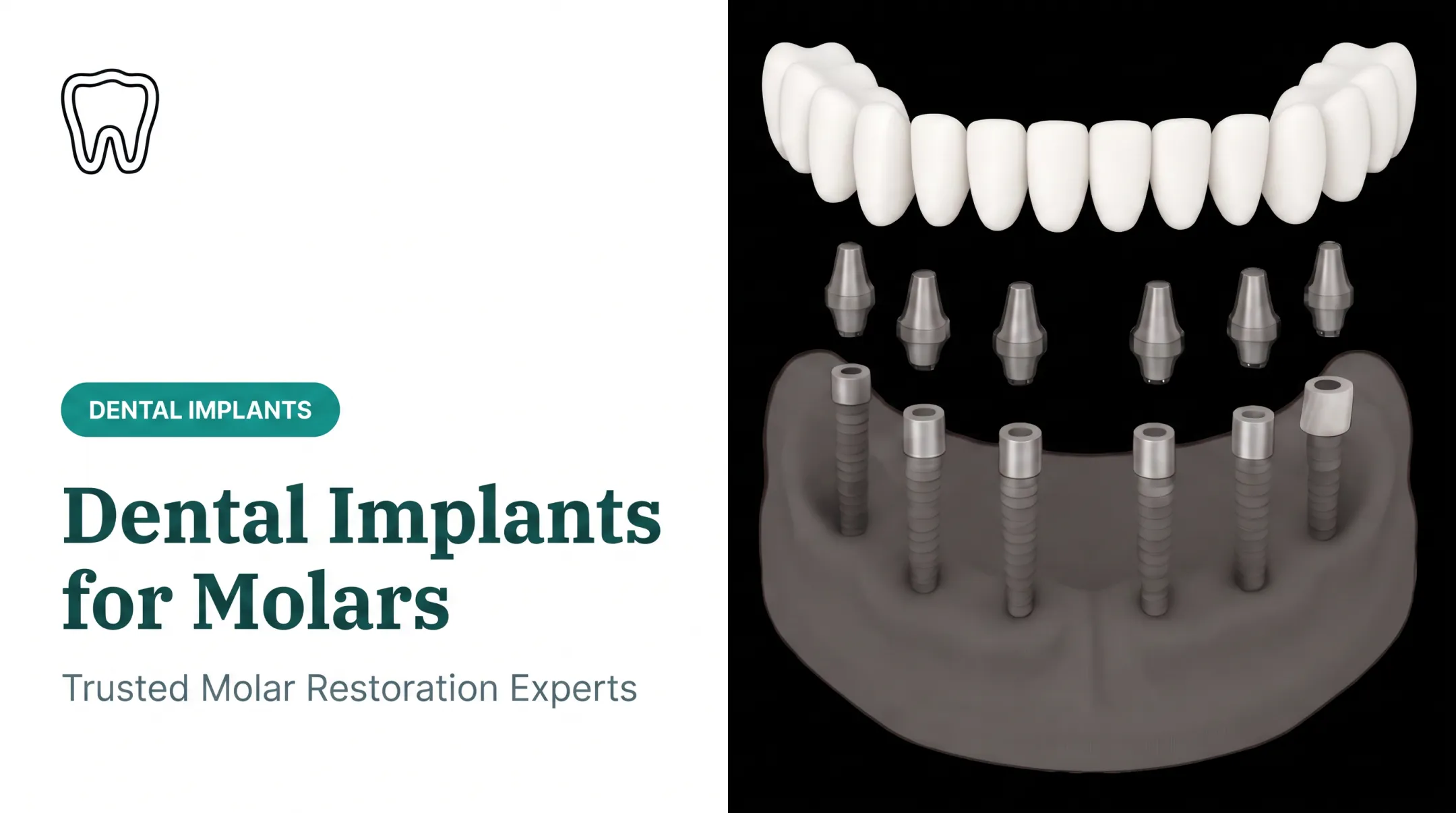
A titanium dental implant is a screw-shaped post surgically anchored into the jawbone. It replaces the tooth root, then supports an abutment and custom crown on top. Once healed, it functions permanently, like a natural tooth root.
Titanium's key advantage is biocompatibility. Bone cells grow directly onto and into the implant surface, a process called osseointegration. This creates a bond strong enough to support chewing forces for decades.
Long-term data backs this up: a 2019 systematic review found a 10-year implant survival rate of 96.4% for titanium implants, according to a 2019 peer-reviewed meta-analysis.

Dr. Moguel exclusively uses FDA-approved, medical-grade titanium systems from Nobel Biocare, Straumann, and MegaGen, brands backed by decades of clinical research.
Titanium vs. Zirconia at a Glance
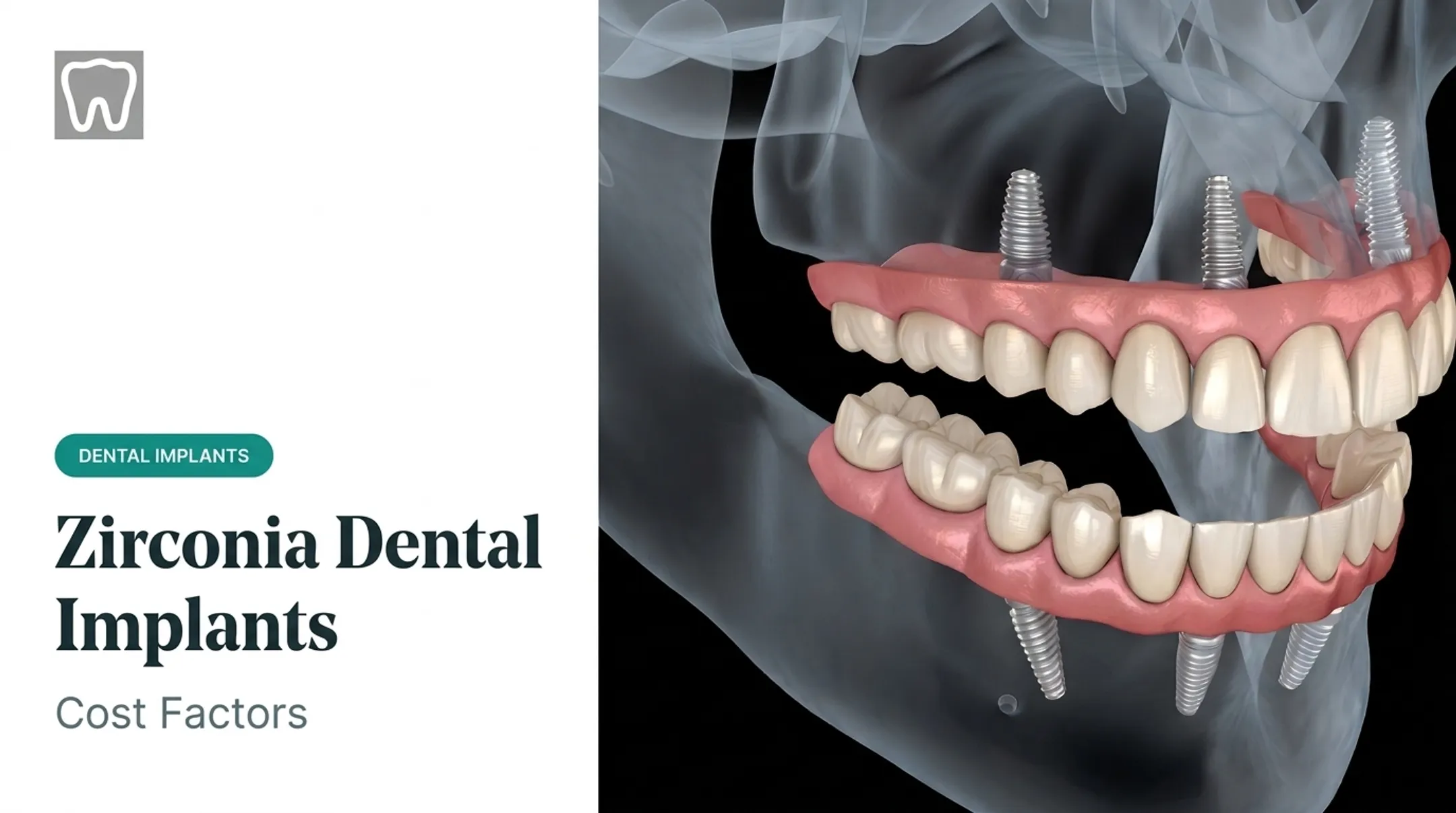
Zirconia is a newer, metal-free alternative. It's white, hypoallergenic, and avoids the faint gray shadow titanium can sometimes cast through thin gum tissue. For full-arch cases and multi-tooth restorations, though, titanium's decades-long clinical track record makes it the more established choice.
Titanium Dental Implant Cost Breakdown
A single-tooth implant has three cost components:
- Implant post — the titanium fixture placed in the jawbone
- Abutment — the connector piece between post and crown
- Crown — the visible, custom-made replacement tooth
In the US, the American Academy of Implant Dentistry reports a combined total of $3,100-$5,800 per implant, including imaging, the fixture, abutment, and crown. Many US clinics charge $4,000-$6,000 depending on the case.
US vs. Mexico: Side-by-Side Comparison
| Procedure | Typical US Cost | Mexico Cost (Dr. Moguel's Clinic) |
|---|---|---|
| Single-tooth implant | $4,000-$6,000 | $1,500-$2,500 |
| Bone graft | ~$2,500 | ~$600 |
| Sinus lift | ~$3,000 | ~$800 |
| All-on-6 (per arch) | $25,000-$40,000 | $12,000-$16,000 |
| 3-ON-8™ (per arch) | $30,000-$45,000 | $16,000-$20,000 |

Additional Cost Factors
Several variables can add to the base price on either side of the border:
- Bone grafting or sinus lift surgery (needed when jawbone density is insufficient)
- Tooth extractions prior to implant placement
- 3D Cone Beam CT imaging for surgical planning
- Sedation ($300-$600 in Mexico vs. $1,200-$2,000 in the US)
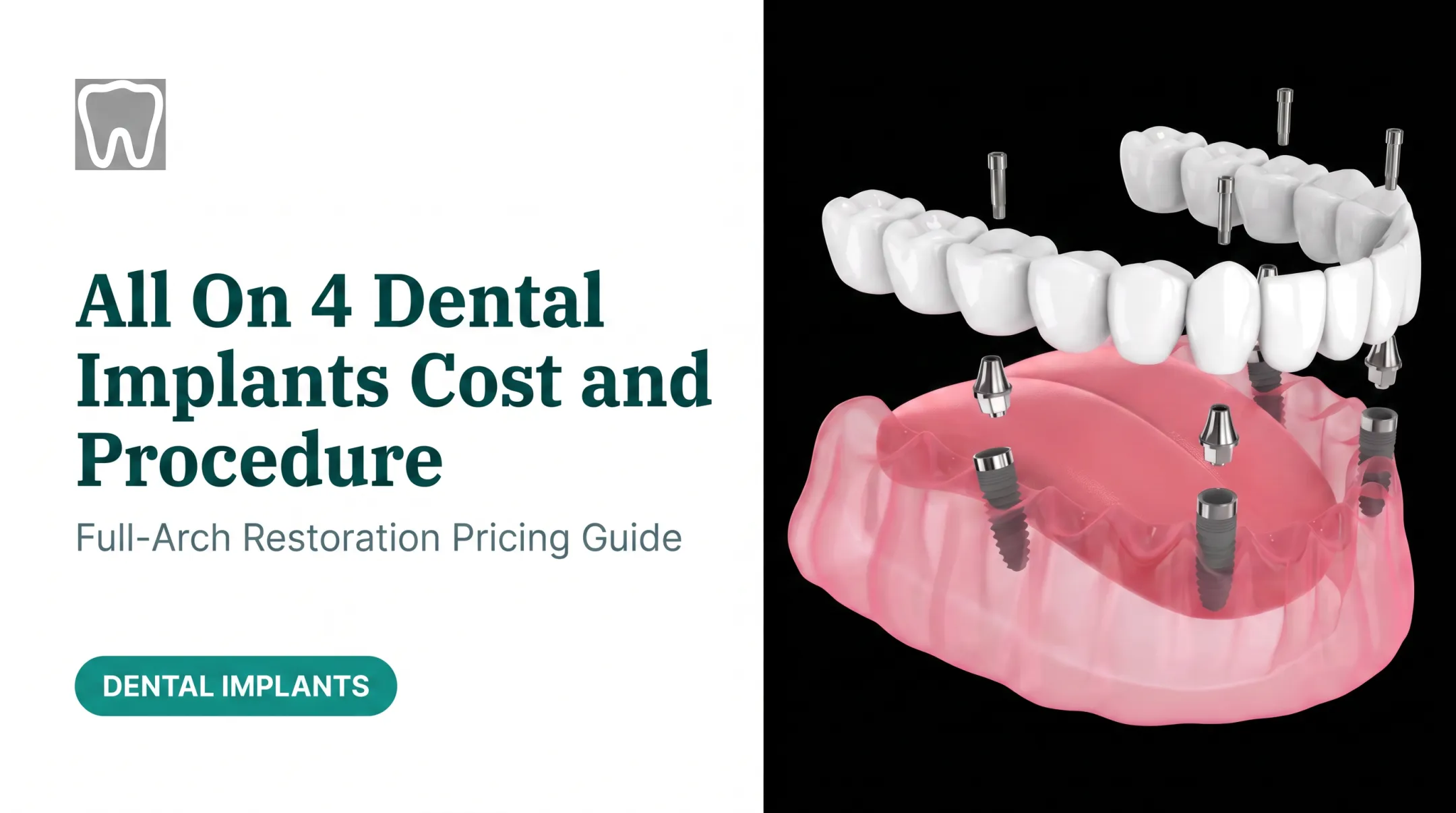
Full-arch solutions cost more per treatment but less per tooth. All-on-4, All-on-6, and the patented 3-ON-8™ protocol replace an entire arch using just 4, 6, or 8 implants instead of one implant per missing tooth. For patients missing multiple teeth, that cuts cost per tooth sharply versus one implant per space.
Dental Implants in Mexico provides transparent, itemized pricing and a free consultation before any commitment. Insurance rarely covers implants in full, but the clinic assists patients with claim documentation for submission back home.
The Titanium Implant Procedure Step-by-Step
Here's how treatment typically unfolds:
- Consultation and imaging. A 3D CT scan and digital scanning assess bone density and map out implant placement. This can happen virtually before you even travel.
- Preparatory work, if needed. Tooth extraction may come first when damaged teeth must be removed. Bone grafting or a sinus lift is added when the jawbone lacks sufficient density or volume.
- Surgical placement. The titanium post is placed under local anesthesia. The procedure itself typically takes less than an hour.
- Healing (osseointegration). This is the waiting period, generally 3-6 months, while bone fuses to the titanium surface. Research shows this happens in phases, with new bone growing into implant threads by weeks 5-12.
- Final restoration. Once integrated, a custom abutment and crown are attached. Same-day, fixed full-arch options are available for patients who qualify. For sinus lift cases specifically, bone graft material can take 6-9 months to integrate before upper implants go in — though in select cases with adequate existing bone, both procedures happen simultaneously.

Titanium vs. Zirconia Implants: Which Is Right for You?
Both materials are FDA-approved, and Dr. Moguel offers both premium options depending on the case.
Titanium has the longer clinical history and the stronger evidence base for durability. A 2025 overview of systematic reviews found titanium implant survival rates of 90-100% at one to five years, compared with a wider 65-100% range for zirconia. For full-mouth reconstruction and multi-tooth cases, titanium remains the more proven material.
Zirconia offers a metal-free, tooth-colored aesthetic. It won't cast a gray shadow through thin gum tissue, so it suits visible front-tooth cases. It is also naturally hypoallergenic, which matters for the estimated 0.6% of implant patients who have a titanium allergy.
A practical way to decide:
- Choose titanium for full-arch work, multi-tooth cases, or when long-term durability data matters most
- Choose zirconia when you want a metal-free option or maximum aesthetics in the smile zone
- Combine both in many full-arch protocols: titanium posts anchor the structure; zirconia forms the visible bridge or crown
Dr. Moguel reports a 98% implant success rate using premium grade-5 titanium systems, reflecting both material quality and surgical technique.

Why Patients Choose Los Algodones, Mexico for Titanium Implants
Los Algodones sits practically on the border, which makes titanium implant care easier to reach without a long medical trip. The clinic is a short walk from the Andrade, California crossing, so patients can park on the US side for about $6 and walk across.
That convenience pairs with Dr. Moguel's credentials:
- Board-certified periodontist, ADA and ADM certified
- Trained at Universidad Nacional Autónoma de México (UNAM)
- Over 17,000 implants placed across 38+ years of practice
The clinic also handles the logistics that make cross-border care manageable:
- Bilingual coordinators for scheduling and questions
- Hotel coordination in Yuma, Arizona, for patients who prefer to stay stateside
- Local shuttle assistance for getting to and from appointments
Quality assurances include:
- Lifetime warranty on implants
- American-standard technology, including 3D Cone Beam CT imaging, digital scanning, and laser surgery
- In-house CAD/CAM lab for custom restorations

Frequently Asked Questions
Is a titanium implant painful?
No. Local anesthesia keeps you pain-free during surgery. Mild soreness and swelling afterward are normal and typically manageable with over-the-counter medication for a few days.
How long do titanium dental implants last?
The titanium post itself can last a lifetime with proper care and good oral hygiene. Crowns wear differently and often need replacement after 10 to 20 years or more.
What is the average cost of a titanium implant in Mexico compared to the US?
Mexico clinics typically charge $1,500-$2,500 for a single-tooth implant, versus $4,000-$6,000 in the US, a savings of roughly 60-70%.
How long does the full implant process take from start to finish?
Most cases span 3-9 months total, covering consultation, any preparatory work, healing and osseointegration, and final crown placement.
Are titanium implants safe, and can I get an MRI with one?
Yes on both counts. Titanium is paramagnetic and unaffected by MRI magnetic fields, and long-term studies show a strong safety record with rare complications.
Does insurance cover titanium dental implants?
Coverage is usually limited, since many plans classify implants as elective. Dental Implants in Mexico helps patients prepare documentation for insurance claims and offers transparent self-pay pricing upfront.