
For patients traveling for treatment, this decision matters even more. You're planning logistics, budgeting for care, and want confidence before you commit. This guide breaks down composition, pros and cons, costs, and how a board-certified periodontist helps determine the right fit for your mouth.
TL;DR
- Titanium is the long-established, high-strength choice with 95-98% success rates over decades
- Zirconia is a metal-free ceramic chosen when white aesthetics or metal sensitivity is the priority
- Zirconia suits front teeth and metal-sensitive patients; titanium suits molars and full-arch cases
- Cost, gum thickness, bite force, and aesthetic priorities should guide your decision
- Long-term success depends on an implant specialist experienced with your material and case type
Titanium vs Zirconia: Quick Comparison
| Factor | Titanium | Zirconia |
|---|---|---|
| Cost | Generally lower; common in affordable full-arch protocols | Typically higher due to milling and lab customization |
| Composition | Metal alloy (Ti-6Al-4V); two-piece design common | Zirconium dioxide ceramic; often one-piece design |
| Durability | Proven flexibility, resists fracture under heavy chewing | Strong but more brittle; best in lower-stress areas |
| Aesthetics | Grey hue may show through thin gums | Tooth-colored, blends naturally with gum tissue |
| Biocompatibility | Excellent, rare allergy risk | Hypoallergenic, metal-free |

At Dr. José Moguel's clinic in Los Algodones, both materials are available. Titanium single-tooth implants start around $750; premium zirconia implants and crowns start around $1,200.
The price gap reflects the extra milling and lab customization zirconia requires.
What Is a Titanium Dental Implant?
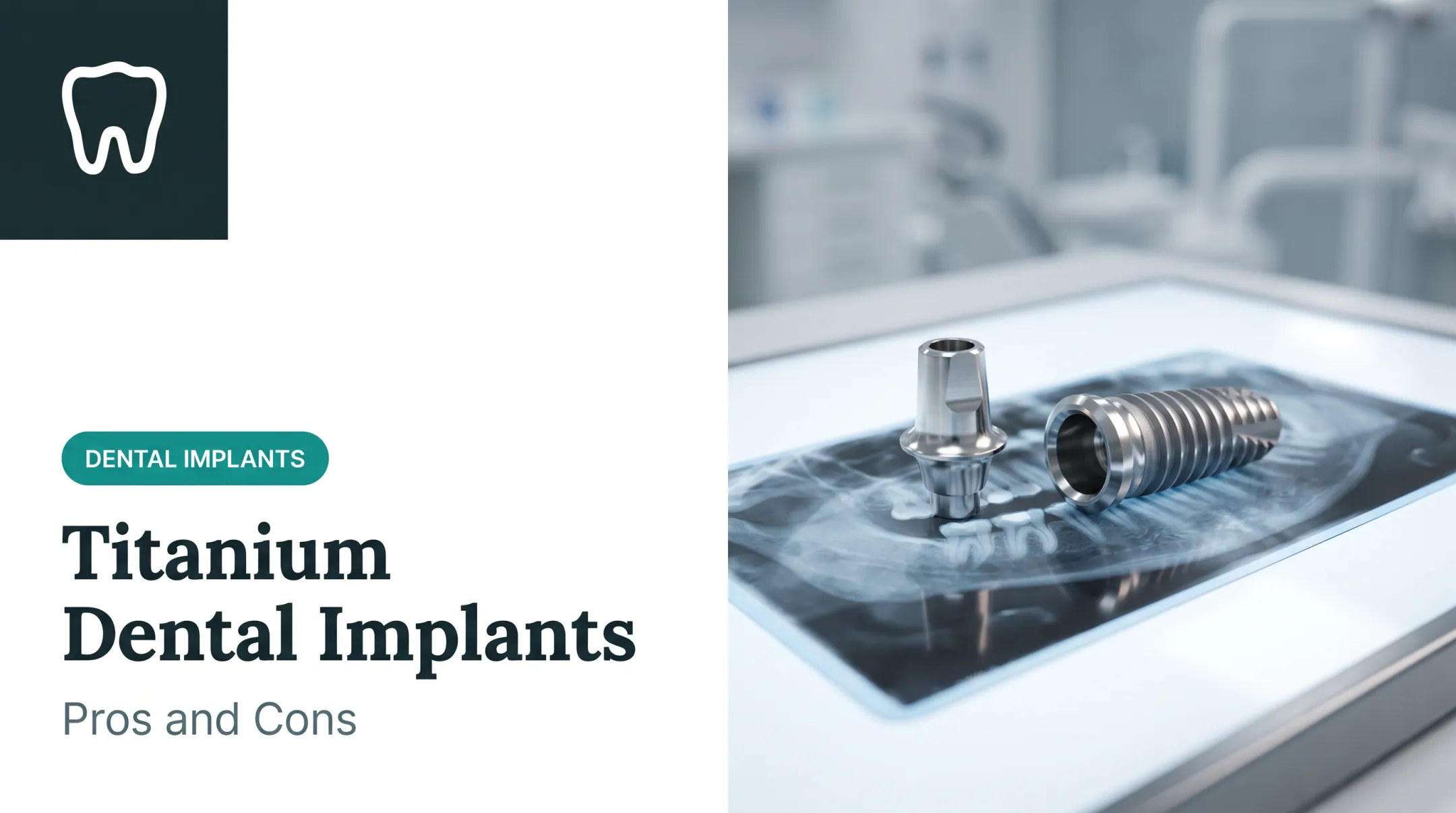
Titanium implants have been the gold standard since 1965, when Per-Ingvar Brånemark placed the first successful titanium dental implant in a patient with no remaining teeth. The material works because of osseointegration: bone actually fuses to the titanium surface, creating a bond as strong as a natural tooth root.
Core benefits include:
- High strength for everyday chewing forces
- Decades of clinical research backing its safety and performance
- Flexible two-piece design that allows angle adjustments for complex cases
Modern titanium implants often use surface treatments like SLA (sandblasted, large-grit, acid-etched), which speeds up bone integration.
A landmark 2012 study following 303 patients with 511 titanium implants found a 98.8% survival rate and 97.0% success rate at 10 years, with zero implant fractures reported (Buser et al., Clinical Implant Dentistry and Related Research).

Use Cases of Titanium
Titanium performs well in load-bearing situations:
- Full-arch protocols like All-on-4 and All-on-6, where implants must support an entire row of teeth
- Molar replacement, where chewing forces are highest
- Cases requiring bone grafting or sinus lifts, where titanium has a long record in complex reconstructions
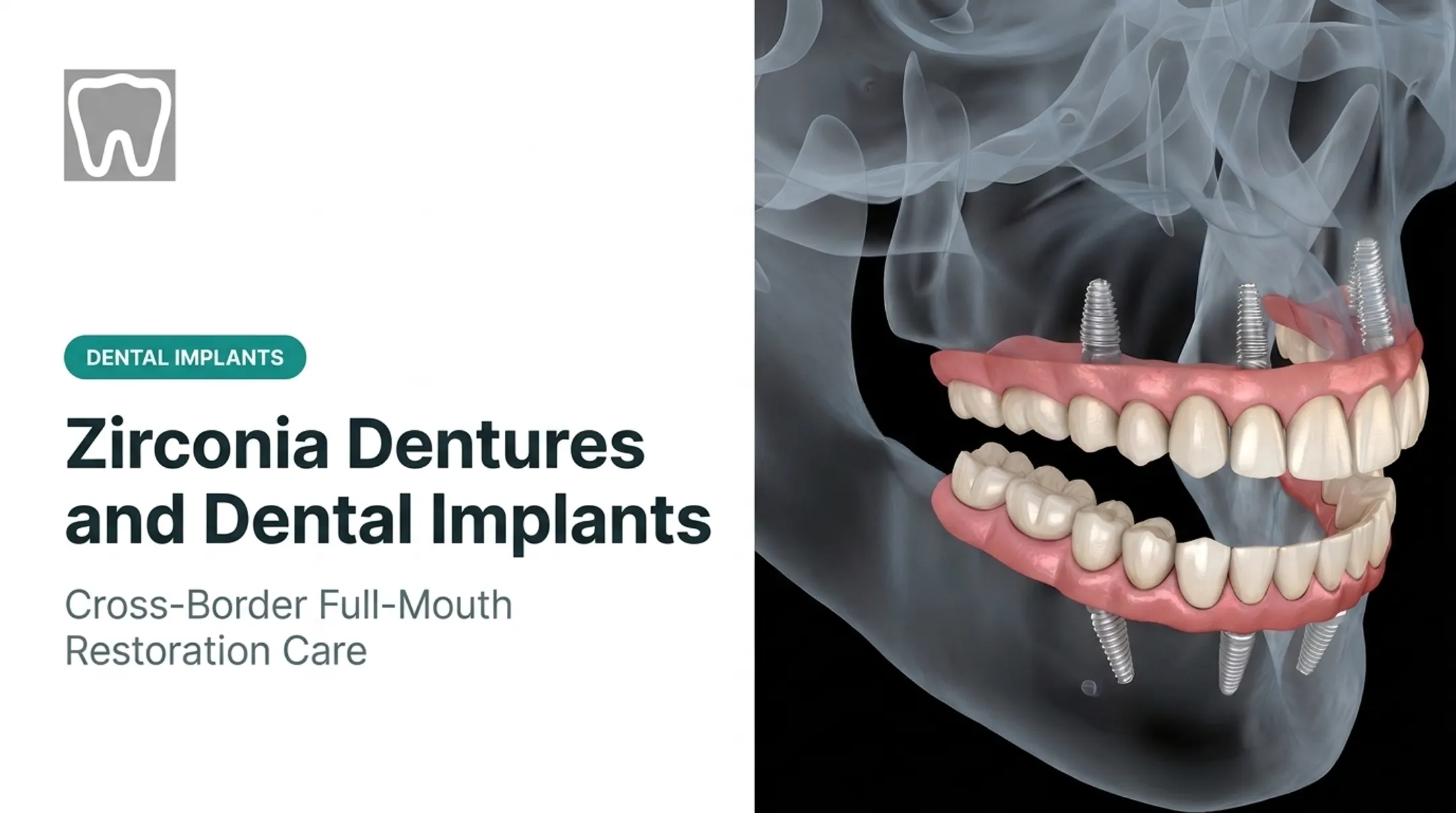
A randomized trial comparing All-on-4 and All-on-6 found implant survival of 98.75% and 95.0% respectively over at least five years, with 100% prosthesis survival in both groups. At Dr. Moguel's clinic, All-on-4 uses four titanium implants per arch, while the patented 3-ON-8™ protocol uses eight titanium posts to anchor a custom zirconia bridge.
What Is a Zirconia Dental Implant?
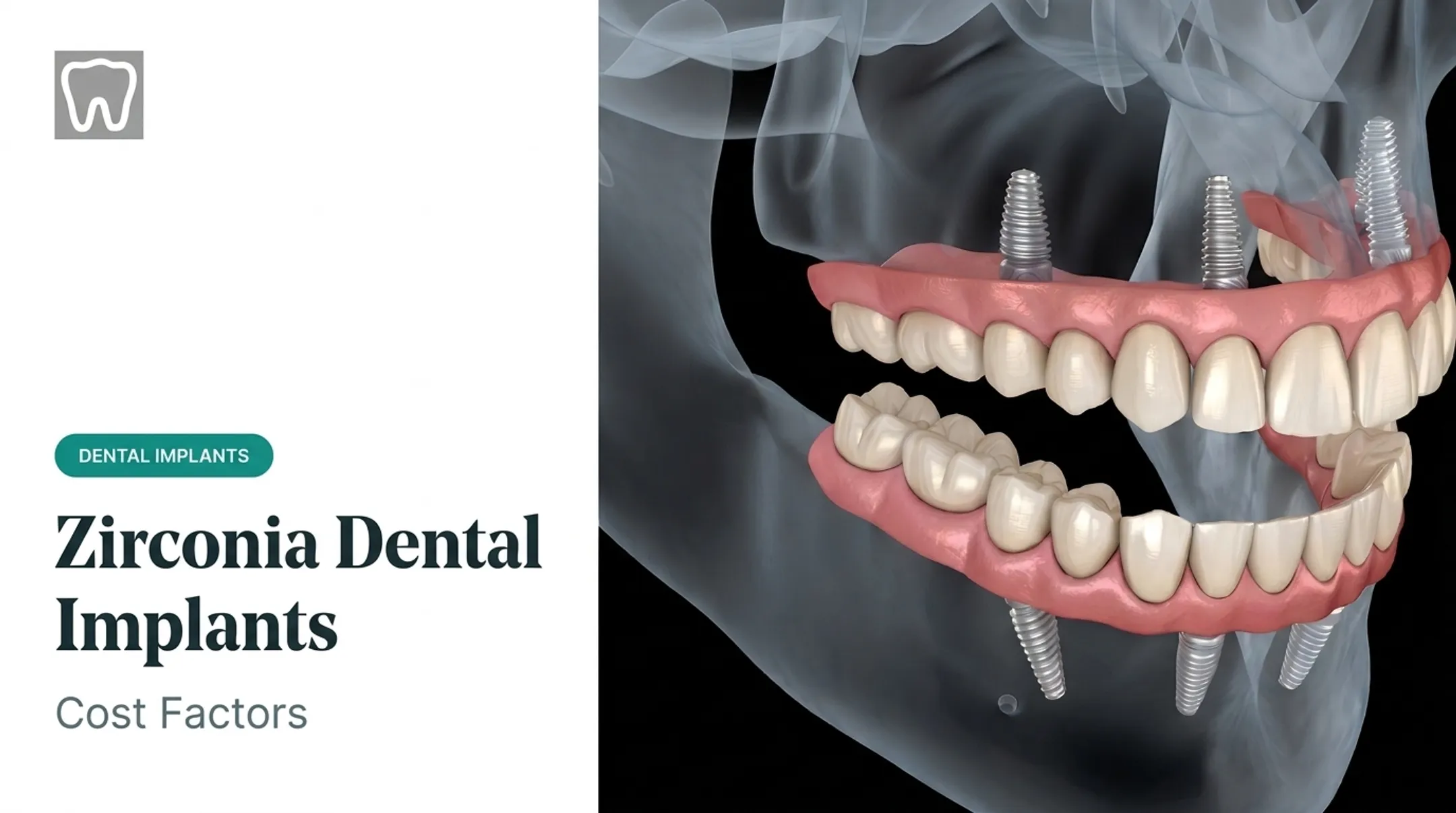
Zirconia implants are made from zirconium dioxide, a white ceramic that eliminates the gray shadowing sometimes seen with titanium near thin gum tissue. Since the FDA cleared the first one-piece zirconia system in 2010, the material has grown into a genuine alternative for metal-free treatment. Core benefits include:
- Natural white color that blends with surrounding teeth and gums
- Reduced plaque adhesion in several in-vitro and clinical studies
- Thermally non-conductive, meaning no hot/cold sensitivity transfer through the implant Most zirconia systems remain one-piece, combining implant and abutment into a single unit. Newer two-piece zirconia systems are emerging, offering more flexibility for angle correction, similar to titanium designs.
Use Cases of Zirconia
Zirconia works best where aesthetics and biocompatibility matter most:
- Front-tooth replacements, where a natural white color is critical
- Patients with thin gum tissue, avoiding any grey show-through
- Patients with metal sensitivities, since zirconia is completely metal-free Evidence on long-term performance is more mixed than titanium's. A 2023 systematic review of 4,017 zirconia implants reported 95.3% cumulative survival at five years and 95.1% at 10 years, though researchers noted small cohorts and limited long-term follow-up (Clinical Oral Investigations, 2023. Results still vary by system. One separate study of one-piece zirconia implants found a 78% five-year survival rate, so outcomes depend heavily on implant design and case selection. Cost is another practical factor. At Dr. Moguel's clinic, zirconia implants and zirconia teeth are priced at $1,200–$1,800, compared to $3,500–$5,000 typically charged in the US.

Titanium vs Zirconia: Which Is Better for You?
There's no universal winner. The right material depends on a handful of factors:
- Implant location — front teeth favor zirconia's aesthetics; back teeth favor titanium's strength
- Bite force and grinding habits — heavy grinders need titanium's fracture resistance
- Gum thickness — thin gums benefit from zirconia's white color
- Metal sensitivity history — zirconia eliminates this concern entirely
- Budget — titanium is generally the more affordable route
General rule of thumb: choose titanium for molars, full-arch cases, or when you want the most long-term clinical data behind your decision. Choose zirconia for front teeth, known metal sensitivities, or when aesthetics are your top priority.
A periodontist's evaluation matters here. Every patient at Dr. Moguel's clinic receives a high-resolution 3D CBCT scan so he can assess bone density in three dimensions before recommending a material.
With 38 years of experience and more than 17,000 implants placed, he works with both premium titanium (Nobel Biocare, Straumann, MegaGen) and zirconia systems. He guides patients toward the option that fits their anatomy, goals, and budget.

Cost Considerations for Patients Traveling for Treatment
Material choice isn't the only cost factor. Where you get treated matters just as much. The American Academy of Implant Dentistry reports that a single implant, abutment, and crown in the US can run $3,100 to $5,800 (AAID, 2024).
Compare that to Los Algodones pricing:
- Single-tooth implants: $750–$1,500
- Zirconia implants and crowns: $1,200–$1,800 (versus $3,500–$5,000 in the US)
- All-on-4: $8,000–$12,000 per arch
Patients traveling to Los Algodones can save roughly 60–70% compared to US prices, while still receiving care from an ADA- and ADM-board-certified periodontist using FDA-approved materials.

Before you book travel, submit X-rays or CBCT scans for a free remote consultation. Dr. Moguel reviews them personally and recommends titanium, zirconia, or a combination, with a transparent cost estimate before anyone crosses the border.
Frequently Asked Questions
Should you get titanium or zirconia dental implants?
It depends on implant location, gum thickness, bite force, and any metal sensitivity history. A professional evaluation, ideally with 3D imaging, is the best way to determine the right fit for your case.
Which dental implant material is healthiest: zirconia or titanium?
Both are biocompatible. Zirconia is metal-free and hypoallergenic, while titanium has decades of safety data with only rare allergy risk reported.
What can I not eat with zirconia implants?
Avoid hard foods like ice, hard candy, and tough or chewy foods that could crack or chip the more brittle ceramic material, especially around the crown.
How long do titanium and zirconia implants last?
Titanium implants show 95-98% success rates over 10-20+ years. Zirconia shows promising 90-95% rates over 5-10 years, though long-term data is still developing.
Can zirconia implants be used for full-mouth restorations?
Titanium is generally preferred for full-arch stability due to superior load distribution across multiple implants. Zirconia can work in select cases but has less supporting data for full-arch use.
Is one material more expensive than the other?
Zirconia is typically pricier due to material costs and lab processing time. Exact pricing varies by clinic, case complexity, and whether it's a single tooth or full-arch case.