
The good news: 2025 offers far more than a plate of false teeth. Implant dentistry has matured, materials have improved, and patients now have options that look, feel, and function like natural teeth. This guide breaks down the top denture alternatives, what they cost, and how to figure out which one fits your situation.
TL;DR
- Dental implants, implant-supported bridges, and All-on-4 deliver the most permanent, natural-feeling results
- Flexible and fixed bridges work for patients who can't or won't have surgery
- Your choice depends on bone density, gum health, budget, and lifestyle
- Treatment in Mexico can cut implant costs by 60-70% versus U.S. pricing
Overview of Denture Alternatives in 2025
Dentures remain common, but they're not without drawbacks. Common issues include:
- Slipping while eating or speaking
- Accelerating jawbone loss without natural root stimulation
- Dulling taste from palate coverage on upper plates
Tooth loss is more widespread than most people realize. According to the CDC's 2024 Oral Health Surveillance Report, edentulism (complete tooth loss) climbs sharply with age — from 1.2% at ages 35-49 to 19.7% at age 75+. That's a lot of people searching for something better than a removable plate.
Modern dentistry has responded with fixed and implant-supported solutions that mimic real teeth far more closely than traditional dentures ever could. Here are the fixed and implant-supported options leading in 2025.

Top Alternatives to Dentures for 2025
The list below is ordered by stability and durability, starting with the option that most closely replicates natural teeth.
Dental Implants
A single-tooth implant replaces one root and crown; full-arch implants replace an entire arch. At Dental Implants in Mexico, treatment is led by Dr. José Moguel, a board-certified periodontist with 38+ years of experience and more than 17,000 implants placed.
Clinic options and credentials include:
- The patented 3-ON-8™ protocol, using eight implants to anchor three independent zirconia bridges
- All-on-4 and All-on-6 full-arch options for patients needing to replace an entire jaw
- Premium FDA-approved materials from Nobel Biocare, Straumann, and MegaGen
- Reported 60–70% savings compared to U.S. pricing
| Factor | Details |
|---|---|
| Best For | Patients wanting a permanent, natural-feeling replacement for one or all teeth |
| Cost Range | U.S.: about $3,100–$5,800 per implant (fixture, abutment, crown). At Dental Implants in Mexico: single-tooth from ~$1,500; full-arch about $6,000–$20,000 (All-on-4, All-on-6, or 3-ON-8™) |
| Recovery Time | Osseointegration typically takes 3–6 months; same-day loading available with some protocols |

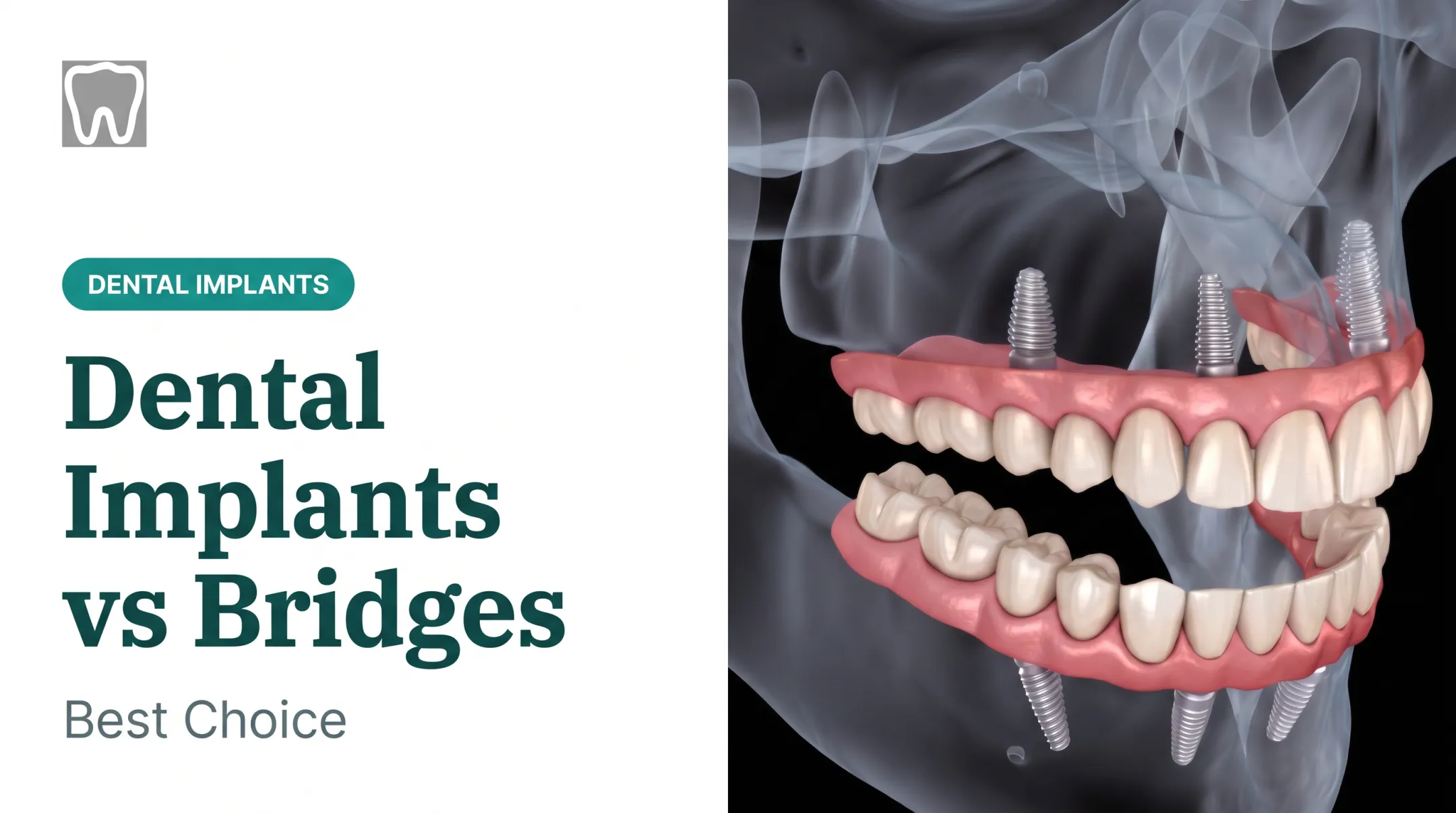
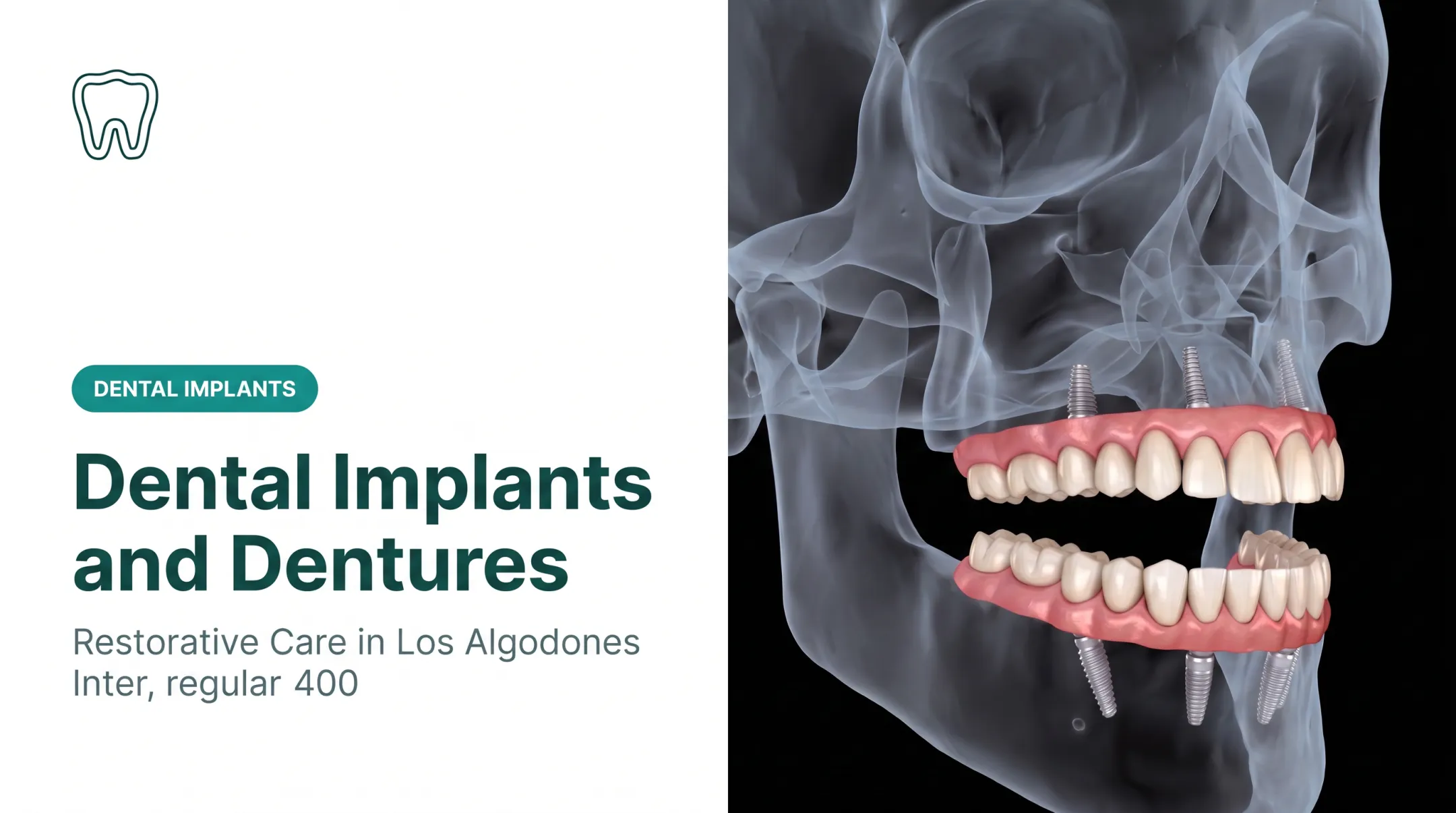
Implant-Supported Bridges / All-on-4
Instead of placing one implant per missing tooth, this approach anchors a full bridge or arch to as few as four implants (or up to eight with 3-ON-8™), without grinding down healthy adjacent teeth.
Benefits:
- Strong, fixed stability — no slipping
- Preserves healthy neighboring teeth
- Costs less than replacing every tooth individually
| Factor | Details |
|---|---|
| Best For | Patients missing multiple adjacent teeth or an entire arch |
| Cost Range | U.S. 2-implant bridges: about $5,000–$15,000. All-on-4 at Dental Implants in Mexico: about $6,000–$12,000 per arch vs. $20,000–$30,000 in the U.S. |
| Lifespan | Long-term: Nobel Biocare’s 18-year data shows >90% implant survival, often 15–20+ years with proper care |
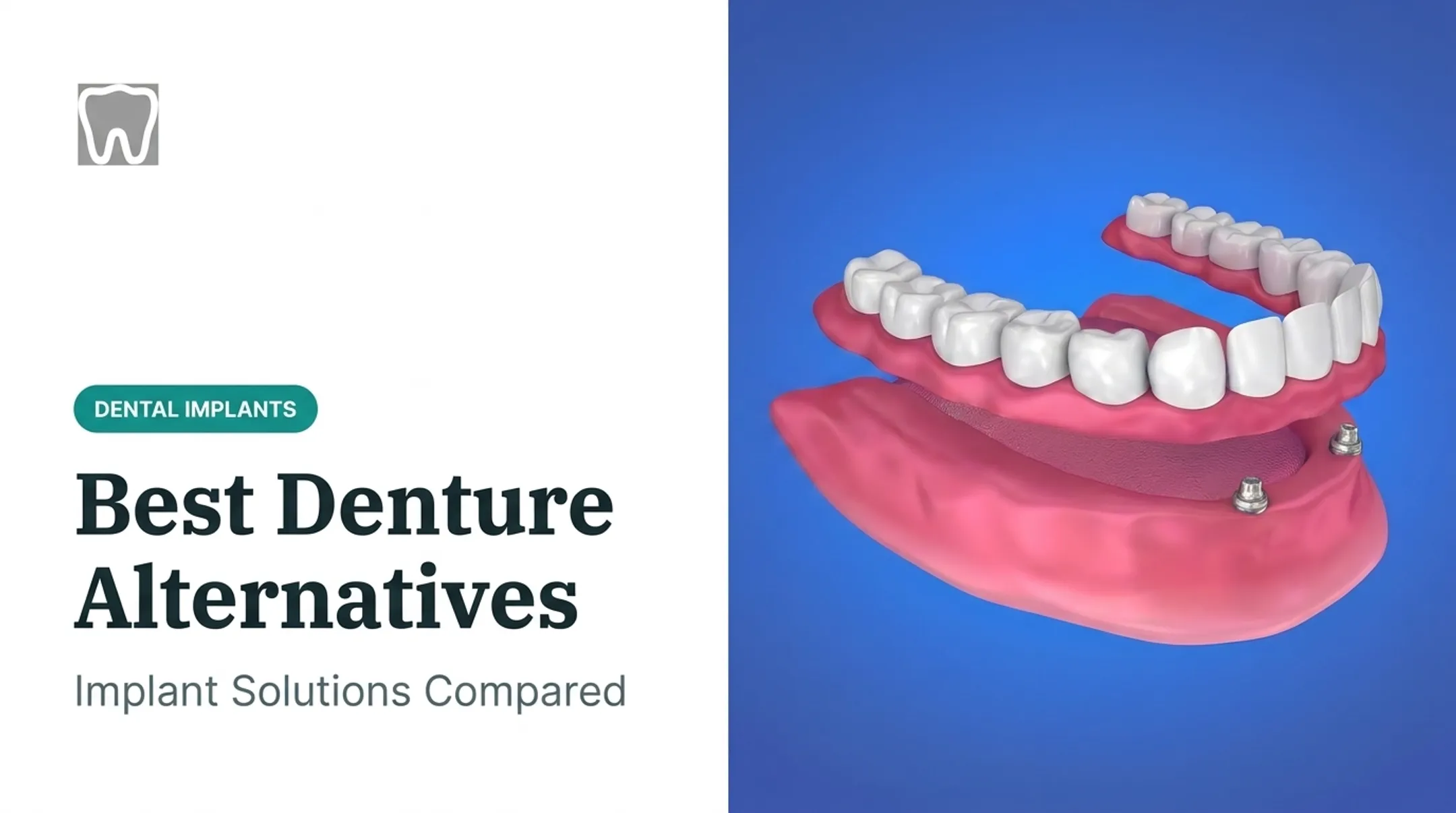
Overdentures (Snap-In Dentures)
These snap onto two to four implants, giving far more stability than a traditional plate while still being removable for cleaning. It’s a middle ground: more affordable than full-implant treatment, with the bone-preserving benefit of implants underneath.
| Factor | Details |
|---|---|
| Best For | Patients wanting more stability than traditional dentures without full-implant cost |
| Cost Range | About $3,500–$5,500 in Mexico vs. $10,000–$14,000 in the U.S. (2–4 titanium implants) |
| Maintenance | Removable nightly for cleaning; implants still need daily oral hygiene |

Fixed Dental Bridges
A fixed bridge anchors an artificial tooth to crowns placed on adjacent teeth, with no surgery needed. The trade-off: those neighboring teeth get ground down to accept crowns, even if they were perfectly healthy.
| Factor | Details |
|---|---|
| Best For | Patients unable or unwilling to undergo implant surgery |
| Cost Range | About $3,600 for a three-unit bridge (two crowns plus a pontic); varies by material |
| Lifespan | About 5–15 years, depending on maintenance |
Flexible & Resin-Bonded (Maryland) Bridges
Flexible partials use gum-colored, metal-free materials that bend slightly for comfort. Maryland bridges bond a replacement tooth to the back of neighboring teeth using a resin framework, skipping crowns altogether.
Both work best for:
- Front teeth replacement where bite force is lower
- Budget-conscious patients wanting a quick fix
- Short-to-mid-term solutions rather than permanent ones
| Factor | Details |
|---|---|
| Best For | Patients needing an affordable, non-surgical, short-to-mid-term solution |
| Cost Range | Maryland bridges average about $1,569 without insurance; flexible partials usually cost less (no strong national benchmark) |
| Lifespan | Shorter than implants or fixed bridges; typically 5–10 years |
How Much Do These Alternatives Cost?
Pricing swings widely based on materials, number of implants, and where you get treated. Here's a snapshot of typical market ranges—location accounts for much of the spread:
| Option | Typical Cost |
|---|---|
| Single implant | $1,500-$5,800 |
| All-on-4 (per arch) | $6,000-$30,000 |
| All-on-6 (per arch) | $8,000-$35,000 |
| Overdentures | $3,500-$14,000 |
| Fixed bridge | ~$3,600 |
| Maryland/flexible bridge | $1,500-$2,500 |
Clinics near the U.S.–Mexico border, including Los Algodones, often deliver 60–70% savings on comparable implant work while meeting ADA/ADM-aligned clinical standards.
Typical price gaps look like this:
- Single implant: $4,000–$6,000 in the U.S. vs. $1,500–$2,500 in Mexico
- All-on-4 (full arch): $20,000–$30,000 stateside vs. $6,000–$9,000 in Mexico

How to Choose the Right Alternative
The right option isn't about picking the cheapest quote you find online. It depends on:
- Bone density — insufficient jawbone may rule out implants without grafting first
- Gum health — active gum disease needs treatment before implants are safe
- Budget — factor in long-term durability, not just sticker price
- Lifestyle — daily cleaning and handling if you choose removable options
A common mistake is choosing on upfront cost alone. Repeat replacements and later bone loss often cost more over time.
A free consultation with a specialist who can check bone density and gum condition with 3D imaging helps you avoid that trap.
Frequently Asked Questions
What is the cheapest option to replace missing teeth?
Flexible partials and Maryland bridges are typically the most affordable upfront options, often costing $1,500-$2,500. They're non-surgical but have a shorter lifespan than implants.
How do you get implants when you can't afford them?
Financing plans, insurance appeal documentation, and lower-cost treatment in Mexico can make implants accessible. Many clinics offer itemized receipts with CDT codes for out-of-network insurance claims.
Can you get permanent fake teeth instead of dentures?
Yes. Implant-supported bridges, All-on-4, and fixed bridges are all non-removable, permanent alternatives that stay in your mouth full-time, unlike traditional dentures.
What is the best alternative to dentures?
Dental implants are the best long-term alternative for most patients due to durability, bone preservation, and a natural feel. Higher upfront cost often pays off through longer lifespan and fewer replacements.
What are the alternatives to dentures for people with gum disease?
Gum disease typically needs treatment first, since active infection is a contraindication for implants. Once gums heal, usually within 2-4 weeks, implants or bridges may become viable options.
How can I cover up my missing tooth?
Quick cosmetic fixes include flipper teeth, snap-on smiles, or Maryland bridges. These aren't permanent solutions but work well for temporary or budget-conscious needs.
Conclusion
There's no single "best" denture alternative. The right choice depends on your bone density, gum health, budget, and how permanent you want the solution to be. Skipping a professional evaluation to save time often costs more later, whether that's a bridge that fails early or an implant placed without addressing bone loss first.
If you're exploring implant-based alternatives to dentures, Dental Implants in Mexico offers free consultations with Dr. José Moguel for a candidacy review and personalized treatment plan.
Book online, call 928-374-4575, or message via WhatsApp to get started.