
Here's the confusion: "ceramic" and "porcelain" aren't opposites. Porcelain is actually a type of ceramic. That mix-up leads people to compare the wrong things, then wonder why quotes vary so wildly.
Cost, longevity, and appearance all hinge on which specific material you choose. This guide breaks down the composition, durability, and price differences so you can walk into a consultation already knowing what to ask.
TL;DR
- Ceramic is the umbrella term; porcelain is a denser ceramic subtype prized for natural translucency
- Porcelain resists stains well; feldspathic types show 95.7% survival at 5 years in clinical research
- Lithium disilicate balances strength and looks, with 96% survival at 15 years in a 2025 study
- Cross-border treatment can make premium materials far more affordable than prices back home
Ceramic vs Porcelain Veneers: Quick Comparison
| Criterion | Ceramic (such as lithium disilicate) | Porcelain (feldspathic) |
|---|---|---|
| Cost | Generally lower per tooth | Higher, due to craftsmanship and translucency layering |
| Composition | Lithium disilicate crystals in a glass matrix | Silicon dioxide and aluminum oxide with fluorapatite crystals |
| Strength | Higher flexural strength; better fracture resistance | Lower flexural strength (~60-70 MPa); more esthetic |
| Tooth prep | Varies by design; some minimal-prep options | Typically 0.4-0.7mm labial reduction |
| Esthetics | Strong but sometimes less lifelike in ultra-thin builds | Highest translucency, closest match to natural enamel |

Neither option is universally better. Choose ceramic when strength and fracture resistance matter most; choose feldspathic porcelain when maximum translucency and enamel-like esthetics are the priority.
What Is Ceramic?
Ceramic is a broad category covering any inorganic dental material formed through heat application. This includes classic feldspathic porcelain, reinforced options like lithium disilicate (brand names include IPS e.max and Celtra Press), and even metal-based ceramics.
Why does this matter? Because when a clinic quotes you "ceramic veneers," you need to ask which subtype they mean. The differences in strength and cost are significant.
Core benefits of ceramic materials:
- Biocompatible and well-tolerated by gum tissue
- Highly customizable for shade and shape
- Moderate cost compared to premium porcelain systems
- Reinforced versions resist chipping better than traditional porcelain
When Reinforced Ceramic Fits
Reinforced ceramic works well for patients wanting a faster, more economical cosmetic fix for minor discoloration, chips, or gaps. It's also common when patients prefer minimal tooth alteration.
A 2022 study on feldspathic ceramic veneers found 91.77% survival up to 7 years of function (Mihali et al., 2022).
A 2025 retrospective study of 650 lithium-disilicate veneers followed for 1–15 years showed survival hinged on the bonding surface: 96.7% on enamel-only preparations versus 93.9% when more than 30% dentin was exposed. Substrate matters as much as the material label.

What Is Porcelain?
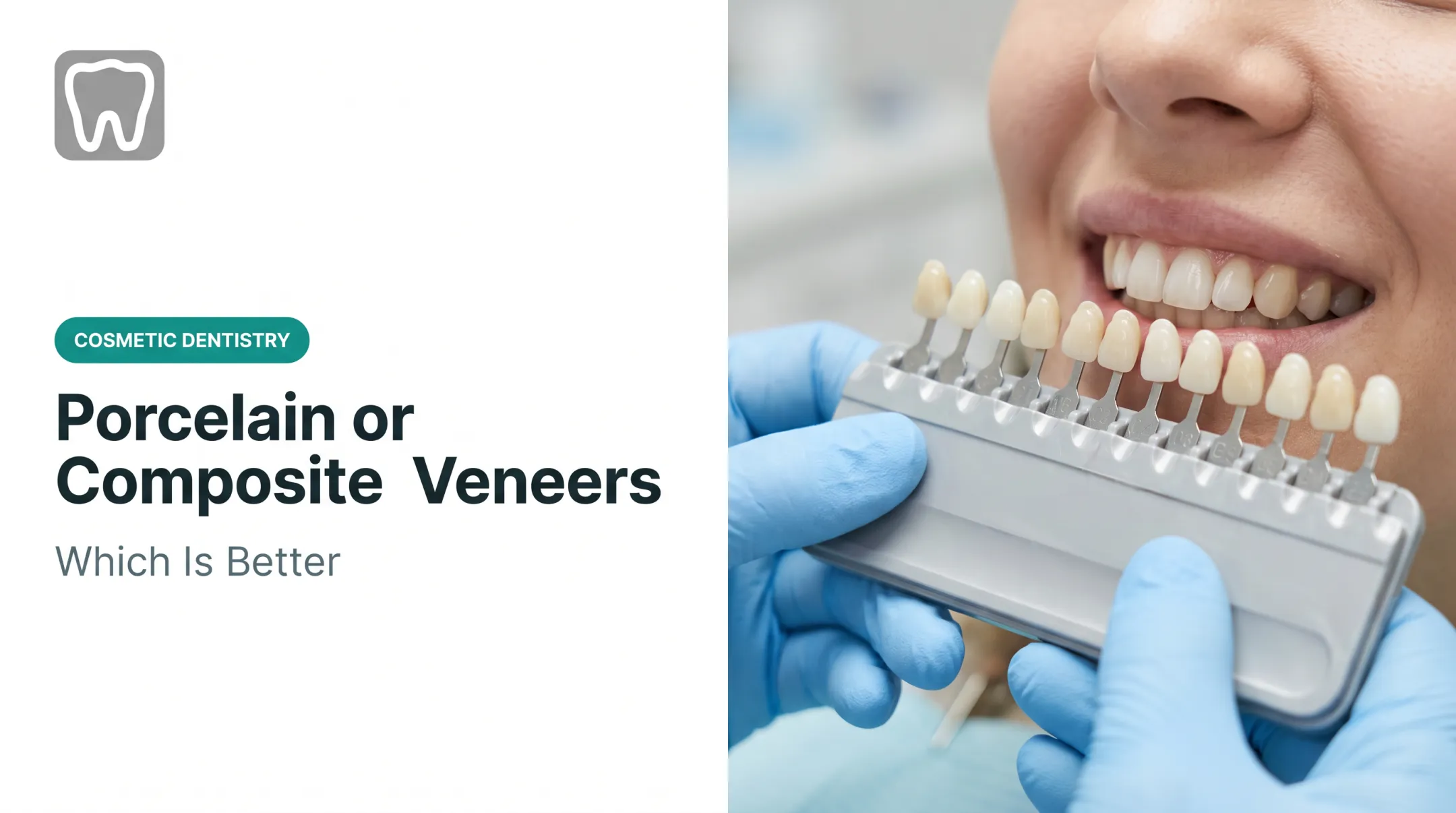
Porcelain, specifically feldspathic porcelain, is the ceramic subtype most associated with premium, natural-looking veneer cases. It's glass-based and layered to mimic how real enamel reflects light, which is why it's often the material referenced when patients say they want "the good stuff."
Core benefits:
- Superior stain resistance over years of daily use
- Closest optical match to natural tooth enamel
- Long-term durability that can reduce replacement frequency and long-term cost
Variations exist too. Traditional feldspathic layered porcelain differs from pressed or reinforced porcelain systems, with the latter trading a bit of translucency for added strength.
Use Cases of Porcelain
Porcelain tends to suit patients undergoing full smile makeovers or full-arch cosmetic work who want the most natural, long-lasting result. It's also common in cases combining cosmetic work with restorative treatment, such as patients pairing implants with veneer work.
A meta-analysis of feldspathic porcelain veneers estimated 95.7% survival at 5 years, with a post-hoc estimate approaching 95.6% at 10 years when bonded to enamel (Layton et al., 2012).
A separate long-term study following prepared-enamel porcelain veneers for up to 21 years found 96% cumulative survival when preparations preserved at least 80% enamel. The pattern is consistent: porcelain performs best when bonded to healthy enamel rather than dentin.

At Dental Implants in Mexico, porcelain veneers are priced at $450 per tooth, compared with a typical $1,500 per tooth in the United States, a 70% savings on this specific procedure.
Ceramic vs Porcelain: Which Is Better for You?
There's no single right answer. Weigh these factors:
- Budget — reinforced ceramic options typically cost less upfront
- Timeline — some ceramic designs need less lab customization time
- Longevity goals — porcelain's stain resistance pays off over a decade-plus
- Enamel preservation — how much natural tooth are you willing to reshape?
- Combined treatment — are you also getting implants, whitening, or bonding? Quick guidance: If lower upfront cost and minimal tooth alteration matter most, ceramic or composite options make sense. If you're prioritizing longevity, natural aesthetics, and stain resistance, porcelain is usually worth the investment. Cost is often the tie-breaker—and dental tourism changes that math. Patients traveling from the US or Canada to Mexico can often get premium porcelain veneers at a fraction of home-country pricing: about $450 versus $1,500 per tooth. That roughly 70% savings puts porcelain in reach for many patients who assumed it was too expensive. Material choice still shouldn't happen in a vacuum. A consultation with a board-certified specialist is the only way to confirm which option fits your bite, gum health, and any existing dental work. Dr. José Moguel's team brings over 38 years of clinical experience in implants and full-mouth restorative care, with more than 17,000 implants placed. They offer free, no-obligation consultations and transparent price quotes so you know what you're paying before you commit. Ready to find out which material fits your smile goals? Request a free consultation and get a personalized recommendation with clear, upfront pricing.
Frequently Asked Questions
What are the three types of veneers?
The three common types are composite resin, ceramic (including lithium disilicate), and porcelain. Composite is the most affordable but least durable; porcelain leads on longevity and stain resistance, with other ceramics falling between the two on cost and strength.
How long do porcelain veneers last compared to ceramic veneers?
Porcelain bonded properly to enamel has shown survival rates around 95–96% at 10–15 years in clinical studies. Other ceramics and composite options often need replacement sooner, typically in the 5–10 year range depending on wear and dentin exposure.
Are porcelain veneers more expensive than ceramic veneers?
Generally yes, due to lab craftsmanship and material quality. Treatment in Mexico can narrow that gap a lot: porcelain veneers run about $450 per tooth here versus $1,500 in the US.
Do veneers require removing tooth enamel?
Most veneers require some minimal enamel reshaping, typically 0.4-0.7mm of labial reduction. No-prep options exist, but they come with aesthetic trade-offs and may bond less securely.
Can veneers be combined with dental implants or full-mouth reconstruction?
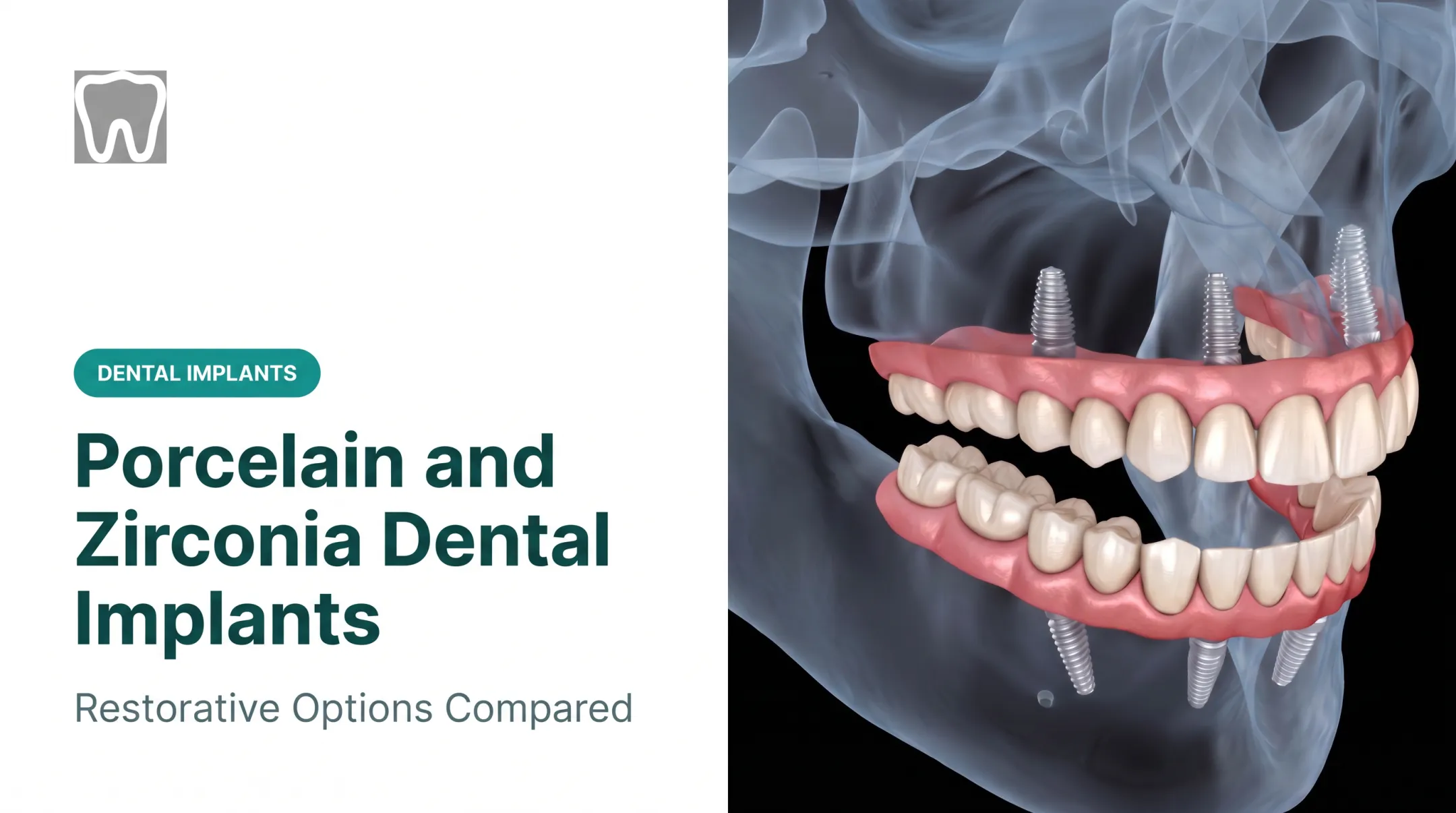
Yes. Veneers can be paired with implant-based restorations when you need a broader smile upgrade. Full-mouth reconstruction plans often combine implants with zirconia or ceramic fixed restorations.
How do I choose between ceramic and porcelain veneers?
Start with a professional consultation. Your dentist should assess bite, gum health, budget, and aesthetic goals before recommending a material.