
Each comes with real trade-offs in cost, timeline, and longevity. A bridge might get you back to normal in weeks. An implant asks for more patience upfront but can outlast the bridge by decades. Neither is universally "better" — the right answer depends on your bone health, budget, and how long you want the fix to last.
This guide breaks down cost, durability, procedure, and suitability for both options, including why many patients now look at implant care in Los Algodones, Mexico, to make the higher-cost option more affordable.
TL;DR
- Bridges cost less upfront but need replacement within 10–15 years and require filing down healthy adjacent teeth
- Implants cost more initially, can last decades, and preserve jawbone without touching neighboring teeth
- Your choice hinges on bone health, budget, timeline, and whether grafting is needed
- Clinics in Los Algodones can cut implant costs by roughly 60–70% compared to US pricing
Dental Implants vs Bridges: Quick Comparison
Cost
Implants run $3,100–$5,800 for a single tooth in the US, according to the AAID's 2024 cost breakdown. That figure includes the implant post, abutment, and crown.
In Mexico, single-tooth implants typically range from about $750–$1,500 depending on the case.
Bridges are generally cheaper at the outset, roughly $2,000 to $5,000+ in the US according to GoodRx, though implant-supported versions can run $4,000-$16,000.

Procedure & Recovery
- Implants: Surgical placement, followed by an osseointegration period (bone fusing to the titanium post) lasting several months
- Bridges: No surgery. Typically completed in two to three visits over a few weeks
Durability
Published data is more nuanced than the usual "5–15 years" claim:
- Conventional bridges: 93.8% five-year survival and 89.2% at 10 years (2007 systematic review)
- Implant-supported prostheses: 95.2% at five years and 86.7% at 10 years (same review)
- Contemporary implant systems: 96.4% survival at the 10-year mark, per a 2019 systematic review
Impact on Adjacent Teeth
- Implants: No alteration to neighboring healthy teeth
- Bridges: Requires filing down the abutment teeth on either side of the gap, which can weaken them permanently
Jawbone Health
Bone loss after extraction is dramatic and fast. A 2012 systematic review found horizontal bone loss of 29–63% within six months of losing a tooth.
Implants replace the root structure and help maintain that bone. Bridges sit on top of the gum without the same stimulation, so resorption continues underneath.

What Is a Dental Implant?
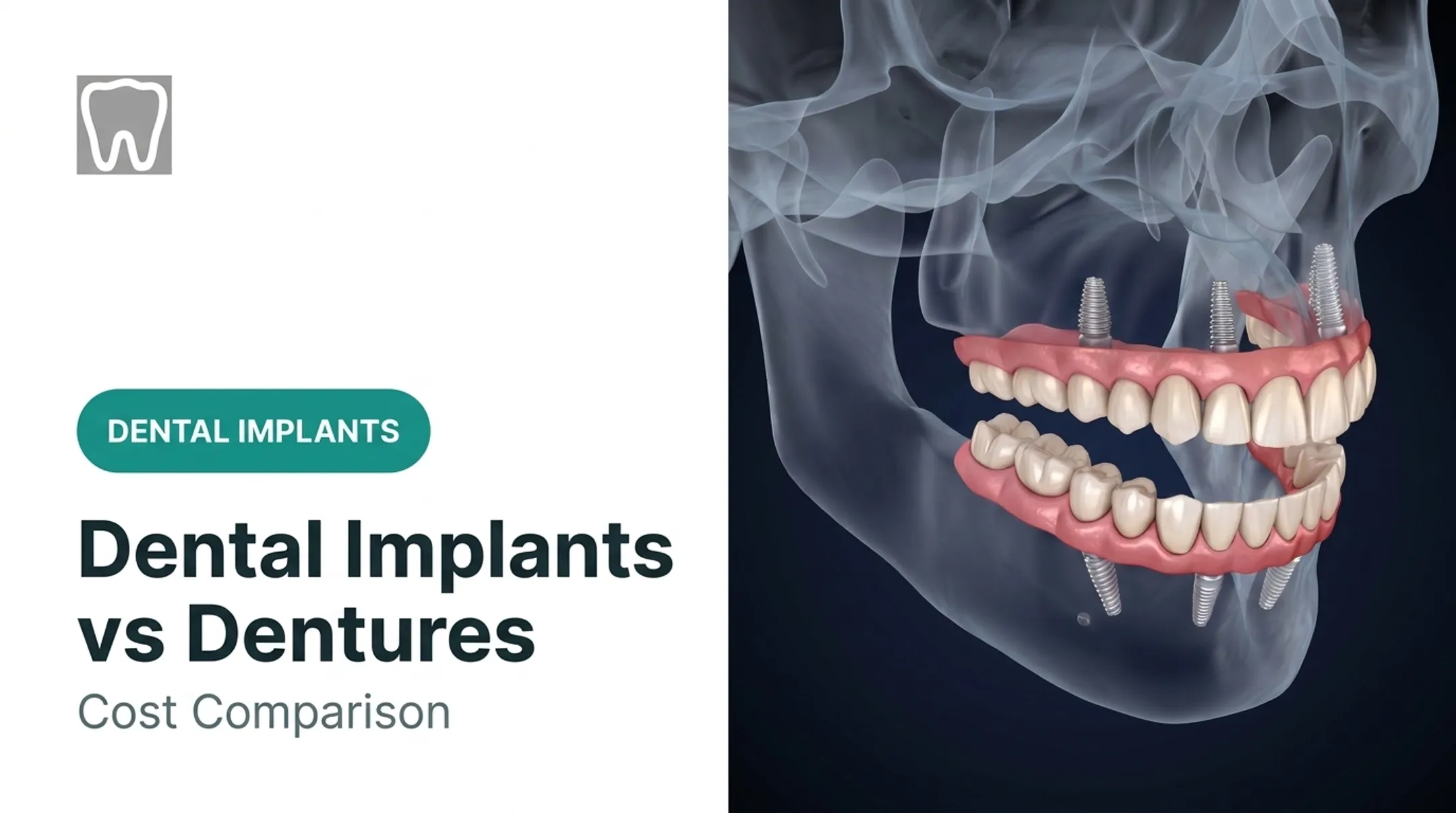
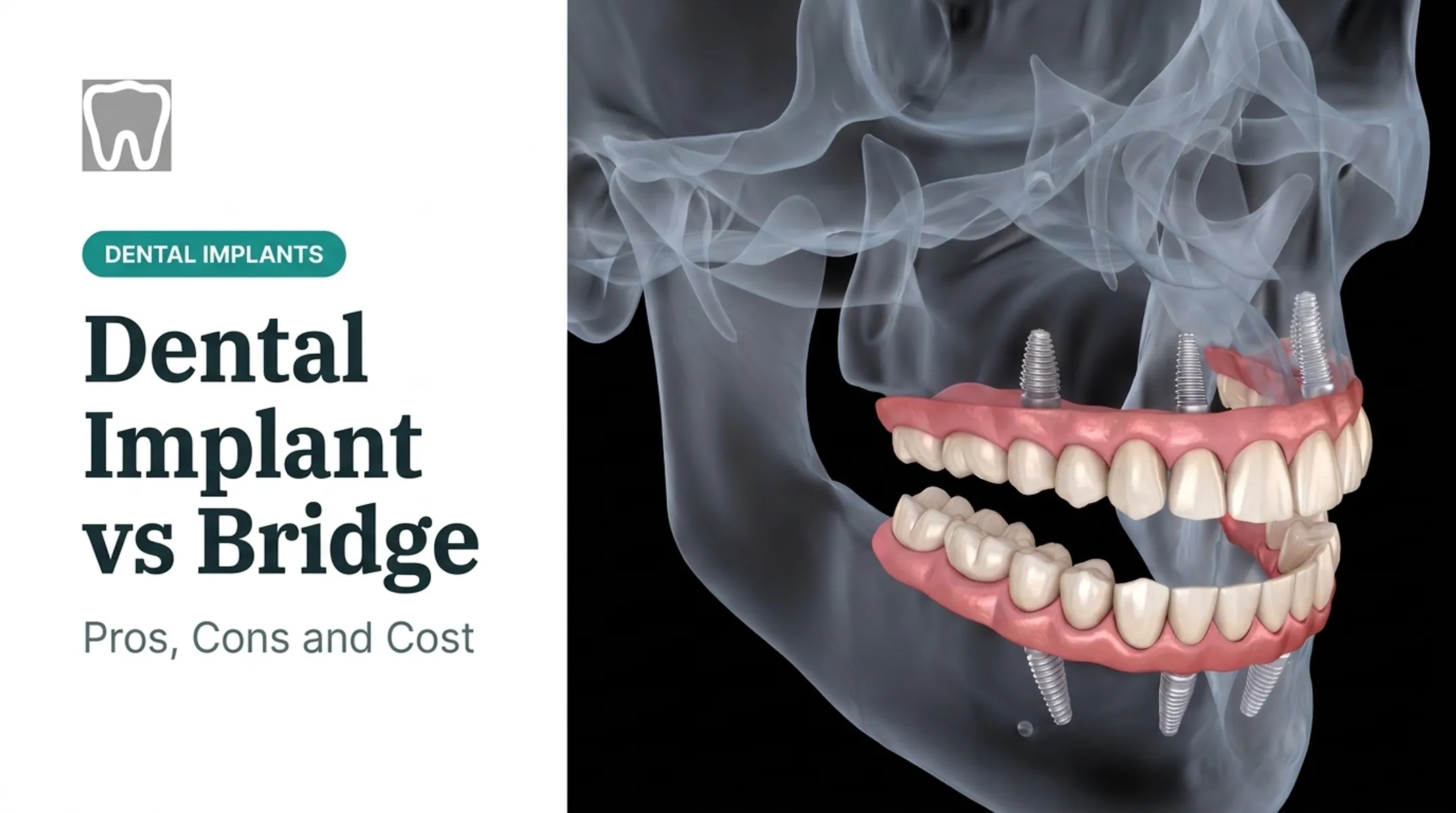
A dental implant is a titanium post placed directly into the jawbone at the site of the missing tooth. Over several months, the bone fuses to the post through a process called osseointegration. Once healed, the post supports a crown that looks and functions like a natural tooth.
Core benefits:
- Natural look and feel
- No preparation of adjacent teeth required
- Long-term jawbone density maintenance
- High survival rates — 96.4% at 10 years across contemporary systems
Implants aren't one-size-fits-all. Options include single-tooth implants, implant-supported bridges, and full-arch solutions like All-on-4 or All-on-6.
Use Cases of Dental Implants
Implants work well for single missing teeth, multiple gaps, or full-arch replacement, provided there's enough bone to anchor them. Patients with more extensive bone loss or complex restoration needs sometimes require advanced protocols.
Dr. José Moguel, a board-certified periodontist who has placed more than 17,000 implants, developed the 3-ON-8™ protocol for exactly this scenario. It uses eight implants per arch to support three independent zirconia bridges.
A 3D CBCT scan checks bone density and width at eight strategic locations before placement. Patients who don't initially qualify may still be candidates after localized bone grafting.

What Is a Dental Bridge?
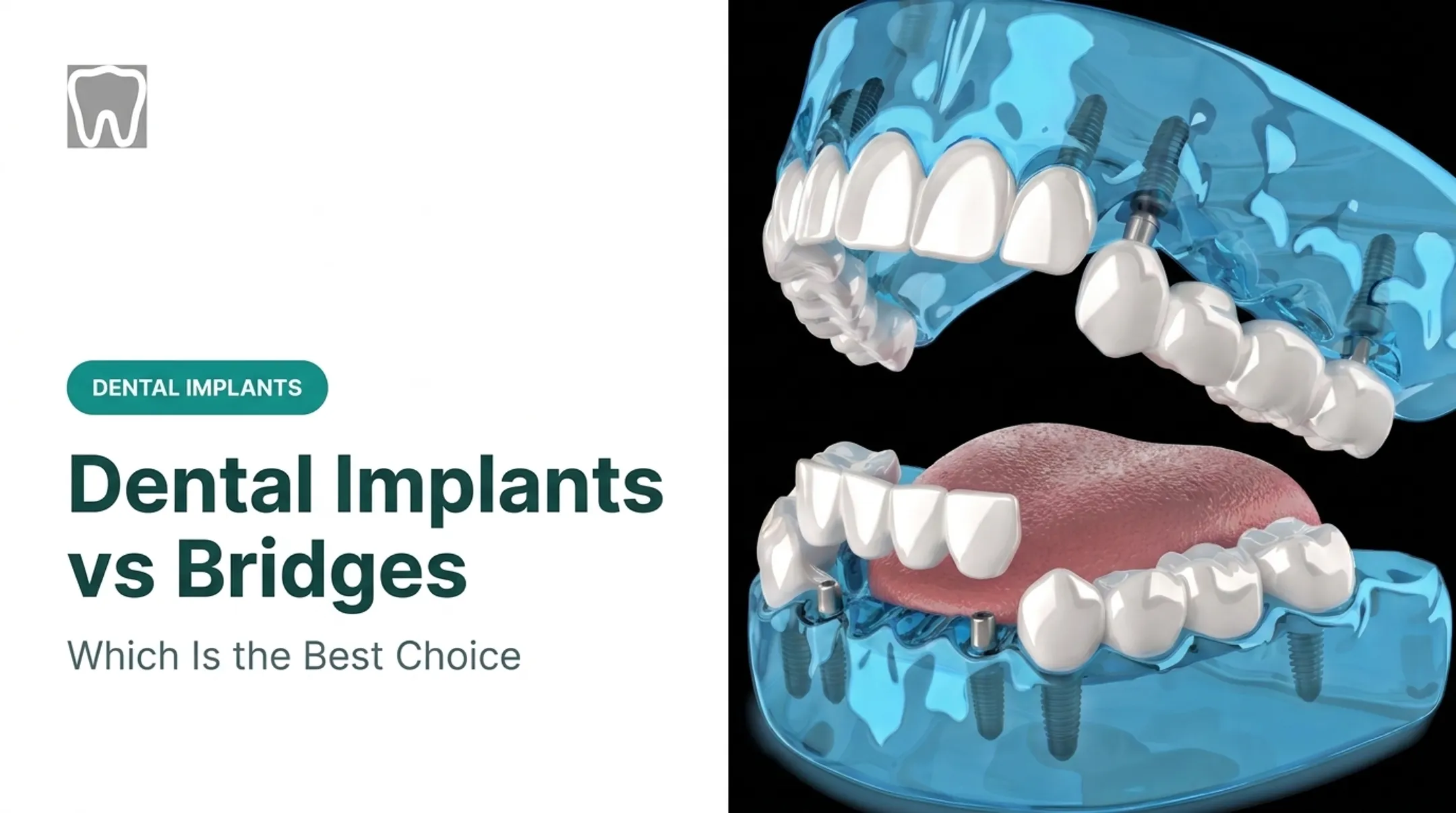
A bridge "bridges" the gap left by a missing tooth using crowns placed on the adjacent teeth, which support a false tooth (called a pontic) in between. Unlike a denture, it's fixed in place, not removable.
Core benefits:
- Faster completion with no surgery required
- Lower upfront cost than implants
- Workable option when you aren't a strong implant candidate
Common subtypes include:
- Traditional bridges
- Cantilever bridges (anchored on just one side)
- Maryland bonded bridges (metal or resin framework)
- Implant-supported bridges
Use Cases of Dental Bridges
Bridges suit patients with healthy, strong adjacent teeth, a limited budget, or a need for a faster non-surgical fix. They're also common when bone loss rules out implants without extensive grafting.
Longevity depends on design. Resin-bonded bridges show 91.4% survival at five years and 82.9% at 10 years, according to a systematic review of nearly 2,300 bridges, though chipping and de-bonding are frequent technical issues.
Most bridge failures come from decay in the supporting teeth or mechanical wear at the connectors — not the pontic itself.
Dental Implants vs Bridges: Which Is Better?
There's no universal winner here. The right choice comes down to five factors:
- Budget: how much you can invest now versus later
- Timeline: do you need a fix in weeks, or can you wait months for healing?
- Bone health: sufficient density is required for implants without grafting
- Number of missing teeth: single gaps versus full-arch needs
- Long-term goals: a temporary fix versus a lifetime solution
Choose a bridge if: you need something fast, want to avoid surgery, have strong adjacent teeth, and are working with a tighter budget.
Choose an implant if: you want the longest-lasting option, care about preserving jawbone density, and can invest more upfront.
That upfront cost is often the real deciding factor, and geography plays a major role in what you pay.
A single-tooth implant that runs $3,500-$5,000 in the US might cost $1,500 or less in Los Algodones, for savings of about 60-70%. All-on-4 shows a similar pattern: $18,000-$28,000 in Yuma, Arizona, versus $8,000-$12,000 just across the border in Mexico.

Traveling for treatment with a board-certified periodontist can make the implant route financially realistic for patients who'd otherwise default to a bridge purely on cost.
Making the Right Choice for Your Situation
Before you choose between an implant and a bridge, get a professional evaluation. X-rays or a 3D CT scan will reveal your actual bone density and gum health: information that no article, including this one, can substitute for.
Free consultations remove the guesswork. Dental Implants in Mexico offers no-obligation reviews by phone or video call. You send a panoramic X-ray or CBCT scan digitally, and Dr. Moguel provides a personalized treatment plan with pricing before you book travel.
If you have dental insurance, ask about claim documentation support. This typically includes:
- Itemized invoices using standard ADA CDT procedure codes
- Pre-treatment estimates for pre-determination of benefits
- Diagnostic X-rays, clinical charts, and doctor's notes
- Appeal support if your insurer requests additional documentation
Coverage varies by policy, but proper documentation can offset a meaningful portion of either bridge or implant costs.
Frequently Asked Questions
What does a single tooth bridge cost?
In the US, a single-tooth bridge typically runs $2,000 to $5,000 or more, depending on material and location, per GoodRx. Mexico clinics often price comparable bridge work much lower, which is why many patients weigh both markets before they commit.
How long do dental implant bridges last?
The implant hardware itself often carries a lifetime warranty at reputable clinics, while the bridge prosthesis typically has a five-year warranty with proper professional cleanings. Expect normal wear on the restoration around the 10-15 year mark.
Is it better to have a bridge or a denture?
Bridges are fixed and don't come out, offering more stability and a closer feel to natural teeth. Dentures are removable, generally cheaper, but require more daily maintenance and can shift while eating or speaking.
How many teeth can be replaced with a bridge?
Bridges typically replace one to four consecutive missing teeth, depending on the strength of the supporting teeth or implants. More than that usually calls for a full-arch solution like All-on-4, All-on-6, or 3-ON-8.
Why would a dentist not recommend an implant?
Insufficient bone density, uncontrolled diabetes or other systemic conditions, heavy smoking, and active gum disease can all complicate implant success. Many of these are manageable with grafting or treatment first, not permanent disqualifications.
What is more painful, a bridge or an implant?
Both procedures use local anesthesia, so pain during treatment is minimal either way. Implants need more recovery because they involve surgery and healing time; bridges usually heal faster with no incision.