
You're not alone. Many patients delay treatment for years because they assume full repair means endless procedures and crushing bills. The good news: modern dentistry can rebuild almost any mouth, no matter how far the damage has progressed.
This guide breaks down the real difference between dental restoration and dental reconstruction, walks through what each procedure involves, and explains why patients from the US and Canada are increasingly crossing the border into Los Algodones, Mexico for board-certified implant care.
Key Takeaways
- Dental restoration fixes individual damaged teeth; reconstruction rebuilds the entire mouth's function and bite
- Full mouth reconstruction combines implants, fixed bridges, and periodontal therapy into one coordinated plan
- Teeth become unfixable when bone support drops too low, infection won't resolve, or the root itself fractures
- US and Canadian patients access comparable implant procedures in Mexico for 60–70% less than typical US prices
Dental Restoration vs. Dental Reconstruction: Understanding the Difference
These terms get used interchangeably online, but they describe different scopes of treatment. Dental restoration targets a single tooth or a few teeth. It repairs damage from decay, trauma, or wear using fillings, crowns, bridges, or veneers. Think of it as spot repair: one cavity, one crown. Dental reconstruction (also called full-mouth rehabilitation) addresses the whole picture: teeth, gums, jawbone, and bite alignment. The American College of Prosthodontists defines it as rebuilding or replacing all teeth in the mouth, often combining implants, bridges, and dentures into a single coordinated plan. Here's the key distinction most patients miss:
- Restoration often replaces a tooth with a prosthetic component while preserving the surrounding structure
- Reconstruction takes a whole-mouth view, sometimes strengthening existing structure, sometimes replacing it entirely, depending on what the bone and gums can support
- Planning differs too: restoration is tooth-focused; reconstruction maps bite, bone, and gums before treatment starts
When each approach applies:
| Scenario | Likely Approach |
|---|---|
| One cavity, otherwise healthy mouth | Restoration (filling or crown) |
| Several missing back teeth | Restoration (bridge or implant) |
| Advanced periodontal disease, multiple failing teeth | Reconstruction |
| Full-arch tooth loss, bite collapse | Full-mouth reconstruction |
| Many patients need a blend of both, especially with advanced gum disease. Dr. José Moguel's plans at his Los Algodones clinic are built around each patient's bone condition and goals rather than a one-size-fits-all package. | |
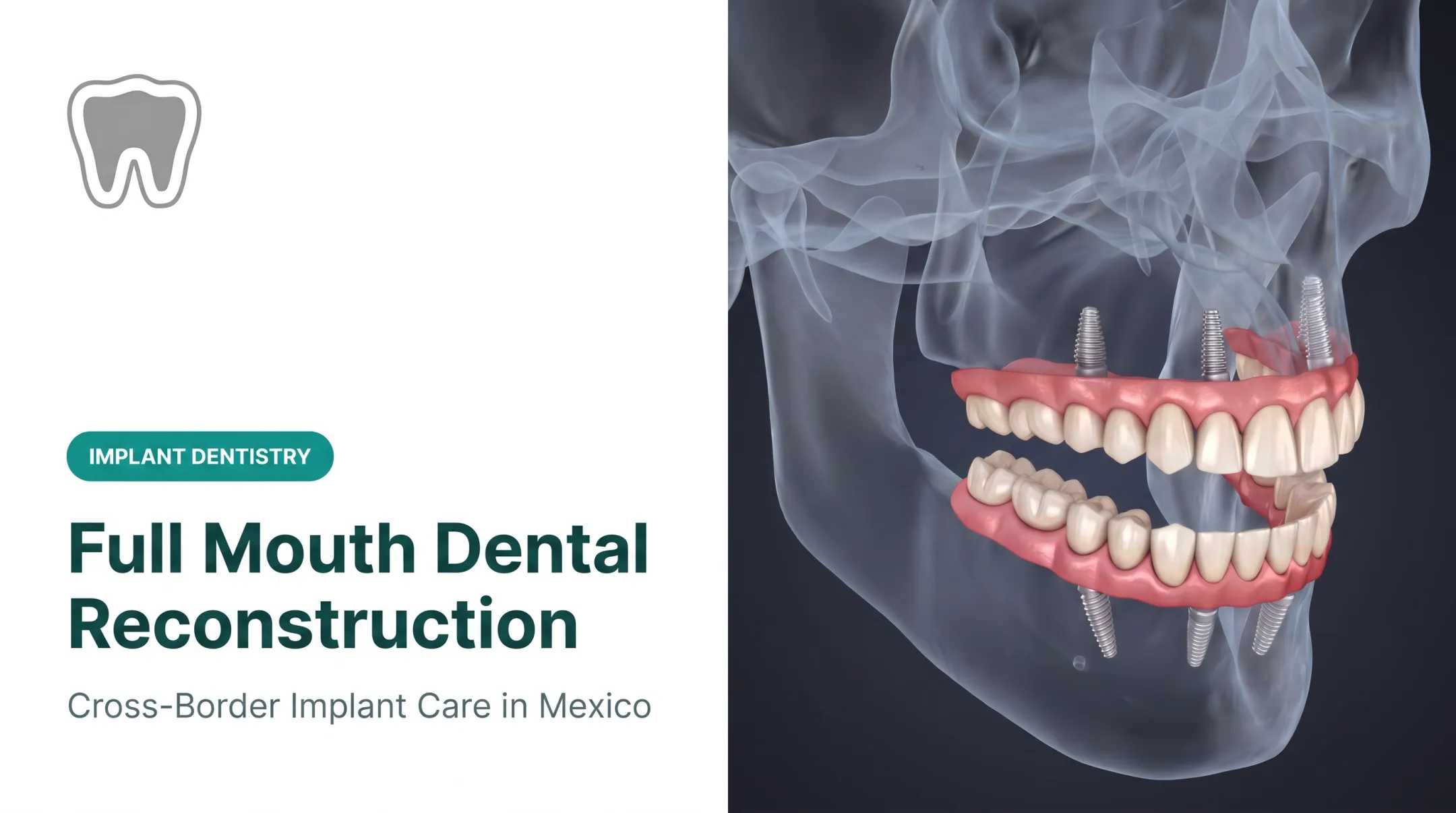
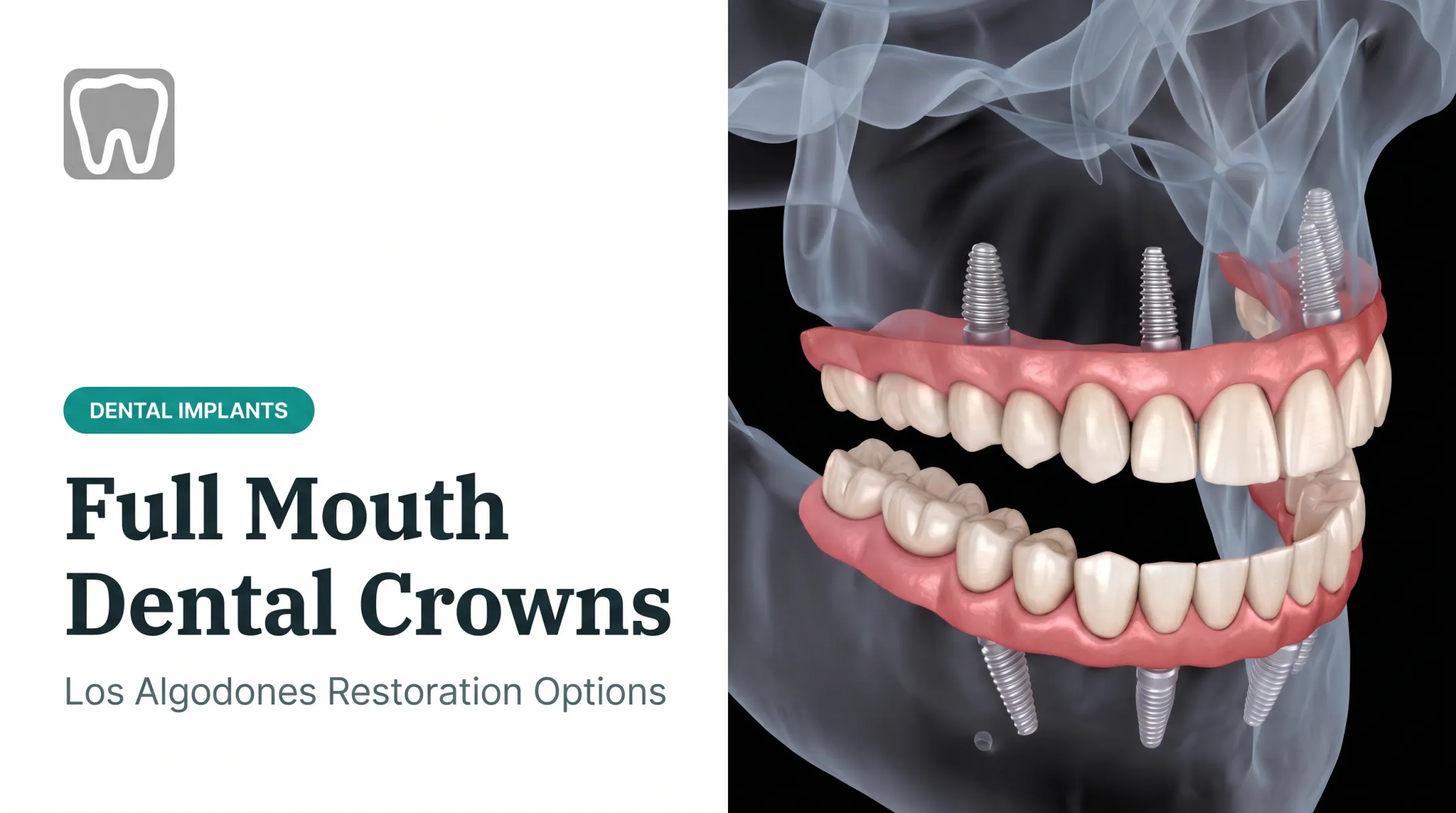
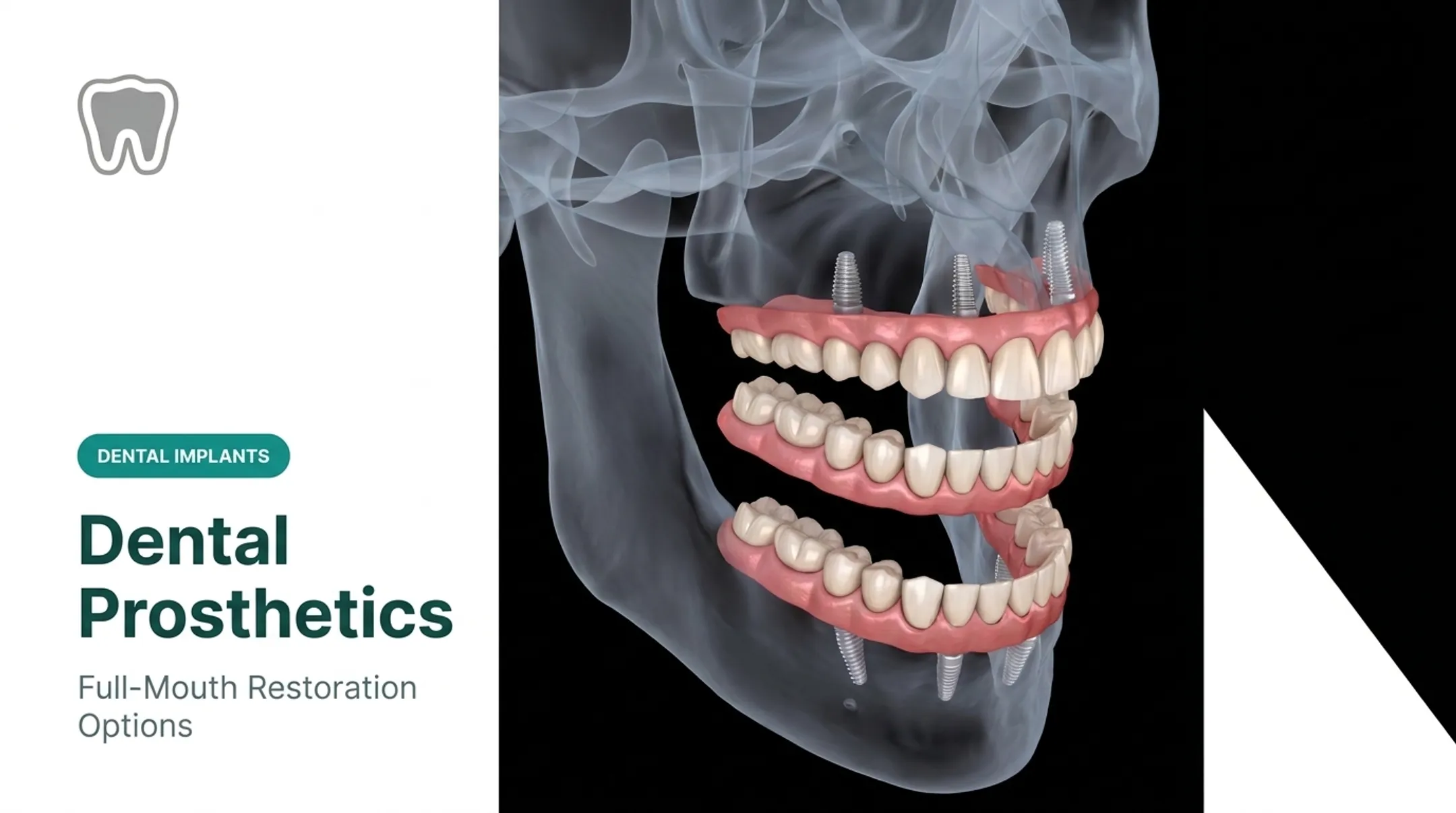
| A typical full-mouth reconstruction might combine implant placement (All-on-4, All-on-6, or the patented 3-ON-8™ protocol), fixed zirconia bridges, and periodontal therapy to clear infection before implants go in. |

Is It Possible to Reconstruct Teeth? Common Types of Procedures
Short answer: yes, for the vast majority of patients, even in advanced cases.
A 2014 systematic review found full-arch prosthesis survival rates between 93.3% and 100%, with supporting implants surviving at 87.89% to 100% over 5-10 years (PubMed). Modern implant dentistry has made "unfixable" a much smaller category than it used to be.
Dental Implants: The Gold Standard
Implants replace the tooth root itself, not just the visible crown. Options scale with the extent of tooth loss:
- Single implant - replaces one missing tooth without touching neighboring teeth
- All-on-4 - four implants per arch for moderate bone loss, denture wearers, or failing teeth
- All-on-6 - six implants per arch for patients with more available bone who want greater stability
- 3-ON-8™ - Dr. Moguel's patented protocol: eight implants per arch supporting three independent zirconia bridges
With the segmented 3-ON-8™ design, a problem in one section can be fixed without replacing the entire arch.

Other Restorative Options
- Crowns and bridges - strengthen a damaged tooth or replace one using adjacent teeth for support
- Partial or full dentures - removable alternatives for extensive tooth loss where implants aren't feasible or desired
- Periodontal therapy and bone grafting - often prerequisites when gum disease or bone loss threaten implant success
Bone grafting typically requires 3-4 months to heal. Sinus grafting can take 6-9 months, though simultaneous implant placement is sometimes possible when existing bone is stable enough.
The Full Mouth Reconstruction Process: Step-by-Step
Full reconstruction follows a predictable sequence, even though every treatment plan is customized.
- Diagnostic consultation — 3D Cone Beam CT and digital scans map bone density, nerve pathways, and bite alignment
- Preparatory procedures — extractions, bone grafting, or sinus lifts when bone volume is insufficient
- Implant placement — surgery under IV sedation, often with a temporary fixed bridge the same day
- Healing and osseointegration — implants fuse with the jawbone over the following months
- Final restoration — permanent zirconia or ceramic bridges are custom-milled and attached

The American College of Prosthodontists recommends CBCT for pre-implant assessment, sinus augmentation planning, and full-arch cases (ACP).
Same-Day Fixed Teeth vs. Staged Treatment
Same-day fixed full-arch treatment is available when implants can be adequately stabilized. Patients leave with a temporary fixed bridge, not the final restoration. With careful screening, same-day protocols achieve success rates above 95%.
A staged approach becomes necessary when substantial bone loss requires grafting first. Classic unloaded healing periods run 3-4 months in the lower jaw and 6-8 months in the upper jaw, per peer-reviewed research (PMC).
How Long Does Teeth Reconstruction Take? What to Expect During Recovery
Timing depends heavily on scope. A single-tooth implant can often be placed in one surgical visit, but final restoration still follows healing. Full-mouth reconstruction, including healing time, typically spans 3-6 months from placement to permanent teeth.
Immediate Recovery (First Week)
- Expect swelling and mild discomfort similar to a simple extraction
- Stick to soft foods to protect healing implant sites
- Finish any prescribed antibiotics for the full course
- Use an antibacterial mouth rinse, often twice daily for two weeks
- Allow gum tissue about a week to settle
Longer-Term Healing
Osseointegration—the fusion of titanium implants to bone—usually takes 3-6 months. Cleveland Clinic reports a broader jawbone fusion range of 3-9 months (Cleveland Clinic).
Follow-up visits in this window confirm the implants are stable before permanent restorations are attached.
At What Point Are Teeth Not Fixable? Knowing When Extraction Is Necessary
Not every tooth can be saved, and knowing the signs helps set realistic expectations.
The American Association of Endodontists identifies several red flags that generally point to extraction rather than restoration:
- Vertical root fractures — a longitudinal crack through the root structure, usually not salvageable
- Insufficient bone support — less than 30% remaining support, leaving a site that cannot be cleaned or maintained without recurring infection
- Severe structural loss — no remaining tooth structure above the gumline, or damage deep into the root dentin
- Persistent endodontic infection that doesn't respond to retreatment
A board-certified periodontist evaluates candidacy using clinical exams alongside imaging, sometimes 3D CBCT scans when conventional X-rays are inconclusive. The assessment weighs periodontal, restorative, and endodontic factors together, not just one isolated symptom.

Even when a tooth is beyond saving, extraction followed by implant placement can restore chewing function and a natural-looking smile.
Cost Considerations: Why Patients Travel to Mexico for Reconstruction
Cost is often the deciding factor that pushes patients to look south of the border. The American Academy of General Dentistry reports US patients can expect 40-65% savings in Mexico, with Los Algodones specifically averaging roughly one-third of comparable US prices (AGD).
At Dr. Moguel's clinic in Los Algodones, current "from" pricing includes:
- Single-tooth implant: from $1,500
- All-on-4: from $6,000
- All-on-6: from $8,000
- 3-ON-8™ full-mouth reconstruction: from $15,000
Quality Isn't Sacrificed for Savings
Savings at this clinic still rest on documented credentials and materials. Dr. Moguel is board-certified by both the American Dental Association and the Asociación Dental Mexicana, holds specialty certification through the Consejo Mexicano de Periodoncia, and has placed over 17,000 implants across 38+ years of practice.
His clinic uses FDA-approved implant systems from Nobel Biocare, Straumann, and MegaGen, not generic or unbranded hardware.

Additional practical advantages:
- Free, no-obligation consultations reviewed personally by Dr. Moguel
- Lifetime warranty on implant hardware, with a five-year warranty on crowns and bridges
- Itemized documentation with ADA CDT procedure codes to support insurance reimbursement claims
- Clinic location roughly a three-minute walk from the Andrade, California border crossing
Board credentials, published “from” pricing, and a border crossing minutes from the clinic make the cost comparison easier to act on—not just easier to read.
Frequently Asked Questions
Is it possible to reconstruct teeth?
Yes. Most damaged or missing teeth can be reconstructed using modern implants, crowns, and full mouth reconstruction techniques, even in advanced cases involving significant bone loss.
How long does it take to reconstruct a tooth?
A single tooth may take just a few weeks. Full mouth reconstruction typically spans 3-6 months due to healing and osseointegration time.
At what point are teeth not fixable?
Teeth become unfixable when the root fractures below the gumline, bone support drops below sustainable levels, or infection persists despite repeated treatment attempts.
What is the difference between a dental crown and a full mouth reconstruction?
A crown treats one damaged tooth. Full mouth reconstruction addresses the entire mouth's function, combining implants, bridges, and periodontal treatment as needed.
Does dental insurance cover full mouth reconstruction?
Coverage varies widely and often only partially applies, with many plans classifying implants as major procedures with lower reimbursement rates. This gap is a major reason patients seek treatment in Mexico.
How painful is full mouth dental reconstruction?
Modern sedation, including IV conscious sedation monitored by an anesthesiologist, keeps patients comfortable during surgery. Postoperative discomfort is generally mild, comparable to a routine tooth extraction.