
Implant overdentures are usually pitched as a technical upgrade — more implants, better attachments, stronger materials. But the real story is simpler: patients chew better, talk without worrying, and stop thinking about their teeth all day long.
This article breaks down why implant overdentures matter in practice, the specific benefits backed by clinical research, and how to get the most value if you're considering treatment.
TL;DR
- Implant overdentures anchor a removable denture to implants, improving stability, chewing force, and comfort versus traditional dentures
- Patients gain better chewing efficiency, slower bone loss, clearer speech, and higher satisfaction in clinical studies
- Lower arches typically need two implants; upper arches often need four, depending on bone quality
- US and Canadian patients can get board-certified periodontist care at Dental Implants in Mexico in Los Algodones for roughly 60–70% less than home prices
What Are Dental Implant Overdentures?
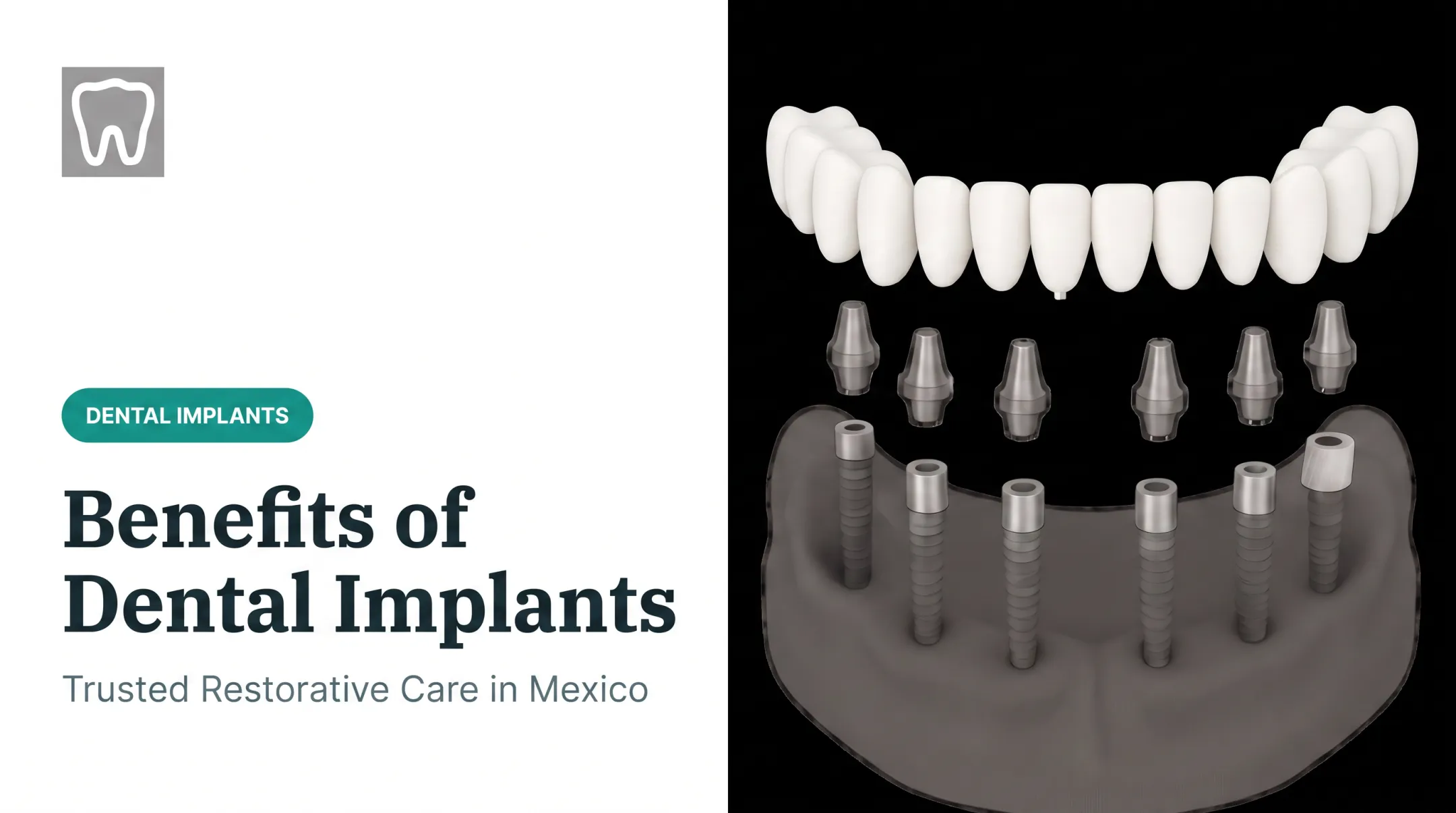
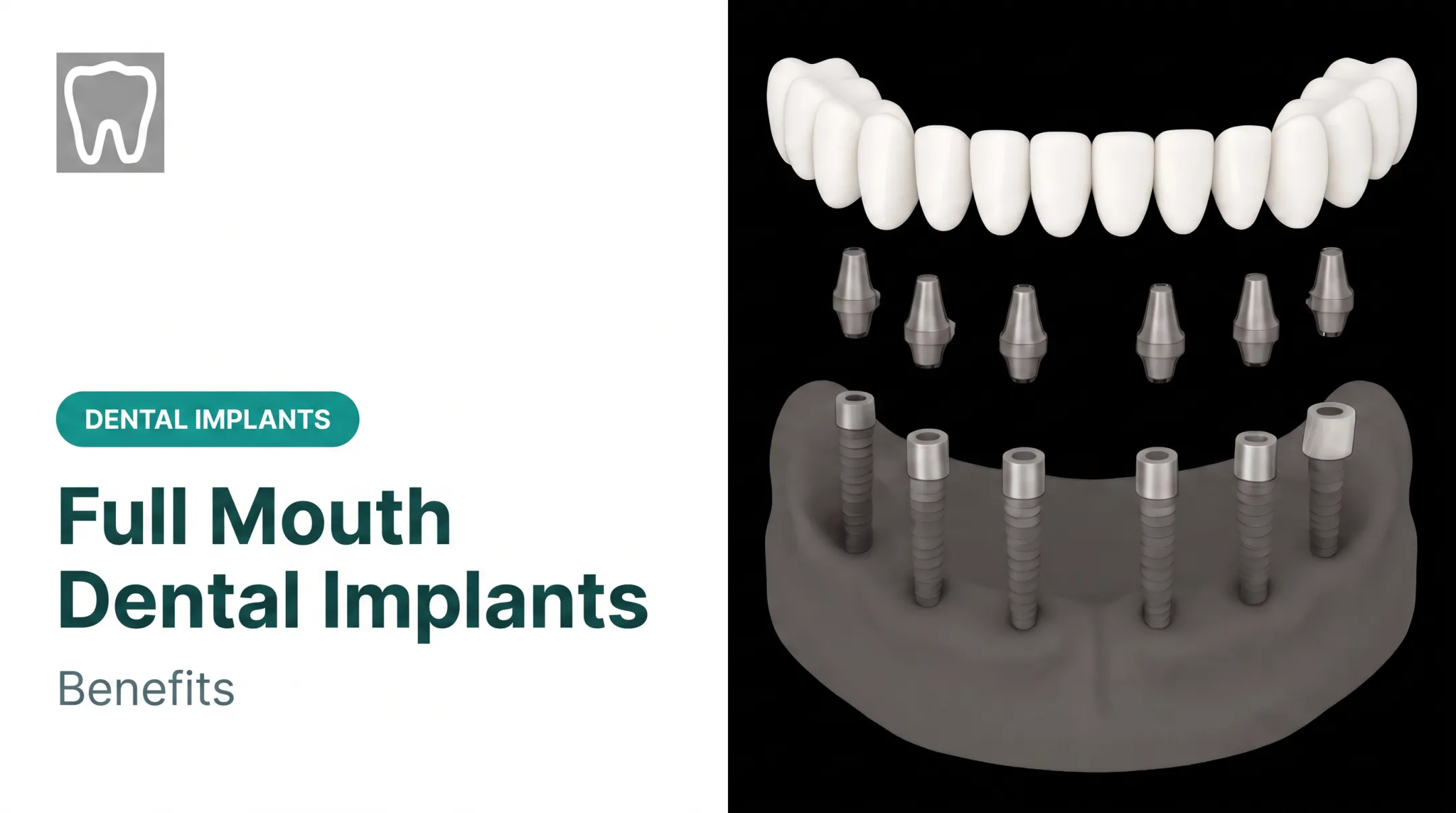
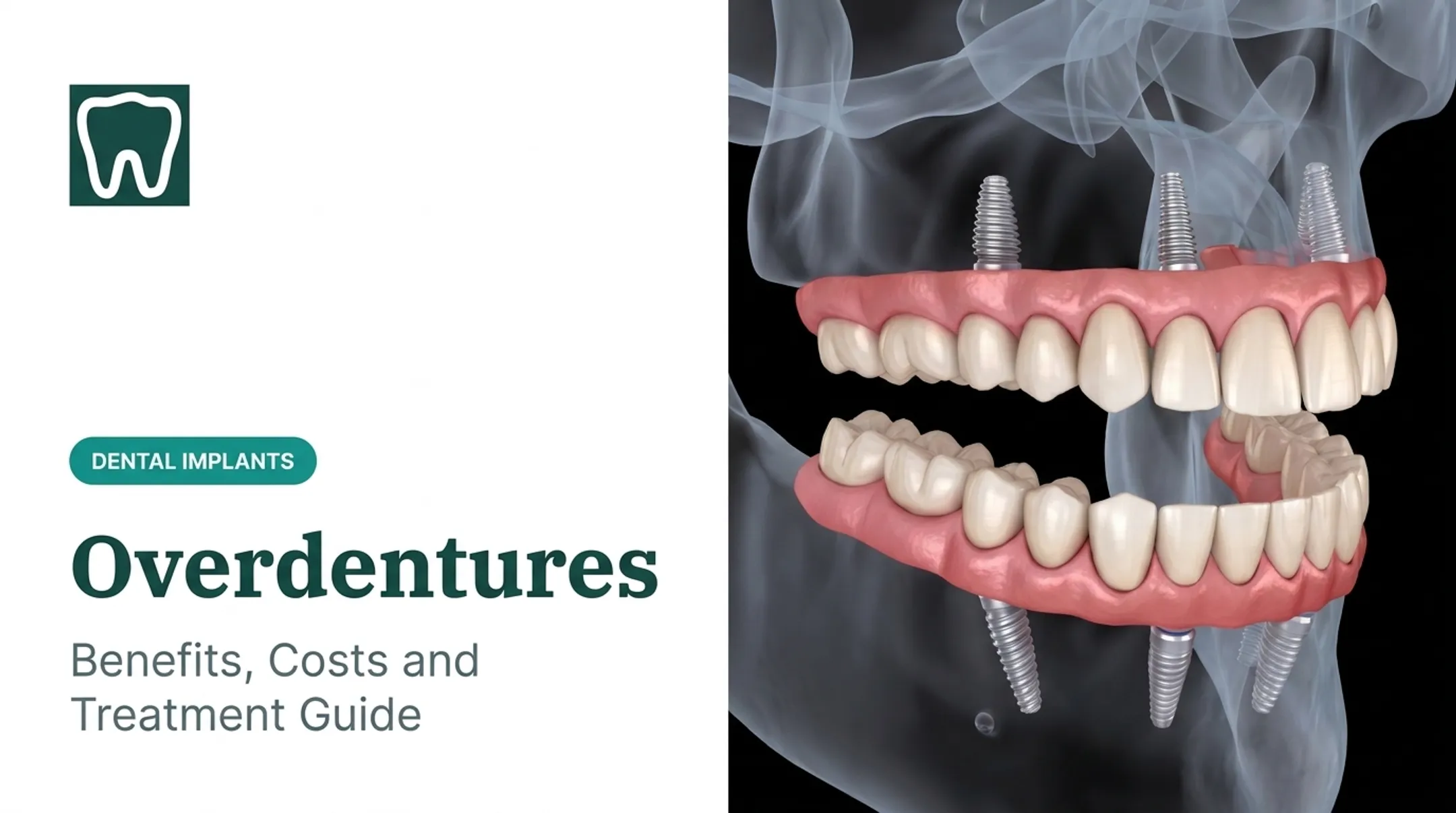
An implant overdenture is a removable denture that clips or snaps onto implants placed in the jawbone, instead of resting loosely on the gums like a traditional plate.
Implant overdentures are typically prescribed for:
- Patients with no remaining teeth in an arch (edentulous)
- Patients with several missing teeth who want more security than a conventional denture offers
- Patients who want removable cleaning convenience with implant-level stability
This functional upgrade restores the ability to chew, speak, and smile with confidence, without the anxiety of a denture coming loose mid-conversation.
Key Advantages of Dental Implant Overdentures
The benefits below aren't abstract. They're the measurable, everyday differences patients notice within weeks of treatment, tied to outcomes people actually care about: eating, comfort, long-term bone health, and confidence.
Advantage 1: Improved Stability and Chewing Function
Once implants anchor the denture, it no longer floats on the gums. Attachment systems — ball, locator, or bar-retained — snap the denture into place while still allowing it to be removed for cleaning. Why this matters: A 2017 clinical study published in the Journal of Indian Prosthodontic Society found that mean bite force increased from 62.90 N with a conventional denture to 132.20 N with an implant overdenture, a jump of over 110%. Patients also needed fewer chewing strokes (40 versus 69) to break down the same piece of food, and general satisfaction scores rose from 5.42 to 7.83 on a 10-point scale. Dental Implants in Mexico cites chewing-capacity gains of up to 300% versus traditional dentures for snap-on patients. Ask your specialist how that range applies to your case. Outcomes impacted: bite force, food choices, speech clarity, denture movement. This matters most for patients with a loose lower denture, or anyone who's quietly given up steak, apples, or corn on the cob.

Advantage 2: Slows Jawbone Loss and Preserves Facial Structure
Missing teeth cause the jawbone to resorb over time. That is why faces can look sunken after years without teeth or implants. Implants transmit chewing forces into the bone the way natural roots do, helping maintain bone volume. Why this matters:
- A 2003 comparative study found posterior mandibular ridge height reduction over five years averaged 1.63 mm with conventional dentures versus 0.69 mm with implant overdentures
- A 2022 study tracking 63 patients per group found significantly less alveolar bone loss in the implant-overdenture group at multiple sites, both short and long term
- Not every review finds resorption fully halted: a 2021 systematic review saw no significant difference for two-implant overdentures, though four-implant designs performed better Slower bone loss means fewer future relines, less denture instability over time, and better long-term facial support. When this matters most: younger edentulous patients or anyone planning for decades of oral health, not just an immediate fix.

Advantage 3: Improved Comfort, Speech, and Confidence in Daily Life
A stable, well-fitted overdenture stops the rubbing and sore spots common with loose conventional dentures. Less movement also means clearer articulation of sounds dentures typically distort. Why this matters: The McGill Consensus Statement positions mandibular two-implant overdentures as the first-choice standard of care for edentulous patients. A 2016 meta-analysis of 441 patients found a pooled Oral Health Impact Profile improvement of -30.72 points in favor of implant overdentures, with significant gains across nearly every quality-of-life category measured.
Sandra P., a patient who received four lower-jaw implants supporting a snap-on denture after years of slipping dentures and gum sores, described the result simply: "solid, stable, and pain-free." Outcomes impacted: satisfaction scores, social confidence, sore spot frequency, daily comfort.
Advantage 4: Cost-Effective Compared to Fixed Full-Arch Solutions
Overdentures typically use fewer implants than fixed bridges, which reduces surgical complexity and overall cost. That lower barrier makes implant-supported treatment accessible to patients who might otherwise stick with an ill-fitting denture. At Dental Implants in Mexico, listed starting prices illustrate the gap:
| Treatment | Starting Price (USD) |
|---|---|
| Implant overdentures | $3,500 |
| All-on-4 | $8,000 |
| All-on-6 | $12,000 |
| 3-ON-8™ | $16,000 |
| That's a $4,500 to $12,500 difference depending on which fixed option you're comparing against. Free, no-obligation consultations and transparent treatment plans help patients understand exact costs before committing to anything. | |
| When this matters most: patients weighing overdentures against fixed full-arch options, or anyone hesitant about implant treatment costs in general. |

What Happens When Overdentures Are Skipped or Delayed
Sticking with an ill-fitting traditional denture, or postponing implant treatment altogether, carries real consequences:
- Continued bone resorption: most ridge reduction happens in the first three to six months after tooth loss, which can complicate future implant placement
- Ongoing discomfort: sore spots, adhesive dependence, and diet restrictions persist
- Reduced confidence: avoiding social meals or hesitating to speak in public settings
- Higher future costs: prolonged bone loss can mean bone grafting becomes necessary before implants are even possible
Delaying care can limit the treatment options still available later.
How to Get the Most Value from Implant Overdentures
You get the most value from implant overdentures when you:
- Choose an experienced, board-certified implant specialist for accurate treatment planning and precise implant placement
- Maintain a consistent home-care routine: clean attachments and denture surfaces daily to prevent plaque buildup around the implants
- Attend regular check-ups to catch worn clips, loosening attachments, or bone changes before they turn into costly repairs

Dr. José Moguel, a board-certified periodontist with over 38 years of clinical experience and more than 17,000 implants placed, notes that basic professional cleanings are required to keep the clinic's lifetime implant warranty active. Follow-up care protects your investment; it is not optional extra credit.
Conclusion
The real value of implant overdentures shows up after treatment: restored stability, preserved bone, and confidence when you eat and speak. Those gains build over time when you keep up with maintenance and professional follow-up.
If cost or uncertainty has delayed treatment, a free, no-obligation consultation is the fastest way to learn whether you're a candidate and which attachment system fits your needs.
Frequently Asked Questions
How long do dental implant overdentures last?
The implants themselves can last many years, even decades, with proper care. Attachment components like clips may need periodic replacement, and the denture base may require relining over time.
What are the different types of dental implant overdentures?
The main options are ball/stud, locator, and bar-retained attachment systems. The right choice depends on bone volume, which arch is being treated, and patient preference.
What do dental implant overdentures look like?
They look like conventional dentures, with white prosthetic teeth and pink gum-colored acrylic. The difference is underneath: they snap securely onto implants instead of resting loosely on the gums.
How many implants are needed for an overdenture?
Lower arches typically need two implants, while upper arches often require four due to softer bone. Exact numbers depend on individual bone quality and are confirmed during consultation.
Are implant overdentures painful to get?
Your dentist performs the procedure under local anesthesia, with sedation options available for anxious patients. Most people report only mild tenderness for 2-3 days afterward, managed with over-the-counter pain relievers.
How much do implant overdentures cost compared to traditional dentures or fixed bridges?
Overdentures cost more upfront than traditional dentures but considerably less than fixed full-arch solutions like All-on-4 or All-on-6. A free, personalized consultation provides an accurate, itemized estimate.