
Zirconia has earned a reputation as one of the strongest, most biocompatible materials in restorative and implant dentistry. It doesn't decay, resists chipping better than most ceramics, and blends in with your natural teeth. But "durable" isn't the same as "indestructible."
How long your crown lasts depends on the type of zirconia used, your bite habits, and where the crown sits in your mouth. Let's look at the actual clinical data.
Key Takeaways
- Zirconia crowns typically last 15-20+ years, with strong 10-15 year clinical survival rates
- Monolithic zirconia is the toughest type, ideal for molars and heavy chewing forces
- Longevity hinges on hygiene, bruxism control, and a precise clinical fit
- Night guards and regular checkups can extend a crown’s lifespan
How Long Do Zirconia Crowns Really Last? (Survival Rates Explained)
Most zirconia crowns last 15 to 20 years, and some well-maintained ones keep going well beyond that. Lifespan is a range built from real clinical follow-up, not a single number.
Here's what the research actually shows:
- A 2025 retrospective study of posterior crowns found 86.0% survival at 10 years for monolithic zirconia, compared to 71.0% for porcelain-fused zirconia
- A 2023 study following veneered zirconia crowns for more than 10 years reported 92.9% survival, though technical issues like chipping and marginal gaps showed up in 54% of crowns
- A 2024 study tracking zirconia-based crowns for 15 years found cumulative survival of 72.36% on natural teeth and 69.11% on implants, with a 28.33% overall complication rate (mostly fracture and chipping)
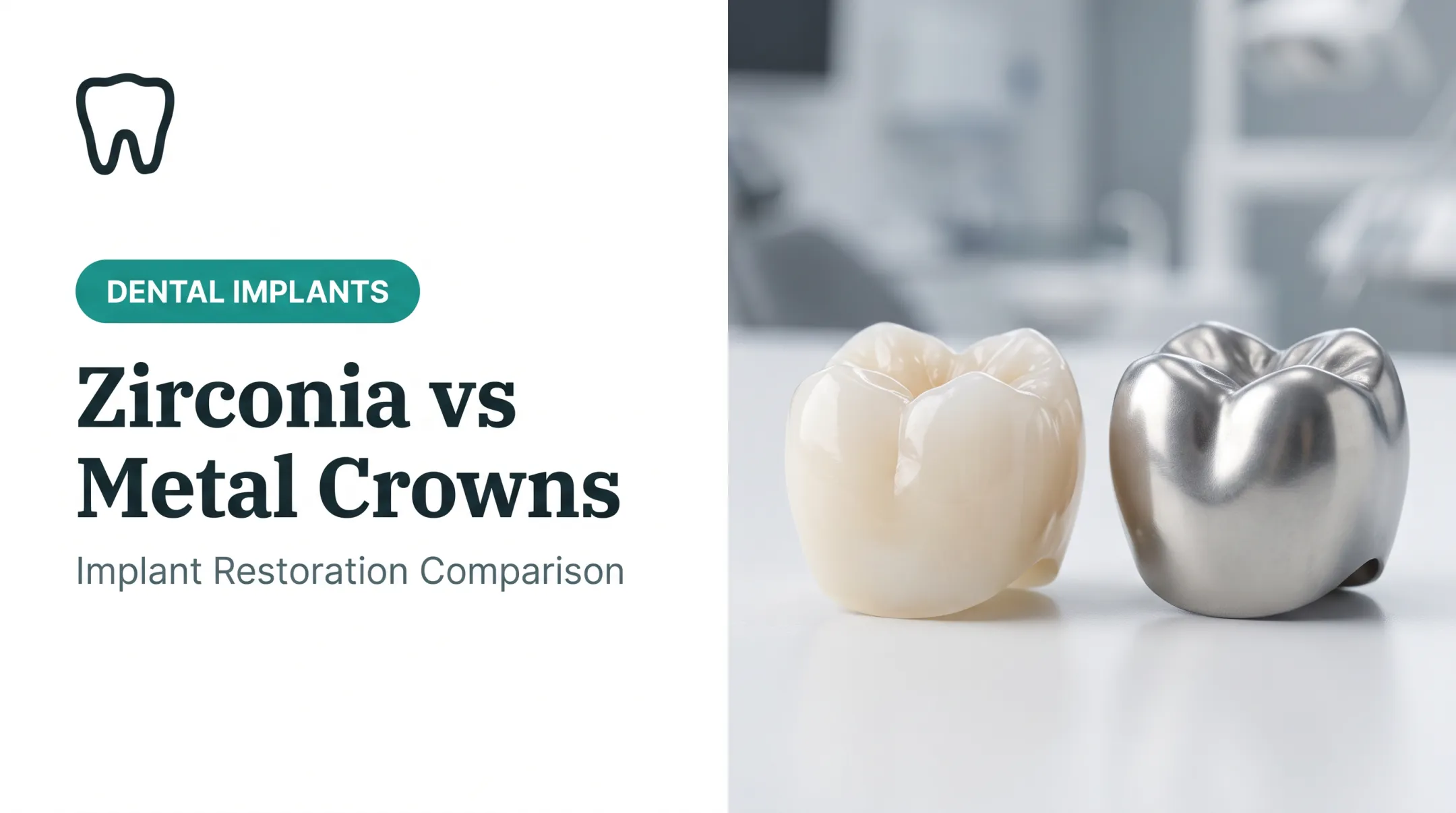
Monolithic (single-block) zirconia is the newer generation, and five-year data already shows failure-free survival above 93%. That strength comes from skipping the separate porcelain veneer layer that often chips. Because monolithic crowns remove that weak point, they are expected to outlast older layered designs long-term, though full 20-year monolithic data is still years away.

Is a 30-Year Zirconia Crown Realistic?
Patients ask this a lot, and the honest answer is: maybe, but it's not guaranteed by current evidence. The longest published studies only track outcomes to 15 years. A 30-year crown is plausible only under close-to-perfect conditions: excellent hygiene, no bruxism, and a precise initial fit. Treat 30 years as a best-case ceiling, not an expectation.
Zirconia vs. Other Crown Materials: A Quick Comparison
Here’s how zirconia compares with other common crown materials on durability and everyday trade-offs:
| Material | Typical Survival | Notes |
|---|---|---|
| Zirconia (monolithic) | ~93% at 5 years | Strong, chip-resistant, best for molars |
| PFM (metal-ceramic) | ~95% at 5 years | Reliable, but porcelain can chip at the margin |
| Feldspathic porcelain | ~91% at 5 years | Best aesthetics for front teeth, weaker structurally |
| High-gold PFM | ~97% at 10 years | Extremely durable but metallic appearance |
Gold rivals zirconia for durability. Some gold restorations hold up for decades. But gold doesn’t blend in. For a molar nobody sees, that’s fine. For anything visible, zirconia wins on looks without sacrificing much strength.

6 Key Factors That Affect Your Crown's Lifespan
Material Quality and Crown Type
Monolithic zirconia is solid ceramic all the way through, with nothing to chip off. Layered (veneered) zirconia has a porcelain overlay for better aesthetics, but that layer is the weak point. For back teeth taking heavy chewing loads, monolithic is the safer bet.
Occlusion and Fit
A crown that sits even slightly high concentrates pressure on one spot every time you bite. Over months, that uneven load can crack even a strong material. Proper bite adjustment at placement is essential.
Oral Hygiene Habits
Zirconia itself can't decay. But plaque still builds up at the crown's margin, where it meets your natural tooth. Left unchecked, that leads to decay underneath the crown or gum recession. Those are problems with your tooth, not the material.
Bruxism (Teeth Grinding or Clenching)
This is the single biggest threat to any crown. Grinding puts repetitive, forceful stress on the ceramic. One 5-year clinical study found that patients using a night guard kept 92% of their crowns functional, compared to just 80% without one. A simple guard sharply reduces your fracture risk.

Supporting Structure: Natural Tooth vs. Implant
Crowns on natural teeth get a slight survival edge because the periodontal ligament absorbs some chewing force like a shock absorber. Implant-supported crowns sit on a rigid post with no such cushioning, so they transmit more force directly.
Dentist's Skill and Lab Quality
Correct tooth preparation, precise cementation, and proper polishing all affect how long a crown lasts. A rushed prep or an ill-fitting lab-made crown sets a restoration up to fail early, no matter how good the material is.
How to Extend the Life of Your Zirconia Crown
A few steady habits protect both the crown and the tooth underneath:
- Brush twice daily and floss around the crown margin — this is where decay of the underlying tooth typically starts
- Get professional cleanings twice a year — your dentist can catch early issues before they turn into costly repairs
- Avoid biting ice, hard candy, or bone — zirconia is tough, but sudden hard impacts can still chip it
- Wear a night guard if you grind or clench — even occasional pressure can stress the restoration

Stay consistent with these steps and you give the crown—and the tooth it covers—the best shot at lasting as long as it should.
Signs Your Crown May Need Attention (and Can It Be Removed Safely?)
Even durable zirconia crowns can develop problems over time. Watch for:
- Looseness or a shifting feeling when you bite
- New sensitivity to hot or cold
- Visible cracks or chips
- A bite that suddenly feels "off"
Any of these warrants a dental visit rather than a wait-and-see approach.
Can a dentist remove a zirconia crown without breaking it?
Usually yes, but removal is harder than with other crown materials. Zirconia's hardness means dentists typically section it with fine diamond burs, cutting slots from the gumline up through the biting surface before dislodging the pieces.
In most cases the tooth underneath stays intact, though the crown itself is often sacrificed in the process.
Getting High-Quality, Long-Lasting Zirconia Crowns Without the High Cost
Here's the thing about crown longevity: it's decided at placement, not afterward. The precision of the digital scan, the milling accuracy, and the dentist's technique all set the ceiling for how long your crown will last. No amount of good home care fixes a poor initial fit.
At Dental Implants in Mexico, our Los Algodones clinic is led by Dr. José Moguel, a board-certified periodontist with over 38 years of clinical experience and more than 17,000 implants placed.
We custom-mill zirconia crowns in-house so the fit is precise from day one:
- CAD/CAM milling technology
- 3D Cone Beam CT imaging
- Premium FDA-approved materials
Patients from the US and Canada typically save 60-70% compared to home-country pricing, without sacrificing quality. You get the same American-standard equipment and the same attention to detail. We also offer a free, no-obligation consultation to map out your treatment before you commit.
Frequently Asked Questions
Can zirconia crowns last 30 years?
Typical lifespan is 15-20 years. With excellent hygiene and no bruxism, a crown might approach 30 years, but long-term clinical data for that span is limited.
Can a dentist remove a zirconia crown without breaking it?
Dentists use specialized diamond burs and sectioning techniques to remove zirconia safely in most cases. Because zirconia is so hard, the crown itself is sometimes sacrificed during removal.
What is the most common reason zirconia crowns fail early?
Fracture and chipping, usually caused by untreated bruxism or a poorly adjusted bite. Both put uneven, repeated stress on the crown.
Are zirconia crowns better than porcelain crowns for back teeth?
Yes. Zirconia's superior strength makes it the preferred choice for molars, which absorb far higher bite forces than front teeth.
Do zirconia crowns need special care compared to natural teeth?
Care is largely the same: brushing, flossing, regular checkups. The main difference is paying extra attention to the gumline margin, where decay of the underlying tooth can start.
How much can I save getting zirconia crowns in Mexico versus the US?
Patients typically save 60-70% at Dental Implants in Mexico compared to US pricing. A free consultation is available before you commit to treatment.