
Introduction
Missing a back tooth doesn't show when you smile, so it's easy to ignore. But molars and premolars carry most of your chewing load, and skipping replacement can cost you more than you think.
More patients in the US and Canada are researching back tooth implants right now. Rising dental costs and a better understanding of long-term bite health are pushing this trend.
This article breaks down the practical benefits of replacing back teeth with implants. We'll also cover how patients access this care affordably, including board-certified treatment in Mexico.
TL;DR
- Back teeth implants restore chewing strength, prevent bone loss, and stop neighboring teeth from shifting
- Implants replace the tooth root, not just the crown, making them the only option that preserves jawbone
- Patients can save an estimated 60-70% by getting board-certified implant care in Los Algodones, Mexico versus US pricing
- Delaying treatment leads to bone loss, bite misalignment, and pricier procedures down the road
What Are Dental Implants for Back Teeth?
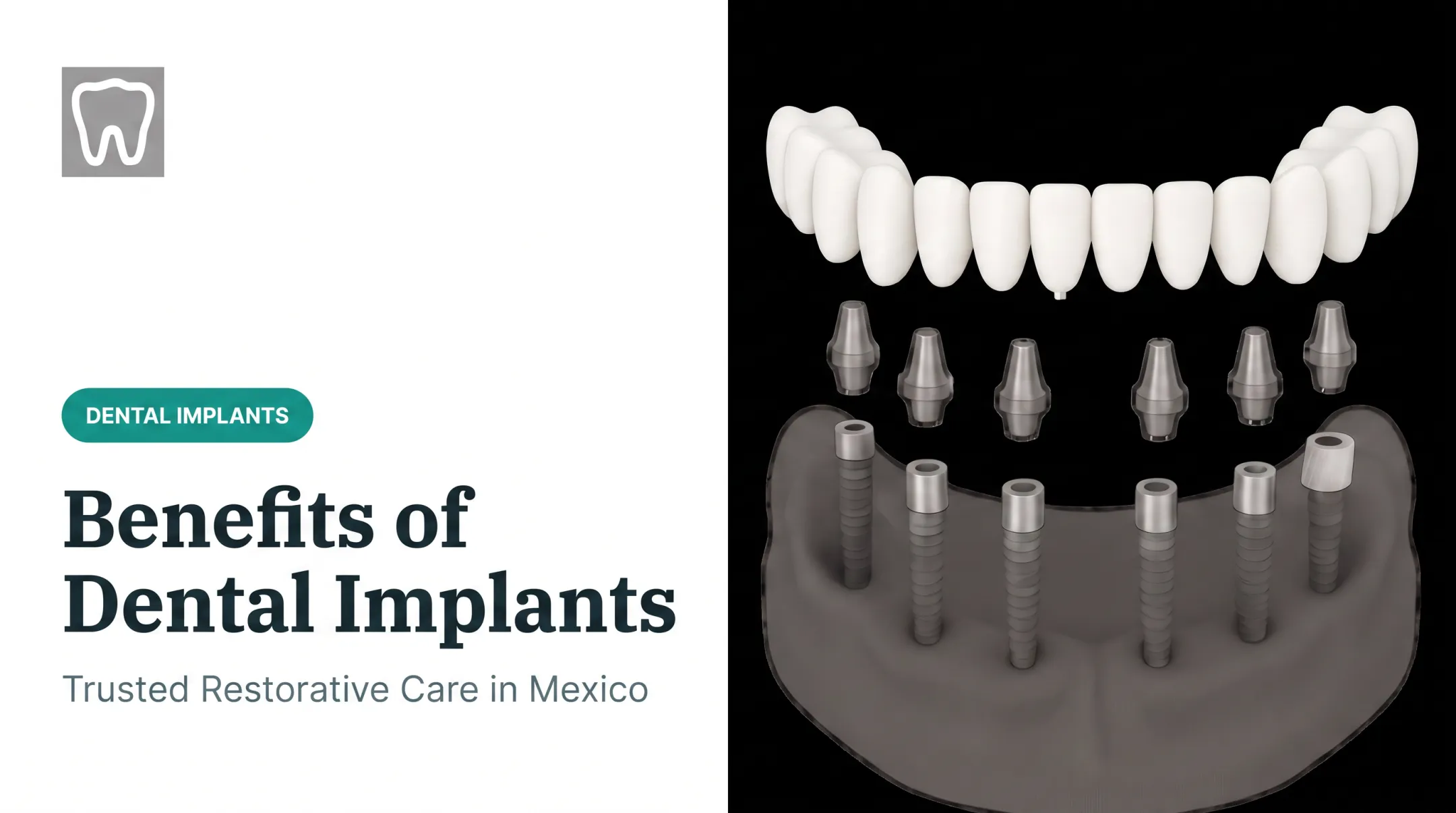
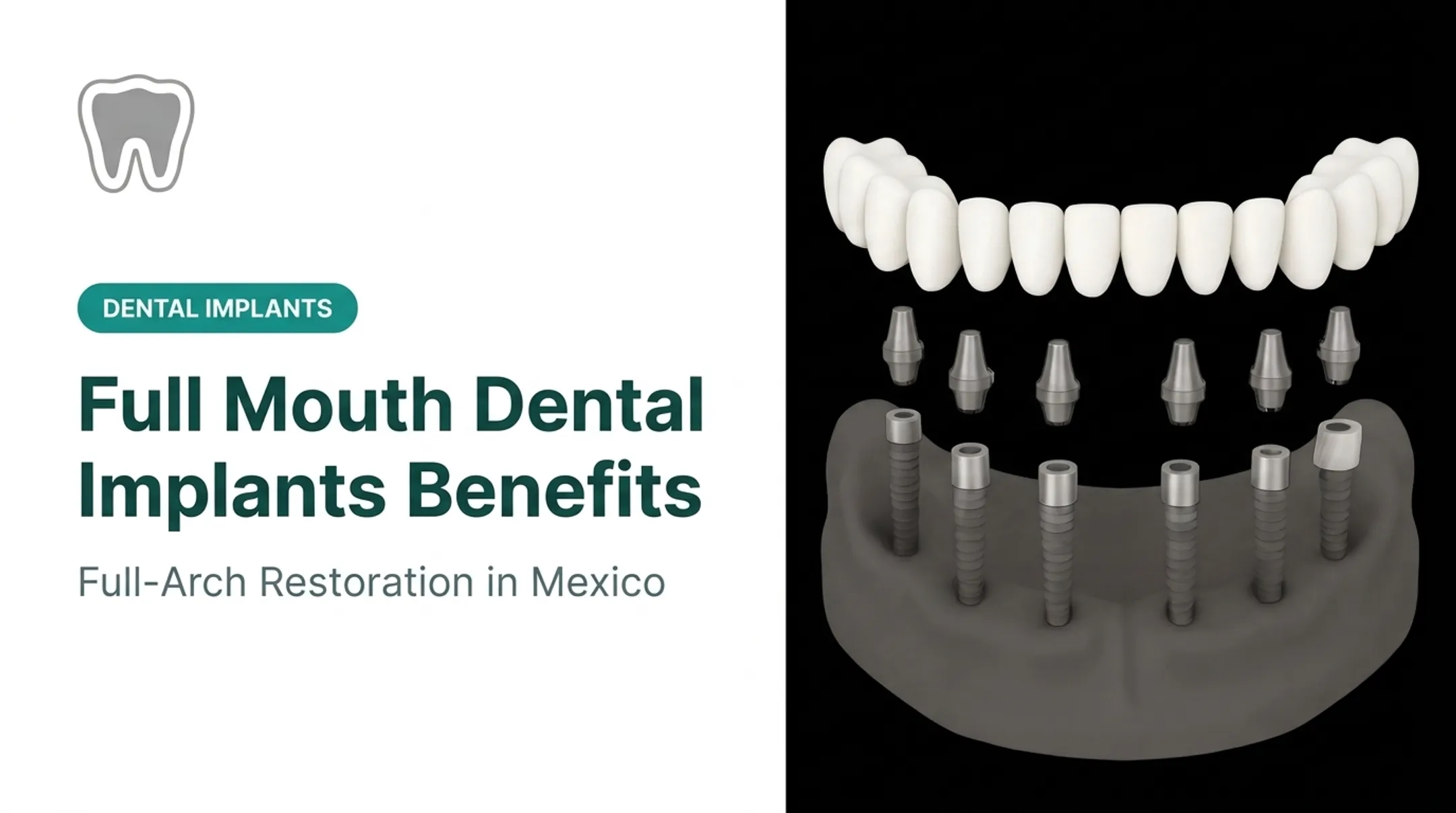
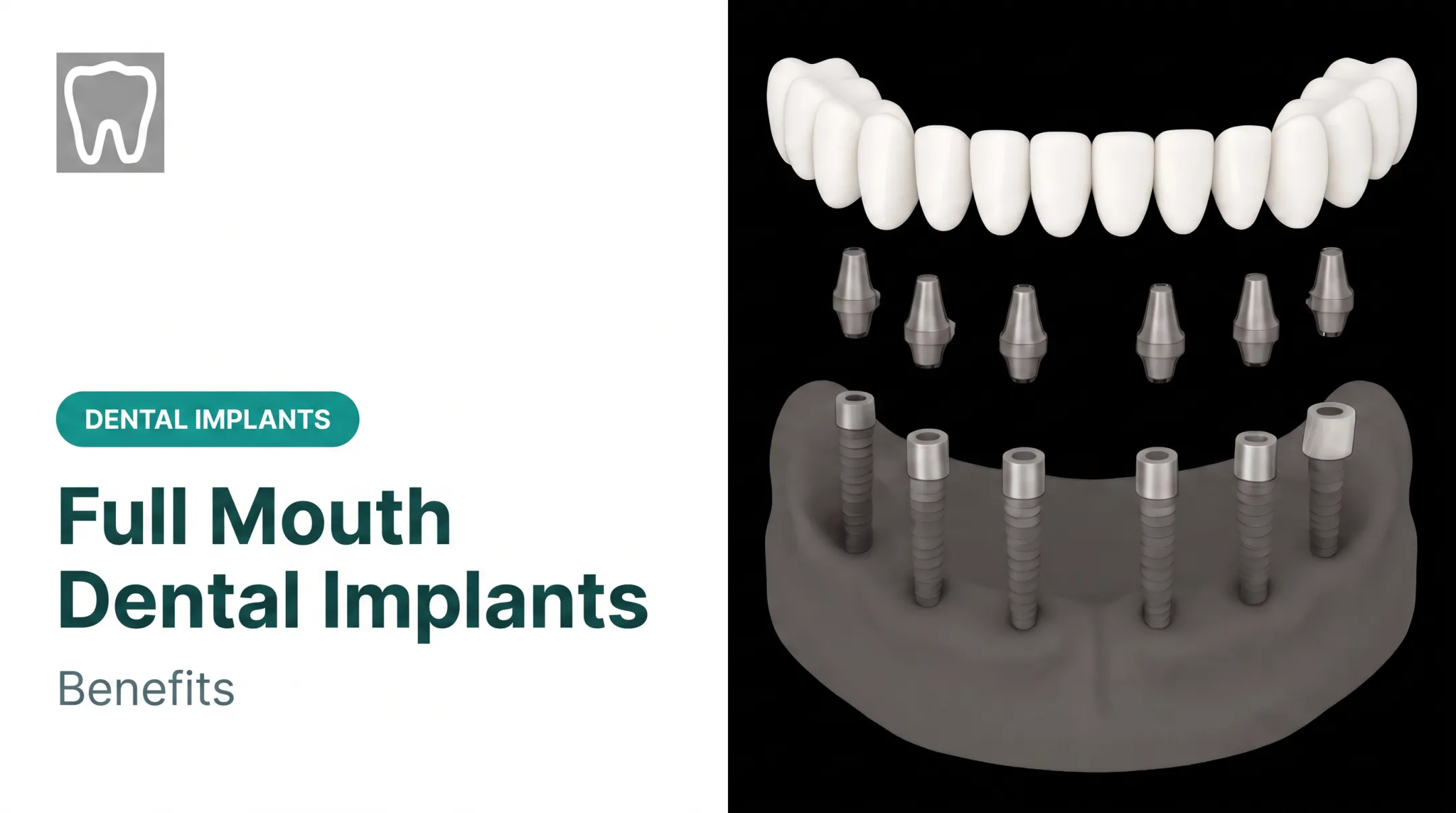
A back tooth implant replaces two parts:
- The root — a titanium post set in the jawbone
- The visible tooth — a crown matched to your bite
Bridges and dentures only replace what you see. They do not replace the root, so the jawbone stays unsupported underneath.
Molars and premolars need wider, sturdier implants than front teeth. Why? They absorb the bulk of your chewing force every time you eat.
A back tooth implant is built for long-term function. It keeps your jaw working and your bone structure intact for decades, far beyond simply filling a gap.

Key Benefits of Dental Implants for Back Teeth
Each benefit ties to something patients actually feel: how well they chew, how their face holds up, whether their bite stays straight, and what they spend over a lifetime.
Restored Chewing Function and Bite Strength
Molars do the heavy lifting during digestion, grinding and crushing food before it goes any further. Lose one, and that job gets harder.
Implants restore near-natural bite force. Removable dentures, by contrast, can shift mid-meal.
A clinical study found implant-supported overdentures produced bite forces of 150-170 N, more than double the 60-80 N measured with conventional dentures. The same research showed implant wearers needed just 40 chewing strokes to break down food to the same particle size that took 69 strokes with dentures.

Why does this matter beyond comfort? Research on older adults with fewer teeth found lower intake of fiber, protein, and several key micronutrients compared to adults with more natural teeth. This benefit hits hardest for patients who've already started avoiding steak, nuts, or raw vegetables since losing a molar.
Jawbone Preservation and Facial Structure
Your tooth root doesn't just anchor a tooth. It signals your jawbone to keep rebuilding itself. Remove the root and don't replace it, and that signal disappears.
The result is fast. Research on post-extraction bone loss found 29-63% horizontal bone loss and 11-22% vertical bone loss within just six months of losing a tooth without root replacement.
An implant's titanium post steps in and does the job the natural root used to do. It keeps stimulating the bone, which:
- Prevents the sunken, aged look that comes with jawbone shrinkage
- Maintains your natural facial contours over time
- Reduces the odds you'll need bone grafting later
This matters most if you've been missing a tooth for months or years already. At that point, bone loss may have progressed far enough that grafting becomes necessary before an implant can even be placed.
Prevents Shifting, Bite Misalignment, and Costly Complications
An empty gap doesn't stay empty for long. Neighboring teeth tilt inward, and the tooth above or below can over-erupt into the space. One clinical study of unopposed posterior teeth found 83% of sites showed measurable overeruption, some by more than 5mm.
An implant acts as a stable placeholder, holding your entire bite in alignment the way a natural tooth would.
A slightly shifted bite is more than a cosmetic issue. Misalignment has been linked to uneven wear, higher decay risk, and jaw strain.
One study of adults with missing posterior teeth found a strong association between missing back teeth and temporomandibular disorder (TMD) prevalence. Researchers note this is an association, not proof of direct cause.
Longevity backs up the value here too. A 2019 systematic review found 96.4% implant survival at 10 years, compared to 89.2% survival for conventional tooth-supported bridges over the same period. Fewer replacements over a lifetime means fewer procedures and less disruption.

Cost-Effective Long-Term Value Compared to Alternatives
Implants cost more upfront than bridges or dentures. That's the trade-off everyone weighs. But dentures often need attention or replacement within 5-7 years, and bridges typically last 8-15 years before needing rework. Implants that are properly placed and maintained can last decades.
Dr. José Moguel, a board-certified periodontist with over 38 years of experience and 17,000+ implants placed, provides this care in Los Algodones, Mexico at roughly 60-70% lower cost than comparable US treatment.
As a reference point, single-tooth implants often run $1,200 in Mexico versus $4,500 in the US, a difference of around $3,300 per tooth.
Free consultations and written pricing let patients compare true lifetime cost, not just the sticker price, before committing to any option.
What Happens When Back Tooth Loss Is Left Untreated
Delaying replacement doesn't freeze the problem in place. It compounds it. Left untreated, a missing back tooth typically leads to:
- Accelerated bone loss at the extraction site, since nothing is stimulating the jawbone anymore
- Drifting and over-eruption of neighboring and opposing teeth, throwing off your bite
- Increased wear and TMJ strain as remaining teeth absorb forces they weren't designed for
- More complex treatment later, including bone grafting or sinus lifts that wouldn't have been needed with earlier treatment
Bone grafting, when it becomes necessary, adds significant time and cost. Grafts typically add three to four months of healing before an implant can be placed. In Mexico, this procedure runs $400–$800, compared to $1,500–$3,000 in the US.
How to Get the Most Value from a Back Tooth Implant
Good outcomes start before surgery even begins. Here's what makes the biggest difference:
- Insist on 3D imaging (CBCT). It maps bone density, nerve pathways, and sinus position in three dimensions so your specialist can set implant length, width, and angle before any incision.
- Choose an experienced, board-certified specialist. This matters most for upper molars, where the sinus sits close and precision is critical.
- Match the fix to how many teeth are missing. One implant replaces a single tooth. Implant-supported bridges cover adjacent gaps. For wider loss, full-arch options like the patented 3-ON-8™ protocol use 8 implants to support three independent zirconia bridges.
- Get a free consultation and written treatment plan. It should spell out bone needs, timeline, and total cost upfront—before you commit.

Conclusion
Replacing a back tooth restores the chewing function you rely on every day. It also keeps the jawbone intact and stops neighboring teeth from drifting out of alignment.
These benefits build on each other year after year. Delay, on the other hand, tends to compound costs and complications instead. What starts as a simple implant can turn into a bone graft, a sinus lift, and a bigger bill.
If you're missing a back tooth, treat replacement as a proactive health decision rather than a cosmetic afterthought. A free consultation can map out board-certified, affordable options for your specific case.
Frequently Asked Questions
Can you get dental implants on back teeth?
Yes. Molars and premolars are commonly restored with implants, using wider posts specifically designed to handle the heavier chewing forces back teeth experience daily.
Is a back tooth implant worth it?
Despite a higher upfront cost, implants preserve jawbone, prevent neighboring teeth from shifting, and outlast bridges or dentures. Over the long run, that makes them the better value.
What are the best treatment options for missing back teeth?
Single implants, implant-supported bridges, traditional bridges, and dentures are the main options. Implants offer the most durable, bone-preserving solution of the group.
Do I need a sinus lift for an upper back tooth implant?
It depends on your bone height near the sinus, which a CBCT scan determines. Sinus lifts are a common, well-established step when bone height is limited.
How long do back tooth implants last?
With proper care, the titanium implant post can last decades, sometimes a lifetime. The crown on top may need occasional replacement due to normal wear.
How much can I save getting back tooth implants in Mexico?
Most patients save 60–70% compared with U.S. pricing. Treatment is provided by board-certified specialist Dr. Moguel in Los Algodones using American-standard protocols.