
Many patients worry about how they'll look and function during this period. Will people notice? Can you chew normally? Will it hurt? These are fair questions. This article covers what temporary crowns are, why dentists use them, the different types available, how to care for one, and what the timeline looks like before your permanent crown goes in.
Key Takeaways
- Temporary crowns protect the implant site and shape gum tissue while it fuses to the jawbone
- Most patients wear a temporary crown for 3-6 months, depending on healing speed and case complexity
- Soft foods and gentle hygiene keep the temporary crown intact and protect the implant underneath
- Immediate temporary crowns require enough bone density and primary implant stability
What Is a Temporary Crown on a Dental Implant and Why Is It Used
A temporary (or provisional) crown is a short-term restoration placed over a dental implant or healing abutment while osseointegration takes place, meaning while the implant fuses with your jawbone. It's not meant to last forever. It's a placeholder that does real clinical work.
Provisional restorations are typically made from PMMA (a type of acrylic) or composite resin, sometimes reinforced with a metal framework for added strength. Permanent crowns, by contrast, are usually crafted from zirconia or porcelain, materials selected for long-term durability rather than the flexibility needed during healing.
Why Dentists Place Them
- Guide gum tissue into a natural-looking emergence profile as it heals
- Shield the surgical area from food debris and close off the implant site
- Avoid a visible gap and the speech changes that come with missing teeth
- Sit slightly out of occlusion so biting forces don't disrupt the fusing implant
Not every implant case gets an immediate temporary crown. Eligibility depends on bone quality, implant stability, and where the implant sits in your mouth.
A traditional single-tooth implant often needs a healing period before any crown goes on. Full-arch protocols, including Dr. José Moguel's patented 3-ON-8™ method, can attach fixed temporary teeth the same day as surgery through cross-arch stabilization.
In a documented case at Dr. Moguel's clinic, a 32-year-old patient named Marcus received a temporary aesthetic crown on Day 1 of his single anterior implant treatment. It maintained his natural gum shape and let him smile and speak normally for the full three months of healing before his final crown was placed.

The Dental Implant Healing Timeline and Role of the Temporary Crown
Osseointegration is the process where your jawbone grows around and fuses with the titanium implant post. This is what gives an implant its long-term stability, and it doesn't happen overnight.
Typical healing windows:
- Standard single-tooth implants: 3 to 4 months
- General bone fusion across cases: 3 to 6 months, according to internal case data
- Bone-grafted sites: an additional 3 to 4 months before the implant can even be placed
- Traditional loading delays: 3 to 4 months (lower jaw) and 6 to 8 months (upper jaw), reflecting density differences between the jaws
A 2023 review on primary implant stability reports these mandibular and maxillary ranges across broader clinical literature.

How the Temporary Crown's Job Changes Over Time
- Immediately post-surgery: Protect the site while giving you a functional, natural-looking tooth right away
- Mid-healing (months 1-3): Support gum contouring so you can eat and speak with minimal restriction
- Pre-final-crown: Confirm stability with X-rays and gum-health checks before moving forward
In Marcus's case, month 4 brought digital scans and fabrication of a custom zirconia abutment with a translucent ceramic crown, the standard sequence before final placement.
Types of Temporary Tooth Solutions During Implant Healing
Temporary crowns aren't the only option during healing. Here's how the main choices compare.
| Option | Best For | Stability | Removable? |
|---|---|---|---|
| Fixed temporary crown | Single implant sites | High | No |
| Flipper retainer | Budget-conscious, short-term gaps | Low | Yes |
| Essix retainer | Anterior (front) teeth, aesthetics | Moderate | Yes |
| Temporary bridge/denture | Multiple missing teeth | High (implant-supported) | Depends on design |
- Fixed temporary crowns attach directly to the implant or healing abutment and stay in place throughout healing.
- Flipper retainers are removable acrylic appliances with a false tooth attached, an economical but less stable option.
- Essix retainers use a clear plastic tray with a pontic tooth, often chosen for anterior implant cases because they're simple and cost-effective.
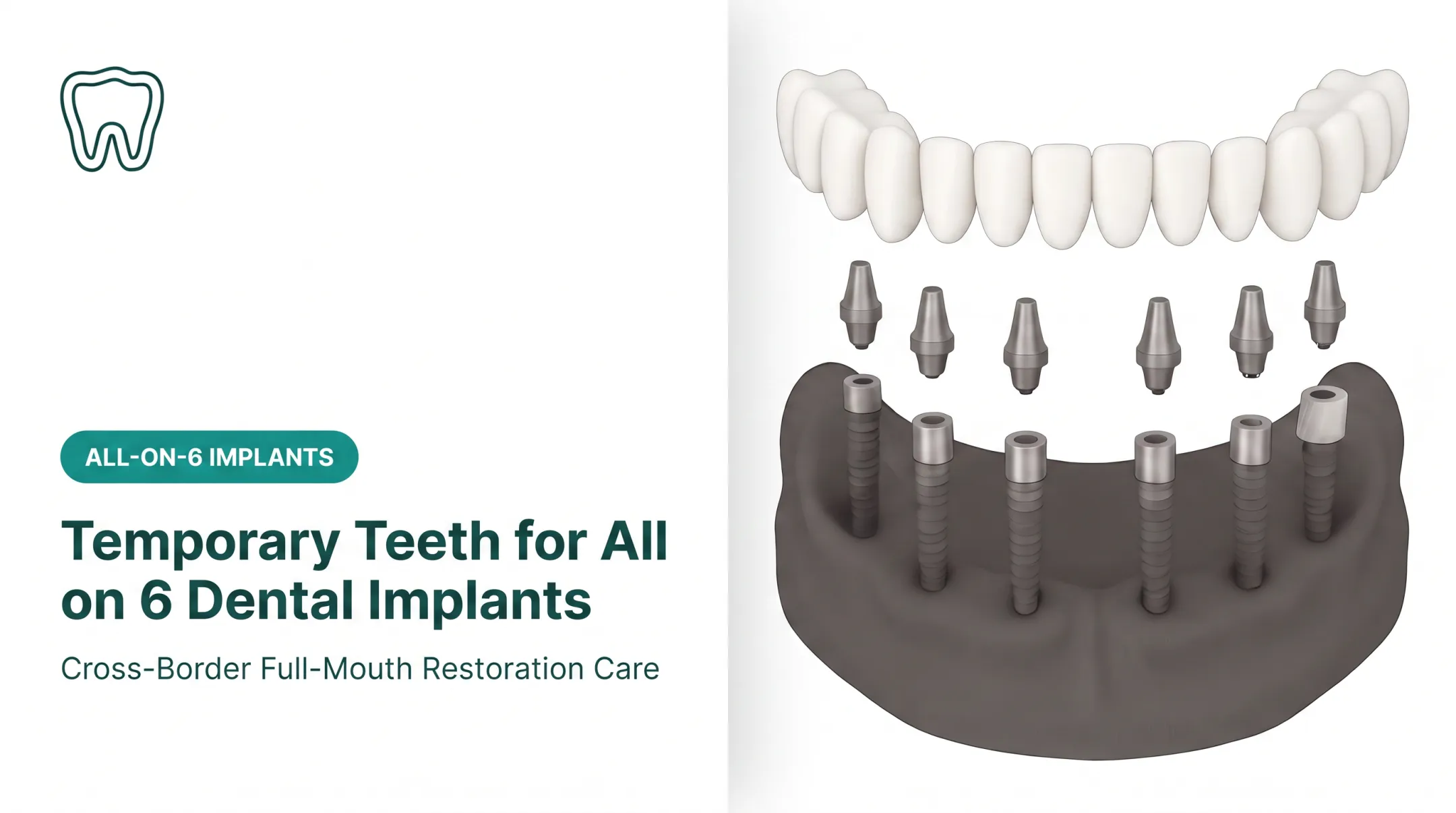
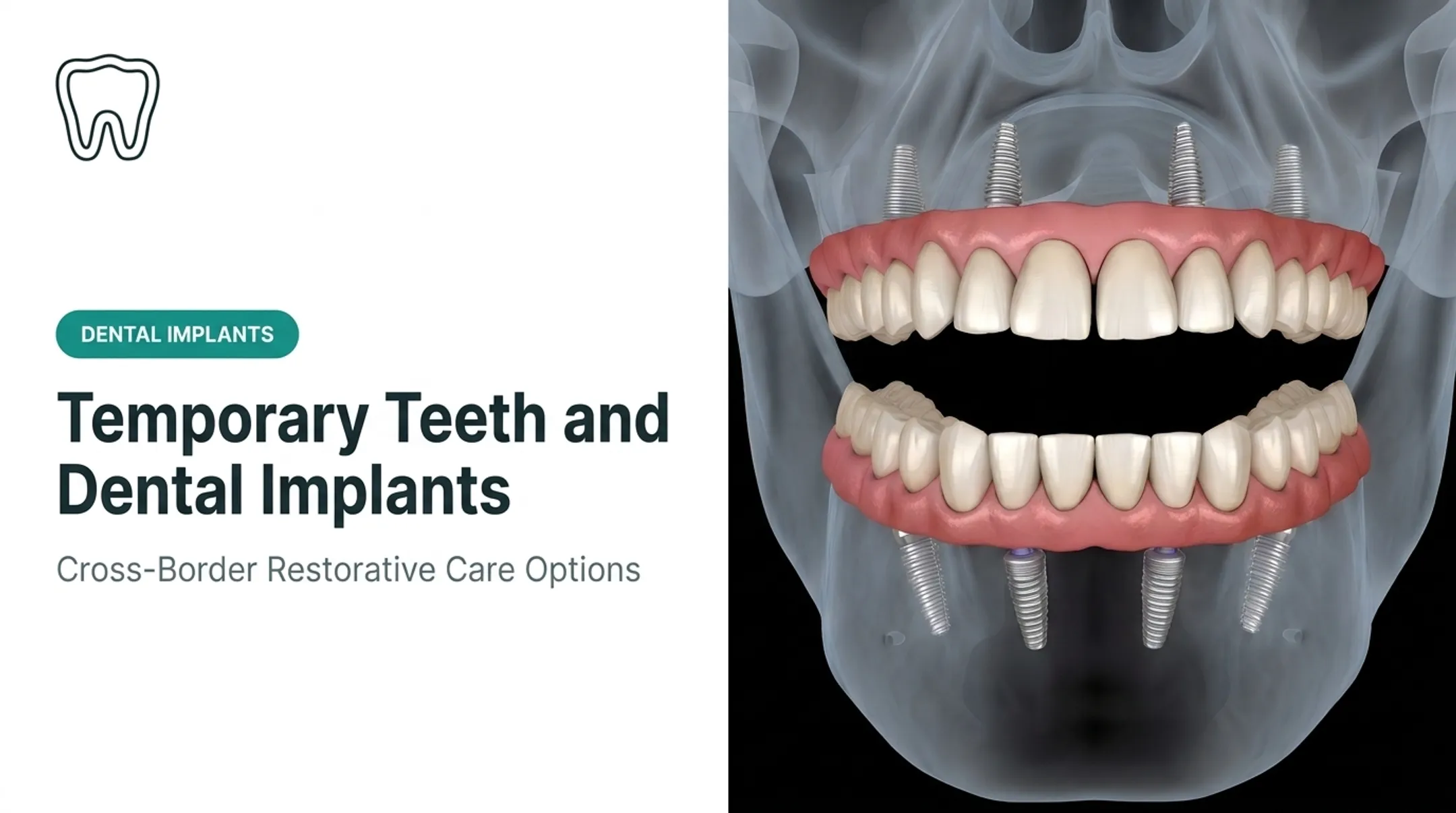
- Temporary bridges or dentures cover multiple missing teeth; in full-arch protocols like All-on-4, a high-strength temporary bridge attaches directly to the implants on the day of surgery.

Which temporary option you need usually follows your broader treatment plan and budget. Pricing varies by path. In Mexico, a single-tooth implant (implant, abutment, and crown) typically runs $750-$1,500 USD. All-on-4 procedures range from $8,000-$12,000 USD per arch—about 60-70% less than typical US and Canadian fees.
How Long Do Temporary Crowns Last and Is the Process Painful
How long do temporary implant crowns last?
Most patients wear a temporary crown for 3 to 6 months. Timing depends on healing speed and whether bone grafting was needed. Straightforward single-tooth cases often move to the final crown sooner.
Can I get a temporary tooth while waiting for an implant to heal?
Yes. A placeholder tooth is standard in modern implant care. Your case may call for a fixed temporary crown, a removable retainer, or a temporary bridge.
How painful is getting a temporary crown?
Fitting the temporary crown is usually quick and comfortable. Implant surgery is done under local anesthesia and typically takes under an hour. Mild sensitivity afterward is normal healing, not caused by the crown itself.
Caring for Your Temporary Crown During Healing
Your temporary crown needs gentler treatment than a permanent one. Following these guidelines protects both the crown and the implant fusing underneath it.
Diet Guidance
- Stick to soft, cold, or lukewarm foods in the first few days: applesauce, yogurt, pudding, Jell-O
- Gradually reintroduce soft solids once normal sensation returns
- Avoid chewing directly on the temporary crown or the implant side of your mouth
- Skip hard, sticky, or crunchy foods that could dislodge or crack the temporary restoration
Oral Hygiene
- Begin gentle oral care the day after surgery
- Use a soft-bristled toothbrush after meals and before bed
- Avoid brushing directly over the surgical site for the first 48 hours
- Starting 24 hours post-surgery, rinse with warm salt water (half a teaspoon of salt in a glass of warm water) 4-5 times daily
- Don't touch or apply pressure to the surgical area for the first two weeks

Warning Signs to Watch For
Contact your dental team promptly if you notice:
- A loose or shifting temporary crown
- Pain that worsens instead of improving
- Swelling that persists beyond 7-10 days or seems unusually severe
- Any signs of infection, including discharge or fever
Some swelling is normal. It typically peaks 48-72 hours after surgery and fades over the following week. Anything beyond that pattern deserves a call to your dentist rather than a wait-and-see approach.
Why Choose an Experienced Implant Specialist for Your Temporary and Permanent Crown Journey
Getting a temporary crown right means precise gum contouring and careful bite adjustment. Those details affect whether your implant integrates successfully and how your final crown fits.
Dr. José Moguel brings 38+ years of clinical experience and has placed more than 17,000 implants, including cases requiring his patented 3-ON-8™ protocol for full-mouth restoration. That experience matters most during the temporary-to-permanent transition, where small missteps in crown design can affect gum healing and long-term implant stability.
Patients traveling from the United States and Canada to his Los Algodones, Mexico clinic receive planning that treats the temporary phase with the same rigor as the final crown:
- Transparent treatment plans covering every phase, including temporary restorations
- Crown design choices aimed at healthy gum contours and a stable bite
- Typical savings of 60-70% versus comparable US pricing
That focus protects healing now and sets up a cleaner fit when the permanent crown is placed.
Frequently Asked Questions
How long do temporary implant crowns last?
Most temporary implant crowns stay in place for 3 to 6 months, matching the osseointegration period. Your exact timeline depends on your healing rate and whether bone grafting was part of your treatment.
Can I get a temporary tooth while waiting for an implant to heal?
Yes, this is standard practice today. Options include fixed temporary crowns, removable flipper or Essix retainers, and temporary bridges, depending on your specific case.
How painful is getting a temporary crown?
Implant placement is done under local anesthesia, and mild post-operative sensitivity is normal afterward. This discomfort comes from the surgical process itself, not from the temporary crown fitting.
What happens if my temporary crown becomes loose or falls off?
Contact your dental team right away rather than trying to fix it yourself. A loose temporary crown can affect healing and needs professional attention to reposition or replace it correctly.
Can I eat normally with a temporary crown on my implant?
You'll need to stick to soft foods, especially early on, and avoid chewing directly on the temporary crown. Hard, sticky, or crunchy foods should wait until your permanent crown is placed.
Is every implant patient a candidate for an immediate temporary crown?
No. Bone density, implant stability, and your dentist's clinical assessment all factor into whether immediate placement is appropriate. Some cases require a healing period before any crown is attached.