
Implants get discussed in clinical terms: titanium posts, osseointegration, surgical placement. But the real story is simpler. It's about biting into an apple without hesitation. Speaking without a lisp. Smiling in photos again.
This article breaks down what dental implants actually do for your daily life, what happens if you delay treatment, and how to choose a provider who won't waste your investment.
TL;DR
- Implants replace the tooth root and the crown, unlike removable dentures or bridges
- Long-term durability, jawbone preservation, natural chewing, and restored confidence
- A 2019 systematic review found 96.4% implant survival at 10 years
- Provider experience directly impacts implant longevity and success rates
- Board-certified clinics in Mexico often cost 60–70% less than typical U.S. pricing
What Are Dental Implants (Brief Context)
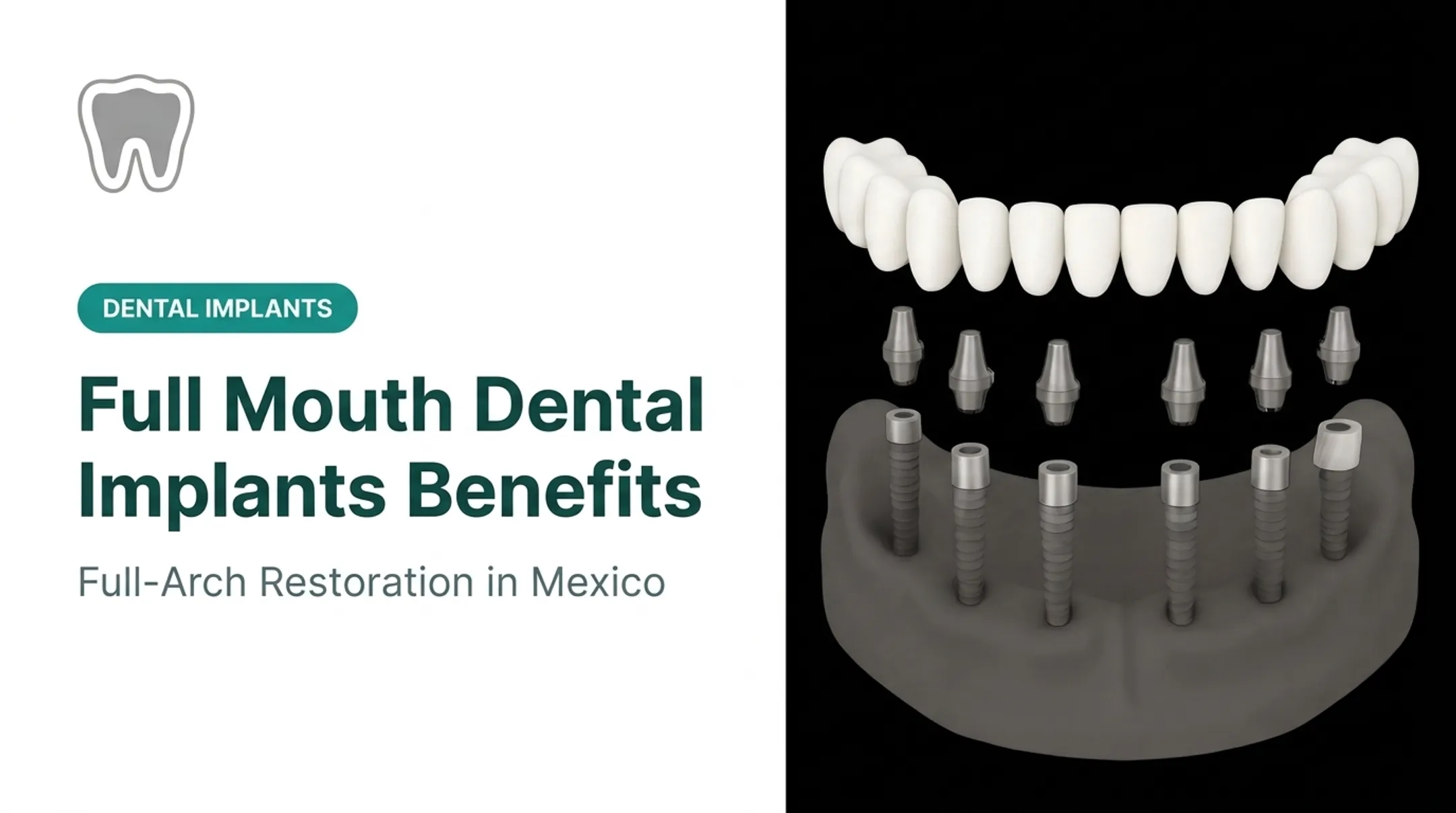
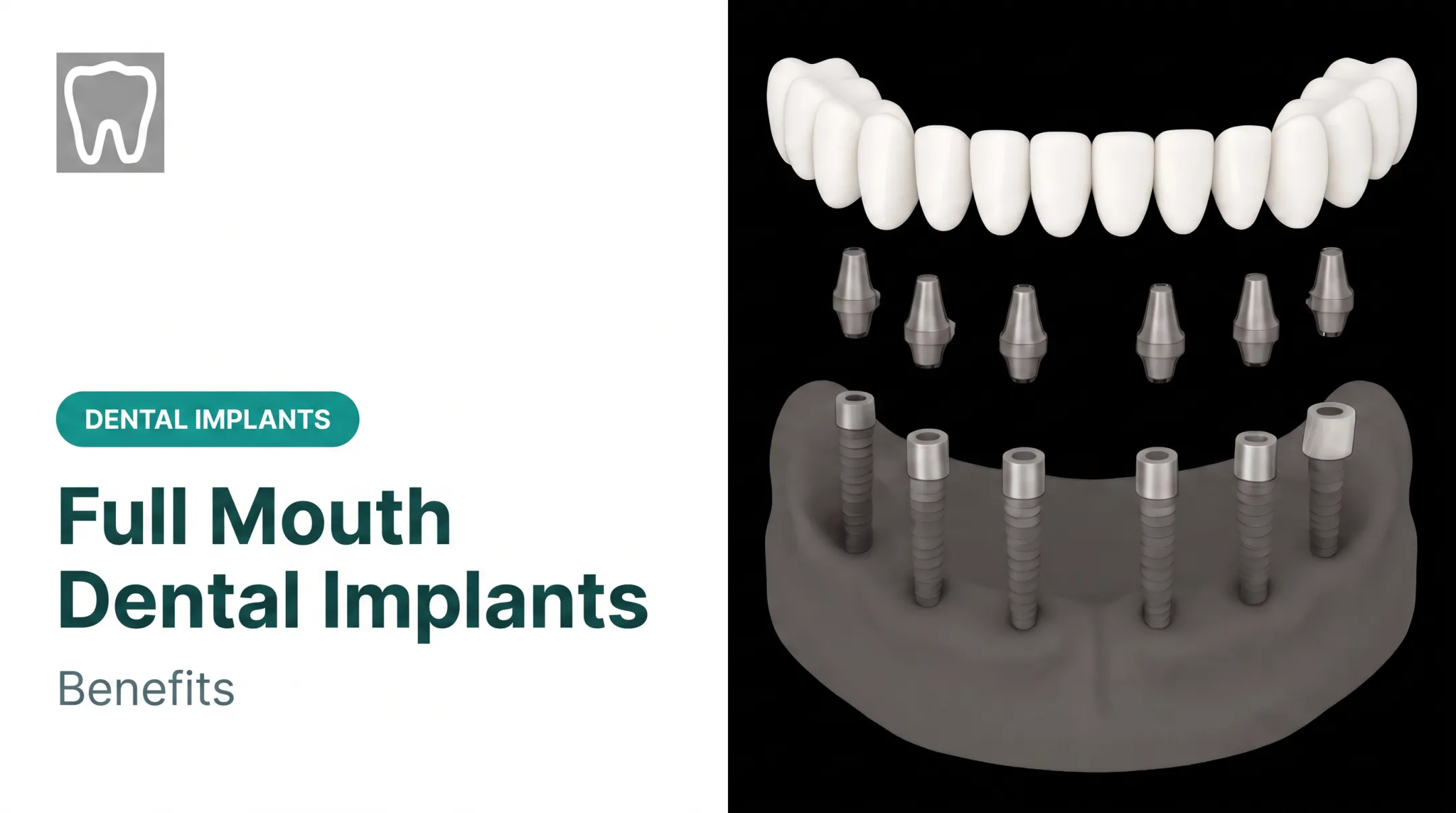
A dental implant is a titanium post surgically placed into the jawbone. Over several months, it fuses with the bone through a process called osseointegration, creating a stable anchor for a crown, bridge, or full-arch restoration.
Implants serve several purposes:
- Replace a single missing tooth with an implant-supported crown
- Replace several missing teeth with implant-supported bridges
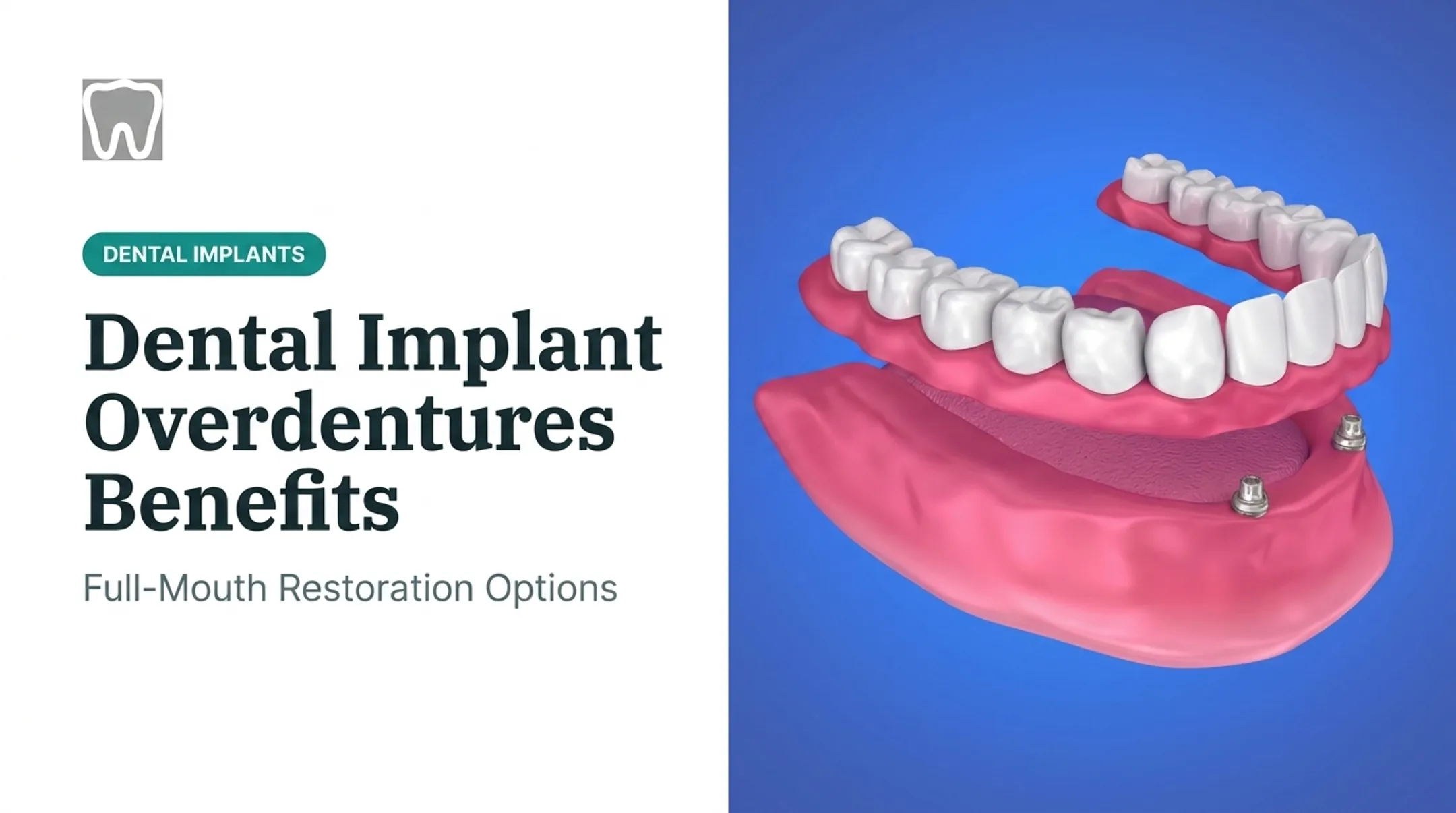
- Restore a full arch with All-on-4, All-on-6, or the patented 3-ON-8™ protocol
Implants also restore chewing function, keep neighboring teeth from shifting, and preserve jawbone that supports natural facial structure.

Key Advantages of Dental Implants
The benefits below fall into three measurable categories: durability, oral and facial health, and quality of life. Each one compounds when you pair a skilled provider with consistent aftercare.
Long-Term Durability and Natural Function
Implants function like real tooth roots. Once fused to the jawbone, they provide a stable foundation for biting and chewing, something dentures simply can't match.
Why this matters:
- No slipping, no adhesives, no worrying about food getting trapped underneath
- 96.4% implant survival at 10 years, compared with about 10 years for bridges and dentures
- Fewer replacements over a lifetime mean fewer dental visits and lower cumulative costs
Dr. José Moguel, who has placed over 17,000 implants across a 38-year career, reports a 98%+ clinical success rate, above the international average of 95-97%.
One patient with 16 Nobel Biocare titanium implants regained enough chewing force to eat steak and apples without hesitation.
This matters most for:
- Patients missing multiple teeth
- Anyone wanting a truly permanent solution
- Patients traveling for treatment who need reliable, long-lasting results

Preservation of Jawbone and Facial Structure
Here's something dentures can't do: stimulate the jawbone. Natural tooth roots send signals to the bone that keep it dense and healthy. Remove the root, and that stimulation disappears.
The consequences show up fast. A 2012 systematic review found 29-63% horizontal bone loss within just 6 months of extraction, with some cases losing up to 50% of ridge width in the first year alone.
This bone loss isn't cosmetic trivia. It leads to:
- Sunken cheeks and a collapsed facial appearance
- Reduced bone available for future implant placement
- Costly bone grafting if treatment is delayed too long

Implants replace the root, restoring that stimulation and helping preserve the bone envelope.
Especially relevant for:
- Patients who have already lost multiple teeth
- Anyone who delayed treatment for years
- Older adults concerned about facial changes
Improved Confidence, Comfort, and Quality of Life
Ill-fitting dentures cover the palate, shift when you talk, and require adhesives that fail at the worst moments. Implants eliminate all of that.
Research backs this up. A 2022 meta-analysis found statistically significant quality-of-life improvements for implant-supported restorations compared to conventional removable options.
Real patient outcomes reflect this:
- Sarah K., a 3-ON-8 patient, said her new teeth "look and feel completely natural"
- A retired veteran with All-on-4 implants reported 90% restoration of chewing force and no more gum pain
- Margaret K. described her All-on-6 restoration as "natural-looking, rigid, and completely secure"
Strongest fit for:
- Patients who avoid smiling or social eating because of visible gaps
- Anyone who tried dentures and found them uncomfortable or unreliable
What Happens When Dental Implants Are Skipped or Delayed
Waiting doesn't pause the clock on your oral health. It accelerates several problems at once:
- Bone loss speeds up — remodeling begins within months of a missing tooth, not years
- Adjacent teeth shift — neighbors tip into the gap and throw off your bite
- Chewing capacity drops — hard or fibrous foods get avoided, and diet narrows over time
- Treatment gets more expensive — delayed cases often need bone grafting before implants are possible
Timelines vary by patient, but the pattern holds. The longer you wait, the more complex and costly treatment becomes.
How to Get the Most Value from Dental Implants
Lasting value depends on provider skill, material quality, and aftercare. Where you treat can also lower cost without lowering those standards.
Choose Experience Over the Lowest Price
Provider training makes a measurable difference. A 2019 retrospective study found implant survival rose from 88.6% with beginner clinicians to 94.2% with advanced clinicians. Credentials correlate with those outcomes.
Look for:
- Board certification in periodontics or oral implantology
- Documented case volume and years of experience
- Use of premium, FDA-approved materials (Nobel Biocare, Straumann, MegaGen)
- Transparent pricing and a clear maintenance plan
Why Patients Are Looking to Mexico
Cost is a real barrier for many patients. In the U.S., full-arch treatment can run $20,000 to $45,000. At Dental Implants in Mexico, Dr. Moguel, a board-certified periodontist with UNAM training and ADM/ADA credentials, offers comparable treatment using the same premium materials, with savings of 60-70% compared to U.S. pricing:
| Treatment | Mexico Pricing | U.S. Pricing |
|---|---|---|
| Single-tooth implant | $750-$1,500 | $3,500-$5,000 |
| All-on-4 (per arch) | $8,000-$12,000 | $20,000-$35,000 |
| All-on-6 (per arch) | $12,000-$16,000 | $25,000-$40,000 |
| 3-ON-8™ | $16,000-$20,000 | $30,000-$45,000 |
The clinic also backs implant hardware with a lifetime warranty, contingent on maintaining professional cleanings.
Aftercare Isn't Optional
Even the best implant fails without maintenance. Protect the investment with steady habits:
- Brush twice daily and floss around the implant
- Avoid smoking, which raises failure risk by 140.2% according to a 2021 meta-analysis
- Keep up with professional cleanings
Conclusion
Dental implants restore chewing function, preserve bone structure, and give you the confidence to eat, speak, and laugh without hesitation—not only a nicer smile.
These benefits compound over time, but only with the right provider and consistent aftercare. Treat implant selection as a long-term investment decision, weighing experience, materials, and cost together rather than chasing the cheapest quote.
Frequently Asked Questions
How many years do dental implants last?
Implants can last decades or even a lifetime with proper care and hygiene. The crown attached to the implant typically needs replacement after 10-15 years due to normal wear.
Is it better to save a tooth or get a dental implant?
Saving a natural tooth is the better option when it's structurally viable. Implants become the recommended solution when a tooth is too damaged, infected, or unstable to save.
Are dental implants suitable for a 70-year-old?
Age alone isn't a barrier. Research shows implant survival rates above 95% at five years, even in patients over 75. Bone density, gum health, and overall health determine candidacy, not age.
Is it worth having dental implants?
Implants offer better longevity, chewing function, and bone preservation than dentures or bridges. The higher upfront cost is often offset over a lifetime of use.
How painful is the dental implant procedure?
The procedure itself is performed under local anesthesia, so patients feel minimal discomfort during surgery. Post-operative pain tends to peak on day one and drops significantly by day three.
Can dental implants fail?
Failure is rare but is linked to smoking, poor oral hygiene, uncontrolled diabetes, or insufficient bone density. Choosing an experienced, board-certified specialist reduces this risk.