
Recovery isn't identical for everyone. Your age, bone density, whether you needed grafting, and how well you follow aftercare instructions all shape your timeline. Smokers and patients with uncontrolled diabetes, for example, heal more slowly and face higher implant failure risk.
This guide walks through the phase-by-phase healing process, what pain to expect, diet progression, and what to plan for if you're traveling from the US or Canada for treatment.
Key Takeaways
- Initial soft-tissue healing takes 1-2 weeks; full osseointegration takes 3-6 months
- Discomfort peaks within 48-72 hours and is manageable with prescribed medication
- Diet progresses from liquids to soft foods to near-normal chewing over roughly 8 weeks
- Consistent aftercare and follow-ups protect long-term implant success
- International patients should budget a few extra days near the clinic before traveling home
Full Arch Dental Implant Recovery Timeline: Phase by Phase
Healing unfolds in distinct biological stages. Each stage has its own milestones and restrictions worth knowing in advance.
Phase 1: The First 48-72 Hours
Swelling typically doesn't show up immediately. It may appear 24 hours after surgery and peak between 48 and 72 hours. Minor oozing or blood-tinged saliva is normal during this window, as is a dull ache as anesthesia wears off.
What helps most:
- Apply ice packs in 20-minutes-on, 20-minutes-off cycles while awake
- Keep your head elevated on pillows, even while sleeping
- Rest quietly and avoid touching or probing the surgical site with your tongue
- Stick to cold, soft liquids only
Phase 2: Weeks 1-2 (Early Soft Tissue Healing)
Gum tissue starts closing over this period, and swelling noticeably drops. Most patients have a follow-up check on the temporary restoration shortly after surgery to confirm fit and bite alignment.
By the end of week one:
- Stitches begin dissolving or are scheduled for removal
- Swelling and bruising are largely gone
- Light daily activities can resume, though strenuous exercise should wait
- Diet remains soft: oatmeal, scrambled eggs, and mashed potatoes
Phase 3: Weeks 2-12 (Osseointegration Begins)
Osseointegration drives long-term implant success. Your jawbone starts fusing with the titanium implant post, and that process needs minimal pressure on the site while it is underway. Between weeks 5 and 12, new bone tissue grows into the implant threads, which is why your temporary prosthesis is not designed for hard chewing.
You can gradually reintroduce semi-soft foods here, but crunchy or sticky foods stay off the menu.
Phase 4: Months 3-6 (Complete Integration and Final Restoration)
By month three to six, bone has consolidated enough to withstand real chewing forces. Your care team takes impressions for the permanent prosthetic, then completes final fitting.
Lower-jaw implants often integrate faster (around 3 months) than upper-jaw implants (4-6 months), since upper jawbone is softer and sits closer to the sinus cavities.
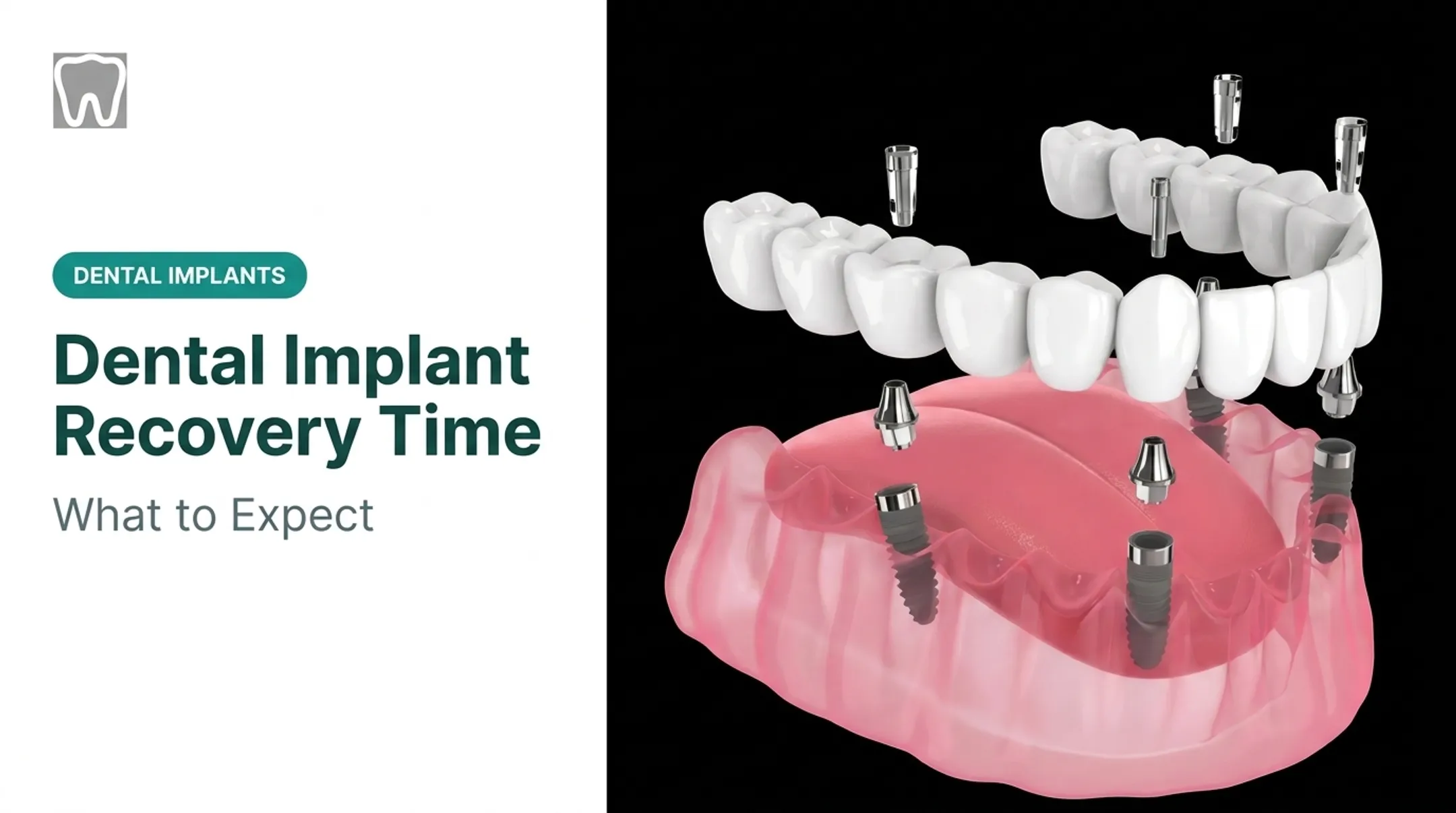
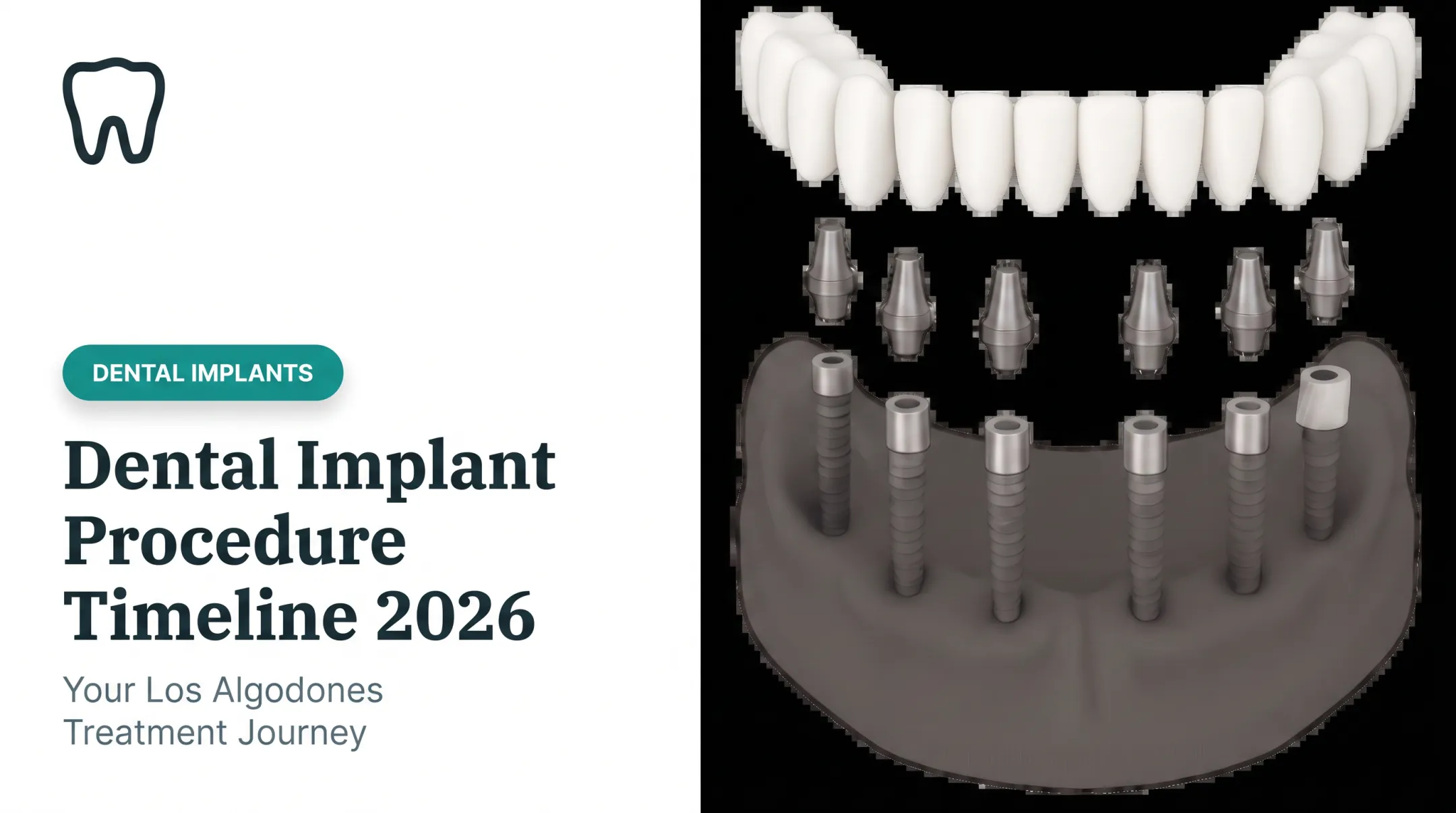
How load is shared across the arch also affects comfort during these later stages. Dr. José Moguel's patented 3-ON-8™ protocol, refined over 38+ years of clinical practice, uses eight titanium implants per arch to support three independent bridges and help distribute chewing forces as bone finishes integrating.

Managing Pain and Discomfort During Recovery
Most patients describe full arch implant recovery as milder than expected — often compared to a straightforward tooth extraction, not major surgery. Severe, unmanageable pain is not the norm.
A 2020 study of 70 All-on-4 patients found the highest reported pain score was 21.3 out of 100 on a visual analog scale. By day 28, average pain had dropped below 5/100 across all groups.
Typical management includes:
- Take an NSAID before local anesthesia fully wears off, if not contraindicated
- Use a short course of stronger prescription medication for more intense discomfort
- Apply ice in 20-minute intervals during the first 24-48 hours
Contact your dental team immediately if you notice:
- Bleeding that won't slow down with gauze pressure
- Fever or chills
- Foul odor or taste from the surgical site
- Pain that worsens instead of improves after day 3
When pain is managed this way and warning signs are caught early, recovery usually stays on track. International dental implant success rates average about 95-97%. Dr. Moguel's clinical record, built across 17,000+ implants placed over 38 years, is documented at 98%+.

Factors That Influence Your Healing Time
Not everyone heals at the same pace. A few variables make the biggest difference:
- Smoking: A 2021 meta-analysis found a 140.2% higher implant failure risk in smokers versus non-smokers. Quitting at least 2 weeks before and 6 weeks after surgery is strongly advised.
- Diabetes: Poorly controlled blood sugar can interfere with osseointegration; well-managed diabetes carries far less risk.
- Bone density: Softer or lower-density bone (common in the upper jaw) takes longer to stabilize around an implant.
- Bone grafting or sinus lifts: Grafts typically need an extra 3-4 months to heal before supporting an implant. Sinus-lift grafts can take 6-9 months to mature.
Premium FDA-approved implant materials from brands like Nobel Biocare, Straumann, and MegaGen, paired with 3D Cone Beam CT planning, help cut complication risk from day one. A CBCT scan shows bone width and nerve pathways that a standard 2D X-ray can't capture. That detail guides exact implant position and supports long-term stability.

Diet and Daily Care Guide by Recovery Stage
| Stage | Diet | Oral Hygiene |
|---|---|---|
| Days 1-2 | Cold, soft liquids (smoothies without straws, blended soups, yogurt) | No rinsing on surgery day; follow your dentist’s gentle-care instructions on Day 2 |
| Days 3-7 | Soft foods (scrambled eggs, mashed potatoes, soft pasta) | Gentle warm salt-water rinses, 4-5x daily |
| Weeks 2-4 | Semi-soft foods, gradually expanding | Careful brushing with soft-bristle brush, avoiding the surgical site |
| Months 2+ | Near-normal diet, still avoiding very hard/crunchy foods | Normal hygiene routine resumes |
Also avoid during recovery:
- Smoking and alcohol, which interfere with osseointegration
- Strenuous exercise for at least the first week
- Hard, crunchy, or sticky foods until your dentist clears them
- Straws, which can disrupt healing tissue

Planning Your Recovery When Traveling for Treatment
Patients coming from the US or Canada should build in extra time near the clinic before heading home. A 2023 dental tourism review notes that flying too soon after oral surgery carries a barotrauma risk, recommending at least 72 hours after implant placement and up to a week after most procedures, longer if a sinus lift was involved.
For patients receiving treatment in Los Algodones, that means:
- Staying near the clinic through the early follow-up check rather than crossing back same-day
- Booking nearby lodging, with coordinated hotel stays in Yuma, Arizona, and local shuttle assistance available
- Leaving with your implant details, X-rays or CBCT report, medication list, and a written follow-up plan
- Keeping the clinic's contact information (928-374-4575) on hand for any questions once you're home
Having a clear post-op plan before you leave means you're not scrambling for answers days later, far from where the surgery happened.
Frequently Asked Questions
How painful is a full arch dental implant?
Discomfort is typically mild-to-moderate, peaking within 48-72 hours after surgery. It's well managed with prescribed medication and ice therapy, and most patients compare it to a routine tooth extraction.
How long do full arch implants last?
With proper care, implants can last decades or even a lifetime. Implant hardware carries a lifetime warranty, while prosthetic crowns and bridges typically carry a 5-year warranty with regular professional cleanings.
When can I return to work after full arch implant surgery?
Desk jobs typically allow a return within 2-3 days. Physically demanding jobs involving heavy lifting or strenuous movement may require up to a week off.
What foods can I eat immediately after surgery?
Stick to cold or room-temperature soft liquids for the first 48 hours — think smoothies (no straws), blended soups, yogurt, and protein shakes. Avoid hot liquids and carbonated drinks.
How do I know if something is wrong during recovery?
Watch for fever, pain that worsens past day 3, pus or foul odor, or any implant mobility. These signs warrant an immediate call to your dental team.
Is bone grafting always needed before full arch implants?
No. It depends entirely on your individual bone density and structure, which is assessed through a 3D CBCT scan during your consultation.