
Many patients struggle with sticker shock when comparing options locally. That's why a growing number of US and Canadian patients now cross the border for board-certified implant care at a fraction of the price. Below, we'll break down both options honestly, so you can pick what actually fits your mouth and your wallet.
Key Takeaways
- Implants preserve bone and last decades; dentures are removable and cost less upfront.
- Long-term denture costs add up—relines, adhesives, and replacements every 5-8 years often exceed the low upfront price.
- Candidacy hinges on jawbone density, general health, and budget, not age alone.
- Board-certified implant care in Los Algodones, Mexico, can run 60-70% less than typical US pricing.
Dental Implants vs Dentures: Quick Comparison
Cost
- Implants: Higher upfront cost, priced per tooth or arch. A single-tooth implant runs $3,100–$5,800 in the US, according to the American Academy of Implant Dentistry.
- Dentures: Lower upfront cost—about $1,800 per arch in the US on average—but relines, repairs, and adhesives add up over time.
Procedure
- Implants: Surgical placement, then a bone-integration healing period (osseointegration, typically 3–6 months)
- Dentures: Non-surgical; molds, fittings, and adjustments only
Durability
- Implants: 96.4% survival rate at 10 years, per a 2019 systematic review
- Dentures: Last about 10.1 years on average, and often need relining or full replacement sooner

Jawbone Health
- Implants: Chewing forces stimulate the jawbone and slow resorption; implant overdentures show roughly 1 mm less annual bone loss than conventional dentures in comparative studies
- Dentures: Rest on the gums and do not stimulate bone, so ridge resorption continues over time
Comfort & Function
- Implants: Implant-retained overdentures score higher on comfort, chewing ability, and satisfaction in comparative research
- Dentures: Can slip, need adhesives, and reduce chewing efficiency—especially on a resorbed lower ridge
What Are Dental Implants?
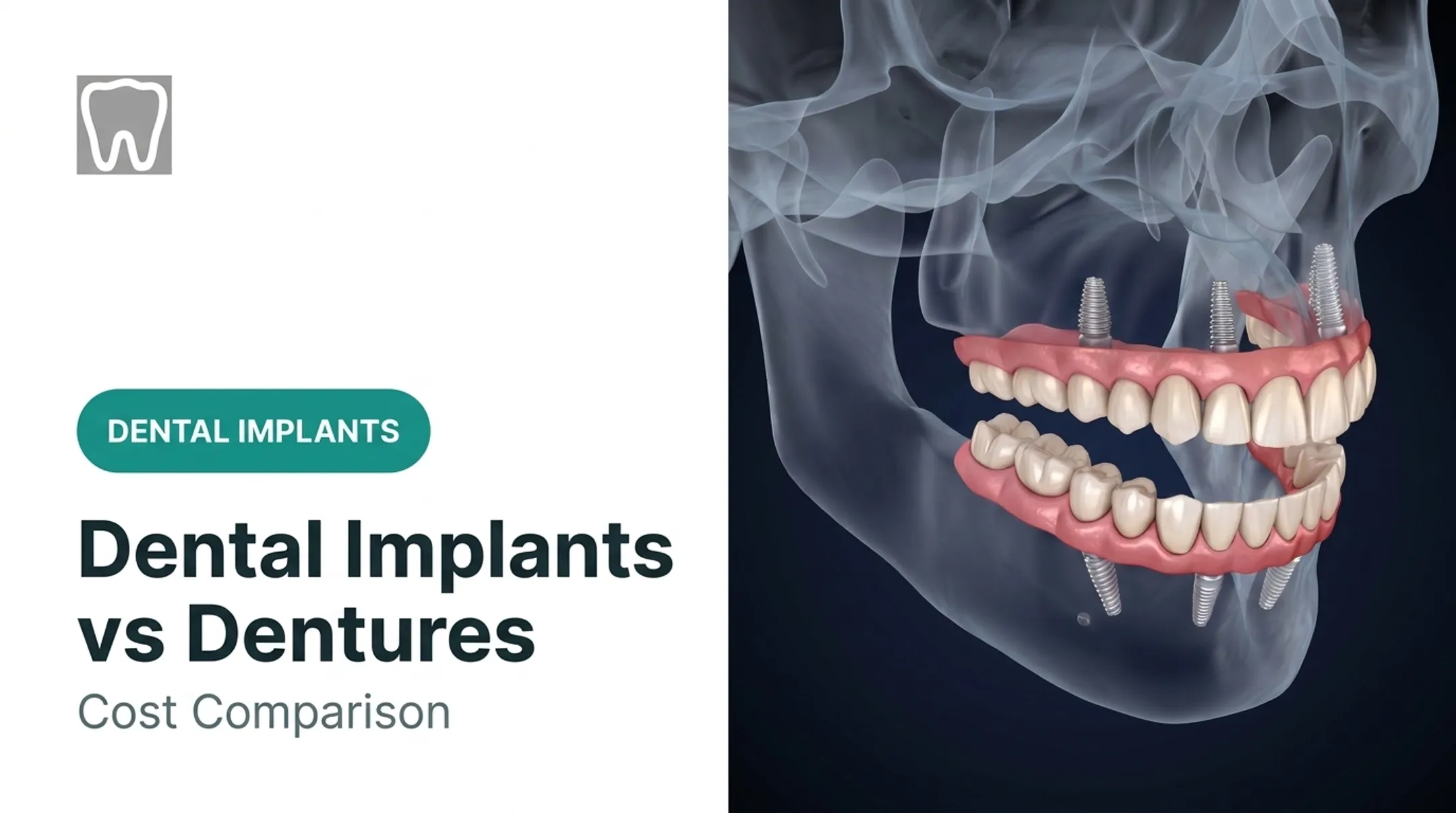
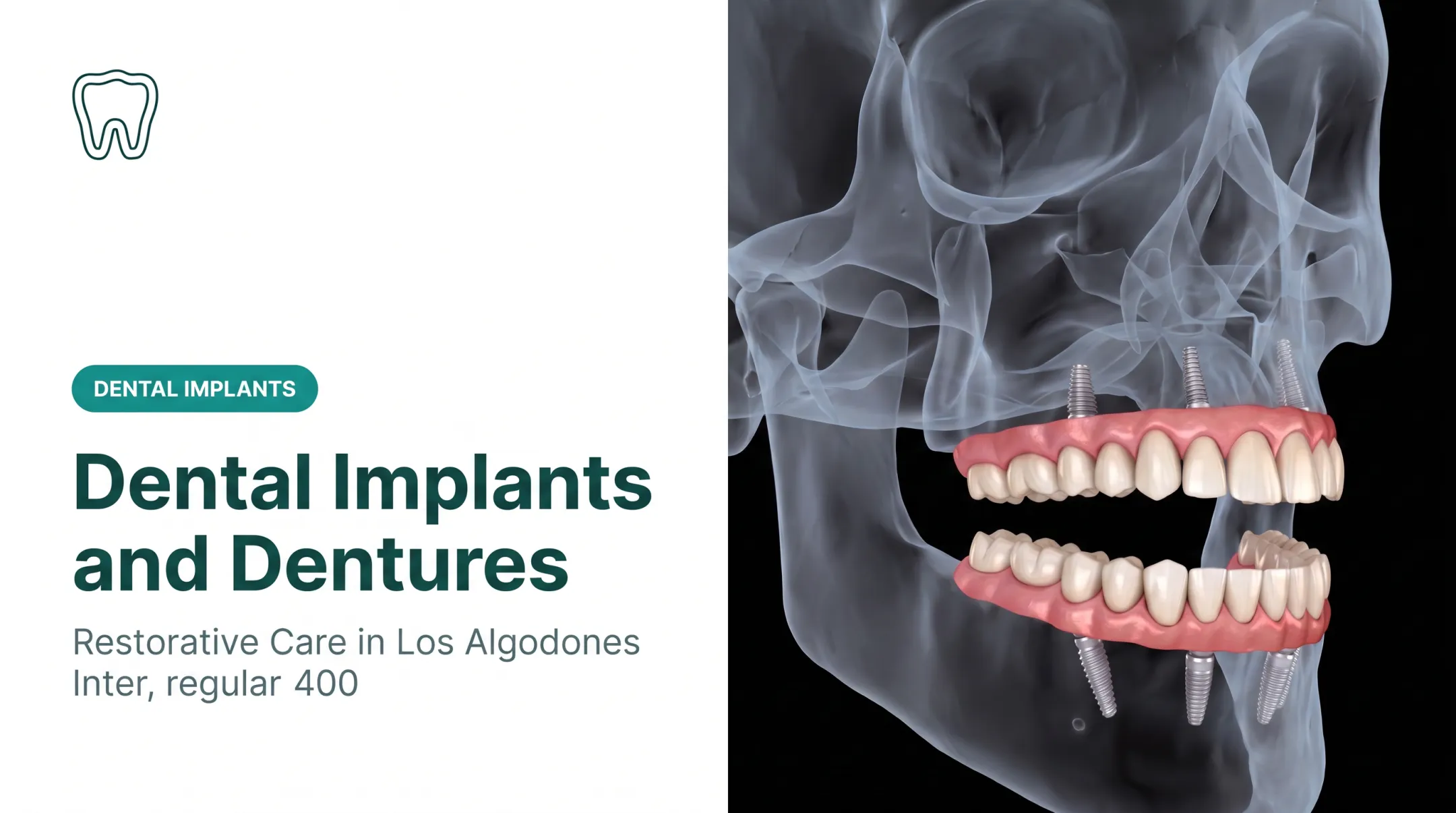
Dental implants are titanium posts surgically placed into the jawbone, acting as artificial tooth roots. They support a crown, bridge, or full-arch prosthesis and fuse with bone over time through a process called osseointegration.
Core benefits:
- Preserves jawbone density by transmitting bite force naturally
- Near-natural chewing and speech
- Long-term durability with proper hygiene
- Aesthetic results that blend with your smile
For full-mouth cases, specialists use multi-implant protocols that distribute bite force and conserve bone:
- All-on-4: Four implants per arch
- All-on-6: Six implants for more distributed bite force
- 3-ON-8™: Dr. José Moguel's patented protocol using eight implants and three independent bridges per arch for maximum stability

Success depends heavily on bone density, overall health, and the treating specialist's experience.
Use Cases of Dental Implants
Implants suit patients with single-tooth loss, multiple missing teeth, or full-arch reconstruction, provided there's adequate bone (or a willingness to undergo grafting). Modern implants achieve survival estimates above 96% at 10 years.
Cost is often the biggest barrier. Many patients choose specialized clinics in Mexico, where board-certified implant care can cost 60-70% less than typical US fees. Single-tooth implants in Mexico often run $750-$2,500, versus $3,100-$5,800 in the US.
What Are Dentures?
Dentures are removable prosthetic devices made from acrylic resin, sometimes reinforced with metal. They come as full or partial sets and remain the fastest, least invasive way to replace missing teeth.
Core benefits:
- Lower upfront cost
- No surgery required
- Faster turnaround than implant treatment
Variations include:
- Complete dentures — replace an entire arch
- Partial dentures — fill gaps while natural teeth remain
- Immediate dentures — placed right after extraction, often needing later adjustment
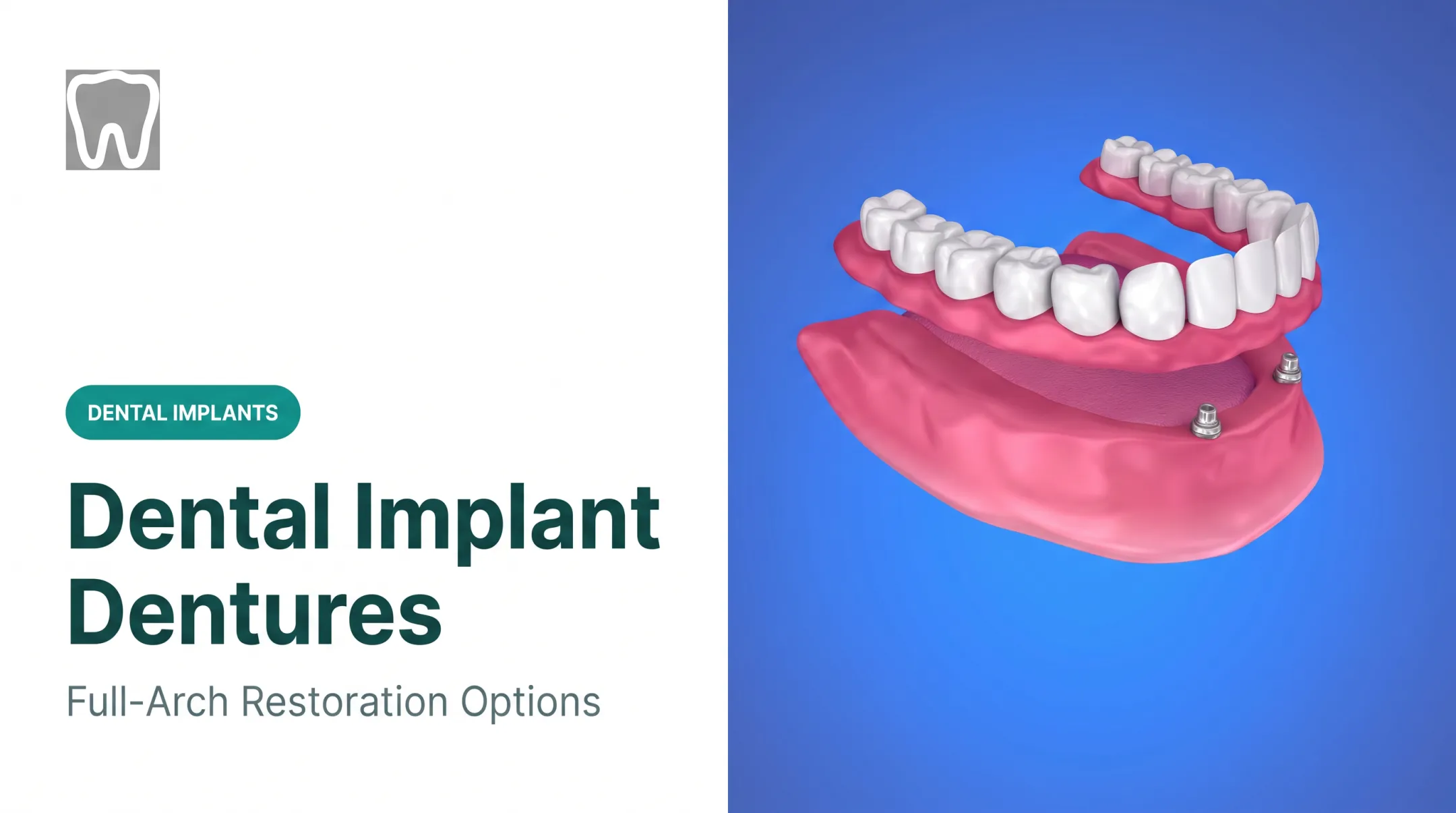
- Implant-supported (snap-in) dentures — a middle-ground option anchored by 2-4 implants
When Dentures Make Sense
Dentures work best for patients prioritizing lower cost, avoiding surgery, or dealing with significant bone loss that complicates implant placement. Complete dentures last about 10 years on average, according to a 2021 systematic review, though many need relining well before then.
Common drawbacks include:
- Slipping and adhesive dependence
- Reduced chewing efficiency
- Continued jawbone resorption that changes fit and requires costly readjustments

Dental Implants vs Dentures: Which Is Better for You?
There's no universal answer. Weigh these factors:
- Budget — Compare upfront cost against 10-year cost, including relines, adhesives, and replacements
- Bone health — Adequate density favors implants; significant loss may require grafting or favor dentures
- Surgical tolerance — Implants require surgery and healing time; dentures don't
- Desired permanence — Implants are fixed and long-lasting; dentures are removable by design
- Lifestyle needs — Active chewers and speakers often prefer implant stability
Choose implants if long-term function, bone preservation, and permanence matter most. Choose dentures if a non-surgical, lower-cost option fits your situation better right now.
Age alone doesn't disqualify anyone. The 2018 ITI Consensus Report states plainly that advanced age, including 75 and older, is not a contraindication for implant therapy. Overall health and bone quality matter more than the number on your birth certificate.
Between full implants and conventional dentures, implant-supported overdentures offer a middle path. Two to four implants anchor a removable denture, which can boost stability and chewing capacity by up to 300% compared to traditional dentures. You can still take them out for cleaning.
Making the Decision: Real Considerations for Cross-Border Patients
Many US and Canadian patients weigh the hassle of travel against genuine savings. A full-mouth restoration can run as high as $50,000 per arch in the US. In Los Algodones, Mexico, that same treatment often costs 60-70% less.
Complex cases, especially full-mouth rehabilitation, call for deep implant experience. Dr. José Moguel is a board-certified periodontist with 38+ years of experience and 17,000+ implants placed.

Before booking travel, verify:
- Free, no-obligation consultations with transparent pricing
- Written treatment warranties (lifetime on implant hardware, typically five years on prosthetics)
- Travel and logistics support, including border-crossing proximity and accommodation coordination
- Documentation support for insurance reimbursement claims
The clinic sits roughly a three-minute walk from the Andrade, California border crossing and about seven minutes from Yuma, Arizona. Bilingual coordinators handle virtual consultations from submitted X-rays.
If you're weighing cost against quality, request a free consultation for a personalized treatment plan and price quote before you decide.
Frequently Asked Questions
What is the average cost of dentures compared to implants?
Average costs vary by materials, location, and case complexity. Dentures typically cost less upfront per arch, while implants cost more initially when priced per tooth. Over 10 years, implants often prove more cost-effective due to durability and fewer full replacements.
Will Medicare or insurance pay for dentures or implants?
Original Medicare generally does not cover dentures or implants, per Medicare.gov. Coverage varies widely by private plan, so verify your specific policy or ask about assistance with claims documentation.
What is the success rate of implant dentures?
Modern implant-supported dentures show strong long-term success, with studies reporting 94-96% implant survival at five years when placed by experienced specialists.
Which is more painful, dentures or implants?
Implant surgery involves anesthesia with manageable post-op discomfort. New dentures often cause adjustment soreness from friction and fit issues rather than surgical pain.
Can you have both implants and dentures?
Yes. Implant-supported overdentures combine both, using two to four implants to stabilize a removable denture for better function than conventional dentures alone.
Is it worth getting dental implants at 70 years old?
Age alone doesn't disqualify candidacy. Overall health, bone quality, and healing ability matter far more than age when evaluating implant suitability.