
Many patients researching this option are also discovering they don't need to pay US prices to get it. Cross-border dental care in Mexico has become a practical way to access advanced implant procedures at a fraction of typical US or Canadian costs.
This guide breaks down how All-on-4 works, who qualifies, how it compares to All-on-6 and other full-arch protocols, and what to expect from consultation through recovery.
Key Takeaways
- All-on-4 uses four strategically angled implants to anchor a fixed full-arch bridge, often without bone grafting
- Most patients leave on surgery day with a fixed temporary bridge already in place
- Clinical reviews report implant survival rates above 99% at three years
- Full-arch treatment in Los Algodones, Mexico can cost 60-70% less than comparable US treatment
- The right protocol (All-on-4, All-on-6, or 3-ON-8™) depends on your bone density and long-term goals
What Are All-on-4 Dental Implants?
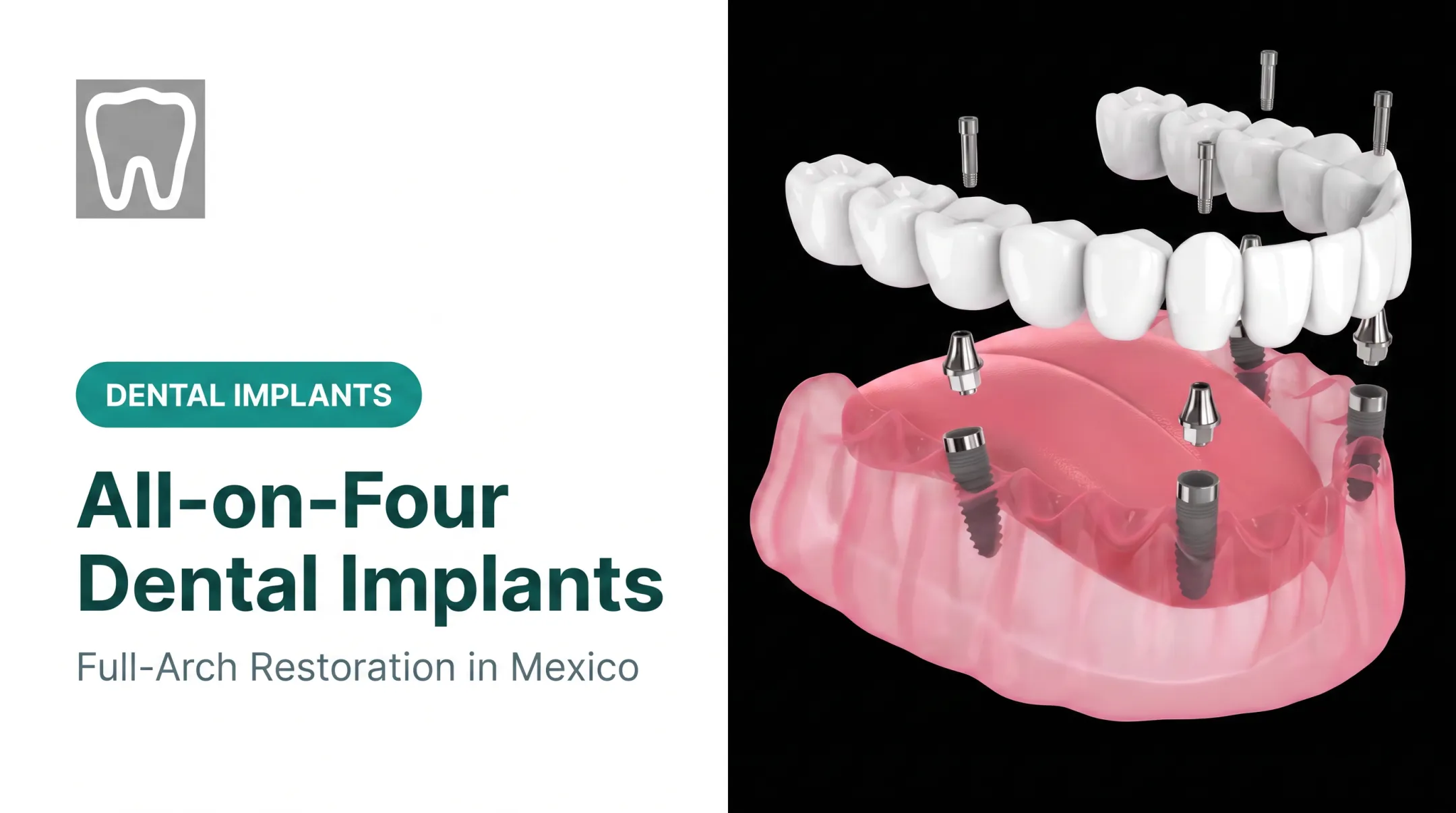
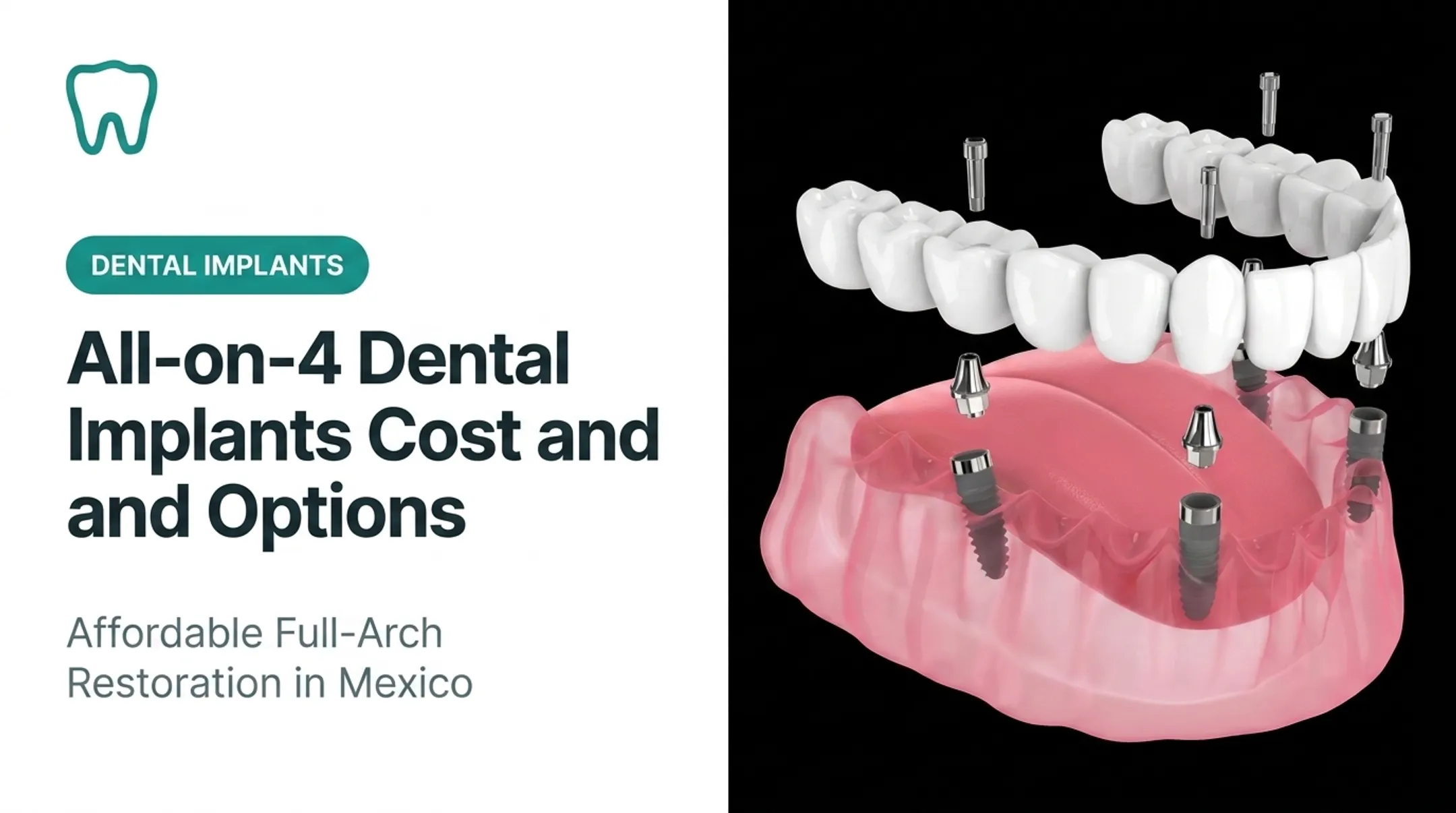
All-on-4 is a full-arch tooth replacement technique that uses four implants per jaw to support a complete fixed prosthetic bridge. Two implants go in vertically at the front of the jaw. The other two are placed at the back, angled at roughly 30-45 degrees.
That angling is structural. By tilting the posterior implants, the surgeon can anchor into denser existing bone while avoiding structures like the sinus cavities or mental nerve.
According to the clinical literature on the All-on-4 concept, this approach often eliminates the need for bone grafting entirely, which shortens treatment time.

How It Differs From Single-Tooth Implants
A single-tooth implant replaces one root with one post, topped by one crown. All-on-4 flips that ratio: four implants support an entire arch of teeth, distributing bite force across the whole structure rather than tooth by tooth.
What About "4-on-1"?
You may see the term "4-on-1" floating around online. It isn't a recognized clinical term. Some patients confuse it with All-on-4, but there's no standard protocol by that name in the dental literature. If you hear it during research, verify exactly what's being described with your specialist before assuming it's interchangeable with All-on-4.
Same-Day Teeth
Same-day teeth are a hallmark of this protocol. Most patients walk out of surgery with a fixed temporary bridge already attached, giving them functional, natural-looking teeth while the permanent restoration is being crafted.
Am I a Good Candidate? Benefits and Considerations
Good candidates typically share a few traits:
- Missing most or all teeth in an arch, or wearing ill-fitting dentures
- Moderate bone loss (rather than severe, though this varies by case)
- Good general health with no uncontrolled systemic conditions
- Non-smokers, or willing to quit during healing
A 3D CT scan confirms whether you qualify. At Dental Implants in Mexico, the imaging maps bone density and width, then locates the sinus cavities and mental nerve so the posterior implants can be angled safely. This digital planning step happens before any surgery is scheduled.
What About Pain?
You receive anesthesia for surgery, so you won't feel the procedure itself. Options typically include local anesthesia, oral conscious sedation, or IV sedation for patients with more anxiety or complex cases.
Post-op soreness is real but manageable. One PubMed-indexed study tracking patient-reported pain after All-on-4 found scores stayed below 5 on a 100-point scale by day 28. Medication controlled discomfort in the weeks before that point.
Can You Eat Normally?
Not immediately. Expect a soft-food phase during initial healing, then firmer foods as the implants fuse with the bone (osseointegration). Most patients return to a normal diet within a few months, though the exact timeline depends on individual healing.
Once healing is on track, key benefits of All-on-4 include:
- Fixed stability without removing the prosthesis for cleaning
- Improved chewing force compared to traditional dentures
- Natural appearance with custom-shaded prosthetics
- Jawbone preservation through implant stimulation
- Faster treatment timeline than staged traditional implants
All-on-4 vs All-on-6 vs the 3-ON-8™ Protocol: Which Is Right for You?
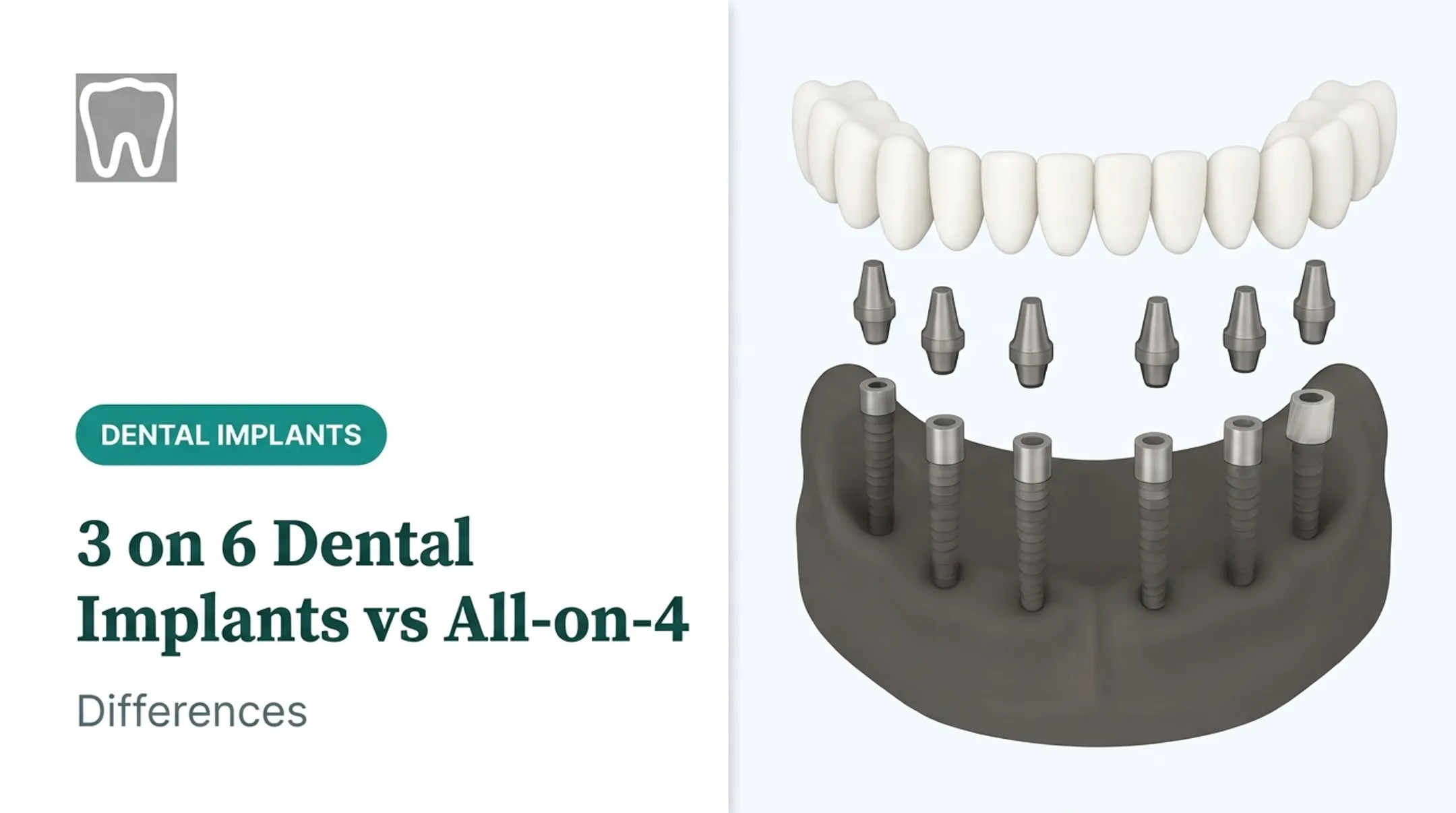
All-on-4 is the best-known full-arch approach, but it is not the only one. All-on-6 adds two more implants for extra support and is often recommended when patients have more available bone or want higher bite-force capacity.
A five-year randomized trial comparing All-on-4 and All-on-6 found no statistically significant difference in implant survival or marginal bone loss, according to research on full-arch implant comparisons. In other words, more implants don't automatically mean better outcomes for every patient.
Dr. José Moguel, after 38 years of clinical implantology and more than 17,000 implants placed, developed a third option: the patented 3-ON-8™ protocol. It uses eight strategically placed implants divided into three independent bridges rather than one continuous arch.
Comparing the Three Protocols
| Protocol | Implants | Ideal Candidate | Bone Requirement | Mexico Cost Range |
|---|---|---|---|---|
| All-on-4 | 4 per arch | Moderate bone loss, wants fastest treatment | Low-to-moderate | $8,000–$12,000 |
| All-on-6 | 6 per arch | More available bone, higher bite-force needs | Moderate | $12,000–$16,000 |
| 3-ON-8™ | 8 per arch, 3 bridges | Wants maximum stability with repairable sections | Moderate-to-high | $16,000–$20,000 |

The segmented design of 3-ON-8™ means if one section needs repair down the line, the other two bridges stay untouched. That's a meaningful difference for patients thinking decades ahead.
Which one is "better"? There isn't a universal winner. It comes down to your bone density, budget, and long-term goals. A board-certified specialist like Dr. Moguel can determine the right fit during a free consultation using 3D imaging, rather than defaulting to whichever option sounds most advanced.
The Full-Arch Treatment Process and Cost Considerations in Mexico
Full-arch All-on-4 treatment in Mexico follows a clear clinical sequence:
- Consultation and 3D imaging to map bone structure and plan implant positions
- Extractions, if any remaining teeth need removal
- Implant surgery, typically 2-3 hours per arch
- Same-day temporary bridge fitted before you leave the clinic
- Osseointegration, roughly 3-6 months as implants fuse with bone
- Final prosthesis fitting once healing is confirmed
Most patients need a 3-5 day clinic visit for the surgical phase, then return months later for the permanent restoration.

What Does It Cost?
At Dental Implants in Mexico, All-on-4 treatment starts at $6,000, with full-arch packages typically ranging from $8,000-$12,000. The same procedure often costs $20,000-$35,000 in the US, so most patients save 60-70%.
Care is delivered with American-standard technology, including:
- 3D Cone Beam CT imaging for precise treatment planning
- In-house CAD/CAM lab for custom prosthetics
- Premium implant brands including Nobel Biocare, Straumann, and MegaGen
The clinic is a few minutes' walk from the Andrade, California border crossing near Yuma, Arizona. Free consultations, transparent price quotes, and travel coordination are available for patients coming from the US or Canada.

Aftercare, Longevity, and Success Rates
Implant survival data is encouraging. A pooled analysis of clinical studies found survival rates above 99.8% at 24 months, though the reviewers noted limitations in study quality and follow-up length, per systematic review findings.
A separate 10-year lower-jaw (mandibular) study reported implant-related success around 94.8%, with prosthesis survival at 99.2%.
These numbers vary by study design and jaw location, so treat any single figure as a range rather than a guarantee.
Daily Care Routine
- Brush twice daily with a soft-bristle or electric toothbrush
- Use a water flosser under the bridge to clear trapped debris
- Add interdental brushes for tight spaces around abutments
- Rinse with alcohol-free mouthwash
- Keep recommended professional cleanings on schedule
With consistent maintenance, implants can last decades or a lifetime. The prosthetic bridge itself, however, may need eventual replacement due to normal wear.
That long-term outlook is backed in clinic: Dr. Moguel offers a lifetime warranty on implant hardware, replacing any failed implant at no cost. Prosthetic crowns and bridges carry a separate five-year warranty, provided patients keep up with basic professional cleanings.
Frequently Asked Questions
Are All-on-4 dental implants worth the cost?
The upfront cost is higher than dentures, but durability, chewing function, and day-to-day comfort often make it worthwhile. At Mexico pricing starting around $6,000 per arch, savings versus typical U.S. fees are substantial.
How painful are All-on-4 dental implants?
Surgery is done under local anesthesia or sedation, so you won't feel the procedure. Post-op soreness is manageable with prescribed medication and typically fades within the first few weeks.
What is better, All-on-4 or All-on-6 dental implants?
Neither is universally "better." The right choice depends on your bone density, bite-force needs, and treatment goals, which a specialist determines through 3D imaging during consultation.
How many teeth do you get with All-on-4 dental implants?
You receive a full-arch fixed prosthesis, typically with 10 to 14 teeth. Your exact count still follows your individual restorative plan.
Can you eat normally with All-on-4 dental implants?
Not right away. You'll follow a soft-food diet during initial healing, gradually progressing to a normal diet as the implants integrate with your jawbone over several months.
What is the success rate of All-on-4 dental implants?
Clinical reviews report implant survival rates above 99% at three years, though outcomes vary by study, jaw location, and individual case factors like bone quality and maintenance.