
This guide breaks down the two main implant materials, how crowns differ from the implant post itself, and how to figure out which option fits your mouth, budget, and goals.
TL;DR
- Titanium and zirconia are the two primary dental implant materials used today
- Titanium has the longest clinical track record; zirconia is metal-free and more aesthetic
- Crowns attached to implants are typically porcelain, zirconia, or composite — separate from the implant post
- The right choice depends on allergies, bone quality, budget, and aesthetic priorities
- Board-certified specialists using FDA-approved materials, like Dr. Moguel in Los Algodones, can help you choose between titanium and zirconia
What Are Dental Implants Made Of?
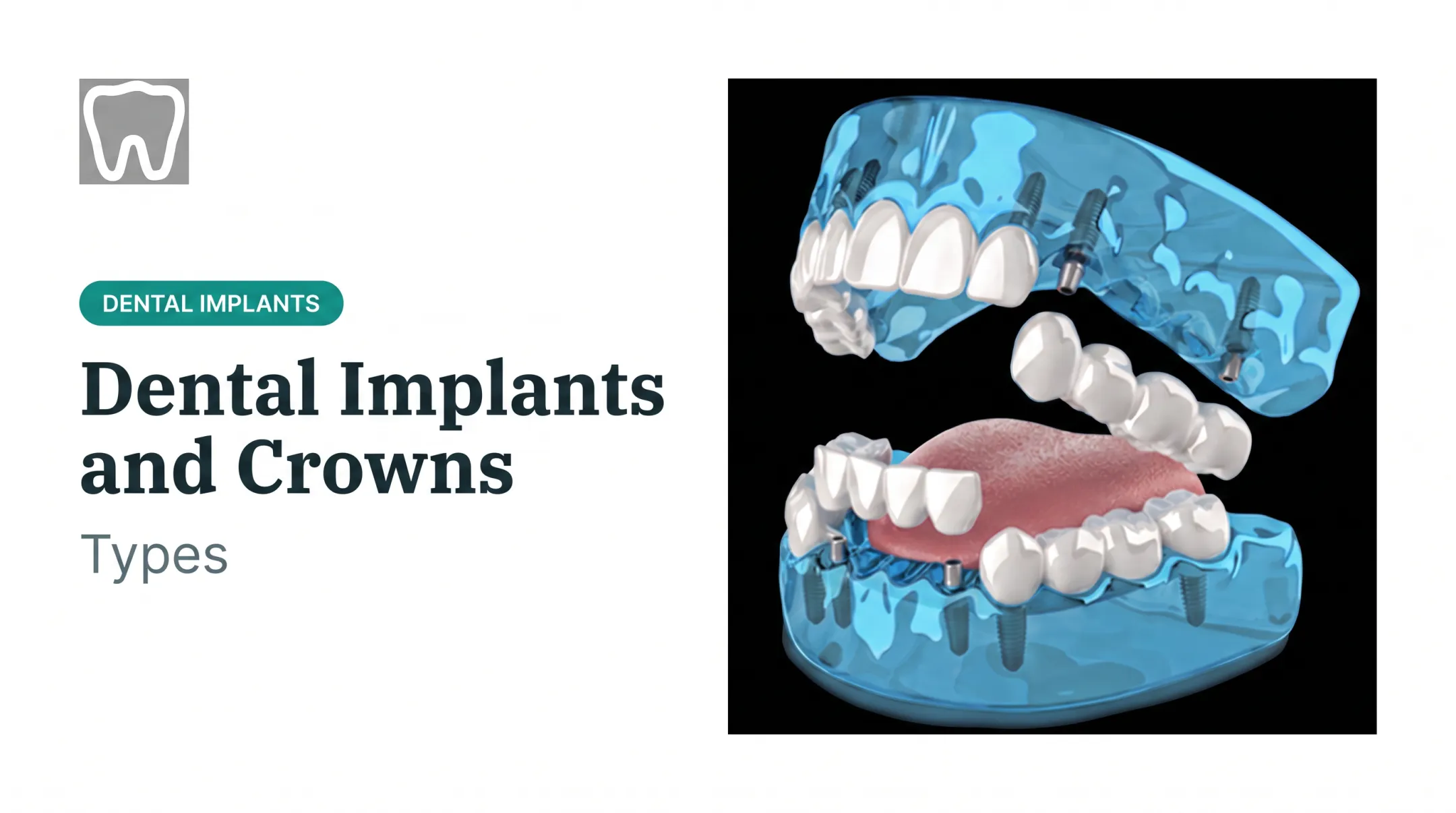
A dental implant is an artificial tooth root, usually a screw-shaped post, surgically anchored into your jawbone. Most implants use three separate parts, and each one can use a different material:
- Fixture (root) — the post placed into the bone
- Abutment (connector) — links the fixture to the visible tooth
- Crown (visible tooth) — the part people actually see when you smile
This three-part structure is used across nearly every implant procedure, from replacing a single tooth to full-arch protocols like All-on-4 and All-on-6, and full-mouth reconstruction.

According to the Cleveland Clinic, the fixture must fuse with your jawbone through a process called osseointegration for the whole structure to stay stable long-term.
Why Does Implant Material Matter?
The material you choose affects three things: how well the implant bonds to bone, whether your body accepts it without irritation, and how long it lasts under daily bite pressure.
Get the wrong material for your situation, and you risk:
- Allergic or sensitivity reactions in rare cases
- Implant failure if osseointegration (bonding to bone) doesn't happen properly
- A grayish shadow through thin gum tissue (a titanium-specific issue)
- Premature wear or fracture, particularly with narrow implants
Those risks are why material standards matter as much as surgical skill. The FDA classifies root-form endosseous implants as Class II medical devices, requiring biological evaluation for cytotoxicity, sensitization, and long-term toxicity before approval.
That bar is only a regulatory floor, so reputable clinics still rely on proven manufacturers. Dr. Moguel's practice uses FDA-approved systems from Nobel Biocare, Straumann, and MegaGen, brands backed by decades of clinical research rather than newer, less-tested alternatives.
Types of Dental Implant Materials
Implants aren't one-size-fits-all. The right material depends on your allergy history, where the tooth sits in your mouth, and how much you prioritize aesthetics over proven longevity.
Titanium Implants
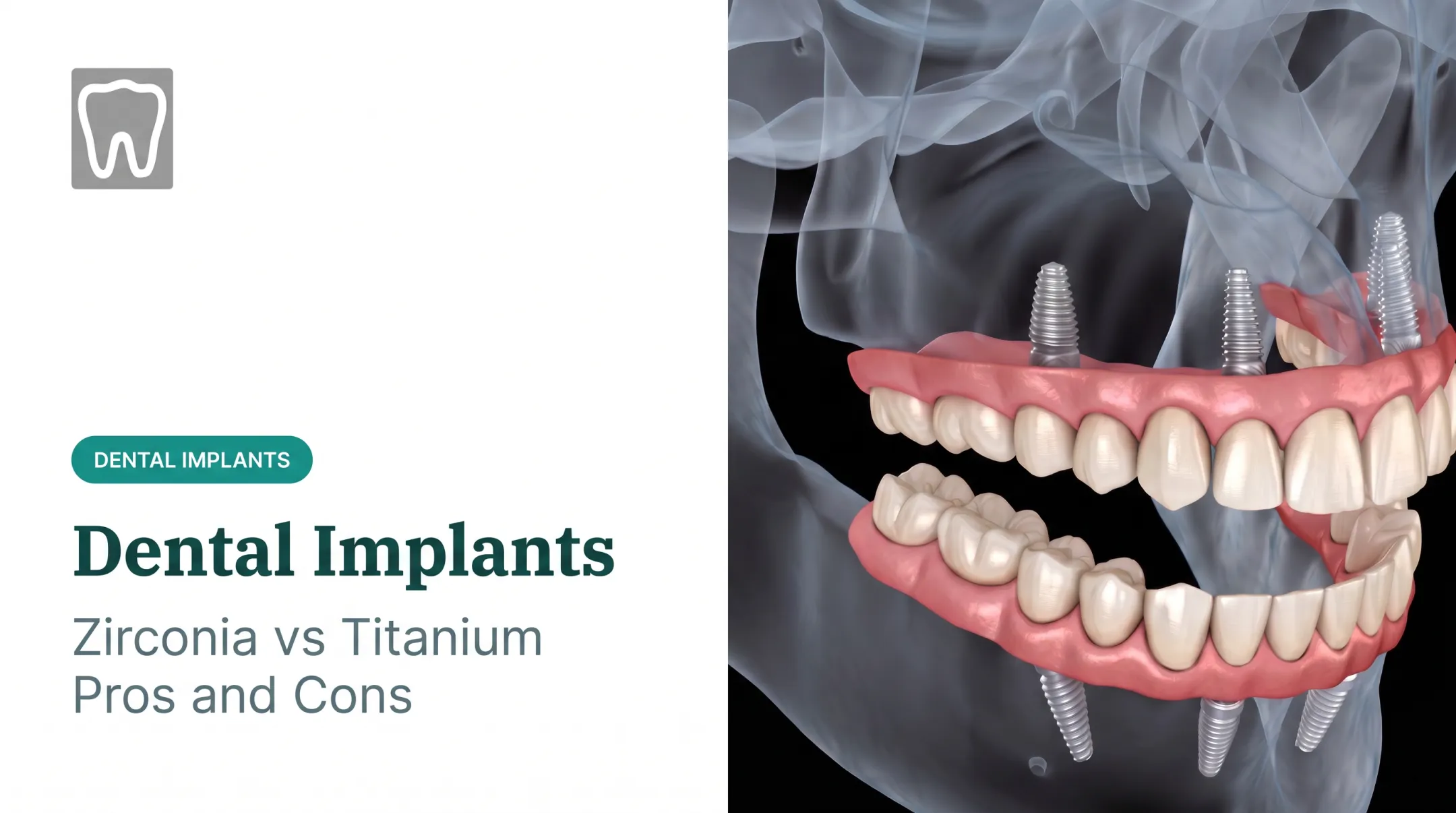
Titanium implants are typically made from commercially pure titanium or a titanium alloy (often Ti-6Al-4V), shaped into a screw-like post. This metal bonds directly to bone during osseointegration, a process that usually takes 3 to 4 months to complete.
Titanium is the most established implant material available, with decades of research behind it and a two- or three-piece design that gives dentists flexibility in placement.
Key strengths:
- A 2019 systematic review found 96.4% implant-level survival at 10 years, with a more conservative sensitivity estimate of 93.2%
- A 2024 titanium-specific meta-analysis reported 92% survival at 20 years in prospective studies (78% after adjusting for missing data)
- Best suited for restorations on back teeth that need high bite force, and for full-arch protocols
Limitations: Titanium can occasionally show through as a grayish tint if your gum tissue is thin, and rare metal sensitivities do exist.

Zirconia Implants
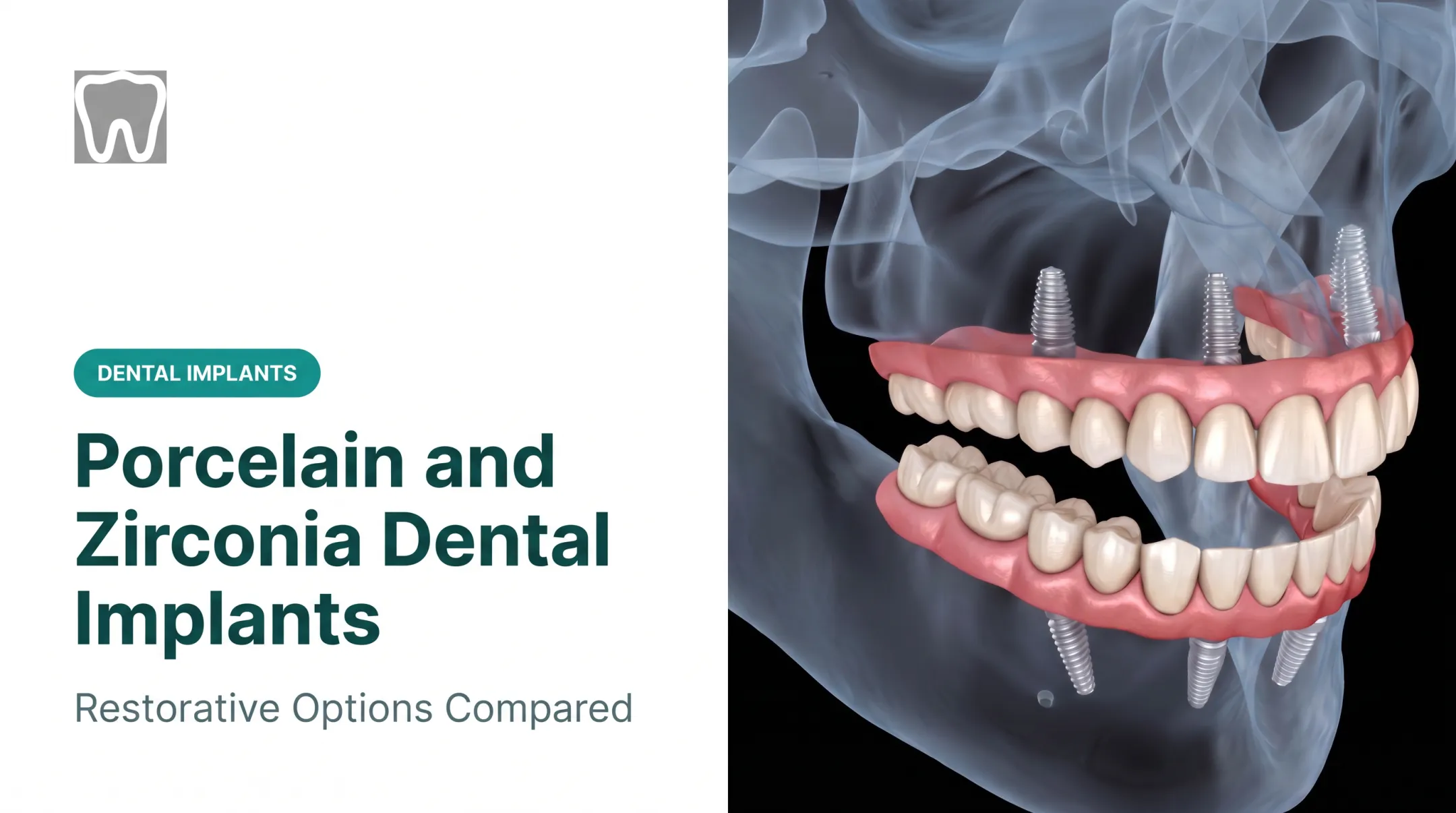
Zirconia (zirconium dioxide) is a white ceramic material, usually placed as a single-piece implant. It's metal-free, which makes it the go-to option for patients with titanium allergies.
Unlike titanium's multi-piece system, zirconia implants are typically one solid unit. That design has trade-offs: fewer size options during surgery, but no grayish shadow under thin gums since the material is naturally white.
Key strengths:
- A 2023 review found a 95.1% cumulative 10-year survival rate for zirconia implants
- Highly biocompatible, corrosion-resistant, and more resistant to plaque buildup than titanium
- Best for front-tooth replacements and patients prioritizing a natural look
Limitations: The same 2023 review found 26 implant fractures among 172 failures, mostly involving narrow-diameter implants. Zirconia also has fewer decades of long-term data than titanium and can be more technically demanding to place.
Alternative Materials
A handful of other materials appear in rare cases: polymers like PEEK, carbon-based ceramics, and metals such as stainless steel, gold, or cobalt-chromium. Implant specialists rarely recommend them today because they have:
- Lower long-term durability than titanium or zirconia
- Higher brittleness or corrosion risk
- Little role outside niche or historical cases
What Are Dental Crowns Made Of?
The crown, the part you actually see when you smile, is a separate piece from the implant post underneath. It attaches via the abutment, so crown material is chosen on its own, apart from the implant post.
Common crown materials include:
- Porcelain: natural-looking and well-studied, with reported 5-year survival rates above 90% for all-ceramic crowns
- Zirconia: strong enough for posterior chewing forces; increasingly used in full-arch protocols
- Composite: a budget-friendly option, though less documented in long-term studies
Full-arch protocols that combine a durable framework with aesthetic crowns are becoming more common. Dr. Moguel's patented 3-ON-8™ approach, for example, uses 8 implants supporting 3 independent zirconia bridges, designed for both stability and a natural appearance.

How to Choose the Right Implant Material
The right implant material is the one that fits your mouth, bite, and long-term goals. Weigh these factors before you decide:
- Metal allergies or sensitivities — a clear signal toward zirconia
- Location in the mouth — front teeth favor aesthetics (zirconia); back teeth favor bite strength (titanium)
- Bone density and quality — assessed through imaging like 3D Cone Beam CT scans
- Budget and long-term goals — titanium usually costs less; zirconia often costs more
- Aesthetic priorities — especially relevant if you have thin gum tissue

This is not a choice to make from a blog post alone. A board-certified periodontist or implant specialist should review your bone health, allergy history, and aesthetic goals before recommending titanium or zirconia.
Dr. José Moguel has placed more than 17,000 implants over 38 years of practice and offers a free consultation to walk through the options with you.
Frequently Asked Questions
What are the teeth in implants made of?
The visible crown is typically made from porcelain, zirconia, or composite. This is separate from the titanium or zirconia implant post that's anchored into your jawbone.
Can I have an MRI with dental implants?
Titanium implants are generally MRI-safe since titanium isn't magnetic and doesn't react to the scanner's field. Still, always tell your radiologist what implant materials you have beforehand.
How many years will a tooth implant last?
Implants can last decades, and often a lifetime, with proper oral hygiene and regular checkups. Research shows survival rates above 96% at the 10-year mark for well-placed implants.
Is titanium or zirconia better for dental implants?
Titanium has more long-term data and a stronger track record for durability, especially in back teeth. Zirconia suits patients with metal sensitivities or those prioritizing a natural, white appearance up front.
Are dental implant materials safe for the body?
Yes. FDA-approved titanium and zirconia are both highly biocompatible and rarely trigger rejection or allergic reactions when placed by a qualified specialist.
Can dental implant material affect the cost of treatment?
Zirconia and premium implant brands generally cost more than standard titanium. Clinics in Mexico, like Dr. Moguel's practice in Los Algodones, offer the same premium materials at savings of up to 60-70% compared to U.S. pricing.