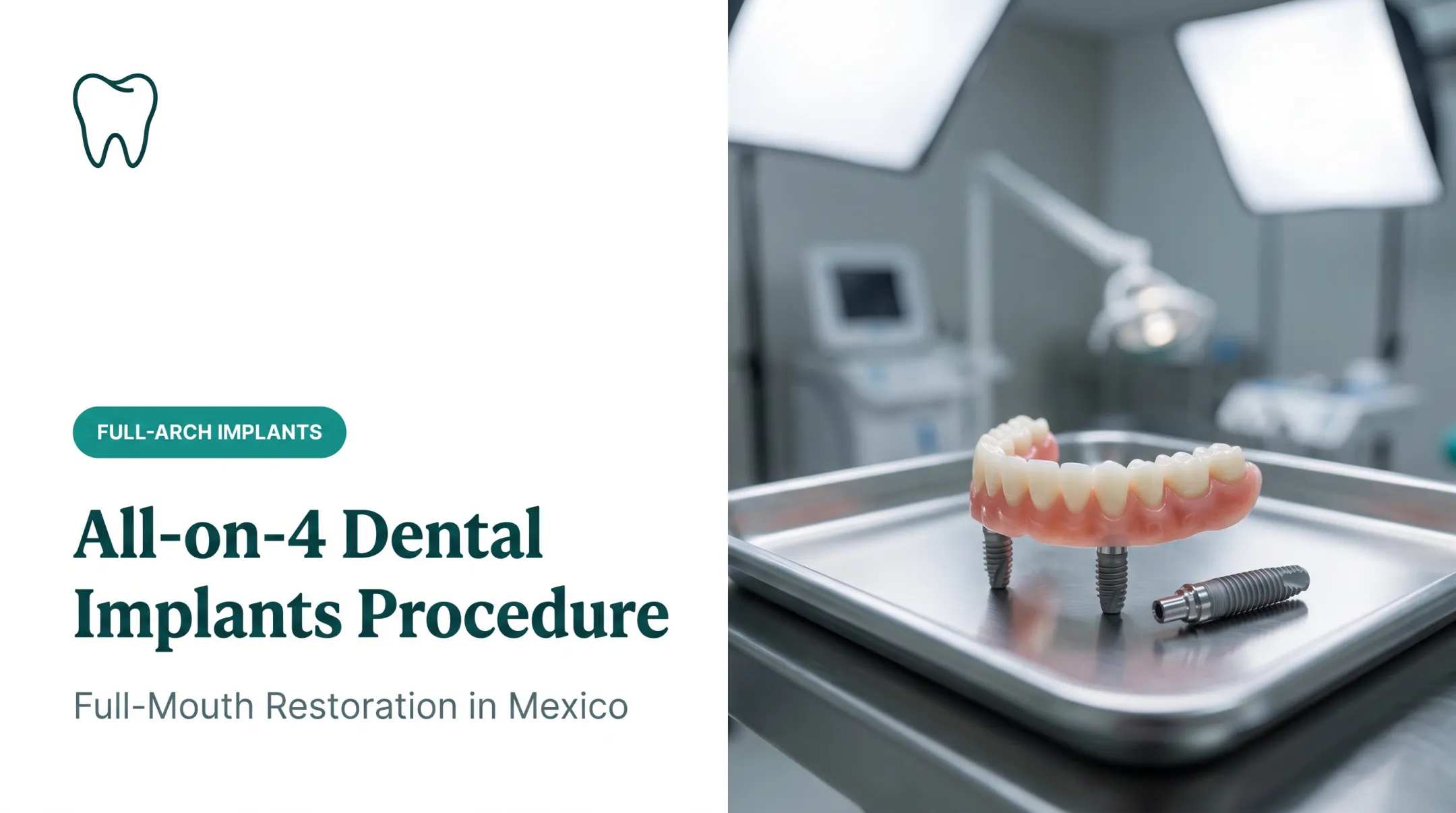

Confusion here is common. Traditional dentures pop out at night. Snap-on overdentures are removable too. All-on-4? It's a different animal entirely.
This article breaks down exactly what "fixed" means for All-on-4, how it compares to removable alternatives, what the procedure involves, and how to figure out which option actually fits your mouth and your budget.
Key Takeaways
- All-on-4 is a fixed, non-removable prosthesis that only a dentist can detach it
- Snap-in overdentures are different: patients remove those daily for cleaning
- The right choice depends on bone health, budget, and how much maintenance you want
- A periodontist's exam, including 3D imaging, determines which option fits your case
Are All-on-4 Dental Implants Removable? The Direct Answer
No. Once your permanent All-on-4 bridge is attached, it stays in your mouth around the clock. You don't take it out to soak it or clean it the way you would a traditional denture.
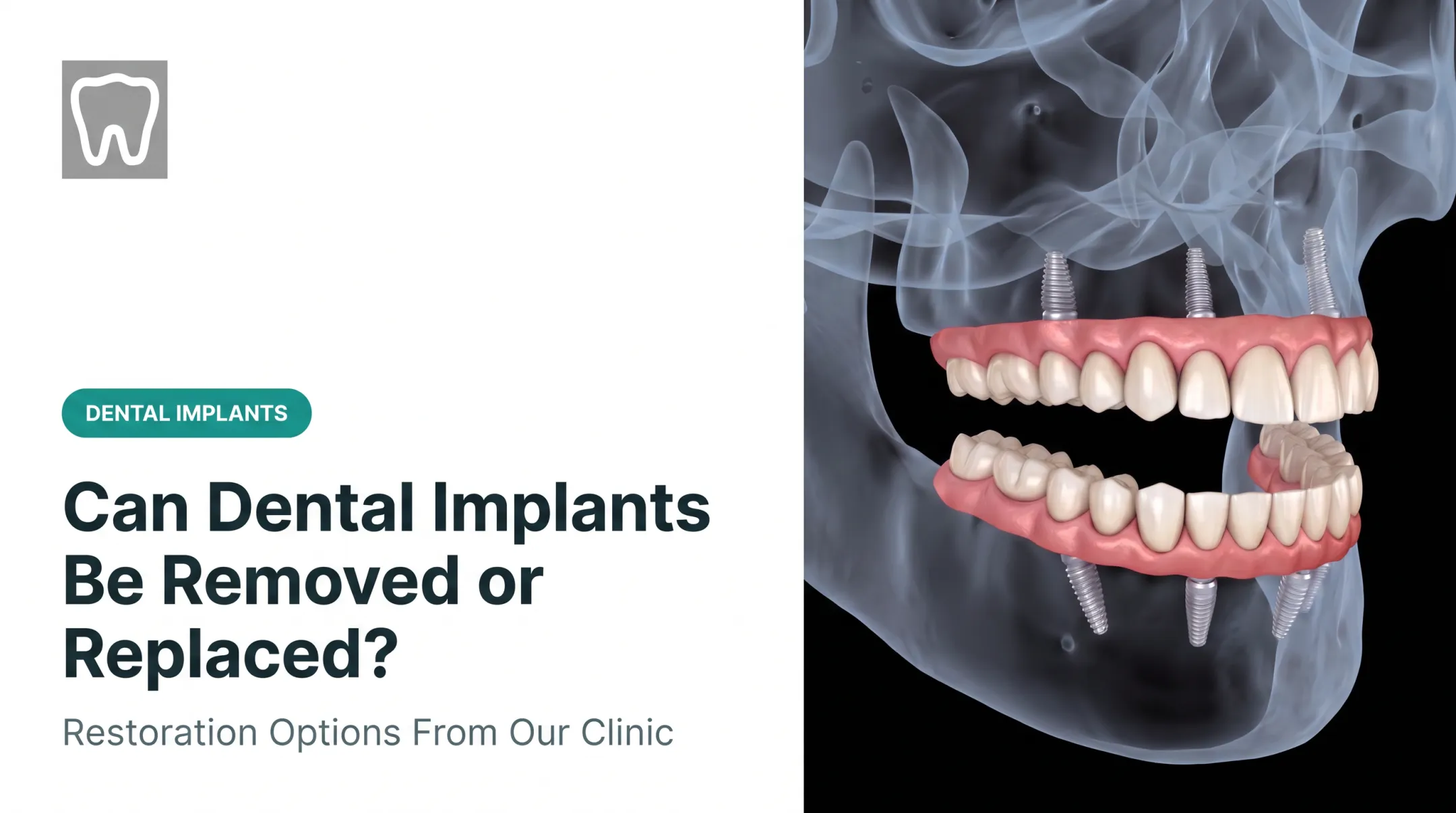
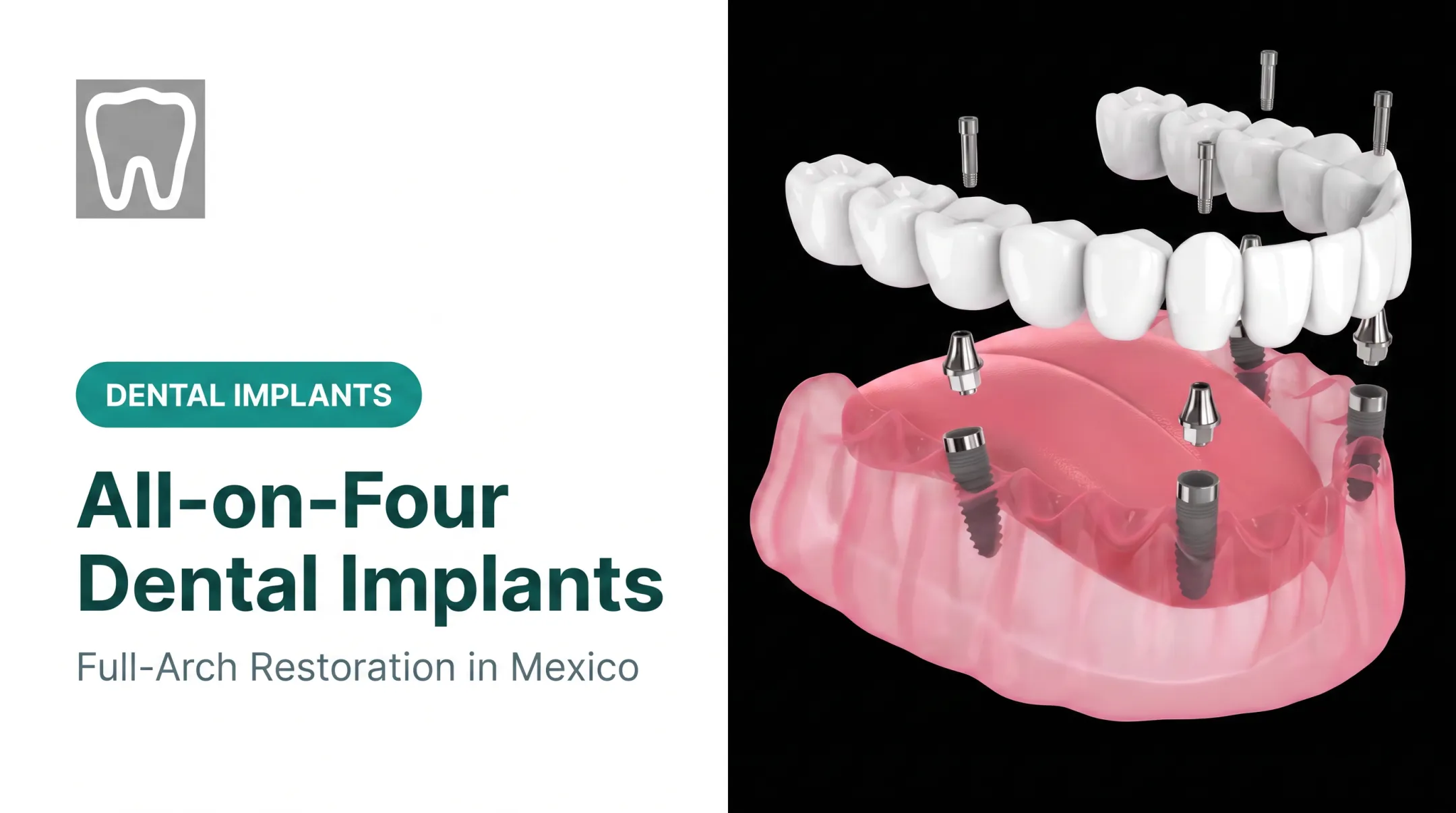
The bridge is secured to four titanium implants using prosthetic screws. Only a dental professional can unscrew and detach it, typically during maintenance visits for repairs, relines, or a deeper cleaning underneath the bridge.
Nobel Biocare, the company behind the original All-on-4 concept, describes it explicitly as a fixed full-arch prosthesis, not a patient-removable appliance.
Here's where most confusion starts:
- All-on-4 (fixed): Screwed to four implants, removed only by a dentist, functions like natural teeth
- Snap-in overdentures (removable): Clip onto locator attachments on 2-4 implants, patients pop them out nightly

Both use dental implants and improve on traditional dentures. But they're built for completely different daily routines. If you've seen "implant-supported dentures" marketed alongside All-on-4, that's the removable category, not the same product.
Fixed All-on-4 vs. Removable Implant Options: Key Differences
Stability and Daily Function
Fixed All-on-4 stays anchored 24/7. There's no taking it out after meals, no worrying about it shifting mid-conversation. Removable snap-in dentures, by contrast, need to come out nightly and after eating for cleaning, which some patients find inconvenient, and others actually prefer for the flexibility.
Comfort and Speech
Because fixed bridges skip the bulky acrylic palate plate common in removable dentures, many patients notice improved taste and less interference with speech. That said, research on speech outcomes is mixed. One 2022 review found some early /s/ sound distortion with fixed upper prostheses in the first six months, so results vary by patient and arch.
Maintenance and Hygiene
- Fixed All-on-4: Brush and use interdental brushes daily; professional cleanings check screws and fit
- Removable overdentures: Take out, rinse, soak, and clean the attachment sites separately
Removable options are genuinely easier to clean at home. That convenience is a genuine trade-off against the stability of a fixed bridge.
Cost and Long-Term Value
Removable options typically cost less upfront. In Mexico, implant-supported dentures run roughly $3,500 to $5,500 compared to $10,000 to $14,000 in the U.S. Fixed All-on-4, meanwhile, runs $8,000 to $12,000 per arch at Dr. Moguel's Los Algodones clinic, versus $18,000 to $28,000 per arch just across the border in Yuma.
Fixed bridges cost more initially but often deliver better long-term value: fewer components to replace, less wear on connector parts.

Bone Preservation
Both options stimulate the jawbone through chewing pressure, which helps slow bone loss. Some retrospective data shows fixed prostheses with lower one-year marginal bone loss than overdentures, though a direct maxillary comparison found similar results between the two. Either option beats no implant at all for preserving bone.
How the All-on-4 Procedure Works (And Why It's Fixed From Day One)
The process starts with a full exam and a 3D CBCT scan to map your bone density and plan implant positioning.
- Extraction and placement: Any failing teeth are removed, then four implants are placed — two vertically in front, two angled in back to use denser bone and often avoid grafting
- Same-day temporary bridge: A high-strength fixed bridge is attached immediately, so patients leave surgery with functional, fixed teeth — not a removable temporary
- Osseointegration: Over the next 3-6 months, titanium implants fuse with the jawbone
- Final restoration: A custom zirconia or ceramic hybrid bridge is permanently attached once healing is complete

This "teeth in a day" approach addresses a common question patients ask — yes, you can walk out with fixed teeth the same day, but that provisional bridge isn't the final one. It's still fixed, just not permanent.
Dr. José Moguel, a board-certified periodontist with 38+ years of experience and over 17,000 implants placed, oversees this planning process. His approach relies on precise imaging to keep implant angles minimally invasive while maximizing bone contact, which is why the same-day bridge holds up as a truly fixed solution rather than a temporary stopgap.
Who Should Choose Fixed All-on-4 vs. a Removable Alternative?
Fixed All-on-4 tends to fit better if you:
- Are missing most or all teeth and want a permanent, low-maintenance result
- Have enough bone, or bone that can support angled implant placement
- Want to avoid the daily in-and-out routine of a removable appliance
Removable snap-in dentures may fit better if you:
- Have budget constraints and want a lower upfront cost
- Have limited bone volume that makes fixed placement harder
- Prefer removing the denture to clean it thoroughly
The better choice depends on your bone anatomy, budget, and how you want daily care to work. A free, no-obligation consultation with a board-certified periodontist—plus bone-density imaging—is the most reliable way to confirm which option fits you.
Recovery, Care, and What to Expect Long-Term
The first few days after surgery involve mild swelling, bruising, and discomfort — managed with prescribed medication and warm salt-water rinses. Most patients need a soft-food diet for 3-6 months while osseointegration completes.
Once healed, daily care for a fixed prosthesis is straightforward:
- Brush morning and night, plus use interdental brushes to reach under the bridge
- Attend professional check-ups so your dentist can inspect screws and fit
- Watch for any looseness or discomfort and report it promptly
With consistent care, All-on-4 restorations have clinically documented success rates reported above 95% in long-term studies and can last a lifetime, though the bridge itself may need maintenance after 10-15 years due to normal wear. Lifetime implant-hardware warranties, paired with routine cleanings, help protect that long-term investment.

Frequently Asked Questions
Can I have all my teeth removed and replaced with All-on-4 dental implants on the same day?
Yes, in many cases. Extractions, implant placement, and a fixed temporary bridge can often happen in one visit. The final permanent prosthesis follows after healing, typically several months later.
How long does it take to recover from All-on-4 dental implants?
Initial recovery (swelling, soreness) usually resolves within days to a couple of weeks. Full osseointegration, where implants fuse with bone, generally takes 3-6 months.
Can I remove my All-on-4 implants myself for cleaning?
No. All-on-4 is a fixed prosthesis attached with prosthetic screws. Only a dental professional can detach it, typically during maintenance visits.
What's the difference between All-on-4 and snap-in dentures?
All-on-4 is permanently fixed and only removable by a dentist. Snap-in dentures clip onto implants and are removed daily by the patient for cleaning.
How much does All-on-4 treatment typically cost compared to removable options?
Fixed All-on-4 usually costs more upfront than removable overdentures, but it often needs fewer replacements and less day-to-day upkeep. Treatment in Mexico can run 60-70% less than comparable U.S. pricing.
How do I know if I'm a candidate for fixed All-on-4 implants?
The best way is a consultation that includes 3D imaging to assess your bone density and oral health. This determines whether fixed or removable treatment suits you better.