
Is it safe? Could you have a metal allergy without knowing it? Will it look natural? And how much is this actually going to cost?
These are the exact concerns that send people searching for alternatives before they've even scheduled a consultation. This article breaks down how titanium implants work, their genuine pros and cons, how they stack up against zirconia, and what drives the final price tag.
Key Takeaways
- Titanium implants show a 96.4% 10-year survival rate across pooled clinical studies
- Durability, strong bone fusion, and decades of proven data lead the advantages
- Rare metal sensitivity (under 1%) and a possible gray gumline are the main drawbacks
- An experienced, board-certified specialist lowers your complication risk
What Are Titanium Dental Implants and How Do They Work
What Are Titanium Dental Implants and How Do They Work?
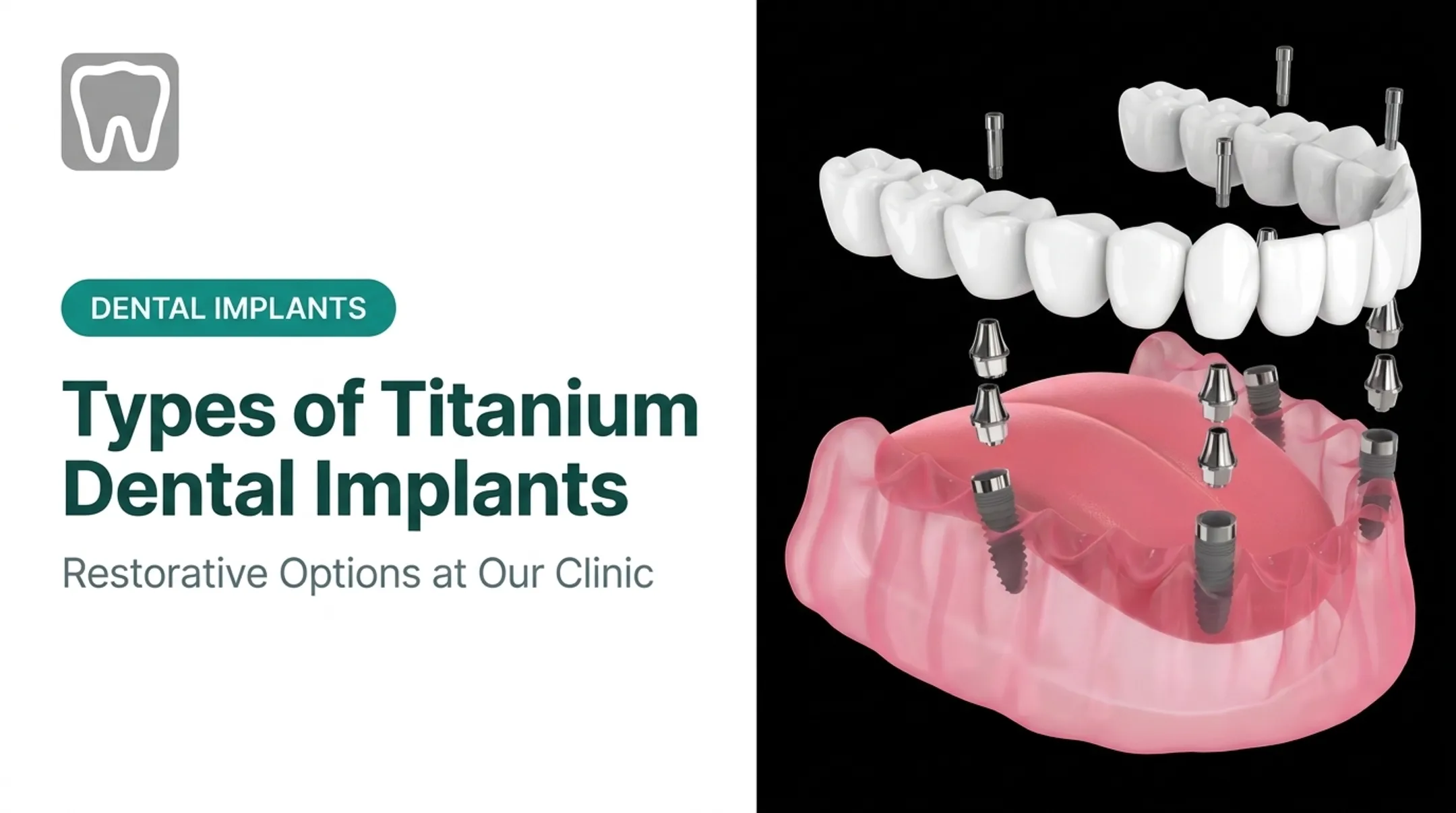
A titanium implant isn't one solid piece. It's actually a three-part system:
- The screw (fixture) – surgically placed into the jawbone to act as the artificial root
- The abutment – a connector piece attached once healing is complete
- The crown – the visible, tooth-shaped restoration on top The screw fuses with your jawbone through a process called osseointegration, where bone cells grow directly against the implant surface with no soft tissue layer in between. This is what makes the implant stable enough to bite and chew normally. The typical timeline runs like this:
- Surgical placement of the titanium screw
- 3-4 month healing period while osseointegration occurs
- Prosthetic phase: abutment attachment, then final crown fitting

Why Titanium Is Used
Titanium isn't limited to dentistry. Medicine uses it in hip replacements and pacemaker casings because it forms a thin oxide layer that resists corrosion and works well with human tissue. That same biocompatibility and corrosion resistance made it the standard for dental implants. It's strong enough to handle daily chewing forces without fracturing, yet light enough not to feel foreign in the mouth.
Pros of Titanium Dental Implants
Proven track record. Six decades of research and clinical refinement have gone into perfecting titanium implant design, surface treatments, and placement techniques.
High success rates. A 2019 systematic review pooling 18 studies found a 96.4% 10-year survival rate. A separate 2012 cohort tracking 511 implants over a decade reported 98.8% survival and 97.0% success, with zero implant fractures recorded.
Long-term durability. With proper hygiene and regular checkups, a titanium implant can realistically last decades, sometimes a lifetime. The crown on top may eventually need replacing, but the fixture itself is built to endure.
Versatility across cases. Titanium works for:
- Single-tooth replacement
- Multiple missing teeth
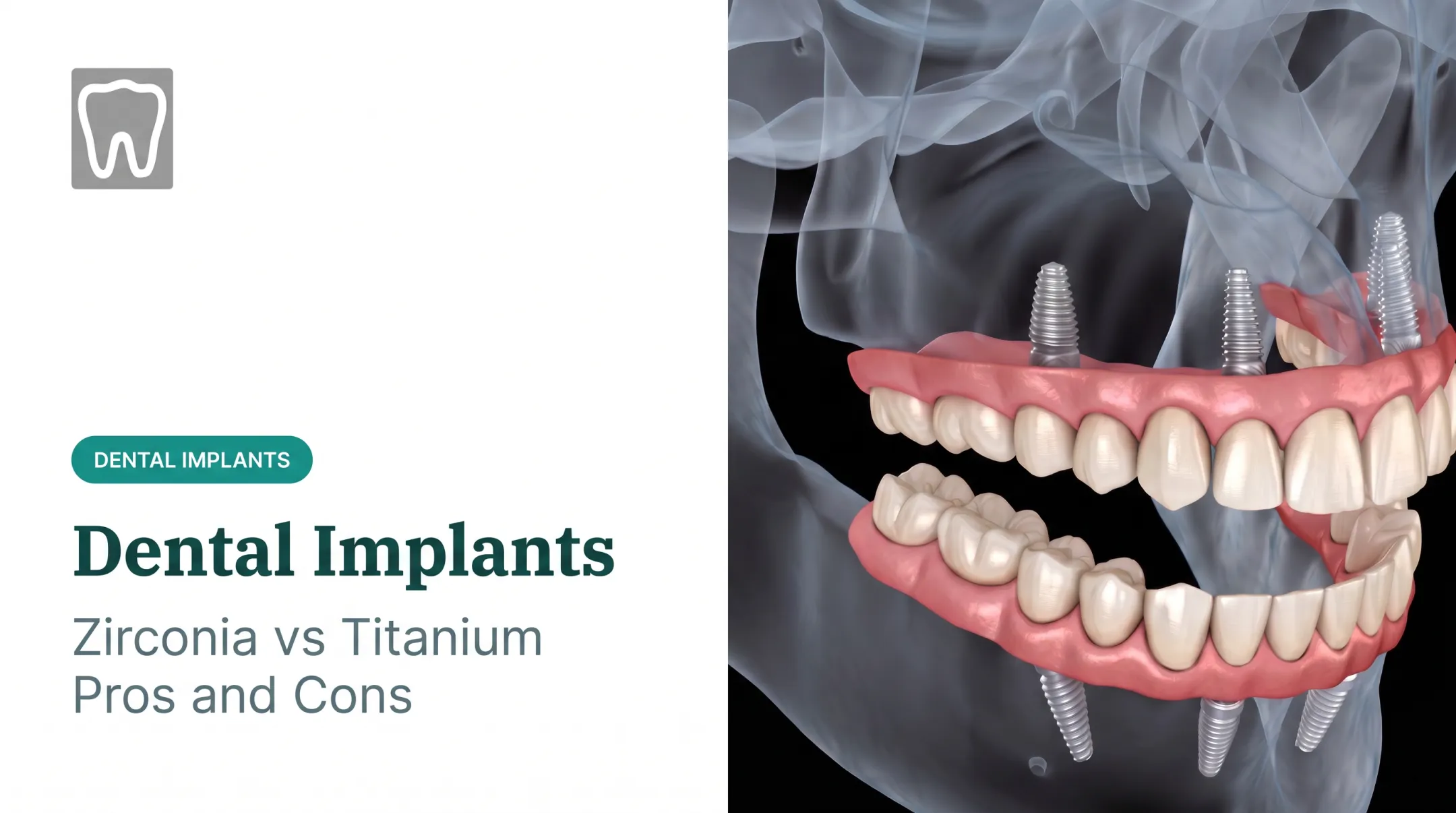
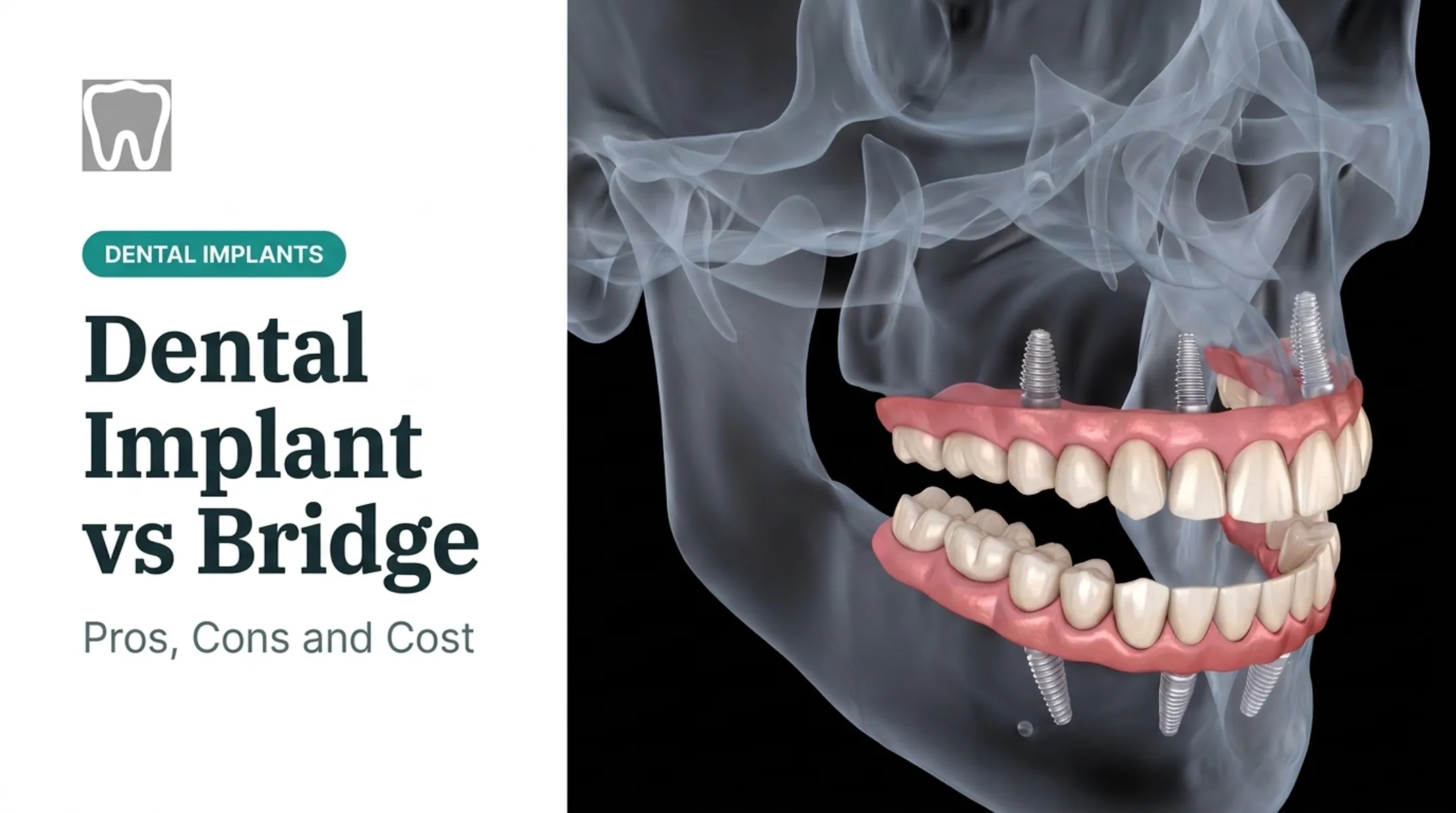
- Full-arch solutions like All-on-4 or All-on-6
Strong biocompatibility. Titanium fuses reliably with jawbone and surrounding gum tissue, which minimizes the loosening or shifting that plagued older implant designs.
For patients needing full-mouth solutions, some clinics have taken titanium's reliability further. Dr. José Moguel's 3-ON-8™ protocol, for example, uses eight titanium implants per arch to support three separate, independent bridges instead of one continuous piece.
That segmented design spreads chewing forces across more support points, so one section can be repaired without touching the other two.

Cons of Titanium Dental Implants
No material is perfect, and titanium has genuine limitations worth knowing before surgery.
Rare metal sensitivity. A study of 1,500 implant patients found that just 9 patients (0.6%) tested positive for titanium allergy. Symptoms can include localized inflammation, itching, or in rare cases, unexplained implant failure. It's uncommon, but not zero.
Possible gray line visibility. Patients with thin or receding gum tissue may notice a faint gray shadow near the gumline where the metal shows through. This mostly affects people with naturally thin gum biotypes or visible front-tooth restorations.
Two-piece design tradeoff. The junction between the screw and abutment creates a microscopic gap where bacteria can accumulate. Poor oral hygiene around this junction increases the risk of peri-implantitis—an inflammatory condition that can loosen or fail the implant.
Surgical risks. Titanium implants require surgery, with the usual risks of infection, swelling, or delayed healing. Those risks apply to any implant procedure, not titanium alone.
Candidacy limitations. These factors can complicate treatment or rule it out:
- Insufficient bone density (may require grafting first)
- Uncontrolled diabetes
- Heavy smoking — research shows smokers face over double the failure risk compared to nonsmokers
- Certain autoimmune conditions

Titanium vs. Ceramic (Zirconia) Implants: Which Is Right for You
Both materials are biocompatible and used routinely in implant dentistry, but they suit different priorities.
| Factor | Titanium | Zirconia |
|---|---|---|
| Aesthetics | Small risk of gray line at gumline | Tooth-colored, metal-free |
| Track record | 60+ years of data | Shorter, growing evidence base |
| Design | Two-piece, flexible for angled placement | Often one-piece, more technique-sensitive |
| Best for | Full-arch cases, small-diameter sites | Visible front teeth, metal sensitivity |
Zirconia's white color eliminates the gray-shadow concern entirely, which matters most for front-tooth restorations with thin gum tissue. But titanium's two-piece flexibility makes it easier to place at angles when bone anatomy is tricky, which is part of why it remains the standard for full-arch protocols.

The better material depends on your bone anatomy, aesthetic priorities, and whether metal sensitivity is a real concern. A specialist consult with proper imaging is what turns those factors into a clear recommendation.
Cost Considerations and Choosing the Right Provider
Implant pricing swings widely based on how many teeth you're replacing, the materials used, your location, and the provider's expertise. A single implant is a very different financial commitment than a full-arch restoration.
In the United States, per the American Academy of Implant Dentistry, a single implant (including abutment and crown) typically runs $3,100 to $5,800. Full-arch treatment costs considerably more, often tens of thousands of dollars per arch.
That range is why many patients compare cross-border care. Dental Implants in Mexico, based in Los Algodones, Baja California, offers treatment at roughly 60-70% less than typical U.S. pricing, using FDA-approved systems from Nobel Biocare, Straumann, and MegaGen.
Why Provider Credentials Matter
Cost savings only matter if the quality holds up. Look for:
- Board certification in periodontics or implantology
- High case volume with documented outcomes
- Use of 3D imaging (CBCT) for treatment planning, not just flat 2D X-rays
- Transparent pricing before you commit
Dr. José Moguel, who leads treatment at Dental Implants in Mexico, brings 38+ years of clinical experience and has placed more than 17,000 implants. Check for similar credentials no matter which provider or country you choose.
Frequently Asked Questions
How long do titanium dental implants typically last?
With proper oral hygiene and regular checkups, titanium implants can last decades or even a lifetime. The crown on top may need replacement over the years, but the implant fixture itself is built for the long haul.
What is the failure rate of titanium implants?
Published research shows roughly 2-4% failure at the 10-year mark, with a large 2025 registry study reporting 2.21% overall failure. Smoking, poor bone quality, and insufficient plaque control are the leading contributing factors.
Are titanium dental implants good?
Yes. Titanium remains the most trusted, widely used implant material, backed by decades of research and success rates consistently above 95%. That long track record is why it remains the industry default.
Are titanium dental implants painful?
Your dentist uses local anesthesia during placement, so you won't feel the surgery itself. Some mild soreness or swelling afterward is normal and typically manageable with over-the-counter pain relief.
Can I have an MRI if I have a titanium dental implant?
Yes. Titanium is non-ferromagnetic and considered MRI-safe, meaning it won't be pulled by the machine's magnetic field. Still, always inform your imaging provider beforehand so they can account for any minor artifact in the scan.