
This guide covers real patient experiences, the genuine pros and cons, what recovery actually feels like, and the cost math driving more patients toward Los Algodones, Mexico for treatment. We'll also draw on the clinical perspective of Dr. José Moguel, a board-certified periodontist with 38+ years of experience and over 17,000 implants placed.
Key Takeaways
- Patients consistently report better chewing, clearer speech, and more confidence than removable dentures
- Outcomes depend heavily on surgeon experience, planning, and bone health
- Recovery includes a soft-food period, but most patients adjust within weeks
- Choosing an experienced provider in Mexico can cut costs by 60-70% versus US pricing
- Candidacy requires imaging, bone evaluation, and a full medical history review
What Real Patients Say About All-on-4: Common Themes in Reviews
Most positive reviews circle back to the same thing: patients can finally eat, talk, and smile without thinking twice. Gone is the fear of a denture slipping mid-conversation or a piece of steak becoming impossible to chew.
Common praise points include:
- Regaining the ability to eat foods they'd avoided for years
- Speaking clearly without a plate shifting in their mouth
- Feeling comfortable smiling in photos again
- No more adhesives, soaking cups, or nightly removal routines
The clinical data backs up this satisfaction. A long-term study following 245 patients found 98.1% implant-related success at five years, dropping only slightly to 94.8% over a decade, with prosthesis survival holding at 99.2%.
Another cohort tracking patients for 10 to 18 years reported 93% implant survival and 98.8% prosthetic survival, though nearly a third of patients were lost to follow-up over that stretch.

The Less Glamorous Feedback
Reviews aren't universally glowing, and that's worth knowing upfront. Common critical points include:
- An adjustment period for speech, especially with the temporary prosthesis
- Getting used to chewing with a fixed appliance instead of natural give
- Frustration when expectations weren't set realistically beforehand
A systematic review of 24 studies found that prosthetic element detachment occurred in 23.2% of patients — meaning repairs and adjustments are common, even when the implants themselves succeed. High survival rates don't mean zero maintenance.
Reviews also repeatedly stress provider credentials. Patients who researched their surgeon's background—specifically a board-certified periodontist rather than a general dentist offering All-on-4 as a side service—tend to report smoother experiences.
Cost comes up just as often. Many patients who traveled for treatment describe quality care at a fraction of typical US pricing.
How All-on-4 Works: Understanding the Procedure Behind the Reviews
Same-Day Teeth and the Surgical Process
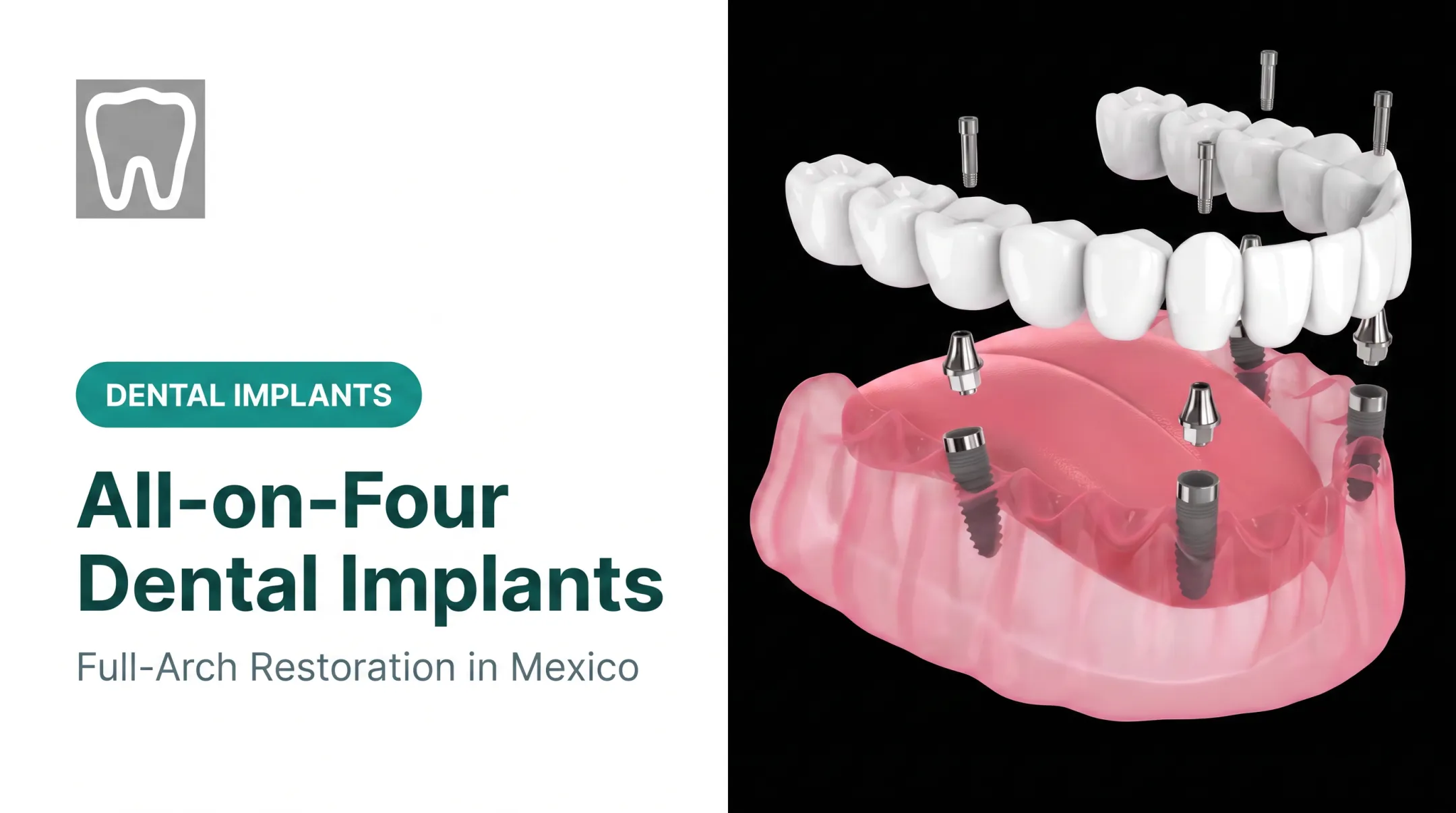
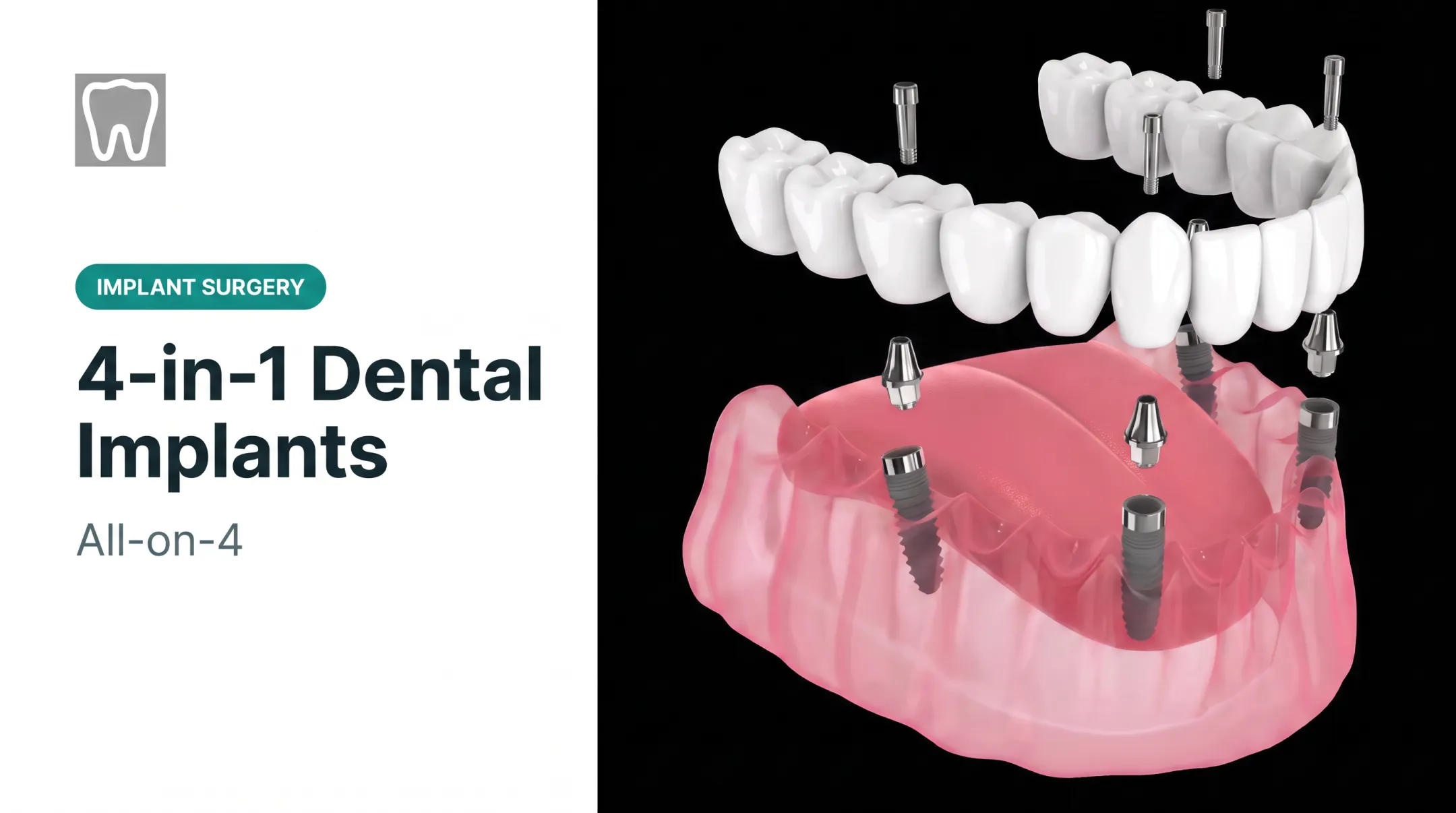
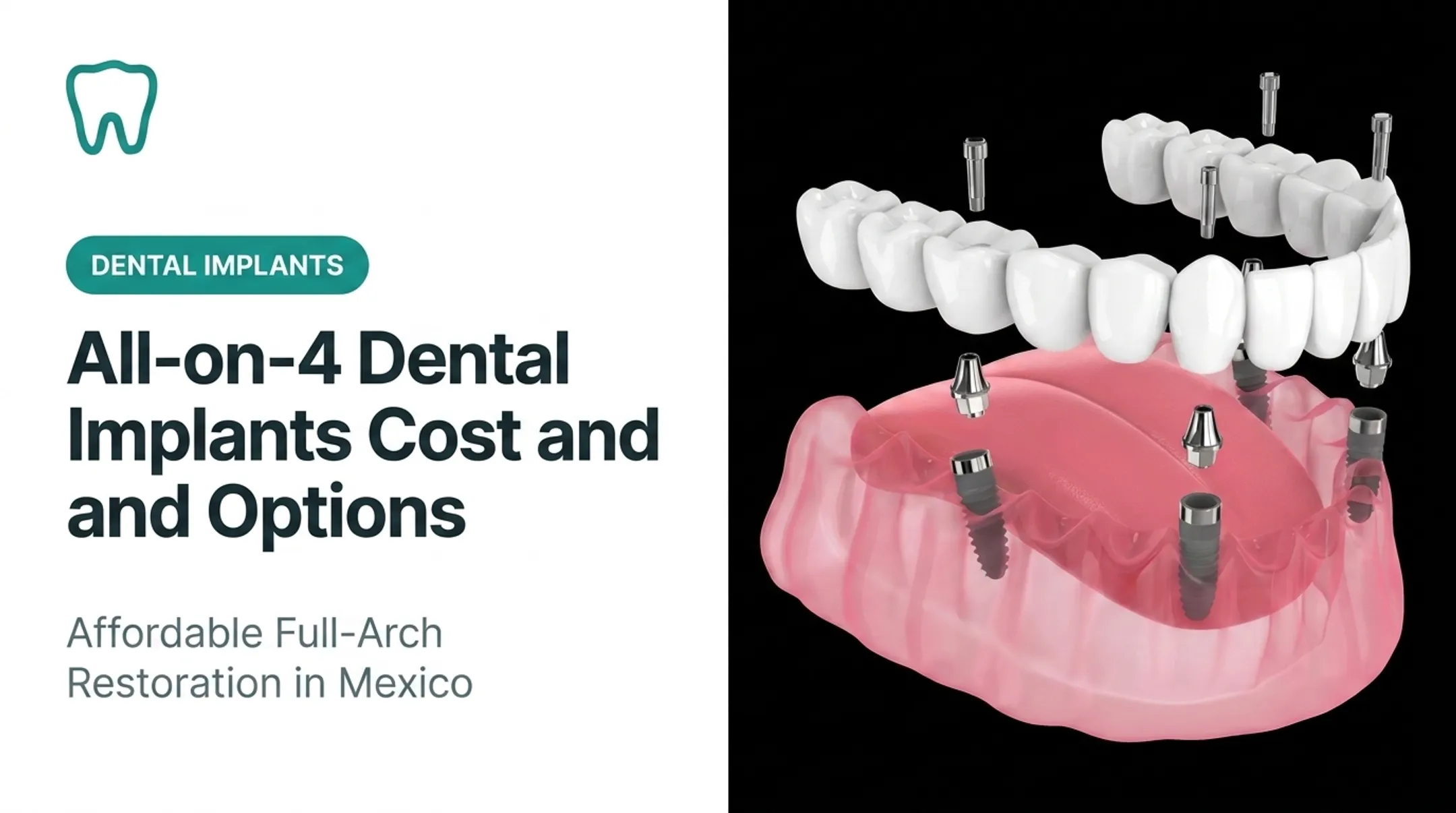
Most All-on-4 reviews make more sense once you know what happens in the chair. The protocol places two straight implants at the front of the jaw and two implants angled up to 45 degrees toward the back. That angled placement maximizes existing bone contact, which is why many patients with moderate bone loss avoid grafting altogether.
At Dr. Moguel's clinic, this isn't a template applied identically to every patient. He evaluates each case using 3D CBCT scanning to map bone density, nerve pathways, and the exact position for each implant before surgery.
What "same-day teeth" actually means:
- A temporary fixed bridge can be attached the same afternoon as surgery
- This is provisional function, not completed healing
- Real osseointegration (bone fusing to the implant) takes months, even though you're walking out with teeth
Recovery Timeline
Recovery follows a fairly predictable arc:
- Surgery day – 2-3 hours under sedation; temporary bridge attached that afternoon
- Days 2-3 – Swelling and soreness typically peak here
- Days 3-7 – Soft-tissue healing largely resolves; most patients feel normal
- Weeks 1-4 – Mechanical stability holds the implant while early bone healing starts
- Weeks 5-12 – New bone grows into the implant threads
- Months 4-6 – Permanent zirconia or ceramic restoration replaces the temporary bridge
Classic healing windows run about 3-4 months for the lower jaw and 6-8 months for the upper jaw, since maxillary bone is typically less dense. That is why many patient accounts praise same-day function, then still describe a later visit for the permanent bridge once osseointegration is complete.

The Benefits Patients Consistently Praise
Chewing power improves dramatically. A small comparative study found bite force on implant-supported prostheses averaged 219 N, compared to just 51 N for conventional dentures. That's roughly four times the chewing force (the study only involved six patients per group, so treat it as directional rather than universal).
Bone preservation comes up just as often. A five-year study comparing conventional dentures to a four-implant fixed prosthesis found significantly more bone loss in the denture group. Implants don't prevent all resorption, but they slow it considerably compared to sitting on bare gums.

Other benefits patients mention often:
- Facial support – a fuller, more youthful appearance versus the sunken look denture wearers develop over time
- Simple maintenance – brushing and flossing like natural teeth instead of nightly soaking and adhesive routines
- Material quality – FDA-approved systems such as Nobel Biocare, Straumann, and MegaGen, chosen at Dr. Moguel's clinic for each patient's anatomy and plan
Warranty coverage also builds confidence. Dr. Moguel's clinic backs implant hardware with a lifetime warranty: if an implant fails, it's replaced at no cost. The visible prosthetic (crowns, bridges, zirconia arches) carries a five-year warranty, contingent on keeping up with professional cleanings.
Honest Downsides and What Reviews Don't Always Mention
All-on-4 isn't a small purchase, and it isn't the right fit for everyone. Here's what glowing testimonials sometimes skip over.
The upfront cost is real. Even at Mexico pricing, you're looking at thousands of dollars paid mostly at once. The smarter question isn't "what's the cheapest option" but "what's included at this price": diagnostics, materials, follow-up visits, and warranty terms all matter more than the sticker number.
Healing takes patience. You'll be on a soft-food diet for weeks, sometimes months, while osseointegration completes. Steak and crunchy vegetables aren't on the menu right away, no matter how good the temporary bridge looks.
Not every case fits the standard four-implant model. Patients with severe bone loss may need:
- Bone grafting or sinus lifts before implant placement
- All-on-6, which uses six implants for added stability
- The 3-ON-8™ protocol, using eight implants per arch for greater load distribution
- Zygomatic implants in extreme atrophy cases, where conventional anchorage isn't possible
A thorough evaluation determines which path fits your anatomy. Skipping this step is where problems start.
Cost, Value, and Why Patients Are Looking Beyond the US Border
US pricing for All-on-4 commonly runs $20,000 to $35,000 per arch. In Mexico, comparable treatment often falls between $6,000 and $12,000, translating to roughly 60-70% in savings.
At Dental Implants in Mexico, All-on-4 starts at $6,000 per arch, with quotes typically including:
- Oral examination and 3D CBCT imaging
- Four premium-grade titanium implants
- Standard abutments and temporary fixed bridge on surgery day
- Custom permanent zirconia or ceramic-hybrid bridge after healing

Dr. Moguel's clinic also offers the patented 3-ON-8™ protocol for patients who need extra implant support for full-mouth stability. Consultations are free, and pricing is quoted upfront with no surprise add-ons later.
Practical Cross-Border Considerations
Those savings still mean crossing the border, so trip logistics matter as much as time in the chair:
- The clinic sits roughly a 3-5 minute walk from the Andrade, California pedestrian border crossing
- Bilingual coordinators help arrange hotel stays in Yuma, Arizona, or Los Algodones directly
- A border-crossing checklist covers required documents (valid passport or passport card) and parking tips
- Check current CBP crossing hours before your trip, since these can shift seasonally
Who Is a Good Candidate for All-on-4?
The ideal candidate is missing most or all teeth in an arch, or has multiple failing teeth that make extraction and replacement more practical than ongoing repairs.
Candidacy evaluation typically includes:
- 3D CBCT imaging to assess bone density and width
- Review of medical history, including diabetes control and smoking status
- Screening for active gum disease that needs treatment first
Certain factors complicate candidacy without automatically disqualifying you. Research links higher risk to:
- Smoking (roughly 2.4 times higher implant failure odds)
- Uncontrolled diabetes and delayed healing
- Active periodontitis that needs treatment before placement
None of these are permanent bans. They're readiness issues a good provider will address before moving forward.
Frequently Asked Questions
Are All-on-4 implants worth the money?
Most patients seeking a fixed, long-term fix for major tooth loss find All-on-4 worth the investment. Value hinges on provider experience, materials, and how well expectations match realistic timelines and outcomes.
How long do All-on-4 implants typically last?
The titanium implants themselves can last decades, often a lifetime, with proper hygiene and maintenance. The visible prosthesis may need adjustment or replacement after 10-15 years due to normal wear.
Is the All-on-4 procedure painful?
Sedation keeps you comfortable during surgery itself. Expect manageable soreness and swelling for the first few days afterward, typically peaking around day two or three.
Can I get All-on-4 if I've lost a lot of jawbone?
The angled posterior implant placement often reduces the need for grafting in moderate bone loss cases. Severe atrophy may require alternatives like bone grafting, All-on-6, or zygomatic implants instead.
How much can I save by getting All-on-4 in Mexico compared to the US?
Patients commonly save 60-70% with experienced providers in Mexico compared to US pricing, including care from ADA/ADM-credentialed clinicians. Dr. Moguel's clinic quotes All-on-4 starting at $6,000 per arch.
What is recovery like after All-on-4 surgery?
Expect a soft-food diet, some swelling in the first few days, and a gradual return to normal eating over several weeks. Full bone healing before the permanent restoration typically takes four to six months.