
Here's the short version: All-on-4 describes the surgical technique, four implants supporting a full arch. Zirconia usually refers to the bridge on top, not the implants themselves. This article breaks down the materials, the benefits, realistic costs, and what treatment looks like with a board-certified periodontist in Los Algodones, Mexico.
Key Takeaways
- Four angled implants anchor a fixed, natural-looking full-arch bridge—no removable dentures or adhesives.
- Zirconia resists stains and plaque better than acrylic and holds up with a more natural look and feel.
- Expect higher upfront cost than acrylic, and repairs are less simple if the bridge chips.
- Patients treated in Los Algodones can get the same premium materials at about 60–70% less than typical U.S. or Canadian prices.
What Are Zirconia All-on-4 Dental Implants?
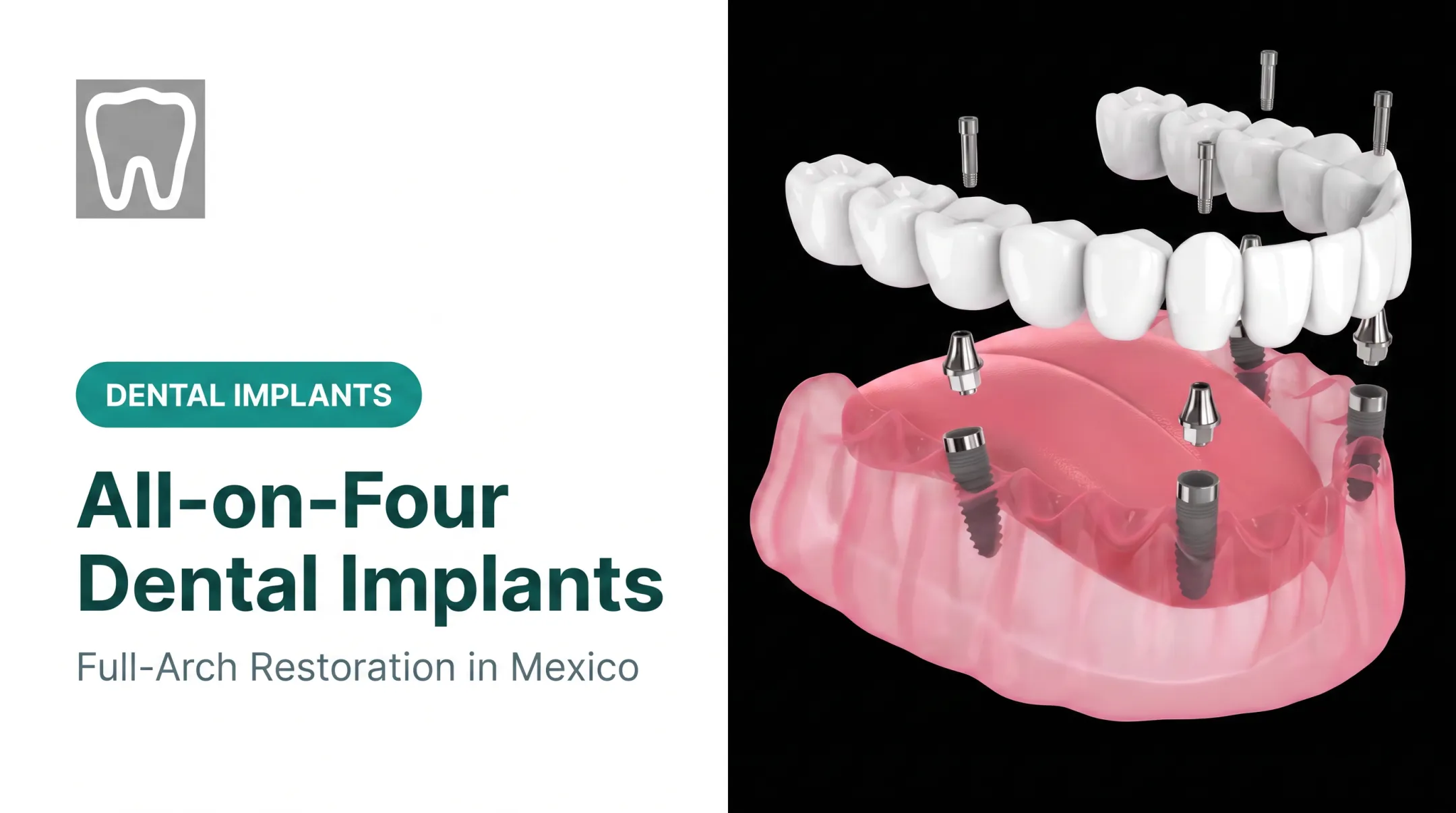
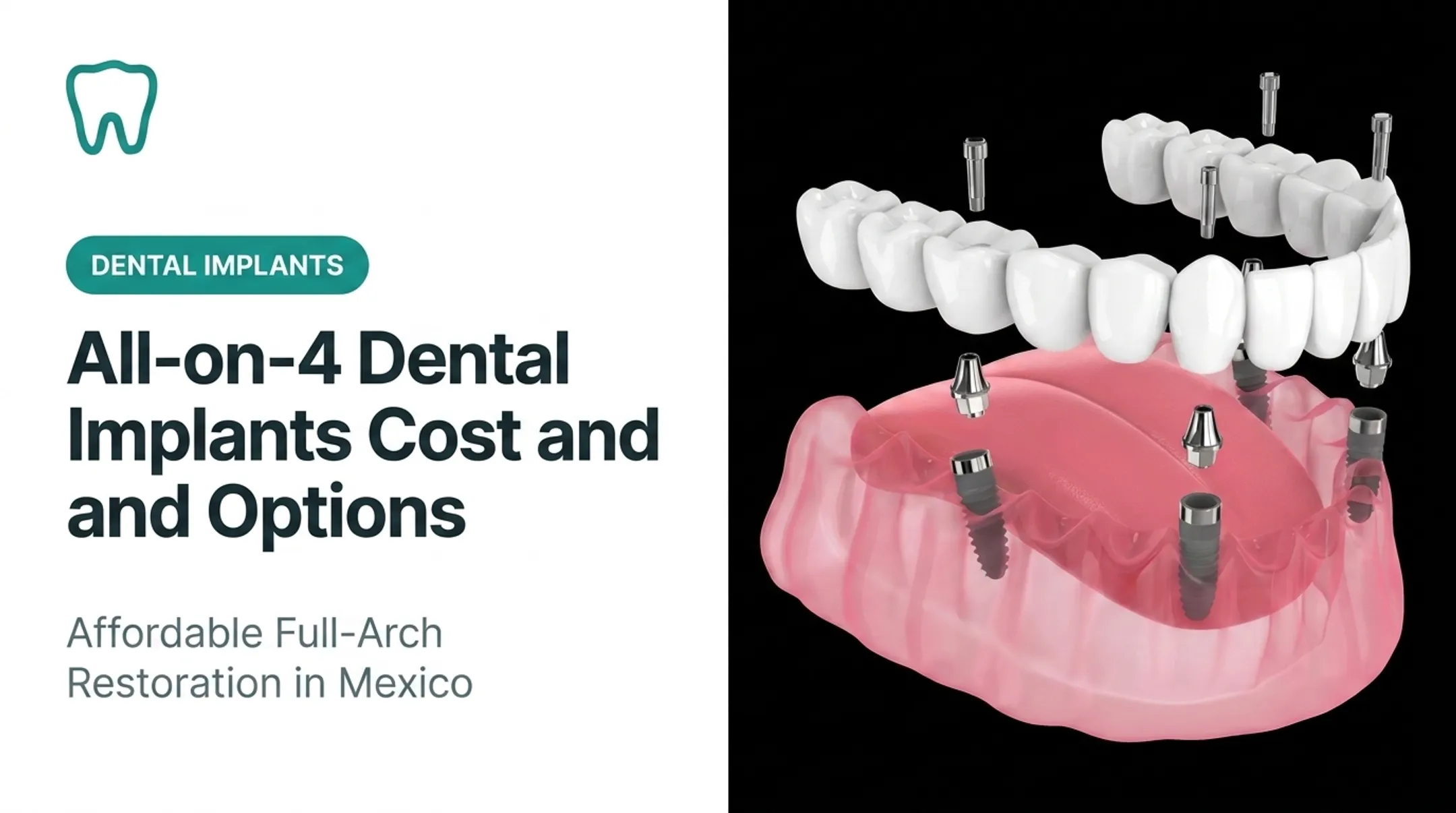
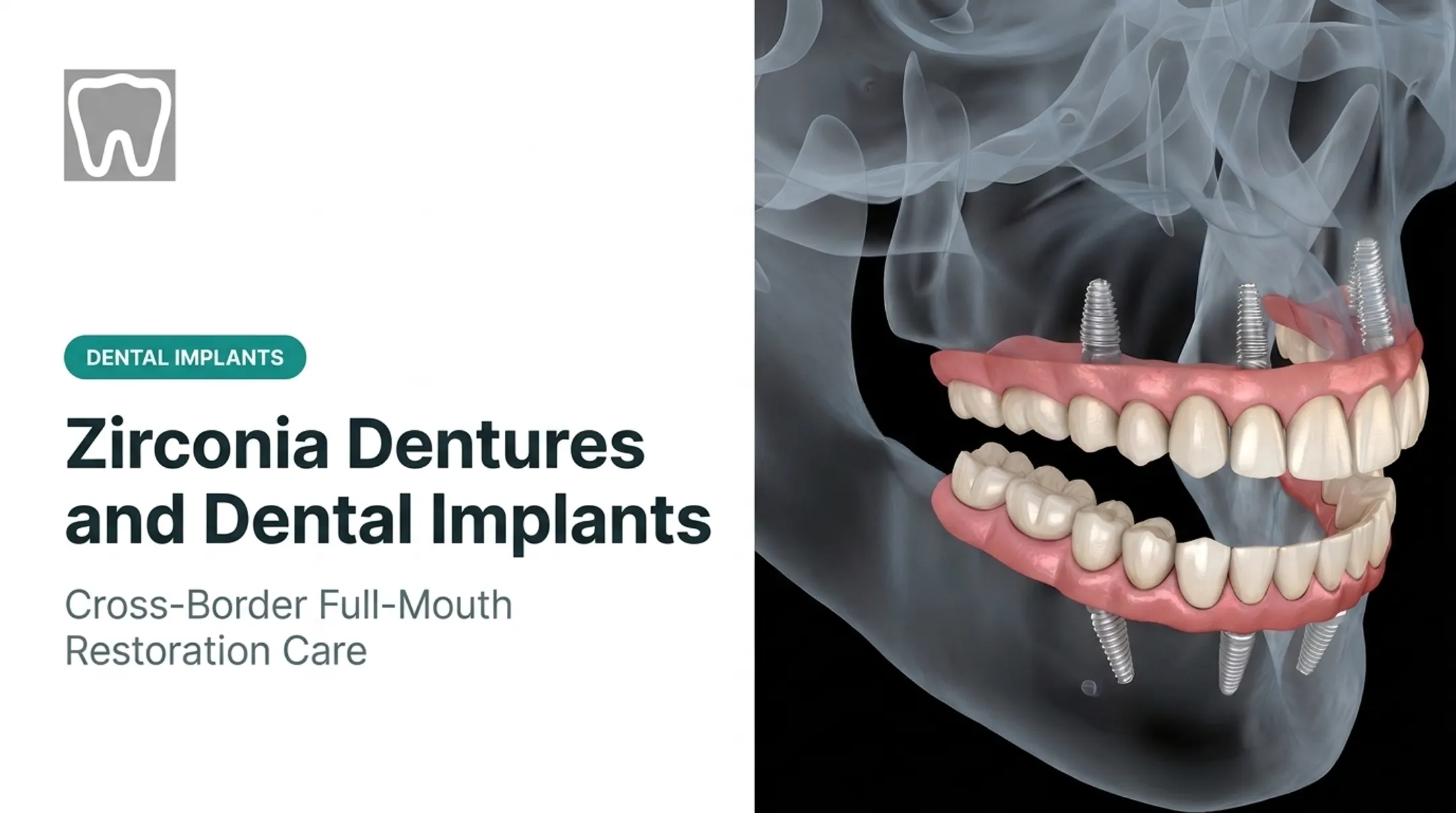
All-on-4 is a full-arch treatment concept: four implants placed at specific angles support an entire row of replacement teeth. The two front implants sit straight up and down, while the back two tilt to reach denser bone, letting many patients skip bone grafting entirely.
A 2017 systematic review describes this posterior tilting as key to reducing cantilever stress and supporting up to 12 teeth on a single arch.
"Zirconia All-on-4" almost always describes the final bridge material, not the implant posts themselves. Most clinics, including Dr. José Moguel's practice, place titanium implant posts as the foundation, then restore them with a custom zirconia bridge after healing.
Zirconia (zirconium dioxide) is a ceramic prized for three things:
- Natural, tooth-like translucency
- High biocompatibility with gum tissue
- Strength that holds up to years of chewing forces
Who Is a Good Candidate?
You may be a strong candidate if you have:
- Extensive tooth loss or failing teeth throughout an arch
- Loose, uncomfortable dentures they want replaced with a fixed solution
- Adequate jawbone, or bone that can be worked around using angled implants
Bone loss, bruxism, and gum disease don't automatically rule you out. They just require closer evaluation. At Dr. Moguel's clinic, every patient gets a 3D CBCT scan during the initial planning stage. This scan maps bone density, nerve pathways, and sinus location, so implant positions can be planned with precision.
If gum disease is active, the team treats it first—usually with scaling, root planing, and laser sanitization—then allows 2–4 weeks of healing before placing implants.
Zirconia vs. Titanium vs. Acrylic: Comparing All-on-4 Materials
Each material serves a distinct job in All-on-4 treatment. Mixing them up leads to unrealistic expectations.
| Feature | Zirconia | Acrylic (PMMA) | Titanium/PFM |
|---|---|---|---|
| Aesthetics | Tooth-colored, translucent | Opaque, less natural | Metal visible at gumline |
| Durability | High flexural strength (900-1,400 MPa) | Lower, prone to wear | Strong but heavier |
| Plaque resistance | Less plaque buildup over time | Porous, stains easily | Moderate |
| Repairability | Often requires full replacement | Easy to patch | Repairable in sections |
| Typical use | Final bridge | Temporary bridge | Implant posts |

Acrylic is the workhorse of the healing phase. It's used for temporary bridges while your implants integrate with the jawbone, generally over 3-6 months. Zirconia is reserved for the final, long-term restoration.
For All-on-4, the best material depends on the component. Titanium remains the standard for implant posts because of its proven track record. For the visible bridge, zirconia wins on aesthetics and hygiene. A 2023 clinical comparison found zirconia prostheses accumulated less plaque over time than titanium-framework restorations.
Zirconia's rigidity can wear down opposing natural teeth if you still have some remaining. And because zirconia bridges are milled as a single piece, a fracture usually means replacing the whole prosthesis rather than a quick patch.
Benefits of Choosing Zirconia for Your All-on-4 Restoration
Patients who upgrade to zirconia are usually chasing three things: durability, appearance, and cleanliness.
Strength that holds up daily. Zirconia resists chipping and cracking under normal chewing forces. A systematic review of complete-arch monolithic zirconia restorations found an average survival rate of 97.23% over roughly four years. The findings are reported in research published in a 2023 materials journal.
No dark metal lines. Unlike porcelain-fused-to-metal options, zirconia is metal-free and translucent, mimicking natural enamel without a gray shadow at the gumline.
Easier to keep clean. Zirconia's non-porous surface resists:
- Plaque accumulation
- Bacteria buildup
- Staining from coffee, wine, or tobacco
That last point matters more than it sounds. Less plaque buildup around a full-arch prosthesis translates to a lower long-term risk of gum irritation near the implant sites.

How Much Do Zirconia All-on-4 Implants Cost? (And How Mexico Compares)
Cost is usually the deciding factor, and the gap between countries is significant.
In the US, a full zirconia All-on-4 arch typically runs $25,000 to $38,000 in 2026 ranges. Acrylic hybrid options usually cost $15,000–$25,000. In Canada, patients often see about CAD 20,000–30,000 per arch, based on provider pricing data.
At Dental Implants in Mexico, patients typically see quotes of $8,000 to $12,000 per arch for All-on-4 treatment, a 60-70% savings compared to US pricing. That quote usually includes:
- Initial consultation and 3D CBCT imaging
- Implant placement surgery using FDA-approved titanium (Nobel Biocare, Straumann, or MegaGen systems)
- A temporary fixed bridge during healing
- The final custom zirconia or ceramic-hybrid restoration

What changes your final number:
- Extractions when failing teeth must come out before implant placement
- Bone grafting ($400–$800) or sinus lift surgery ($600–$900), if imaging shows the need
- Higher case complexity, including extra implants or added restorative work
One documented case involved bilateral sinus lifts, bone regeneration, and six Straumann implants with a zirconia bridge for $14,200—still a fraction of a comparable case north of the border.
Free, no-obligation consultations help patients lock in a real number before they commit to travel.
Your Treatment Journey with a Board-Certified Periodontist
Treatment generally unfolds over two visits rather than one long stay. The first visit covers evaluation through temporary bridge placement; after healing at home, the second visit delivers your final zirconia bridge.
- Comprehensive evaluation - 3D CBCT scan and digital planning to map bone density and implant positioning.
- Extractions (if needed) - Failing teeth are removed the same day as implant surgery when possible.
- Implant placement - Four titanium implants per arch, placed under local anesthesia or sedation. Surgery runs roughly 2-3 hours per arch.
- Temporary fixed bridge - Fitted the same day for immediate function and appearance.
- Healing - Osseointegration takes about 3-6 months, during which a soft-food diet protects the implants.
- Final zirconia bridge delivery - Custom-fabricated and fitted on your second visit.

Your care is led by Dr. José Moguel, a board-certified periodontist with 38+ years of experience and over 17,000 implants placed. He also developed the patented 3-ON-8™ protocol, which uses eight implants across three independent bridge segments for patients who want built-in redundancy beyond a standard All-on-4.
For patients traveling from the US and Canada, the Los Algodones clinic is about a three-minute walk from the Andrade, California border crossing. Coordinators help arrange hotels in Yuma or Los Algodones and local shuttle logistics, so the two-visit trip stays straightforward to plan.
How Long Do Zirconia All-on-4 Implants Last? Caring for Your New Smile
With proper care, zirconia bridges commonly last 15 years or longer, while the underlying titanium implants can function for decades. A multicenter study following zirconia implant-supported prostheses for an average of 7.2 years reported 98.2% prosthetic survival and no identified zirconia fractures, though chipping occurred in about 13.5% of cases.
Daily maintenance checklist:
- Brush twice daily with a soft-bristled toothbrush
- Clean under the bridge with a water flosser or super floss
- Schedule professional cleanings regularly (required to maintain warranty coverage)
- Wear a nightguard if you grind or clench your teeth
Dr. Moguel's clinic backs implants with a lifetime warranty, provided patients keep up with professional cleanings. Zirconia bridges and other prosthetics carry a separate five-year warranty under the same maintenance condition.
That longevity also depends on the material. Zirconia resists wear, staining, and fracture better than acrylic and most metal-ceramic options because of its dense, non-porous structure. Precise placement and bite alignment by an experienced specialist matter as much as the material itself.
Frequently Asked Questions
How much do All-on-4 zirconia implants cost?
US and Canadian patients often pay $25,000-$38,000 per arch. At Dental Implants in Mexico, comparable treatment typically runs $8,000-$12,000 per arch. A free consultation gets you an exact quote.
How long do zirconia implants last?
Zirconia bridges commonly last 15 years or more with proper hygiene and regular checkups. The titanium implant posts underneath can last decades.
How strong are zirconia implants?
Zirconia resists chipping, cracking, and daily wear better than acrylic or metal-ceramic alternatives. Long-term success still depends on precise placement by an experienced periodontist.
What is the best material for All-on-4 implants?
Titanium remains the standard for the implant posts due to its proven track record. Zirconia is preferred for the final bridge because of its strength and natural appearance.
Is the All-on-4 zirconia procedure painful?
You’ll receive local anesthesia or sedation during surgery, so you won’t feel pain during placement. Mild soreness afterward is normal and manageable with standard aftercare.
Can I travel from the US or Canada for this treatment?
Yes. The clinic regularly treats US and Canadian patients, with bilingual staff and travel coordination near the Andrade border crossing to make the trip straightforward.