
The global dental tourism market reflects this shift, valued at $14.8 billion in 2025 and projected to reach $65.4 billion by 2033. This guide compares the top destinations, breaks down real costs, and walks through how to vet a clinic before you book a flight or drive across a border.
Mexico, particularly the border town of Los Algodones, has become one of the most accessible options for US and Canadian patients. No long flights. No jet lag. Just a short drive and a same-day appointment.
Key Takeaways
- Save 50-80% on implants, crowns, and full-arch restorations versus typical US or Canadian prices
- Established care hubs include Thailand, Turkey, Mexico, Hungary, and Costa Rica
- Mexico offers unmatched convenience for North Americans thanks to land-border access and board-certified specialists
- Prioritize accredited clinics and transparent pricing over the lowest quote
What Is Dental Tourism and Why Is It Growing?
Dental tourism means traveling to another country for dental treatment, usually to cut costs without sacrificing quality. Rising US dental prices—especially for implants and full-mouth work—have pushed more patients to look abroad.
The American Academy of Implant Dentistry pegs a complete US implant treatment (implant, abutment, crown) at $3,100 to $5,800. GoodRx cites a broader $3,000–$7,000 range.
In Mexico, that same single implant with abutment and crown often runs $750–$1,500. Savings on that scale are the main reason dental travel keeps growing.
Why Costs Are So Much Lower Abroad
Several factors drive the price gap:
- Facility leases, lab fees, and staff wages run lower in border towns than in major US cities
- Mexican clinicians operate under different malpractice liability structures than US providers
- Many dentists abroad carry far less student-loan debt than typical US graduates
- A lower cost of living makes independent practice ownership more feasible
Cheaper does not mean lower quality. Clinics using FDA-approved materials such as Nobel Biocare, Straumann, and MegaGen source the same implant systems many US dentists use. The savings come from overhead, not corner-cutting on materials.
Best Countries for Dental Tourism: Cost Comparison
Pricing varies significantly by destination, procedure scope, and what's bundled into the quote. Here's how the top five compare:
| Destination | Single Implant | All-on-4 (per arch) | Notes |
|---|---|---|---|
| Mexico | $750-$1,500 | $8,000-$12,000 | Includes implant, abutment, crown |
| Thailand | $700-$1,300 | $7,000-$12,000 | Packages may include hotel/transfers |
| Turkey | Varies widely | $3,500-$6,000 | Often bundled with CT scan, temp prosthesis |
| Hungary | ~$1,000 | $2,900-$13,721 (avg. $6,598) | Low end may be temp bridge only |
| Costa Rica | $850-$2,000 | ~$9,500 | Crown material affects final price |

Mexico's advantage is clear when comparing full treatment costs using the same premium implant brands US clinics use — often at 30–40% of typical US prices.
Other destinations fit different travel patterns:
- Turkey and Hungary: Shorter flights and EU-adjacent standards for European patients
- Thailand: Strong option for Australian and Asia-Pacific patients pairing treatment with a vacation
Is Thailand Worth It for North American Patients?
Thailand offers accredited facilities and English-speaking dentists, which sounds appealing. But the math changes once you factor in an 18+ hour flight. Follow-up visits become logistically difficult, and complications requiring in-person care mean another long trip. For North Americans, that travel burden often outweighs the savings compared with closer options—especially Mexico.
Why Mexico Is a Top Choice for US and Canadian Patients
Proximity changes everything. Los Algodones sits directly on the border with Yuma, Arizona, so many U.S. patients walk across for a consultation and return home the same day. Canadian patients use the same corridor after a short flight into Yuma or another nearby gateway.
Molar City: A Hub Built on Density
Los Algodones has earned the nickname "Molar City" A peer-reviewed study documented roughly 500 dentists serving a town of 6,000 residents, and NPR has called it a border-town "virtual dental factory." Today, the town hosts over 350 dental clinics and welcomes more than 3,000 international visitors daily.
That density creates competition, which keeps pricing transparent and pushes clinics toward better service. Reputable practices here use the same CAD/CAM technology and premium implant brands as US clinics, with dentists trained under Mexico's ADM certification alongside ADA affiliation.

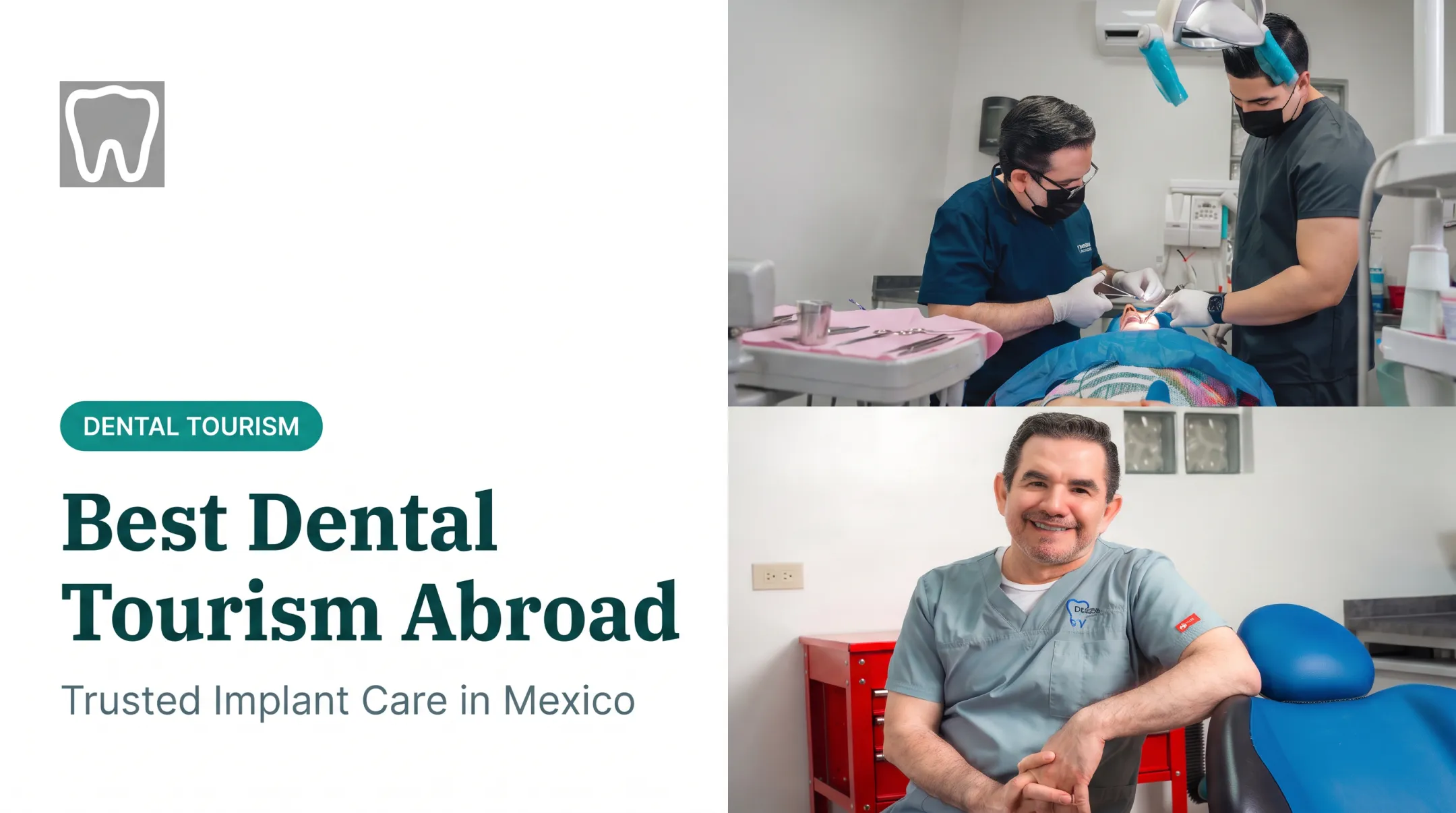
An Example: Dr. José Moguel's Clinic
Dental Implants in Mexico, located in Los Algodones, illustrates what a specialist practice looks like at the border:
- Led by Dr. José Moguel, a board-certified periodontist with over 38 years of experience
- More than 17,000 implants placed
- Developer of the patented 3-ON-8™ protocol—eight titanium implants per arch for full-arch restoration
- Offers All-on-4, All-on-6, and full-mouth reconstruction
- Lifetime warranty on implants, with a 5-year warranty on crowns and zirconia arches (with routine cleanings)
- Located a short walk from the Andrade, California border crossing, about 10 minutes from Yuma, Arizona
Patients typically save 60-70% on full-arch and implant work compared to US pricing, with free consultations and travel coordination included.
Same-day "Teeth in a Day" treatment runs $9,000-$13,000 here, versus $26,000-$32,000 in the US for comparable work.

How to Choose the Right Country and Clinic for Dental Work
Picking a destination is step one. Vetting the actual clinic matters far more. When comparing countries, weigh travel logistics, English-language support, and whether the destination has established dental tourism infrastructure with clear patient protections. Then run through this clinic checklist before committing:
- Verify dentist credentials: Confirm board certification and specialty training, not just a general dental license
- Check facility accreditation: Look for recognized standards like JCI when available
- Ask about implant brands: Reputable clinics name the exact manufacturer (Nobel Biocare, Straumann, MegaGen)
- Confirm sterilization protocols: Ask directly whether the clinic matches the standards used in US and Canadian offices

Before booking travel, request a detailed, itemized treatment plan with pricing that separates diagnostics, surgery, temporary prosthetics, final restorations, and any grafting.
Also confirm:
- Warranty terms in writing (lifetime on implants, timeframe on crowns and bridges)
- Who handles complications and where follow-up care happens
- Review authenticity across multiple platforms, not only the clinic's own site
Is Dental Tourism Safe? Risks and How to Minimize Them
The real risks aren't exotic. They're practical:
- Inconsistent standards across clinics in the same country or even the same town
- Language barriers that complicate understanding your treatment plan
- Limited follow-up access once you've flown home
The CDC's guidance on medical tourism notes that overseas facilities may lack accreditation and can charge unexpected fees for follow-up care. That's why the ADA recommends a pre-trip checkup and confirming records transfer before you travel.
Practical Steps to Reduce Risk
- Bring your dental records: X-rays and CT scans on a USB drive or printed copies
- Confirm implant brand and documentation in writing before surgery
- Plan extra recovery days; swelling typically peaks around day 3, and most patients feel normal by the end of week one
- Choose proximity when possible: driving back for a follow-up beats booking another international flight
Reading verified reviews and researching board certifications (ADA equivalents like ADM in Mexico) cuts down most of the guesswork. Some risk remains, but these steps stack the odds in your favor.
Frequently Asked Questions
What is the cheapest country to get dental work?
Mexico, India, Turkey, and Vietnam are frequently cited as the most affordable. Keep in mind total cost includes travel and clinic reliability, not just the sticker price on a treatment plan.
Which country is the cheapest to get All-on-4 dental implants?
India and Turkey often show lower base prices, sometimes $3,500-$6,000 per arch. Mexico costs slightly more but offers easier access for North American patients who can drive across the border instead of flying.
Where is the best place in the world to go for dental implants?
Thailand, Turkey, Hungary, and Mexico are consistently top-ranked. The best choice depends on your home country, budget, and how easily you can manage follow-up visits.
Which country is the best for dental surgery?
Clinic accreditation and surgeon experience matter more than the country on the brochure. Mexico, Turkey, and Thailand all have strong options if you vet the specific clinic carefully.
Where in Europe is the best place to get dental treatments?
Hungary leads EU dental tourism with dense clinic networks and standards aligned with European expectations. Turkey is a major nearby hub known for volume experience and competitive implant pricing.
Is it a good idea to get my teeth done in Thailand?
Thailand offers quality care and vacation value, but the long flight makes follow-up visits harder for North American patients. Closer options like Mexico often make more practical sense for ongoing care.