
Dental implants offer a fixed, long-term solution, but not every implant treatment for multiple teeth looks the same. Options range from a two-implant bridge to a full-arch system supported by eight implants. This article breaks down the main types, their benefits, and how to choose the right one for your situation, including the patented 3-ON-8™ protocol developed by Dr. José Moguel.
TL;DR
- Replace 2 consecutive teeth up to a full arch with multi-tooth implants
- Compare bridges, overdentures, and full-arch systems (All-on-4, All-on-6, 3-ON-8™)
- Match the option to tooth location, bone density, budget, and stability needs
- Preserve jawbone without grinding down healthy adjacent teeth
What Are Dental Implants for Multiple Teeth?
Instead of placing one implant per missing tooth, multi-tooth implant treatment uses titanium implant posts to anchor a bridge, denture, or full-arch prosthetic. Fewer implants can support several replacement teeth because the prosthetic distributes the biting load across the whole span.
The right approach depends largely on one question: are the missing teeth consecutive, or scattered across the mouth?
- Consecutive gaps (for example, three teeth in a row) usually call for a bridge anchored by two implants
- Several separate gaps may use individual implants or short implant-supported spans in each area
- Scattered or extensive tooth loss often points toward a full-arch system instead
In each case, the goal is the same: stable replacement teeth on fewer fixtures, matched to how your missing teeth are laid out.
Why Choose Implants Over Bridges or Dentures for Multiple Teeth?
Traditional fixed bridges require grinding down the healthy teeth on either side of a gap to serve as anchors. Implant-supported alternatives skip that step entirely, preserving natural tooth structure. Missing tooth roots also mean the jawbone no longer gets stimulated during chewing, so it starts to shrink. Implants replace the root itself and help slow that loss. One systematic review found implant-stabilized overdentures lost roughly 1 mm less bone annually than conventional dentures, with marginal bone loss dropping to just 0.1 mm per year after the initial healing phase. Compared with bridges and dentures, implants typically offer:
- No grinding of adjacent healthy teeth for anchors
- Root-level stimulation that helps limit jawbone shrinkage
- Strong long-term survival when restorations are maintained Survival data backs that durability. Implant-supported fixed bridges showed 95.0% survival at 5 years and 86.7% at 10 years in a widely cited systematic review—comparable to or better than many tooth-supported options over the same span. No option is complication-free. A 2022 study following 37 two-implant bridges for an average of 8.35 years found implant survival of 98.6%, but restoration-level success (accounting for complications) dropped to 62.2%. Implants hold up well; the restorations on them still need routine care and follow-up.

Types of Dental Implants for Multiple Teeth
The right type depends on how many teeth are missing, where the gaps sit, and how much bone is available. Options range from moderate stability at a moderate price to maximum stability at a higher upfront cost.
Implant-Supported Bridge
Two implants anchor a fixed bridge that replaces 3 to 5 consecutive missing teeth, without touching the teeth on either side.
- How it differs: Uses far fewer implants than one-per-tooth, but only works for teeth in a row, not scattered gaps
- Best for: Patients missing several adjacent teeth with solid bone at both anchor points
- Strengths: Natural chewing function, no damage to healthy teeth
- Limitations: Not suitable for full-arch loss or widely spaced gaps
Implant-Supported Dentures/Overdentures
Two to four implants secure a denture that's more stable than a traditional removable one. At Dental Implants in Mexico, this option runs from $3,500, compared to $10,000–$14,000 in the U.S.
- How it differs: Still removable for cleaning, unlike a fixed bridge or full-arch prosthetic
- Best for: Patients wanting an affordable step up from loose, slipping dentures
- Strengths: Lower cost, better comfort and confidence than conventional dentures
- Limitations: Less stable than fixed options; still requires daily removal
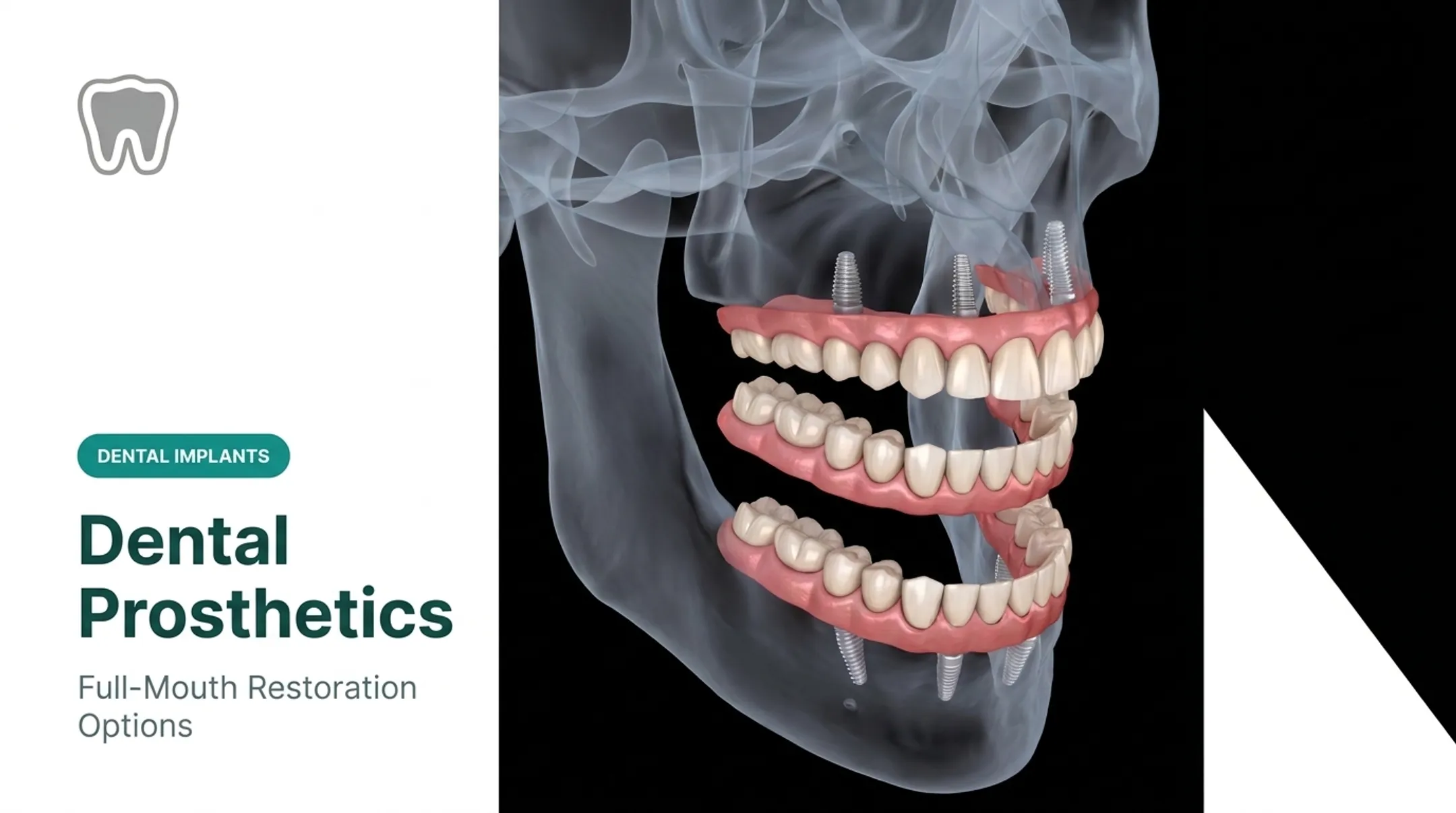
Full-Arch Implant Systems (All-on-4, All-on-6, 3-ON-8™)
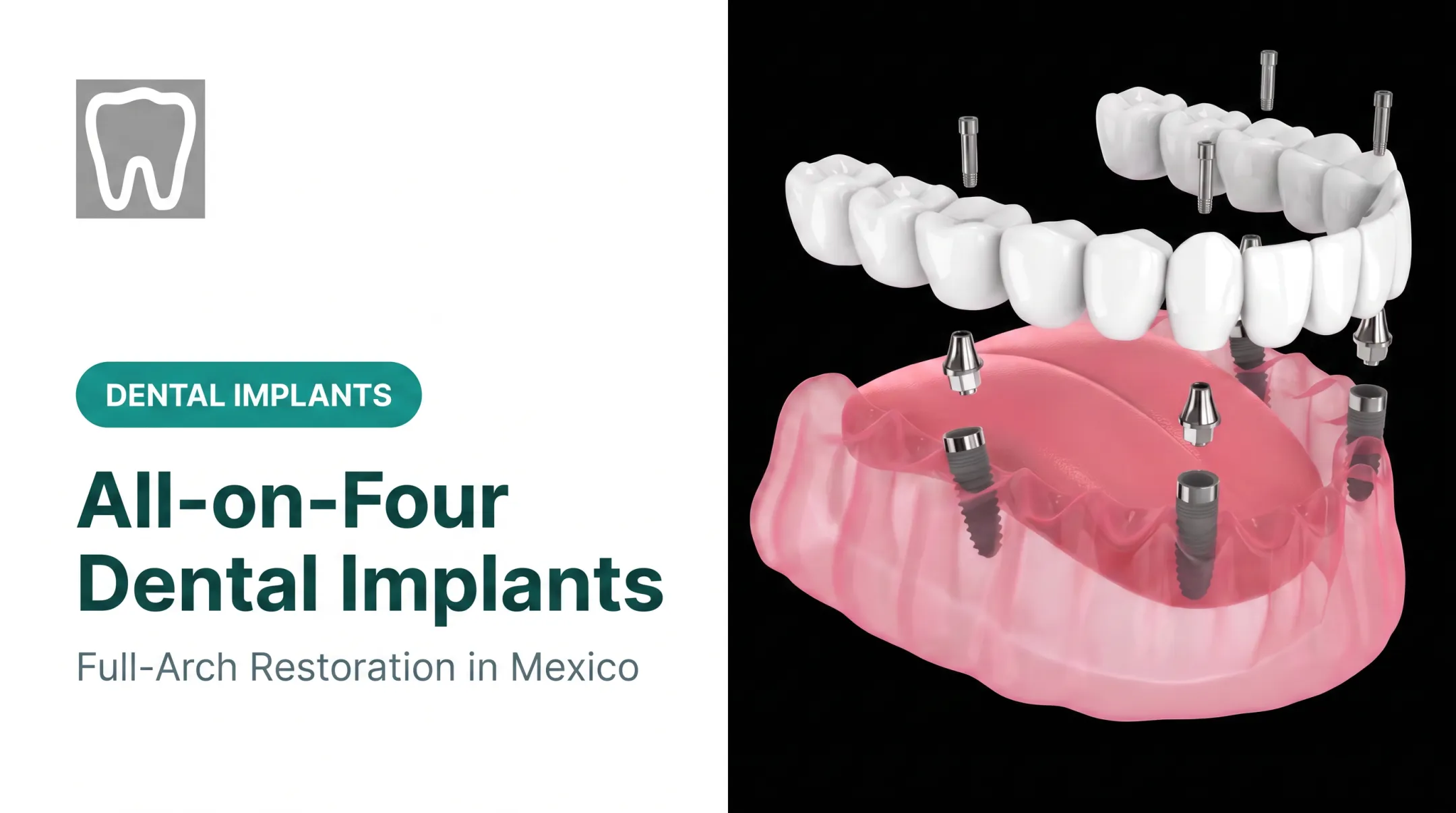
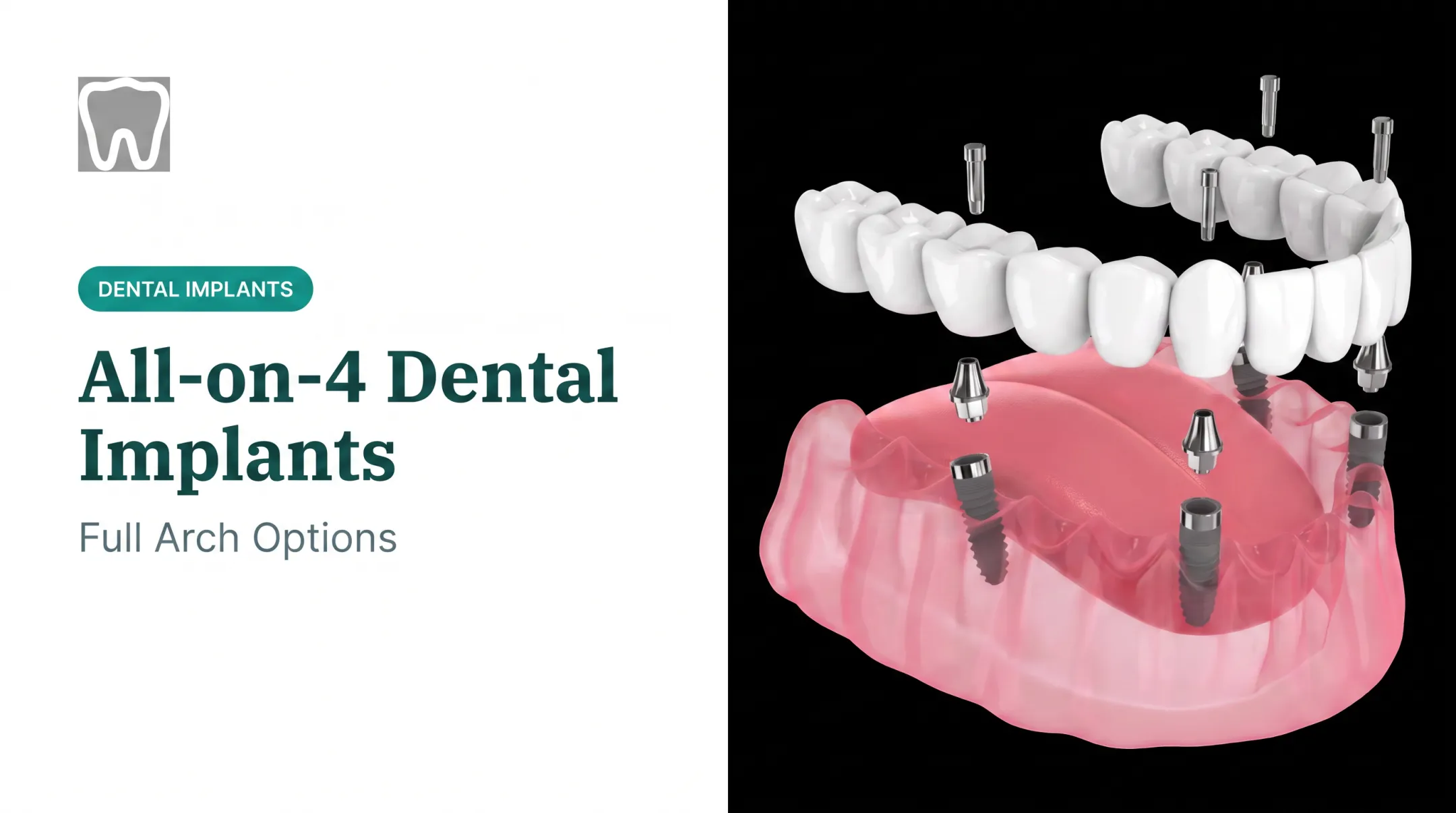
As few as four strategically angled implants can support an entire arch of fixed replacement teeth, maximizing existing bone and often avoiding the need for grafting.
- How it differs: Replaces a full upper or lower arch with a fixed prosthetic on 4–8 implants, not a removable denture or tooth-by-tooth implants
- Best for: Patients missing most or all teeth in an arch who want a non-removable solution
- Strengths: Fixed chewing function; angled placement often maximizes existing bone and limits grafting
- Limitations: Higher upfront cost, longer surgical planning; may need grafting or a sinus lift when bone density is low
| Protocol | Implants per arch | Best suited for |
|---|---|---|
| All-on-4 | 4 | Low-to-moderate bone density |
| All-on-6 | 6 | Moderate bone density, added stability |
| 3-ON-8™ | 8 | Moderate-to-high bone density, maximum redundancy |

A 2024 systematic review found implant survival of 98.5% for four-implant arches and 97.0% for six-implant arches, with no statistically significant difference between the two over a mean follow-up of 3.8 years.
Dr. José Moguel's patented 3-ON-8™ protocol, built on 38+ years of clinical experience and more than 17,000 implants placed, takes a different approach. Instead of one continuous arch-length bridge, it places 8 implants per arch to support three separate, independent zirconia bridges covering 12–14 teeth.
If one segment ever has an issue, the other two stay in place and functional, so only the affected section needs attention.

How to Choose the Right Type of Multi-Tooth Implant
The right multi-tooth implant depends on your anatomy, oral health, and long-term goals. Key factors to weigh:
- Number and location of missing teeth — consecutive gaps often suit an implant-supported bridge; scattered or extensive loss may need a full-arch solution
- Jawbone density — determines whether grafting or a sinus lift is needed before placement
- Budget vs. long-term value — overdentures cost less upfront; fixed full-arch systems cost more but avoid repeat replacements
- Desired stability — removable convenience versus a permanent, fixed result
- Recovery timeline — osseointegration commonly takes 3–6 months, though complex grafting can extend that to about seven months

A free consultation with a board-certified periodontist, using your dental history and a 3D CT scan, is the most reliable way to match your anatomy to the right protocol.
Conclusion
Dental implants for multiple teeth depend on the pattern and extent of tooth loss. Implant-supported bridges suit consecutive gaps, overdentures offer a stable lower-cost option, and full-arch systems like All-on-4, All-on-6, and 3-ON-8™ cover extensive or full-arch needs.
Matching the option to your bone health, budget, and goals is what drives a lasting result. Before you commit to a plan, a consult with an experienced periodontist at Dental Implants in Mexico can clarify fit and cost—many patients save about 60–70% compared with typical U.S. pricing.
Frequently Asked Questions
Is it cheaper to get multiple dental implants?
Cost varies by type. Bridges and overdentures are generally more affordable than placing one implant per tooth, while full-arch systems have a higher upfront cost but offer stronger long-term value.
Can two dental implants support four teeth?
Yes, when the missing teeth are consecutive and there's adequate bone at both anchor points, two implants can support a 4-unit bridge.
Should I have all my teeth extracted and replaced with dental implants?
Only if remaining teeth are unsalvageable or already largely missing. Full-arch replacement isn't recommended just because you're missing several teeth.
How long does it take to recover from multiple implant surgery?
Soft-tissue recovery usually takes 1–2 weeks. Full osseointegration takes 3–6 months, or up to seven months when bone grafting or a sinus lift is involved.
Do multiple-teeth implants require more maintenance than a single implant?
No. They need the same daily hygiene and regular check-ups as a single implant. Careful cleaning around each anchor point helps prevent peri-implant problems.
What determines how many implants I need for a full arch?
Bone density, chewing force, and desired stability determine whether 4 (All-on-4), 6 (All-on-6), or 8 implants (3-ON-8™) are recommended for your case.