
This happens most often to patients traveling for care. Without a structured diagnosis upfront, small surprises compound into missed flights and denied insurance claims. A proper treatment plan prevents this by mapping every phase, cost, and timeline before you ever sit in the chair.
This article covers the five phases of dental treatment planning, the diagnostic technology that makes accurate implant planning possible, and what to expect if you're considering implants in Los Algodones, Mexico.
Key Takeaways
- A complete treatment plan moves through five phases: urgent care, disease control, re-evaluation, definitive treatment, and maintenance
- Accurate diagnosis depends on clinical exams, 3D CBCT imaging, and risk assessment, not visual guesswork
- Transparent, itemized quotes covering every phase prevent surprise costs and treatment abandonment
- Cross-border implant patients do best with providers combining advanced diagnostics and upfront communication
What Is Dental Treatment Planning and Why It Matters
Dental treatment planning is a structured, patient-specific roadmap. It connects your diagnosis to a sequence of procedures, realistic timelines, and itemized costs. Done properly, it doubles as a communication tool: you see exactly what's wrong, what your options are, and what each option costs. Rushed or vague planning creates real problems. Patients often learn mid-treatment that a procedure wasn't covered, or that more work is required. The CDC's medical tourism guidance specifically warns travelers to obtain complete records before returning home and to confirm follow-up care is arranged. Complications abroad can be expensive to resolve once you're back home. For cross-border patients, this matters even more. If you're traveling from the US or Canada to Los Algodones, an incomplete diagnosis can mean:
- A second unplanned trip to address issues that should've been caught on visit one
- Confusion about what your quote actually includes
- Difficulty submitting insurance claims without proper documentation At our Los Algodones clinic, every patient receives a full-resolution 3D CBCT scan before any implant plan is finalized, not a simple panoramic X-ray. That single step catches most surprises before they happen.
The 5 Phases of Dental Treatment Planning
Patients who ask about the 5 phases of dental treatment planning usually want to know why their dentist isn't jumping straight to implants. A responsible implant plan almost never skips steps.
Phase 1: Urgent/Acute Care
Before anything else, your dentist addresses active pain, infection, or swelling. If you arrive with a failing tooth causing pain, extraction or infection control comes first.
Phase 2: Control Phase
This phase stabilizes active disease. Your dentist brings periodontal inflammation, decay, or gum infection under control before any implant work begins. Skipping this step is one of the fastest ways to end up with a failed implant later.
Phase 3: Re-Evaluation Phase
After the mouth heals, your dentist pauses to confirm the plan still makes sense. Did the gums respond to treatment? Is bone healthy enough? This checkpoint prevents committing to a plan that's no longer appropriate.
Phase 4: Definitive Phase
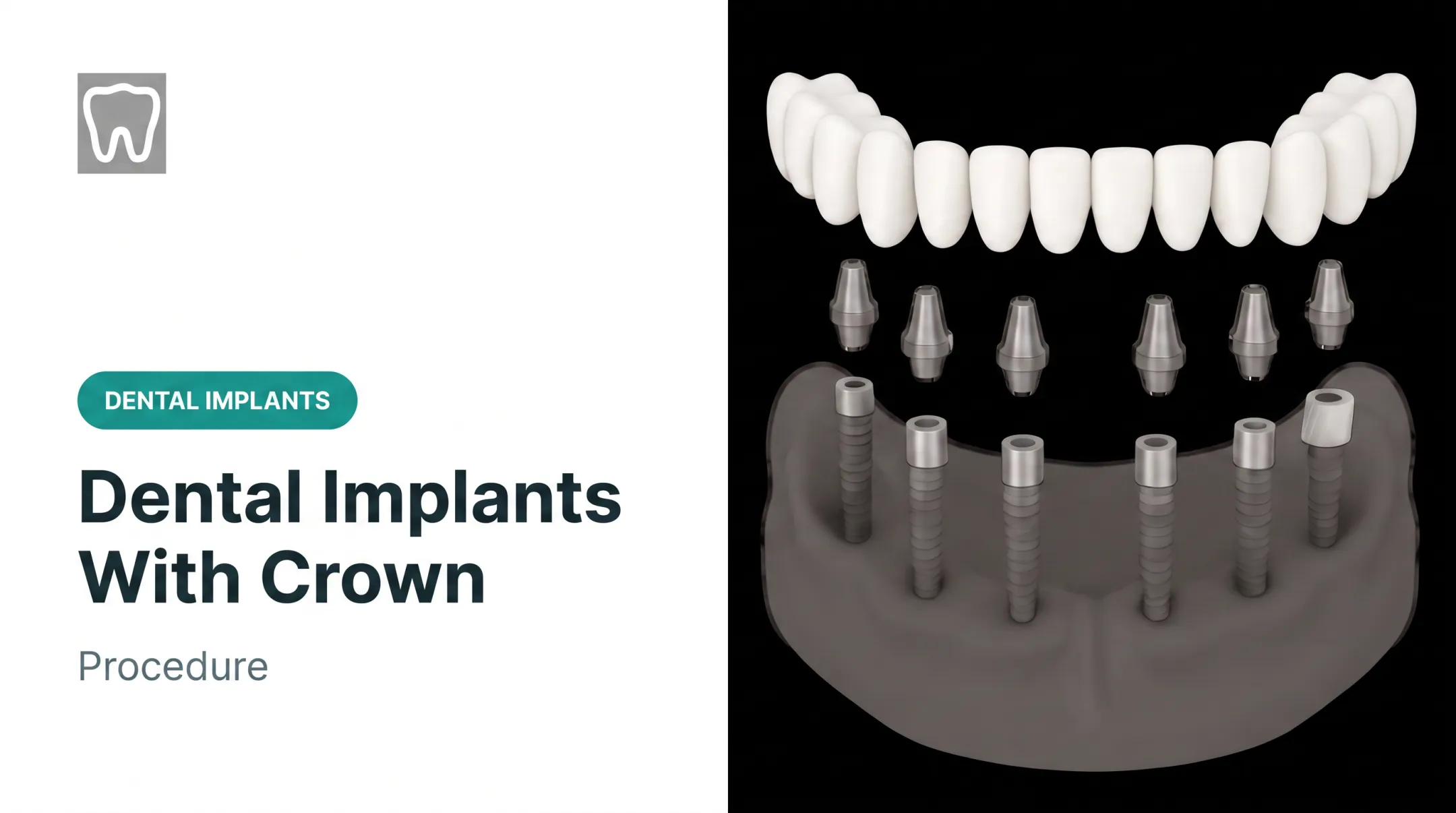
This is where permanent work happens: implants, prosthetics, and full-arch solutions. Depending on your bone volume and needs, that can include:
- All-on-4: four implants per arch, often suited to lower bone density
- All-on-6: six implants for added stability when bone density is moderate
- 3-ON-8™ Protocol: our patented eight-implant full-mouth system for patients who need maximum anchorage
Phase 5: Maintenance Phase
Ongoing recall visits, home care, and monitoring protect your investment long-term. Implants placed by a specialist and maintained on schedule have a clinical success rate above 98%.

A note on "rules" you may have seen online. Terms like the "3-3-3 rule" or "50-40-30 rule" show up in dental forums, but they are not universally recognized clinical treatment-planning protocols.
In the dental literature, similar-sounding terms usually refer to implant esthetics or smile-design proportions, not phased care. Trust your dentist's individualized, diagnosis-based plan over generic online rules.
Diagnostic Tools That Build an Accurate Treatment Plan
Guesswork has no place in implant planning. Here's what an accurate diagnosis actually requires:
Comprehensive clinical exams. Your dentist reviews medical history, completes standardized charting, and performs a physical exam to identify decay, gum disease, and bite problems before any plan gets written.
3D Cone Beam CT imaging. Unlike flat 2D X-rays, CBCT scans show bone density, sinus position, and nerve pathways in three dimensions. This is how your surgeon plans exact implant length, width, angle, and depth before making an incision. The American College of Prosthodontists recommends this cross-sectional imaging specifically for implant sites, particularly in complex cases involving grafting or sinus proximity.
Digital scanning and CAD/CAM design. Digital impressions let you see a preview of your outcome before committing. Fully guided digital workflows deliver greater placement precision than freehand approaches.

Risk stratification. Not everyone is an automatic implant candidate. Key risk factors your dentist should evaluate:
- Bone quality and volume (may require grafting or a sinus lift)
- Gum health and active periodontal disease
- Smoking status (smokers face a significantly higher implant-failure risk than non-smokers)
- Systemic conditions affecting healing
These factors don't disqualify you outright, but they shape whether you need bone grafting, a different implant protocol, or additional healing time.

How Treatment Plans Are Customized for Implant Patients
Implant candidates need a diagnostic path built around their specific mouth, not a standard package applied to every case. Your dentist should evaluate jawbone volume, the condition of remaining teeth, and overall oral health before recommending a path. Bone density requirements vary by protocol:
| Protocol | Implants per Arch | Bone Density Needed |
|---|---|---|
| All-on-4 | 4 | Low to moderate |
| All-on-6 | 6 | Moderate |
| 3-ON-8™ | 8 | Moderate to high |
| Dr. José Moguel, a board-certified periodontist who has placed over 17,000 implants, can flag issues early—hidden sinus problems, insufficient bone, or gum recession—and revise the plan before surgery rather than mid-procedure. | ||
| That judgment shows up in real cases. One 58-year-old patient with severe periodontal disease and major bone loss received a customized 8-implant-per-arch plan with fixed zirconia bridges after CBCT imaging mapped the full extent of the damage. | ||
| A customized clinical plan should come with a clear written quote, especially when patients compare US and Mexico pricing and want no surprise fees. A proper quote itemizes: |
- Surgical placement and implant hardware
- Standard abutments
- Provisional and final restorations
- Grafting, sinus lift, or other adjunctive work
- Diagnostic imaging used to build the plan
What to Expect During Your Diagnosis and Consultation Visit
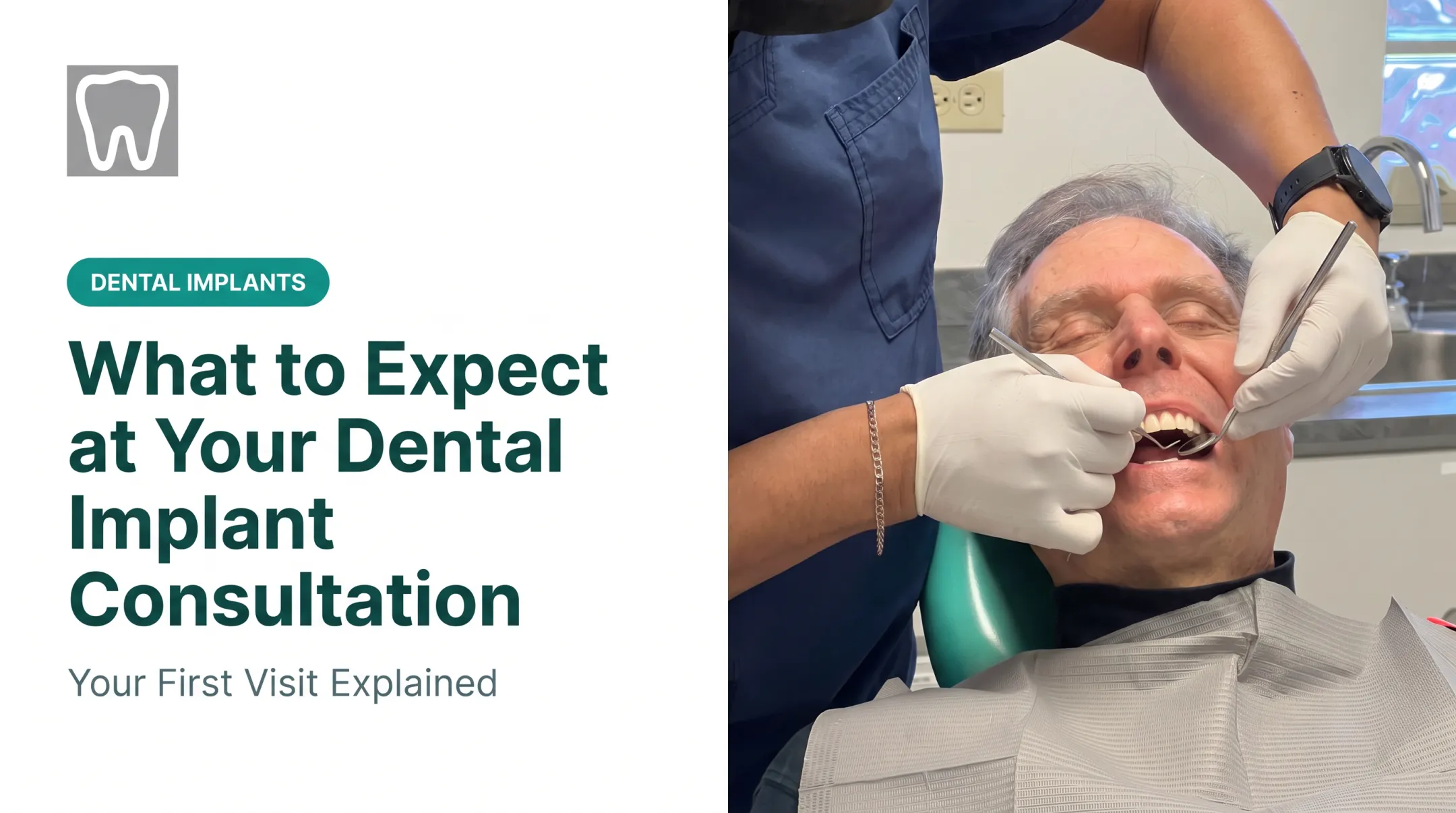
Your visit starts with a free, no-obligation consultation: diagnostic imaging review plus a plain-language treatment plan, not just a verbal estimate.
We coordinate travel around your diagnostic visit. For patients heading to Los Algodones:
- Book your consultation: virtual or in-person, with imaging reviewed within 24 hours by a bilingual coordinator
- Plan travel: Yuma International Airport sits 15 minutes from the clinic, with San Diego and Phoenix as backup options
- Cross the border: parking on the US side runs about $6, then it's a short walk across the Andrade, CA crossing
- Receive your plan: a full diagnosis and written quote, typically same-day
That written plan also sets your timeline. Most standard implant procedures need two trips, spaced roughly 3–6 months apart, so osseointegration can occur between surgical placement and final restoration.

Ask for insurance documentation before you leave. Request an itemized receipt with ADA CDT procedure codes in English. Many US plans reimburse a portion of out-of-country treatment when that paperwork is included.
Frequently Asked Questions
What are the 5 phases of dental treatment planning?
The five phases are urgent care, disease control, re-evaluation, definitive treatment (like implants), and maintenance. Each phase must be completed before moving to the next for predictable results.
What is the 3-3-3 rule for dental?
The 3-3-3 rule is not a recognized clinical treatment-planning term in professional dental literature. Confirm any online terminology directly with your dentist.
What is the 50-40-30 rule in dentistry?
This refers informally to smile-design proportions, not an established treatment-planning protocol. Rely on your dentist's diagnosis-based plan instead of generic rules found online.
How long does it take to get a full dental implant treatment plan?
Most consultations and diagnostic imaging are completed in a single visit. A written plan with cost estimates is typically provided the same day.
Can I get a dental treatment plan before traveling to Mexico for implants?
Yes. We offer remote review of your existing X-rays or CBCT scans and provide a preliminary plan and quote before you travel.
Will my treatment plan change after diagnostic imaging?
Often, yes. 3D imaging can reveal issues a visual exam misses, such as low bone density that needs grafting. That may change the implant protocol discussed at the first visit.