
The field has grown steadily as more dental practices adopt digital smile design and 3D printing technology. According to the AACD's 2022 industry survey, digital smile design adoption jumped from 34% in 2019 to 42% in 2022, signaling a practice that's becoming more precise and accessible.
This guide breaks down the main types of cosmetic dental procedures, how they differ, and how to pick the right one for your situation.
Key Takeaways
- Cosmetic dentistry spans simple whitening through full smile makeovers—pick the scope that fits your goals
- Match each procedure to a specific concern: color, shape, alignment, or missing teeth
- Your choice depends on oral health, budget, timeline, and desired outcome
- Some procedures, like implants, restore function and long-term oral health, not just looks
What Is Cosmetic Dentistry?
Cosmetic dentistry focuses on improving how your teeth, gums, and smile look, rather than solely treating disease. It is a practical category of treatments aimed at visible, measurable smile improvements.
Many patients don't realize this: cosmetic dentistry isn't an officially recognized specialty by the American Dental Association's National Commission. The ADA lists 12 recognized dental specialties, and cosmetic dentistry isn't one of them.
That means general dentists, periodontists, and other specialists all offer these services. Training and experience vary widely between providers, which is why checking credentials matters more than the "cosmetic dentist" label itself.
Why Cosmetic Dentistry Matters
The connection between your smile and confidence isn't just anecdotal. 1 in 4 U.S. adults avoid smiling because of the condition of their mouth and teeth, according to the ADA's national report on oral health.
That's a real barrier to how people show up in job interviews, social situations, and everyday interactions.
There's also a functional side to this. Cosmetic concerns like worn enamel or missing teeth don't just affect appearance:
- They can alter how you chew and speak
- Left untreated, they may shift your bite over time
- Small problems tend to compound into larger, more expensive treatments
Dental anxiety plays a role here too. Patients who avoid the dentist out of fear or embarrassment often see oral health decline further—and preventable tooth loss can follow.
Types of Cosmetic Dental Procedures
Cosmetic dentistry isn't one-size-fits-all. Procedures range from conservative, same-day fixes to multi-month treatment plans, depending on your goals, budget, and how much structural work your teeth need.

Teeth Whitening
Professional bleaching lightens your tooth shade well beyond what drugstore strips can achieve. It's the least invasive option on this list.
- Best for: Healthy, well-aligned teeth where color is the only concern
- Strengths: Fast, affordable, minimal downtime
- Limitations: Doesn't fix shape or alignment; results fade and need maintenance
Research shows whitening results typically last 1 to 2.5 years, with some patients needing touch-ups sooner depending on diet and habits.
Dental Veneers
Thin porcelain or composite shells bond to the front of your teeth, changing their shape, size, and color in one coordinated treatment.
- Best for: Fixing chips, gaps, discoloration, or uneven teeth together
- Strengths: Natural look, stain resistance, long durability
- Limitations: Requires minor, often irreversible enamel removal; higher cost than whitening
Porcelain veneers run about $450 per tooth in Mexico, compared to roughly $1,500 per tooth in the US (about 70% less).
Composite Bonding
A tooth-colored resin is applied and sculpted directly onto your tooth to repair chips, cracks, gaps, or discoloration.
- Best for: Minor fixes on a tight budget or timeline
- Strengths: Affordable, reversible, usually done in one visit
- Limitations: Less durable than veneers; more prone to staining and chipping
Dental Crowns
Full-coverage caps go over teeth that are structurally weakened by decay or heavy fillings, restoring both strength and appearance.
- Best for: Teeth that need structural support, not just a cosmetic fix
- Strengths: Durable, protects against further damage
- Limitations: Requires more tooth reduction than veneers; costs more
Dental Implants
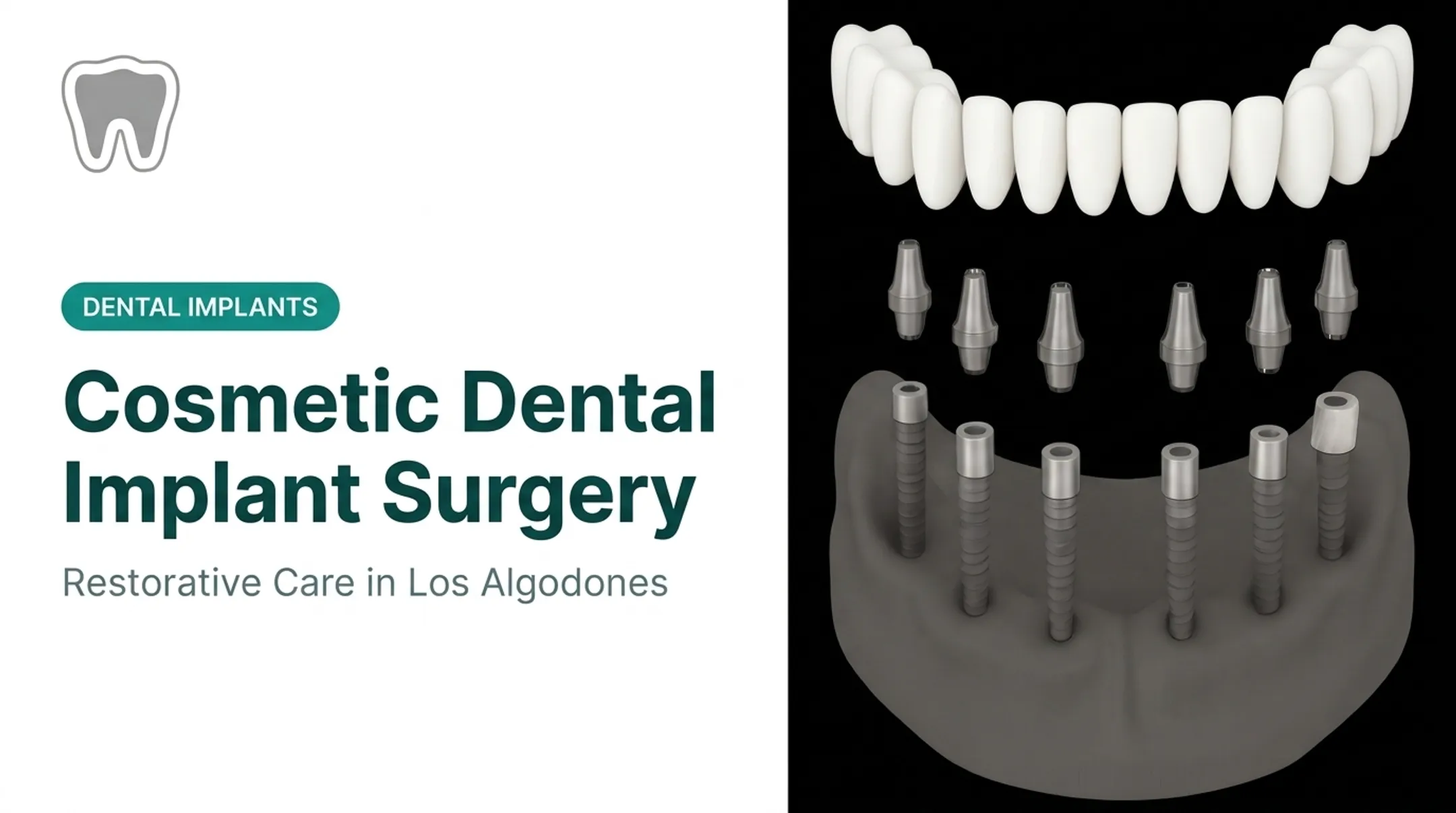
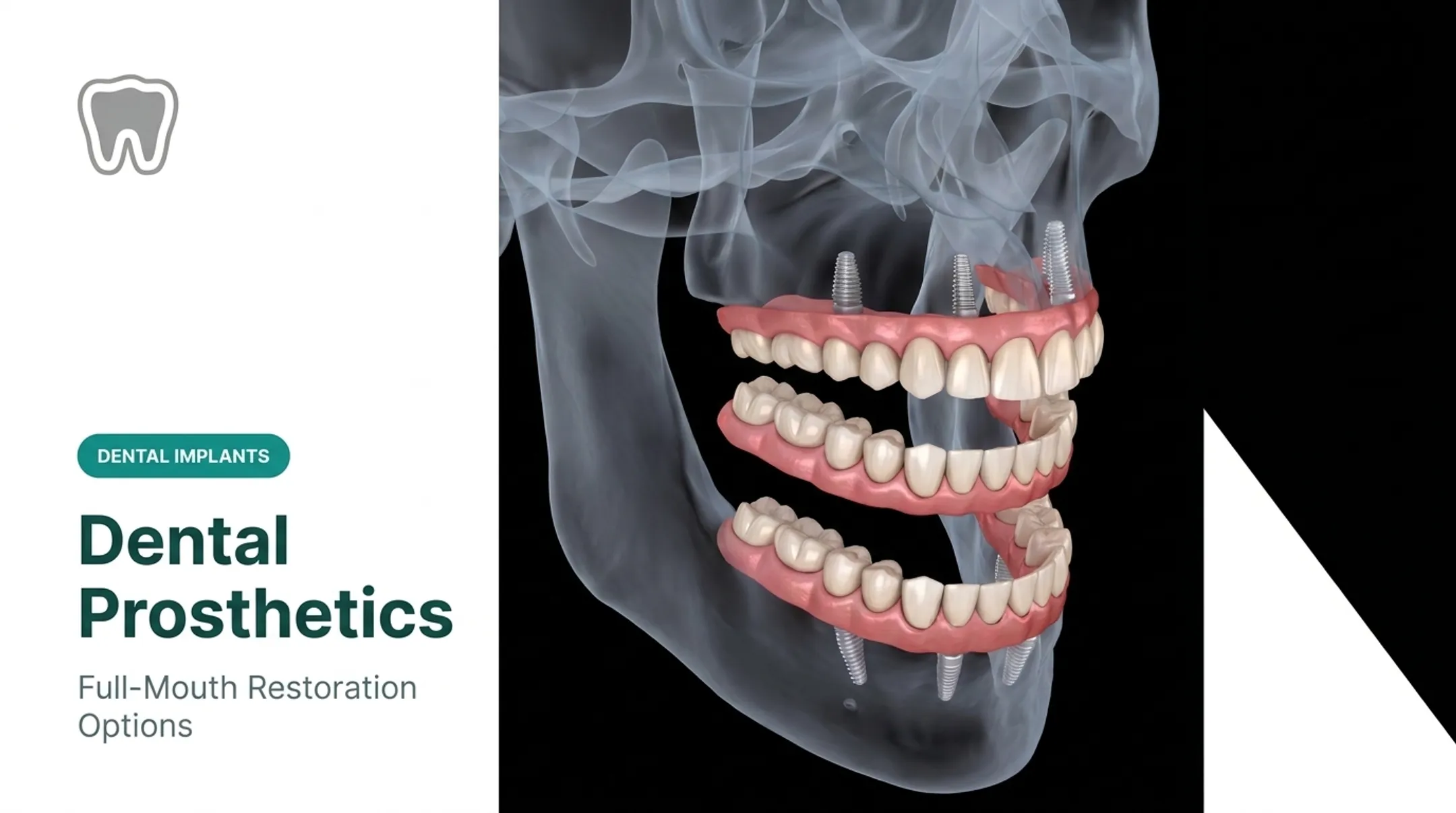
A titanium post replaces a missing tooth's root, anchored into the jawbone and topped with a crown. It's the only cosmetic option that also preserves jawbone structure.
- Best for: Anyone missing one or more teeth who wants a permanent, natural-feeling replacement
- Strengths: Long-term stability, function, and looks compared to bridges or dentures
- Limitations: Higher upfront cost and healing time required
A single tooth implant restores 100% chew power once fully healed. Osseointegration (the fusion of implant and bone) typically takes 3 to 6 months.

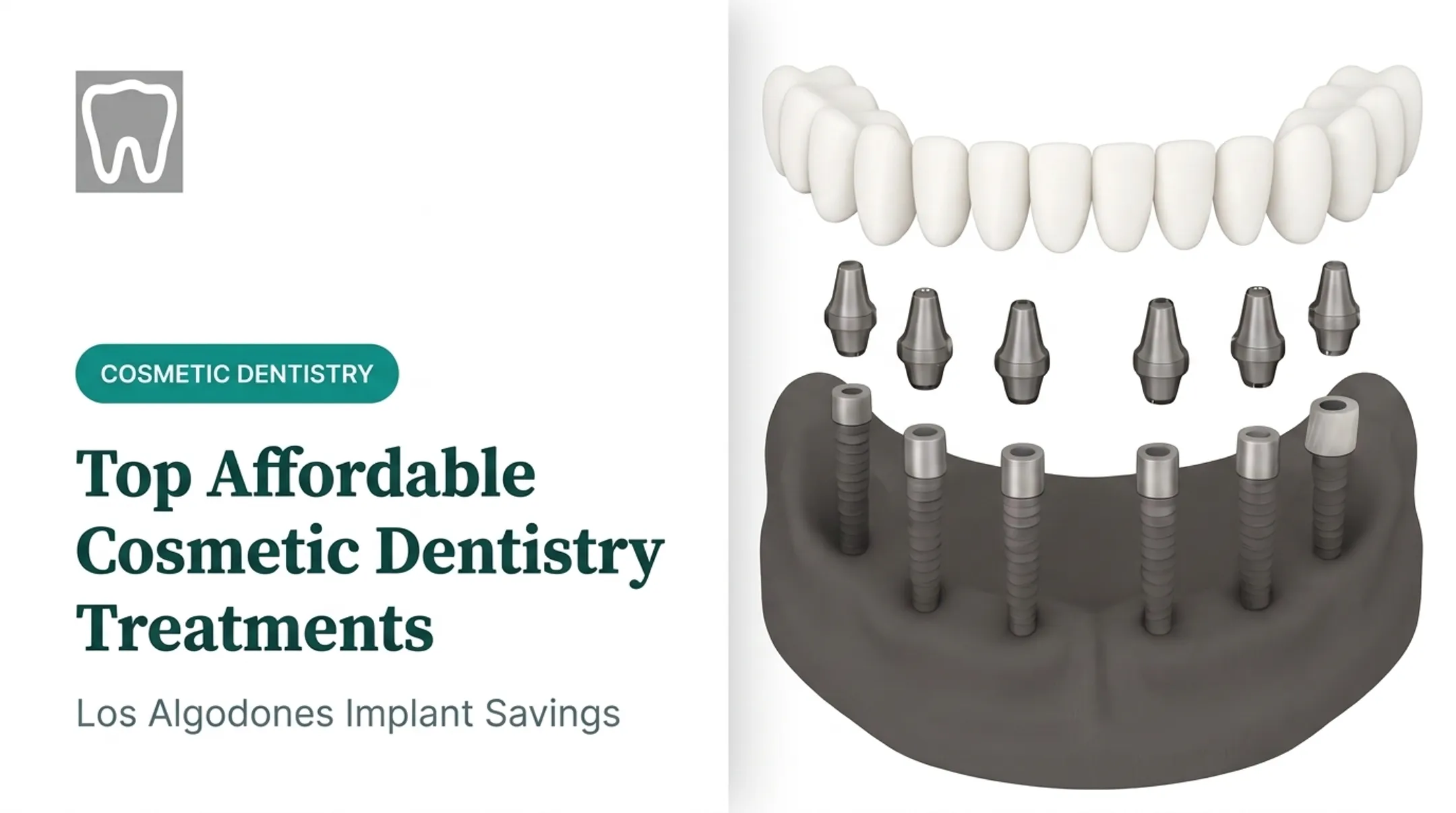
Patients missing several teeth often explore All-on-4 or All-on-6 options. Those needing a complete restoration may consider protocols like the patented 3-ON-8™ system, which uses eight strategically placed implants per arch to support custom zirconia teeth.
How to Choose the Right Cosmetic Procedure
The best choice depends on your individual needs, not what's trending on social media. Consider these factors:
- Your specific concern - Is it color, shape, alignment, or a missing tooth?
- Current oral health - Do you need restorative work before anything cosmetic?
- Budget - Is this a one-time cost or something requiring ongoing maintenance?
- Timeline - Can you commit to a single visit, or is a multi-step plan realistic?
- Durability - How much maintenance are you willing to keep up with long-term?
A patient with mild discoloration and healthy teeth has very different needs than someone missing a molar. Matching the procedure to the problem, rather than the price tag or the newest trend, produces better outcomes.
Cost Considerations and Traveling for Cosmetic Dentistry
Costs vary widely by procedure. Whitening might run a few hundred dollars, while veneers and implants climb into the thousands depending on materials and complexity.
That price gap is why many US and Canadian patients travel to Mexico for care. More than 3,000 Americans and Canadians cross into Los Algodones daily for dental and medical treatment, drawn by board-certified clinics and savings of roughly 60–70% versus typical US fees.
Here's a comparison based on typical Mexico versus US pricing:
| Procedure | Mexico | United States |
|---|---|---|
| Porcelain veneers (per tooth) | $450 | $1,500 |
| Single tooth implant | $750-$1,500 | $3,000-$4,500 |
| 3-ON-8™ full-mouth protocol | $15,000-$20,000 | $45,000-$60,000 |

Dental Implants in Mexico combines American-standard technology, including 3D Cone Beam CT imaging and an in-house CAD/CAM lab, with transparent pricing and travel support. The clinic is about a three-minute walk from the Andrade, California border crossing and helps with Yuma hotel coordination and local shuttles, so implant-focused cosmetic work does not mean handling border logistics alone.

What to Check Before Finalizing a Procedure
Before committing to any treatment, a few checks can save you money and disappointment:
- Don't over-treat. Choosing veneers when whitening would solve your problem wastes money and removes enamel unnecessarily.
- Understand the maintenance. Every procedure has upkeep requirements, from touch-up whitening to implant cleanings.
- Verify credentials. For complex work like implants or full-mouth restoration, confirm the dentist's board certification and experience.
Dr. José Moguel, for example, is a board-certified periodontist with 38+ years of experience and more than 17,000 implants placed. Confirm similar credentials with any provider handling implant-level work.
Also ask about expected longevity and success rates. All-on-4 implants have a success rate over 95% and can last a lifetime with proper hygiene, though the restoration bridge itself may need attention after 10–15 years.
Conclusion
Cosmetic dentistry spans a wide range, from a one-hour whitening session to implant-based full-mouth restoration. Knowing what each procedure can and cannot do helps you choose with confidence instead of guessing from price or trends.
Whether you're fixing one chipped tooth or exploring a full-mouth protocol like 3-ON-8™, start with a free consultation and a clear cost estimate before you commit to treatment.
Frequently Asked Questions
How much does cosmetic dentistry usually cost?
Cost varies widely by procedure type, complexity, and location, from a few hundred dollars for whitening to thousands for veneers or implants. Getting a personalized quote after a consultation is the best way to know your actual cost.
How much will a full set of veneers cost?
Porcelain veneers typically run $450 per tooth in Mexico versus around $1,500 per tooth in the US. Total cost depends on how many teeth you're treating and the material chosen.
What does cosmetic dentistry include?
It covers a broad range of treatments, including whitening, bonding, veneers, crowns, and dental implants. Each addresses a different concern, from color to missing teeth.
What is the most popular cosmetic dental procedure?
Whitening and bonding are commonly cited as the most frequently performed procedures, according to AACD survey data. Their affordability and minimal downtime make them accessible entry points into cosmetic dentistry.
What's the difference between a regular dentist and a cosmetic dentist?
Cosmetic dentistry isn't a formal ADA specialty, so many general dentists and specialists, including periodontists, offer these services with additional training. Checking a provider's specific experience matters more than the title.
Are cosmetic dental procedures covered by insurance?
Most purely cosmetic procedures, like whitening, aren't covered by insurance. Restorative-cosmetic overlaps, such as crowns or implants needed for structural reasons, may receive partial coverage depending on your plan.