
The maxilla has softer, more porous bone than the mandible, and its proximity to the sinus cavities limits how much bone is available in the back of the mouth. That means choosing the right implant type matters more here than almost anywhere else in the mouth.
This guide breaks down the types of upper jaw implants available, their benefits, and how to pick the option that fits your bone structure, timeline, and budget.
TL;DR
- Upper jaw implants replace missing top teeth with titanium posts fixed in the jawbone
- Softer upper-jaw bone and sinus proximity make planning more complex than lower-jaw work
- Options span single-tooth implants to full-arch plans: All-on-4, All-on-6, 3-ON-8™, zygomatic
- Benefits include restored chewing, improved speech, facial support, and long-term bone preservation
- The right choice depends on missing teeth count, bone volume, and budget: not popularity
What Are Upper Jaw Dental Implants and Why Is the Maxilla Different?
Upper jaw (maxillary) dental implants are titanium posts surgically placed into the upper jawbone to support crowns, bridges, or full-arch prosthetics. Once they fuse with the bone (a process called osseointegration), they function like natural tooth roots.
The maxilla isn't built the same way as the lower jaw, and three factors shape how upper implants are planned:
- Lower bone density: A 2013 CT density study measured maxillary cortical bone at 1,020-1,520 HU versus 1,267-1,734 HU in the mandible. Softer bone can reduce immediate stability, so surgeons plan upper cases more conservatively.
- Sinus proximity: Maxillary sinuses sit above the back teeth; when bone height drops below roughly 10 mm, a sinus lift or bone graft may be needed before implants can be placed.
- Aesthetic demand: The upper jaw is the most visible part of your smile. Gum contour, tooth positioning, and symmetry carry more weight here than in the lower arch.
How the clinic evaluates this: Every patient at Dr. Moguel's clinic receives a 3D Cone Beam CT scan rather than a flat 2D X-ray. CBCT shows bone width, density, and sinus position in three dimensions, which determines implant length, angle, and placement.

Types of Upper Jaw Dental Implants
The "right" implant type depends on how many teeth are missing, how much bone you have, and what outcome you want.
Single-Tooth Implants
A single titanium implant with an abutment and crown replaces one missing upper tooth.
- Best for: Patients missing one or a few isolated upper teeth with healthy surrounding bone
- Strengths: Most natural look and feel; doesn't touch adjacent healthy teeth
- Limitations: Not practical or cost-effective if you're missing most of your upper teeth
For example, a patient named David L. received two Nobel Biocare implants for missing upper molars, finished with custom porcelain-fused-to-metal crowns. A typical single-tooth timeline includes 3D CT evaluation, implant placement, 3–4 months of osseointegration, then final crown attachment.
All-on-4 / All-on-6
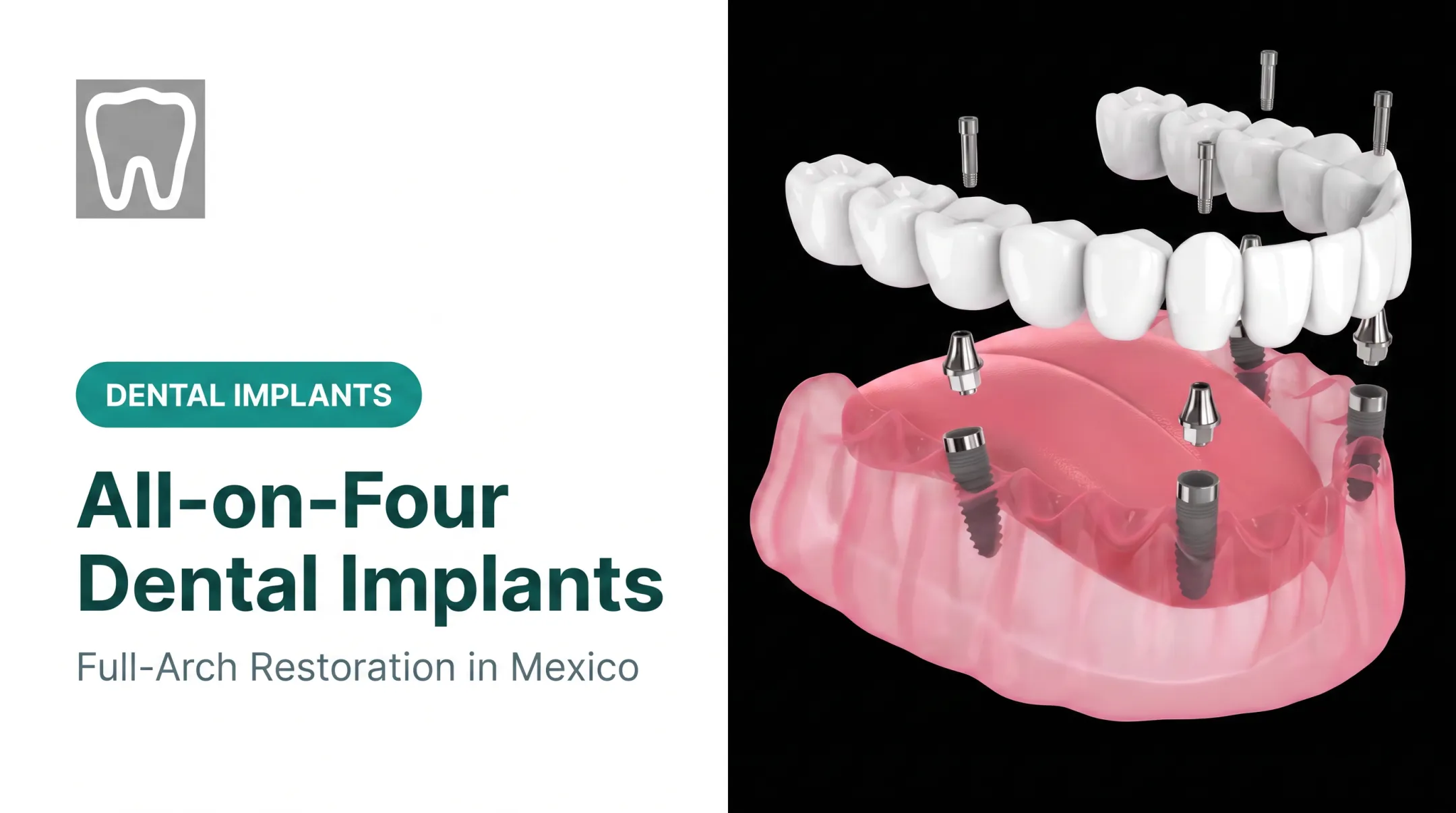
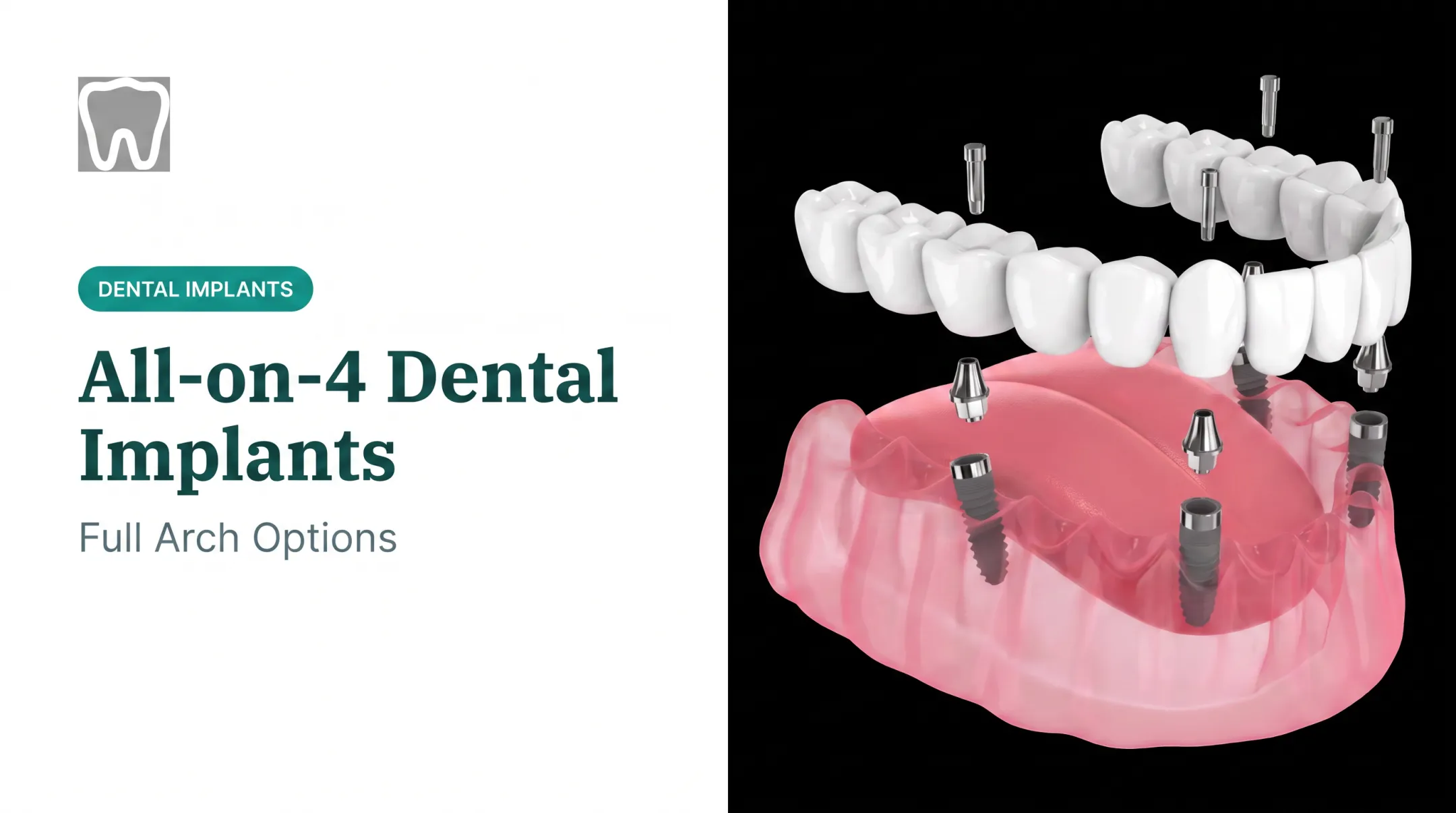
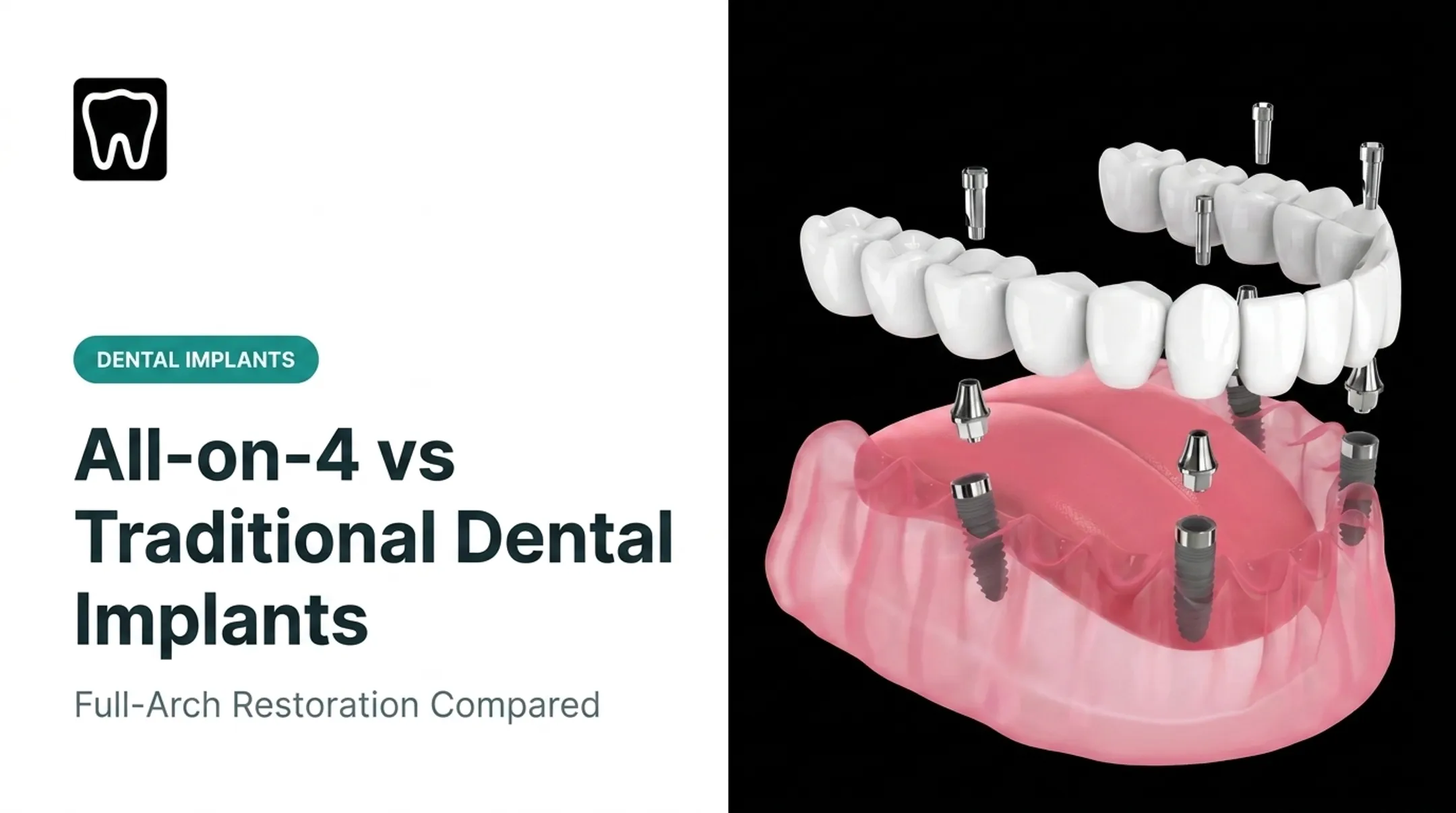
Four or six strategically angled implants support a full fixed arch of prosthetic teeth in one procedure.
- How it works: Implants are placed at angles that maximize contact with existing bone, often avoiding the sinus entirely
- Best for: Patients missing most or all upper teeth who want a fixed, non-removable solution
- Strengths: Faster treatment, often same-day temporary teeth, strong immediate stability
A 5-year maxillary randomized trial found no significant difference in implant failure or bone loss between All-on-4 and All-on-6 (failure rates of 1.25% vs. 5%, not statistically significant). More implants don't automatically mean a better outcome; anatomy and prosthetic design matter more than implant count alone.
Healing runs about 3-6 months for All-on-4 and 4-6 months for All-on-6 before the final zirconia or ceramic bridge replaces the temporary one.
3-ON-8™ Full-Arch Protocol
This is Dr. Moguel's patented protocol, using eight implants per arch to support three separate, independent zirconia or porcelain bridges rather than one continuous prosthesis.
- How it differs: More implants distribute bite force more evenly across the arch, and the segmented bridge design lets the jaw flex naturally during chewing
- Best for: Patients wanting maximum long-term stability and redundancy in a full-arch restoration
- Strengths: If one section develops an issue, only that segment needs repair, not the whole prosthesis
- Limitations: Higher implant count means a larger upfront investment (from $15,000, versus $6,000 for All-on-4 and $8,000 for All-on-6)
Zygomatic Implants
Longer implants anchored into the cheekbone (zygoma) instead of the maxilla, bypassing the sinus entirely.
- Best for: Patients told they lack sufficient bone for grafting or conventional implants
- Strengths: Skips lengthy bone grafting and sinus lift procedures, often saving months of graft healing
- Limitations: Demands a highly experienced surgical team given the anatomical complexity
An ITI consensus review reports 96.2% survival over an average 75.4 months for zygomatic implants in severe maxillary atrophy, supporting their use when conventional upper-jaw implants are not viable.

Benefits of Upper Jaw Dental Implants
Implants change daily life in ways dentures often can't match.
- Restored chewing function: eat a full range of foods without slippage or discomfort
- Bone preservation: implants load the jawbone like natural roots; dentures sit passively on the ridge
- Clearer speech: fixed upper prostheses stay put, so words don’t blur when a denture shifts
- Long-term value: fewer relines, refits, and replacements than dentures over a lifetime
- Smile-zone confidence: the upper arch shows most when you smile, so stable implants matter aesthetically
On bone loss, a retrospective maxillary study found conventional denture wearers lost more ridge bone over five years than patients with implant-supported fixed prostheses. Results vary by patient, but the pattern favors implants for long-term ridge stability.
A 2019 meta-analysis puts implant-level survival at 96.4% at 10 years, or about 93.2% with a more conservative read of study variability. Strong odds still depend on maintenance and daily hygiene.

How to Choose the Right Type of Upper Jaw Implant
The right choice comes down to bone health, extent of tooth loss, and budget.
Factors to weigh:
- Extent of tooth loss — a single gap calls for a different solution than a full arch with no remaining teeth
- Bone volume — determines whether grafting, standard implants, or zygomatic anchorage is needed
- Timeline — same-day loading versus staged healing over several months
- Budget and long-term maintenance — upfront cost versus long-term upkeep
- Surgeon experience — especially critical for advanced protocols like 3-ON-8™ or zygomatic implants
At Dr. Moguel's clinic, this process starts with a free consultation (virtual or in-person), followed by a 3D CBCT scan. Bone density then points to the right full-arch path:
- All-on-4 — generally fits low-to-moderate bone density
- All-on-6 — typically needs moderate density
- 3-ON-8™ — needs enough width and density for eight implants, or preparatory grafting if not
Why Patients Travel to Mexico for Upper Jaw Implant Treatment
In Los Algodones, Mexico, board-certified periodontist care covers the same advanced upper-jaw techniques used in U.S. clinics: CBCT imaging, All-on-4/6, 3-ON-8™, and zygomatic implants, at a fraction of the cost.
Dr. Moguel brings 38+ years of clinical experience and more than 17,000 implants placed. He works with premium FDA-approved implant brands including Nobel Biocare, Straumann, and MegaGen.
Current "from" pricing:
| Procedure | Starting Price |
|---|---|
| Single-tooth implant | $1,500 |
| All-on-4 | $6,000 |
| All-on-6 | $8,000 |
| 3-ON-8™ protocol | $15,000 |
For comparison, AAID's 2024 patient benchmark puts a single U.S. implant, abutment, and crown package at $3,100-$5,800, before full-arch protocols. Patients typically save 60-70% compared to equivalent U.S. treatment.

The clinic sits roughly a three-minute walk from the Andrade, California border crossing. Bilingual coordinators help arrange travel, hotel recommendations in Yuma, Arizona, and insurance claim documentation.
Free consultations and transparent pricing quotes are available before you commit to travel.
Frequently Asked Questions
Can dental implants be done on upper teeth?
Yes, upper jaw implants are routine, though they require careful evaluation of bone density and sinus position first. A 3D CBCT scan is standard before treatment planning to confirm feasibility.
How many implants are needed for the upper jaw?
It ranges from one implant per missing tooth up to four, six, or eight implants for full-arch solutions like All-on-4, All-on-6, or 3-ON-8™. The right number depends on bone volume and how many teeth are missing.
Can I have all my upper teeth pulled and get implants?
Same-day extraction-and-implant protocols are available when bone quality supports immediate loading. In other cases, staged treatment (healing first, then implant placement) is the safer route.
Are dental implants easier on the upper jaw or lower jaw?
The lower jaw generally has denser bone, making implant placement more straightforward there. The upper jaw's softer bone and sinus proximity make it comparatively more complex to plan and execute.
How long do upper dental implants last?
With proper care, implants can last decades, with studies reporting roughly 96% survival at 10 years. Dr. Moguel's clinic backs this with a lifetime warranty on implant hardware, plus a five-year warranty on crowns and bridges.
How painful are upper dental implants?
Most patients report mild-to-moderate discomfort managed with NSAIDs, and occasionally a prescription pain medication for more intense cases. Severe pain is uncommon, and swelling typically resolves within 4-5 days.