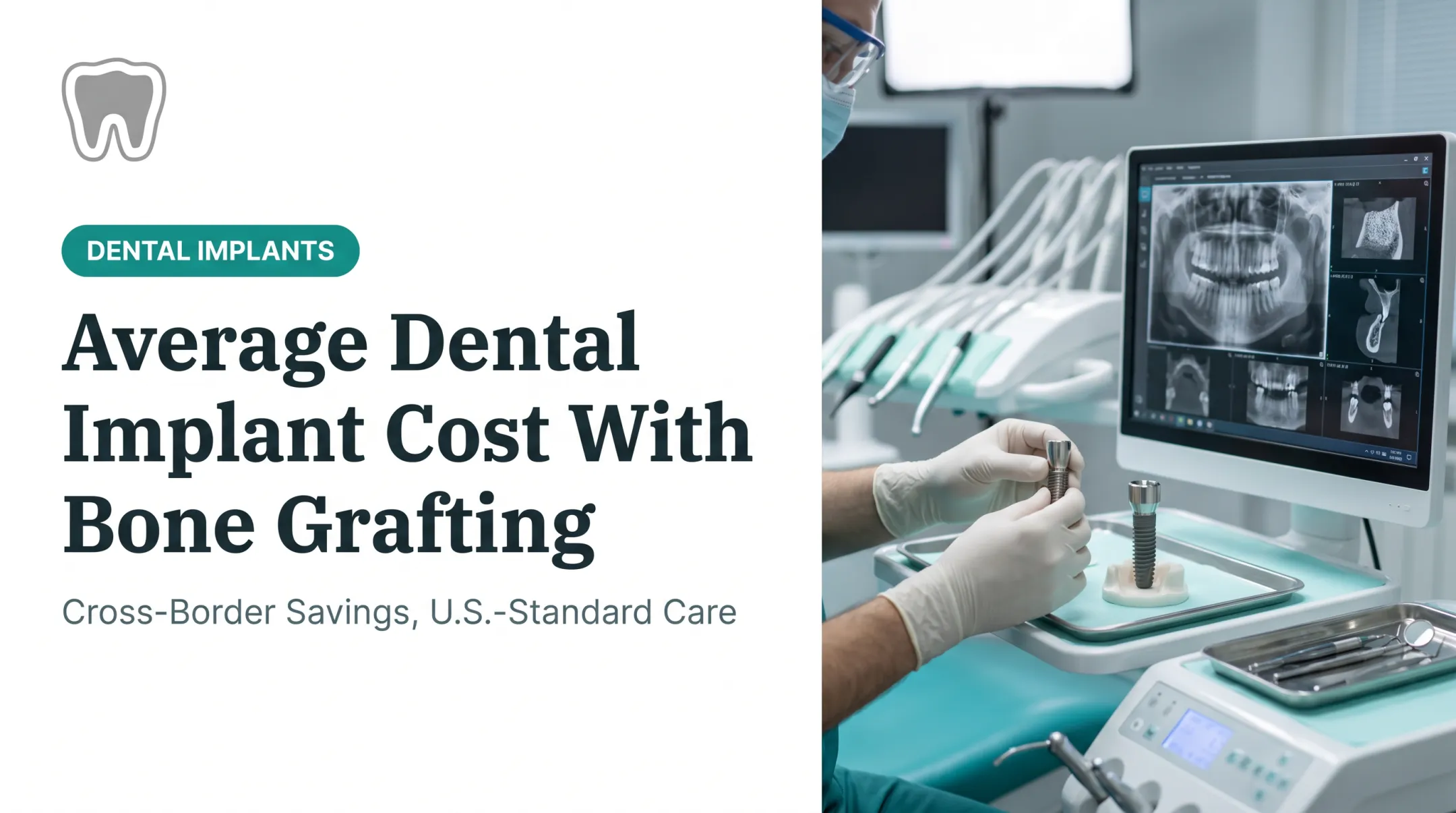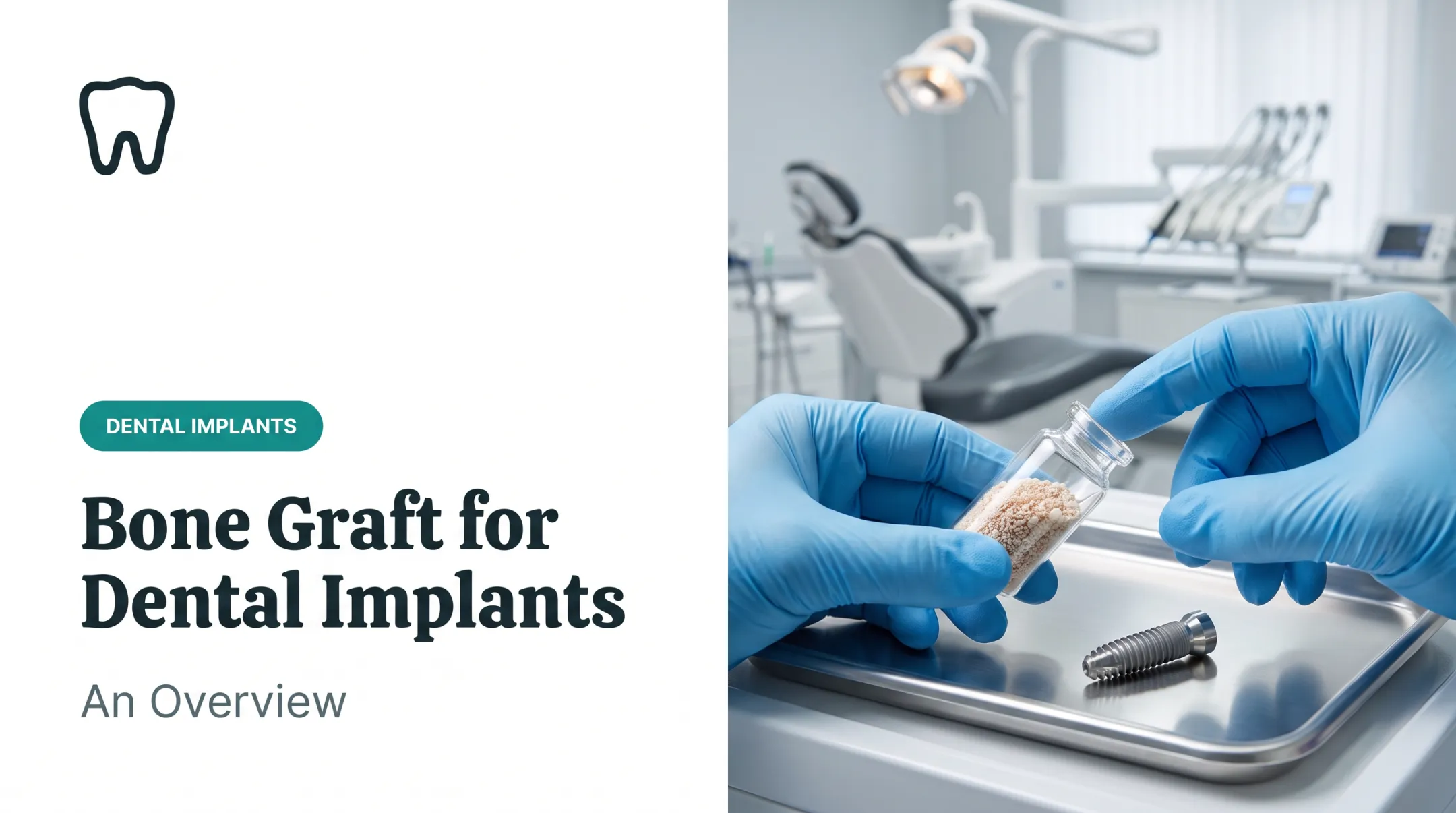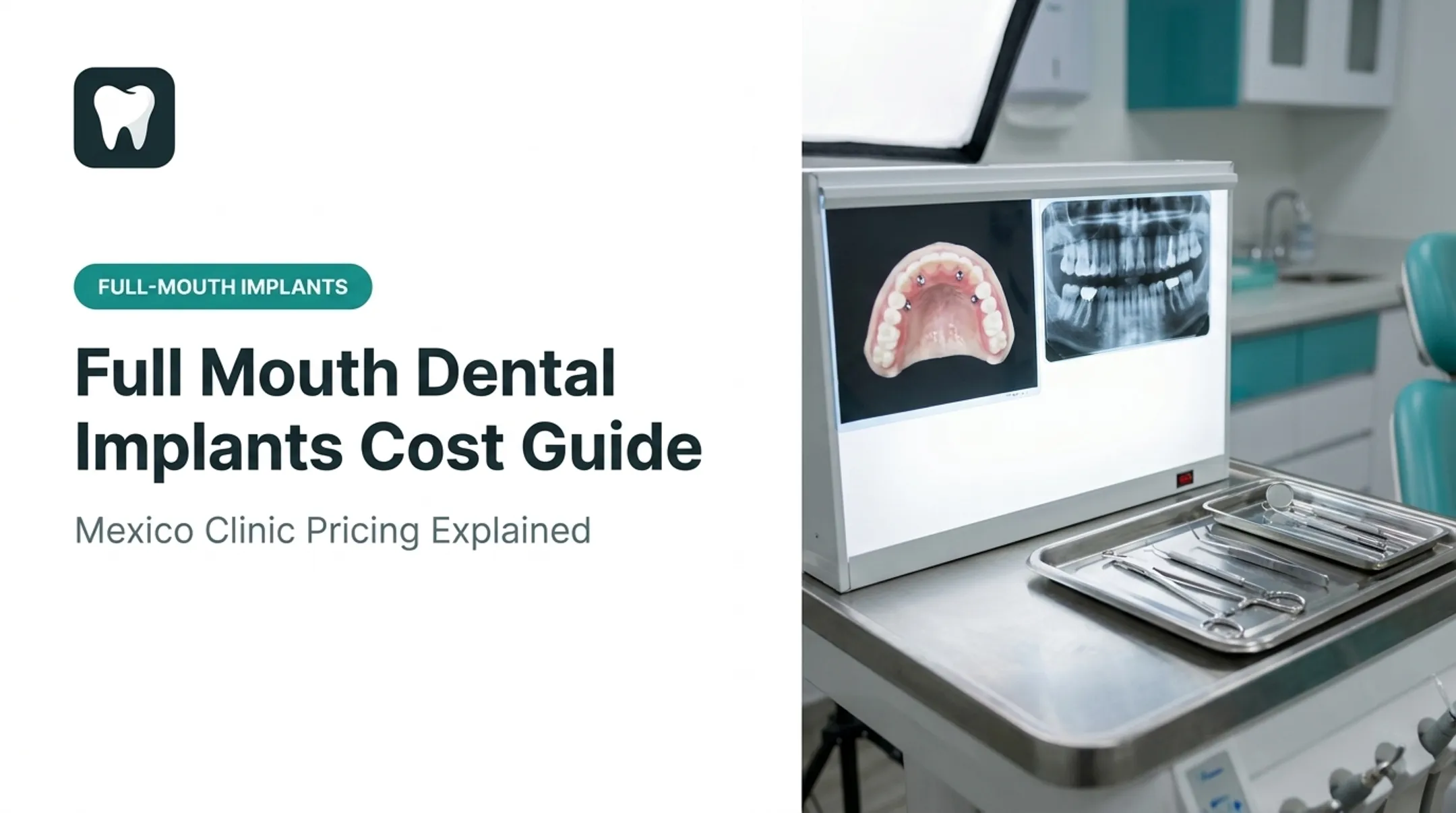

Costs swing wildly, anywhere from a few hundred dollars to well over $3,000 per site, depending on graft material, how much bone loss you're dealing with, and where you get treated. This guide breaks down real pricing, the factors driving those numbers, what's actually included in a quote, and how patients from the US and Canada are cutting costs significantly by getting grafts done in Mexico.
Key Takeaways
- Bone graft costs typically run $300–$3,000+ per site; autografts cost most, synthetic and donor materials less
- Price depends on material type, bone-loss extent, procedure complexity, and treatment location
- US and Canadian patients can often save 60-70% at accredited clinics in Mexico
- Insurance rarely covers grafting unless it's deemed medically necessary for implant success
- Graft success rate and long-term implant stability matter more than the lowest sticker price
How Much Does a Dental Bone Graft Cost? (Pricing Overview)
There's no fixed price tag for a bone graft. Cost hinges on the material used, how complex the surgical site is, and your geographic market.
Research shows 64.7% of dental implant cases required bone augmentation, based on a University of Minnesota review of 553 implants placed between 2010 and 2016. Nearly 9% needed multiple grafting procedures at once (PMC study).
Common budgeting mistakes patients make:
- Assuming there's one flat "bone graft price" instead of a range tied to their specific case
- Forgetting to budget for diagnostic imaging like CT scans
- Underestimating sinus lifts or ridge augmentation, which cost far more than a simple socket graft
Typical Cost Range
| Graft Type | Price Range |
|---|---|
| Basic/minor (socket preservation) | $300 – $1,000 |
| Standard (allograft/xenograft/alloplast) | $700 – $2,000 |
| Advanced (autograft, sinus lift, ridge augmentation) | $2,000 – $5,000+ |

A 2025 CareCredit benchmark backs this up, listing US bone graft prices between $549 and $5,148 nationally, with autografts landing at the top ($2,161–$5,148) and xenografts at the bottom ($549–$1,386) (CareCredit, 2025).
These US ranges typically include graft material, placement, and membrane (if needed). They usually exclude imaging, sedation, and the implant itself. Clinics in Mexico often price the same graft categories well below these benchmarks—commonly about 60–70% less—so many patients compare both markets before they budget.
What Each Graft Level Involves
- Basic graft: Minimal synthetic or donor material with simple site prep—best after extraction when bone loss is mild
- Standard graft: Allograft, xenograft, or alloplast plus a membrane, with moderate prep—typical for a single implant site
- Advanced graft: Autograft harvest, sinus lift, or block grafting with longer healing—used for major bone loss or full-arch support
Key Factors That Affect Bone Graft Cost
What you pay depends on the graft material, how much bone must be rebuilt, how many sites are involved, who does the surgery and where, plus any imaging needed up front.
Type of Graft Material
- Autograft — bone from your own body (often chin or jaw); highest cost because it adds a second surgical site
- Allograft — processed donor bone from a human source, mid-range pricing
- Xenograft — animal-derived bone, generally the least expensive
- Alloplast — synthetic material like hydroxyapatite or tricalcium phosphate, comparable to xenograft pricing
A 2021 peer-reviewed review notes that autografts remain the clinical gold standard for biological integration, but the trade-off is added surgical morbidity from the donor site (PMC review).

Extent of Bone Loss and Procedure Complexity
A simple socket graft after extraction costs far less than a sinus lift or full ridge augmentation. More invasive grafts take longer in the chair and usually need more material and follow-up.
Sinus lifts alone can run $1,500–$5,000 per side in the US, since they involve accessing the sinus cavity and often require longer healing before implant placement.
Number of Implant Sites Needing Grafting
Costs scale with how many teeth or arch sections need rebuilding. A single-site graft is one fee; full-arch grafting multiplies material, time, and surgical complexity across multiple sites.
Provider Expertise and Location
Who places the graft—and which country you have it done in—can move the total as much as the material itself. Board-certified periodontists and oral surgeons in major US metros generally charge more than general dentists in smaller markets.
A 2025 Dental Economics survey of 278 US practices found implant totals ranging from $3,665 in Houston to $5,505 in Minneapolis, with specialist-performed cases averaging $3,400 versus $4,800 for general dentists (Dental Economics, 2025). Many US and Canadian patients also compare those domestic quotes with cross-border care in Mexico (including Los Algodones), where specialist-led grafting is often priced well below typical US ranges.
Diagnostic Imaging Requirements
3D CT scans and X-rays to assess bone density before grafting typically add $200–$400 on top of the procedure itself, depending on scan size and provider.
Cost Breakdown: What's Included Beyond the Graft Itself
The graft material price is just one piece. Full treatment cost usually includes:
- Diagnostic imaging (one-time) — CT scan or X-rays to assess bone density and plan the graft
- Graft material and placement (one-time) — core surgical cost, which varies by material type
- Anesthesia/sedation (one-time) — comfort and safety coverage during the procedure
- Follow-up visits (recurring) — healing checks and graft-integration monitoring before implant placement
- Subsequent implant placement (separate procedure) — usually scheduled 3–4 months after healing; some cases need up to 6 months
According to Cleveland Clinic, initial recovery takes about a week, but full graft integration can take three months to a year, depending on graft size. Waiting too long after healing can allow the graft to shrink, so plan implant placement—and any return visits—around that window.

US/Canada Cost vs. Cross-Border Savings in Mexico
Typical US and Mexico price ranges side by side:
| Procedure | US typical cost | Los Algodones (Mexico) |
|---|---|---|
| Bone grafting | $1,500–$3,500 | $400–$800 |
| Single-tooth implant | $3,000–$6,000 | $750–$2,500 |

Combined, many cross-border patients report total savings in the 60–70% range.
Keep quality checks front and center. Look for:
- ADA/ADM board-certified periodontists
- American-standard imaging, like 3D Cone Beam CT
- FDA-approved graft materials
Dr. José Moguel, who leads treatment at Dental Implants in Mexico, brings 38+ years of experience and more than 17,000 implants placed. His clinic pairs bone grafting with implant placement using premium materials from Nobel Biocare, Straumann, and MegaGen.
Pricing is transparent and upfront, with free consultations before you commit to travel.
Practical logistics that make this feasible:
- The clinic sits roughly a three-minute walk from the Andrade, California border crossing
- Bilingual coordinators handle scheduling, travel questions, and paperwork
- Hotel coordination in nearby Yuma, Arizona, plus local shuttle assistance, is available for patients staying overnight
One documented case: a patient with severe posterior bone loss after 15+ years of missing molars had bilateral sinus lifts and grafting around six implants in a single visit. Follow-up CBCT scans later confirmed over 1.5 cm of bone height gained.
How to Estimate Your Bone Graft Budget
Base your budget on your actual bone loss and treatment goals, not the lowest advertised price. Factor in:
- The extent of bone loss revealed by imaging
- How many implant sites need grafting
- Your graft material preference (or your surgeon's recommendation)
- Whether your insurance offers any partial coverage
Request an itemized quote covering imaging, graft material, the procedure itself, and follow-up visits before you sign anything.
A free consultation—local or remote—is the easiest way to compare options side by side. Dental Implants in Mexico’s remote process lets you submit digital X-rays or CBCT scans for Dr. Moguel to review before he quotes a customized treatment plan.
Frequently Asked Questions
How much does a dental bone graft cost per tooth?
Per tooth (per graft site), costs generally range from $300 to $3,000+, depending on material and case complexity. Simple socket grafts sit at the low end; sinus lifts and autografts push higher.
Will dental insurance cover a bone graft?
Coverage usually applies only when the graft is deemed medically necessary for implant success, not for elective cases. Aetna's clinical policy, for example, ties coverage to cases where normal healing won't correct the bone defect on its own.
How long does a dental bone graft last?
A bone graft can last a lifetime once it's supporting a functioning implant, provided you maintain good oral hygiene. Unused grafted bone without an implant can shrink over time.
Can a dentist do a bone graft and implant at the same time?
Same-day placement is possible for minor grafts when there's enough bone for stability. More complex cases, like sinus lifts or significant bone loss, typically require 3-4 months of healing first.
What percentage of dental implants need a bone graft?
Research from a University of Minnesota cohort found that 64.7% of implant cases required bone augmentation, with nearly 9% needing multiple grafting procedures.
Is dental bone grafting worth it?
Yes, for most patients with insufficient bone. Grafting builds the stable foundation implants need long-term; skipping it when required often leads to implant failure.