
Full mouth dental crowns rebuild an entire smile's strength and appearance in one coordinated treatment plan. The catch? In the US and Canada, this can run into the tens of thousands of dollars. That's driving more patients toward Los Algodones, Mexico, where board-certified specialists deliver the same materials and technology at a fraction of the price.
This guide covers what full mouth crowns actually are, the signs you might need them, the treatment process, realistic cost comparisons, and how to make them last.
Key Takeaways
- Full mouth crowns restore function and appearance when most teeth are worn, decayed, or damaged
- Treatment usually spans two or more visits: prep, temporaries, then permanent placement
- Crowns can last five to fifteen years or longer with good hygiene and material choice
- Mexico-based clinics offer 60–70% savings using the same premium materials as US providers
What Are Full Mouth Dental Crowns?
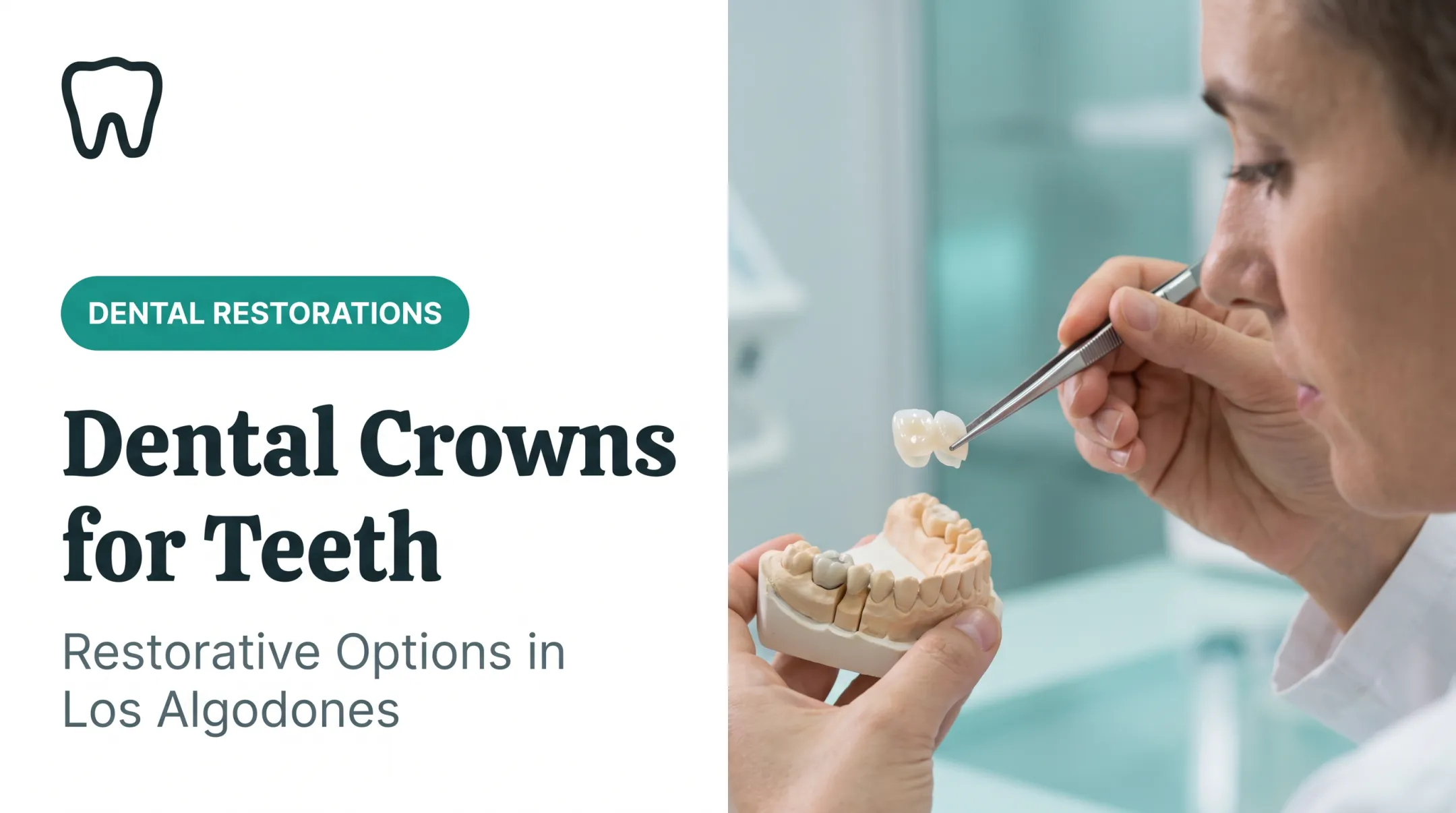
Full mouth dental crowns involve placing individual custom caps over all or most of your natural teeth. Each crown rebuilds strength, restores your bite, and matches the appearance of healthy enamel.
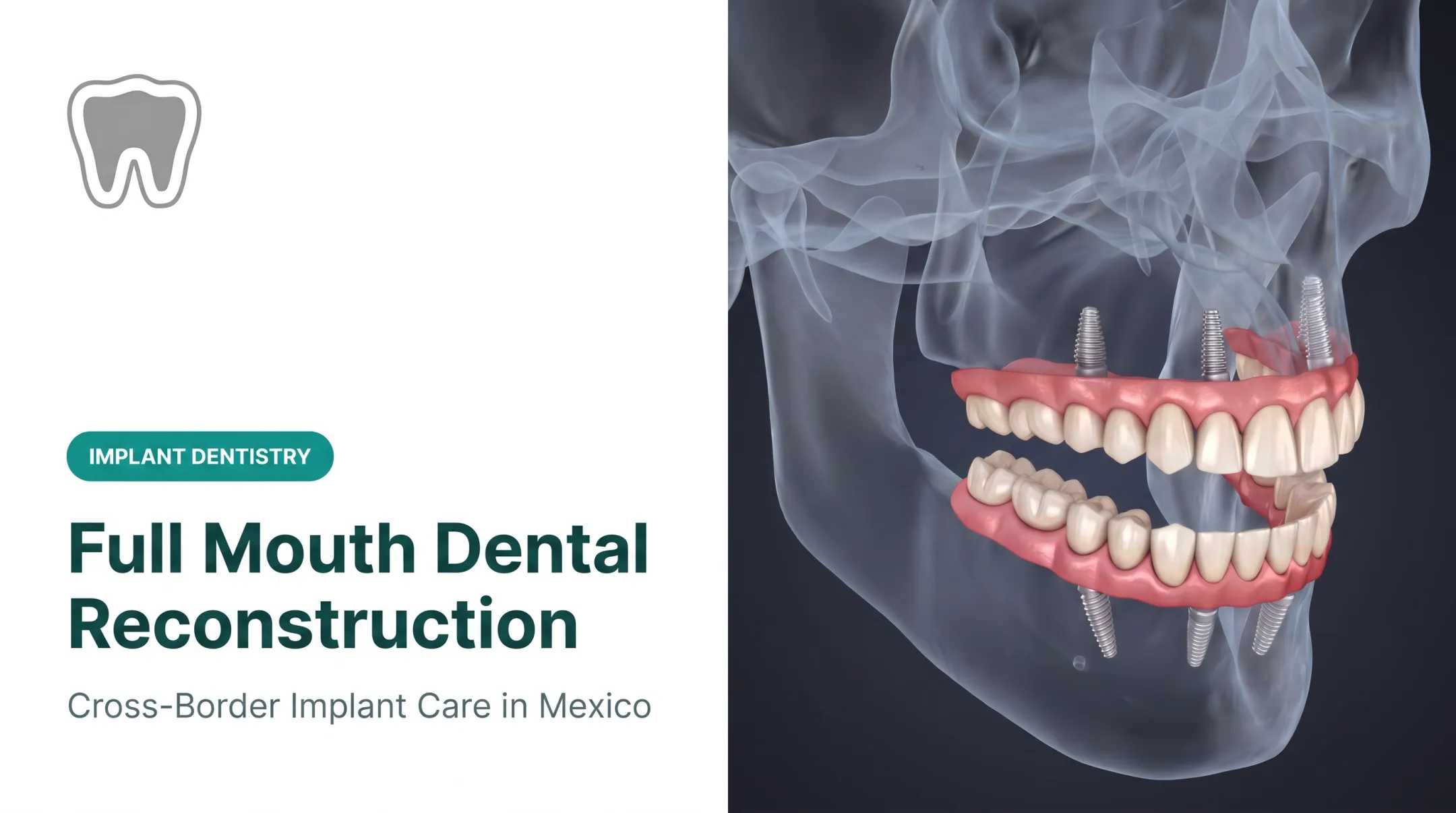
This is different from full mouth reconstruction, which may combine implants, bridges, and veneers for patients missing teeth or with more complex needs. Crowns work best when your natural tooth roots are still healthy but the visible structure is damaged, worn, or decayed.
Can You Actually Get a Full Mouth of Crowns?
Yes. When most teeth have intact roots but compromised structure, crowning them individually is a routine treatment path.
Common Crown Materials
- Zirconia: Extremely durable, with survival rates of 91.2% to 98.5% at five years
- Porcelain/all-ceramic: Best natural translucency, five-year survival around 90-97% depending on construction
- Porcelain-fused-to-metal (PFM): Combines metal strength with a tooth-colored surface; ADA reports 10-year survival around 97%
Once placed, crowns are shade-matched and custom-shaped to your bite. Finished well, they typically blend with natural enamel so others can’t tell which teeth are crowned.

Signs You May Need Full Mouth Crowns
A single cracked tooth needs a single crown. But certain patterns suggest you need a full-mouth approach:
- Severe wear across multiple teeth from bruxism (grinding or clenching)
- Several large or failing fillings that are cracking or leaking
- Widespread decay affecting many teeth at once
- Multiple cracked, fractured, or chipped teeth
- A bite that feels "collapsed" or misaligned across most of the arch
Bruxism is a bigger factor than most patients realize. In a 2021 ADA survey, more than 70% of dentists reported noticing signs of grinding or clenching in their patients. Left unchecked, bruxism wears down enamel and fractures restorations over years.
A comprehensive exam, including X-rays, digital scans, and a gum evaluation, confirms whether crowns are right for you versus alternatives like veneers or implants.
The Full Mouth Crown Treatment Process
Full mouth crown treatment follows a structured sequence:
- Comprehensive assessment. 3D imaging, bite analysis, and gum health evaluation establish a baseline.
- Tooth preparation. The dentist removes decay, reshapes each tooth, and takes digital impressions or scans.
- Temporary crowns. While permanent restorations are fabricated in a lab (typically two to three weeks), you wear temporaries made of resin or acrylic.
- Permanent placement. Final crowns are fitted, checked for bite alignment and shade match, then cemented.

At Dr. José Moguel's clinic in Los Algodones, this process is supported by 3D Cone Beam CT imaging, digital scanning, and an in-house CAD/CAM lab. The on-site lab shortens fabrication time for cross-border patients who can't easily make multiple trips.
Which Tooth Is Hardest to Prepare?
In the preparation step above, molars are usually the most demanding teeth to crown. Access is limited at the back of the mouth, root anatomy is often complex, and these teeth carry heavier bite forces. Precision matters more on molars than on front teeth.
Cost of Full Mouth Crowns: US vs. Mexico
Crown pricing varies widely by material, location, and how much prep work each tooth needs.
| Market | Typical Per-Crown Cost | Source |
|---|---|---|
| United States | $800–$2,500 | GoodRx, 2024 |
| Canada | $900–$1,500 average | Canada Life, 2024 fee guides |
| Mexico (reported example) | $300–$600 | KFF Health News dental tourism report, 2019 |
For a full mouth of crowns, multiply that per-tooth range across most or all of your teeth, and the US/Canada total climbs fast. Traveling to Los Algodones for the same quality materials, including Nobel Biocare, Straumann, and MegaGen, often means 60–70% savings compared to typical US pricing.

What offsets the travel:
- Free, no-obligation consultations
- Transparent, upfront pricing quotes
- Insurance claim documentation support
- Travel coordination near the Andrade, California border crossing, approximately a three-minute walk from the clinic
If your case involves missing teeth rather than just damaged ones, Dr. Moguel's clinic also offers full-mouth reconstruction options, including All-on-4, All-on-6, and the patented 3-ON-8™ protocol, which may be a better fit than crowns alone.
Lifespan, Care, and Maintenance of Full Mouth Crowns
How long do full mouth crowns last? Most crowns last five to fifteen years with proper care, according to Cleveland Clinic's clinical guidance. Zirconia crowns tend toward the higher end of that range; some patients see decades of service.
Longevity depends heavily on:
Material choice — zirconia generally outlasts standard porcelain
Bite forces — grinders put more stress on crown margins
Oral hygiene — decay at the crown edge is the most common failure point
Oral hygiene — decay at the crown edge is the most common failure point
Those same factors are why daily habits matter as much as the material you choose.
Daily Maintenance Checklist
- Brush twice daily with a soft-bristled brush
- Floss or use interdental cleaners specifically around crown margins
- Schedule regular checkups to catch problems early
- Avoid extremely hard, sticky, or chewy foods

If you grind or clench, a night guard protects your investment. That small step helps prevent fractures and premature wear.
Frequently Asked Questions
Can you have a full mouth of crowns?
Yes, it's a common and effective treatment when most teeth are structurally intact but damaged or worn. A full dental exam, including imaging and a bite evaluation, confirms whether you're a candidate.
What do crowns look like in the mouth?
Crowns are custom shade-matched and shaped to blend naturally with your remaining teeth and gums. Most people can't distinguish a well-made crown from natural enamel.
How long do full mouth crowns last?
Typically five to fifteen years, sometimes longer, depending on material and how well you maintain them. Zirconia crowns tend to hold up better than standard porcelain over time.
Which tooth is hardest to prepare for a crown?
Molars are usually the most challenging due to limited access, complex multi-surface anatomy, and the heavier bite forces they absorb. This makes specialist experience especially valuable for back teeth.
How much do full mouth crowns cost compared to full mouth reconstruction?
Crowns alone are generally less expensive than reconstruction involving implants, since they don't require surgical placement or extended healing time. Exact pricing depends on materials, the number of teeth involved, and whether any teeth are missing.
Is traveling to Mexico for full mouth crowns safe?
At reputable clinics, providers like Dr. Moguel are board-certified through the ADA and Asociación Dental Mexicana (ADM) and use American-standard technology, including 3D imaging and in-house CAD/CAM labs. Verifying credentials before booking is essential wherever you choose to travel.