
For qualified candidates, the answer is yes. Same-day implants combine extraction and implant placement into one visit, cutting out the traditional multi-month wait between removing the damaged tooth and starting the implant process.
This article covers who qualifies, how the procedure actually works, what benefits and risks to weigh, and why the skill of your specialist matters more than almost anything else. Dr. José Moguel, a board-certified periodontist with 38 years of experience and over 17,000 implants placed, has evaluated same-day candidacy for thousands of patients — that background shapes everything below.
Key Takeaways
- Same-day implants place the titanium post immediately after extraction, skipping the usual 4–6 month healing wait
- You qualify only if bone quality, infection status, tooth location, and extraction technique all check out
- Not everyone qualifies: some patients need socket preservation and a delayed implant instead
- A board-certified periodontist with substantial implant experience is a major factor in success
What Is a Same-Day Dental Implant?
Immediate implant placement means the damaged tooth is extracted and the titanium implant post is inserted into that same socket, during the same appointment. No separate surgery, no waiting for the socket to heal first.
Patients often confuse two related but different things:
- Immediate placement — the implant post goes in the same day as extraction
- Immediate loading — a temporary crown or bridge is attached to that post the same day
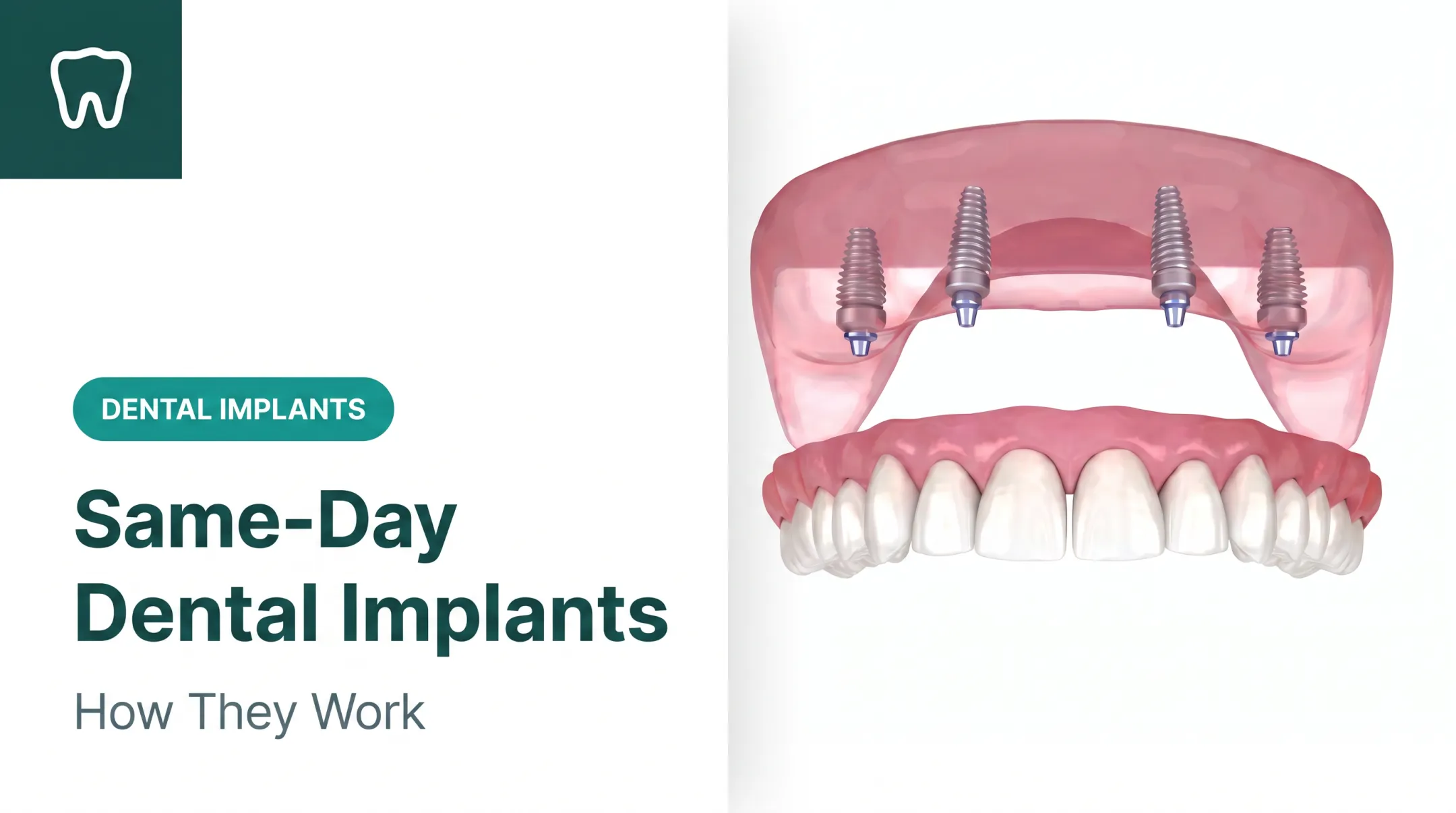
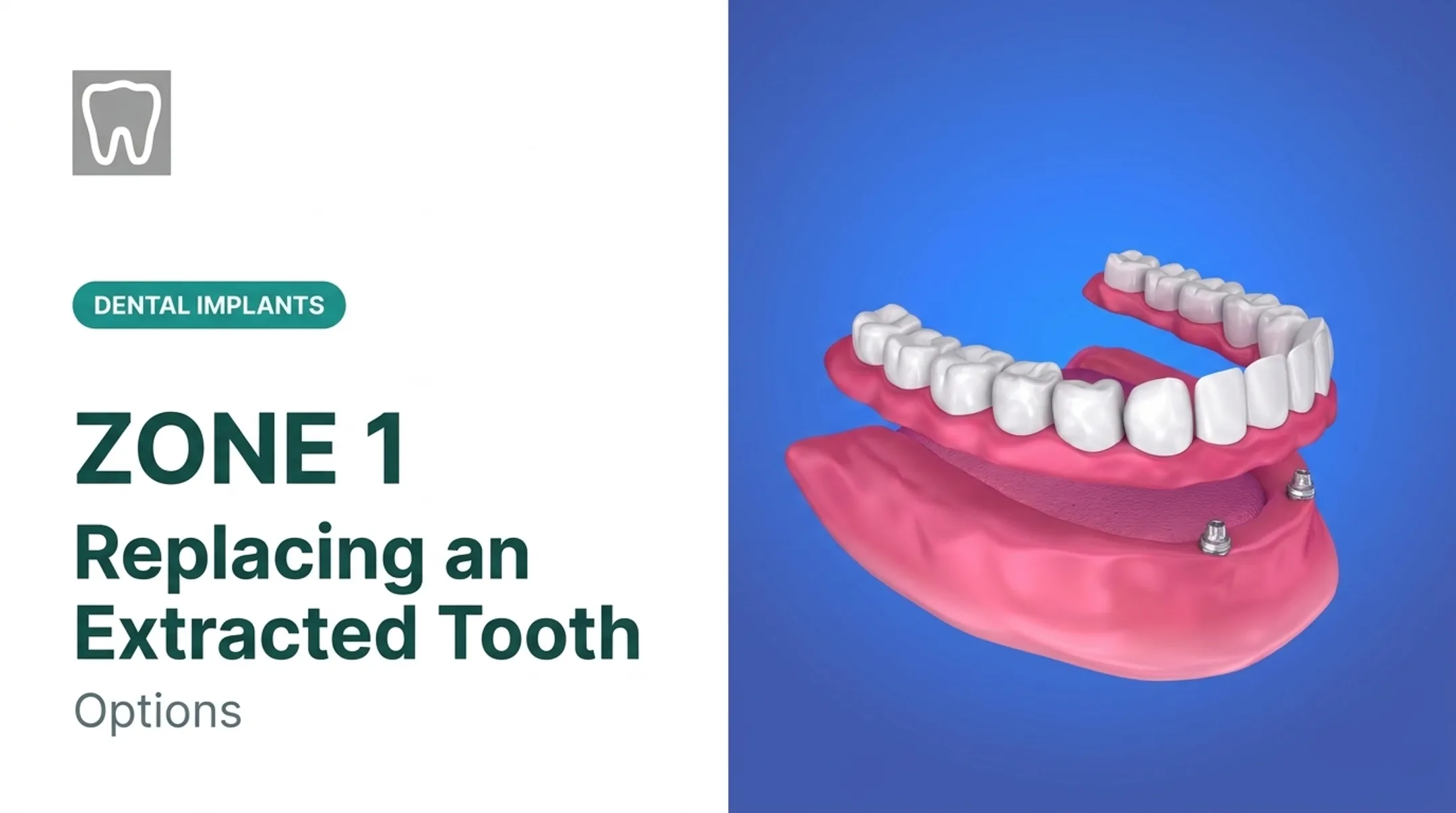
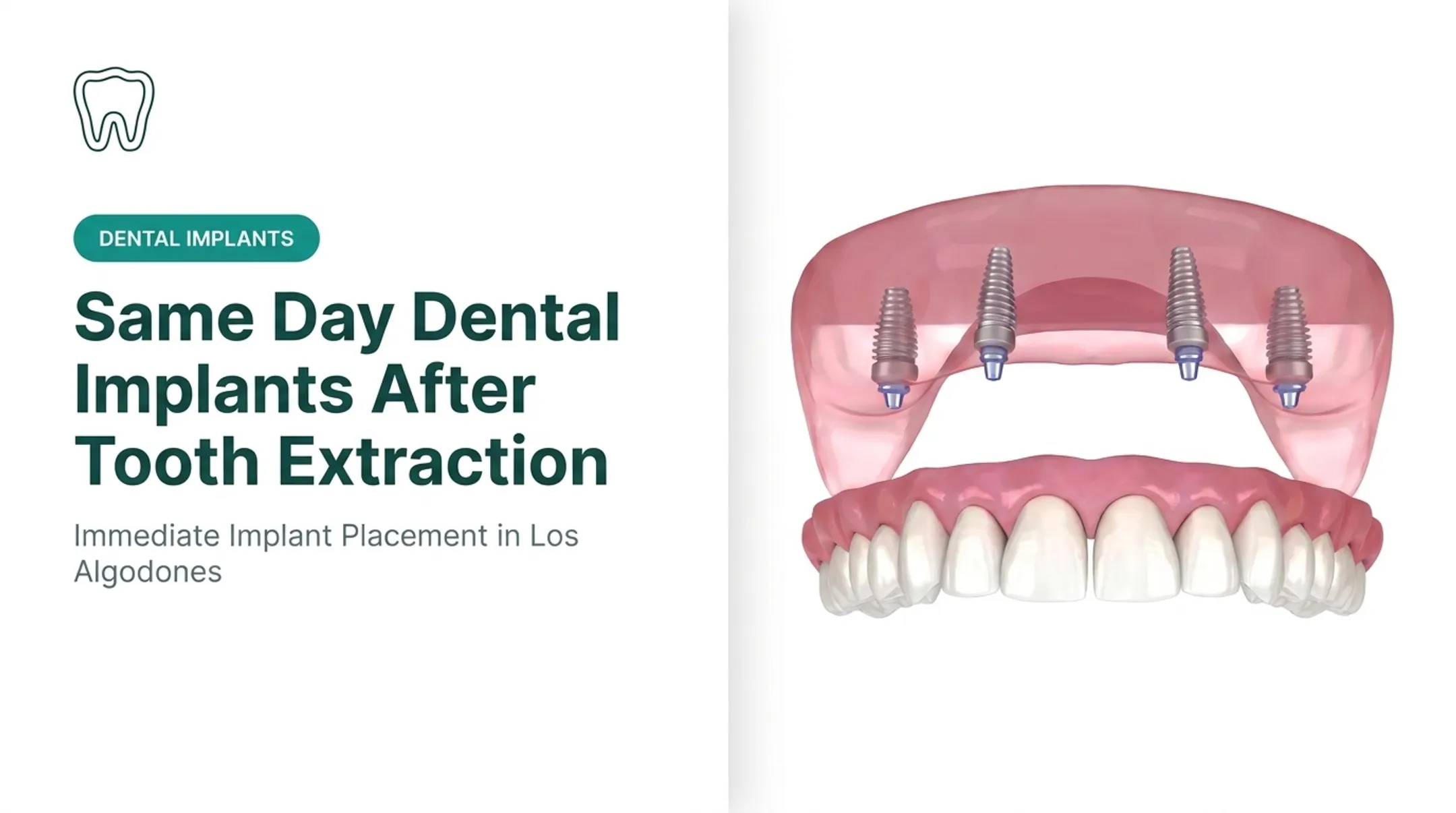
You can have one without the other. Some patients get the post placed immediately but wait months before a temporary tooth is attached. Others—especially full-arch cases like Teeth in a Day—get both the post and a fixed temporary bridge in one visit.
Traditional vs. Same-Day Timeline
| Step | Traditional Route | Same-Day Route |
|---|---|---|
| Extraction | Day 1 | Day 1 |
| Bone graft (if needed) | Day 1, then wait | Often skipped |
| Healing period | 4–6 months before placement | No wait before placement |
| Implant surgery | Separate visit, months later | Same visit as extraction |
| Osseointegration | 3–4 months (lower jaw) to 6–8 months (upper jaw) | Same window; overlaps socket healing |
| Final crown | After full integration | After full integration |

The same-day approach doesn't eliminate healing time before the final crown goes on. It eliminates the separate surgical visit and the waiting period between extraction and implant placement.
Am I a Candidate for Same-Day Implants?
This is the question that matters most, and the honest answer is: it depends on what your dentist finds when they look inside your mouth.
Bone quality and density. The implant needs enough surrounding bone at the extraction site to achieve primary stability: it must hold firmly enough to integrate properly. Thin or soft bone often rules out same-day placement.
No active infection. A tooth with an active abscess or infection typically needs healing time before an implant can go in safely. Placing an implant into infected tissue raises the risk of peri-implantitis and implant failure down the road.
Tooth location matters:
- Front teeth and premolars are generally better same-day candidates, with lower bite forces and more predictable bone anatomy
- Molars carry more bite force and have less forgiving anatomy
- Lower back teeth require 3D imaging to evaluate proximity to the inferior alveolar nerve before anyone commits to immediate placement
Socket condition after extraction. Preserved bone walls (particularly the septal bone between roots) and a clean, atraumatic removal directly affect whether immediate placement is viable. If the extraction fractures the socket wall, same-day placement often gets ruled out on the spot.
The final call is frequently made during the extraction itself, once the dentist can see the socket directly, not just on a scan.
That said, a 3D Cone Beam CT scan beforehand is the standard tool for evaluating candidacy in advance. It maps bone density, nerve position, and sinus proximity in three dimensions, something a flat 2D X-ray can't do.

Overall health matters too. Uncontrolled diabetes and smoking are both associated with higher implant failure rates during the healing phase. Patients are typically advised to stop smoking at least two weeks before and six weeks after surgery.
How the Same-Day Extraction and Implant Procedure Works
Planning Before You Ever Sit in the Chair
Same-day eligibility is confirmed before the appointment through 3D imaging, digital scans, and treatment planning. Your dentist already knows the bone density, nerve locations, and likely implant position before you sit down.
The Appointment Itself
- Extraction — the damaged tooth is removed gently and precisely, preserving surrounding bone and gum tissue
- Socket cleaning — infected or damaged tissue is cleared to create a viable implant site
- Implant placement — the titanium post goes into the jawbone as an artificial root; the dentist confirms primary stability before continuing
- Temporary restoration — a temporary crown or abutment may be placed the same day (immediate loading), or the site heals first when stability is not yet sufficient

In one documented case, a fractured front-tooth root was extracted without damaging the bone socket. A titanium implant was placed immediately, and a temporary aesthetic crown was attached before the patient left. The final zirconia crown followed around month four, after full integration.
Appointment length typically runs 1-2 hours for a single tooth under local anesthesia, sometimes longer with sedation for comfort. Full-arch same-day protocols run closer to 2-3 hours.
Benefits and Risks to Weigh
Benefits of Same-Day Implants
- One surgical visit instead of two separate procedures months apart
- No visible gap in your smile during the healing period
- Better preservation of gum and bone contour, since the implant helps maintain the socket shape
- Shorter overall treatment timeline
- No need for a removable temporary partial denture

Risks and When Delayed Placement Is Better
Rushing immediate placement in poor conditions can lower long-term success. Active infection, thin bone, or nerve proximity are common reasons to wait.
A 2024 systematic review found delayed placement had notably fewer implant failures than immediate placement across the studies analyzed, with an odds ratio favoring delayed treatment of 3.47. Same-day implants still work well in the right cases; selection criteria matter more than speed alone.
Sometimes the more predictable path is extraction plus socket preservation (bone grafting into the socket), followed by implant placement 4-6 months later once the graft has integrated.
Ask your implant specialist directly:
- What's your success rate specifically for same-day placements?
- What's the backup plan if you get in there and immediate placement isn't possible?
A specialist who can't answer both questions clearly probably isn't the right one for this procedure.
Why Experience and Technology Matter for Same-Day Success
Same-day implant placement is technically demanding. It requires someone comfortable with both atraumatic extraction technique and precision implantology, because the decision to proceed often gets made in real time, mid-procedure.
Dr. José Moguel is a board-certified periodontist with over 38 years of clinical experience and more than 17,000 implants placed. That volume of casework matters when a socket doesn't look exactly like the scan predicted and a judgment call has to happen fast.
Advanced diagnostics aren't optional. Before same-day placement, the team needs a clear read on bone density and nerve position:
- 3D Cone Beam CT imaging for bone and nerve assessment
- Digital scanning for precise pre-surgical planning
Guesswork has no place in this decision.
Patients traveling from the U.S. and Canada to Los Algodones can request a free, no-obligation consultation and a transparent price quote before committing to travel. That lets you evaluate same-day candidacy without financial risk upfront.
Frequently Asked Questions
Is it possible to get a dental implant immediately after tooth extraction?
Yes, for qualified patients with healthy surrounding bone and no active infection. Candidacy is confirmed through a clinical exam and 3D imaging, and sometimes the final decision happens during the extraction itself.
How quickly after a tooth extraction can I get an implant?
Some patients qualify for same-day placement. Others need anywhere from 6 weeks to 6 months of healing first, depending on bone condition and whether infection was present at the site.
Can you get a tooth pulled and then get an implant later?
Yes, this staged approach — extraction, socket preservation with bone grafting, then delayed implant placement — is common and often preferred when same-day conditions aren't ideal.
Which is more painful, tooth extraction or tooth implant?
Both procedures use anesthesia or sedation, so pain during either one is minimal. Many patients find implant placement less uncomfortable in recovery than extraction.
What happens if I'm not a candidate for same-day implant placement during surgery?
Your dentist will typically perform socket preservation with bone grafting instead and schedule implant placement for after the site heals, usually 3-6 months later.
How much can I save by getting dental implants in Mexico compared to the U.S.?
Patients commonly save about 60-70% compared to U.S. pricing for equivalent implant treatment. A free consultation and quote will show your specific savings.