
Choosing the right ceramic material, though, makes a real difference in how a crown performs. Zirconia handles a molar's bite force; lithium disilicate handles a front tooth's translucency demands. Get the match wrong, and you either overpay for strength you don't need or underbuild a crown that chips too soon.
Patients are also comparing where they get this work done. Many now weigh accredited clinics near the US-Mexico border against local options to balance quality against cost. This article breaks down the benefits, the material types, how ceramic stacks up against PFM and metal crowns, and what durability and pricing actually look like.
Key Takeaways
- Ceramic crowns are metal-free and biocompatible, built to mimic natural enamel
- Leading materials are zirconia and lithium disilicate, chosen by bite force, tooth position, grinding habits, and visibility
- Properly maintained ceramic crowns commonly last 10-15 years, sometimes longer
- Clinics near the US-Mexico border offer zirconia crowns at 60-70% lower cost
What Are Ceramic Dental Crowns?
A ceramic crown is a full-coverage cap made entirely from dental ceramic, with no metal substructure underneath. It restores teeth that are cracked, heavily decayed, or structurally weakened after a root canal.
This sets it apart from porcelain-fused-to-metal (PFM) crowns, which rely on a metal base for strength. That metal base blocks light and can create a dark line at the gumline as tissue recedes over time. Ceramic crowns skip that problem entirely, letting light pass through the way it does with natural enamel.
Modern ceramics aren't limited to front teeth anymore. High-strength options like zirconia now handle:
- Cosmetic restorations on visible front teeth
- Functional repairs on molars and premolars
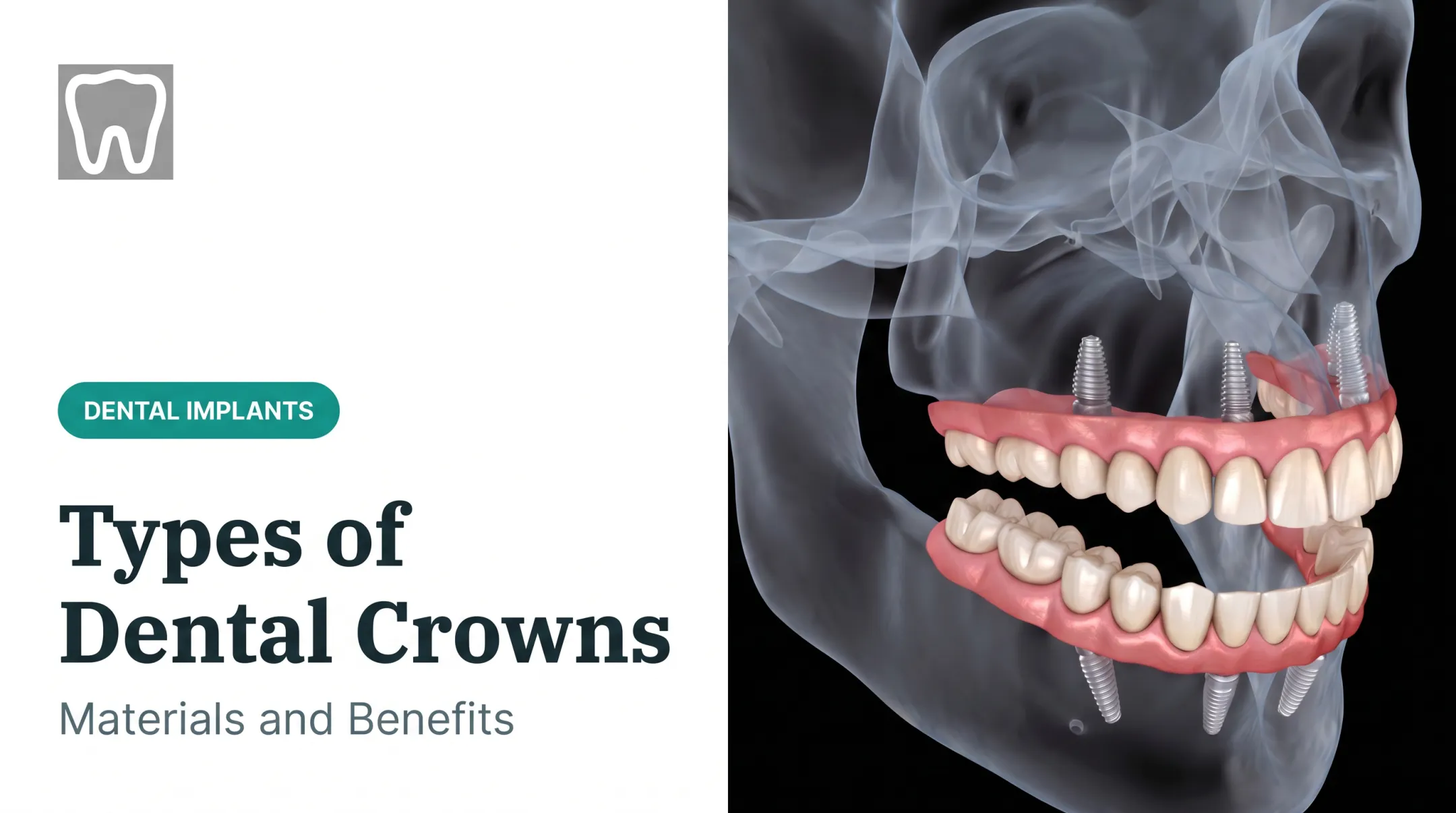
- Full-mouth reconstruction cases combined with implants
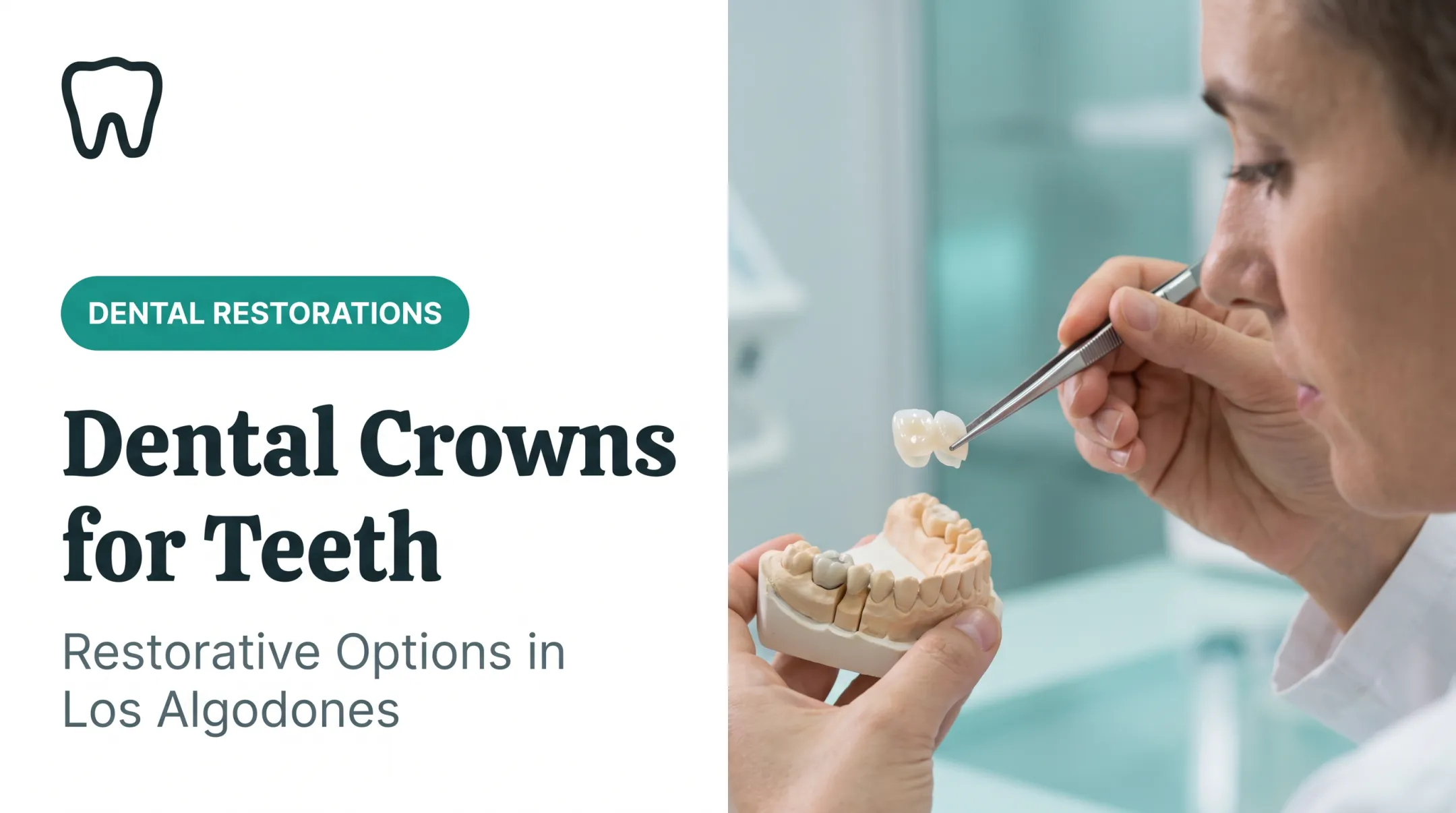
At Dental Implants in Mexico, custom porcelain or zirconia crowns are matched to the color, shape, and translucency of the surrounding teeth, then permanently secured so the restoration blends with the rest of the smile.
Benefits of Ceramic Dental Crowns
Natural Appearance and Biocompatibility
Ceramic mimics enamel's translucency in a way metal-backed crowns can't. In one documented case, a patient received a hand-crafted, translucent ceramic crown for a fractured front incisor that was indistinguishable from his natural teeth.
Because ceramic contains no metal, it also offers:
- Low allergy risk for sensitive patients
- No gum irritation from metal ions
- No dark margin line developing at the gumline over years
Stain Resistance and Strength
Ceramic crowns resist staining far better than composite resin restorations, keeping their color stable through years of coffee, wine, or tobacco exposure.
Strength has improved as well. Zirconia, sometimes called "ceramic steel" in the industry, now withstands molar-level bite forces that would have chipped older all-ceramic crowns.
A systematic review of all-ceramic crowns found 93.3% survival at five years, comparable to metal-ceramic crowns (Pjetursson et al.).

Integration With Broader Treatment Plans
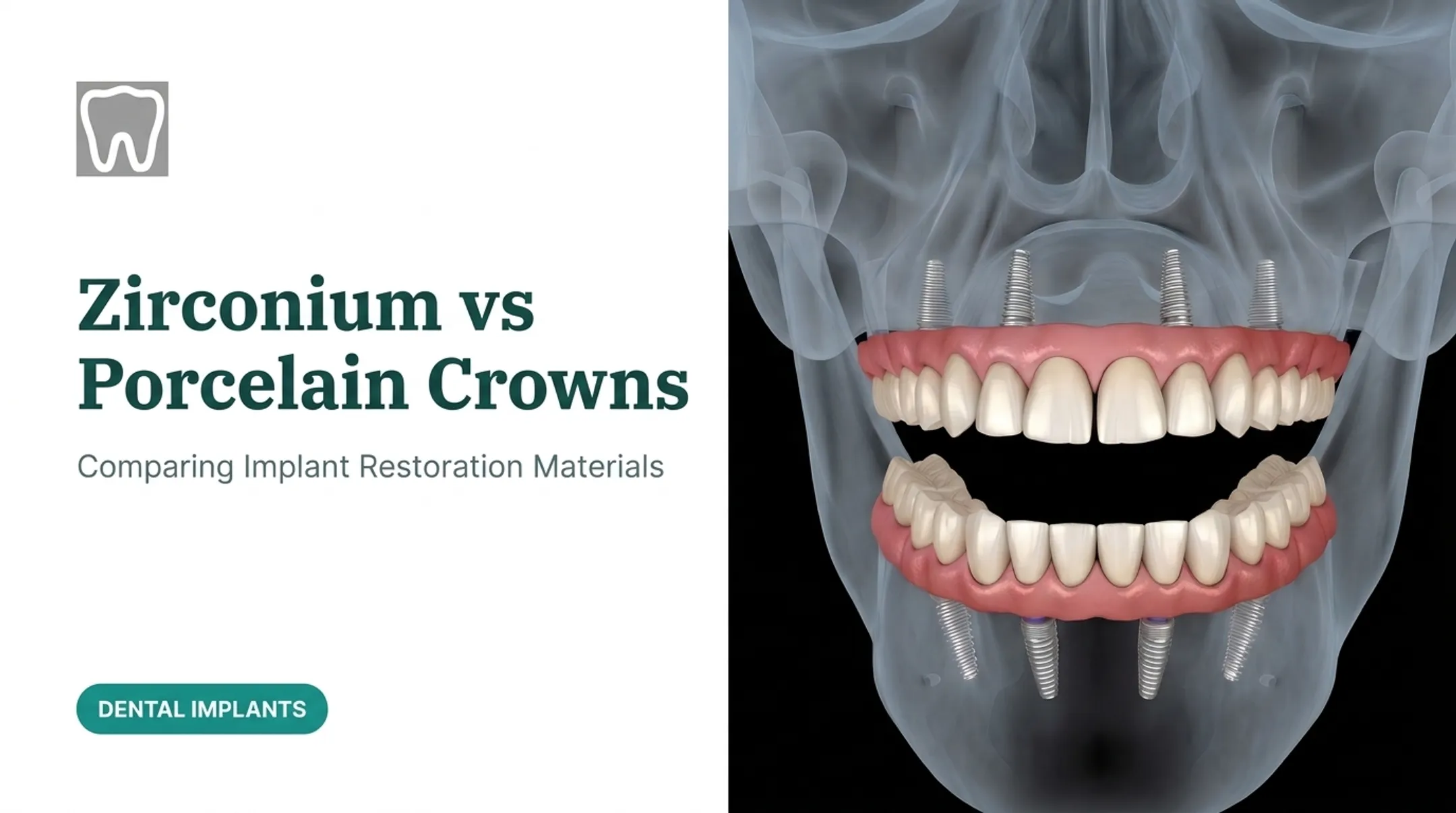
Ceramic crowns fit naturally into larger restorative work. A full-mouth reconstruction, for example, might combine All-on-4 or All-on-6 implant placement with zirconia bridges for one cohesive, metal-free result across the whole arch.
Types of Ceramic Dental Crowns
Zirconia Crowns
Zirconia is the strongest ceramic available, with flexural strength around 1,000 MPa according to a material-selection review by Succaria et al.. That makes it the default choice for:
- Molars carrying heavy chewing loads
- Patients who grind their teeth at night
- Long-span bridges needing structural backbone
The trade-off has traditionally been translucency: conventional zirconia looks slightly more opaque than natural enamel. High-translucency zirconia formulations have narrowed that gap considerably, though lab studies still find it less translucent than lithium disilicate.
Lithium Disilicate (Pressed Ceramic) Crowns
Lithium disilicate trades some strength (roughly 360-400 MPa) for superior light transmission. It's a favorite for front teeth and premolars, where looks matter more than raw bite force. In one 10-year clinical follow-up, these crowns showed an 86.1% survival rate and an 83.4% chipping-free rate.
Layered Porcelain-on-Zirconia Crowns
This design bonds a natural-looking porcelain layer over a zirconia core, balancing strength underneath with esthetics on top. The zirconia core supplies high flexural strength; the veneering porcelain is considerably weaker.
That's the main limitation: the porcelain layer is more prone to chipping than the core itself, especially under heavy bite forces.

Glass Ceramic and Feldspathic Crowns
These offer excellent translucency and a natural look, but only moderate strength, best reserved for low-bite-force areas like upper front teeth.
Material choice depends on bite force, tooth location, and esthetic priorities. A board-certified periodontist or prosthodontist weighs those factors before recommending a crown type.
At Dental Implants in Mexico, that evaluation is paired with an in-house CAD/CAM lab and premium FDA-approved materials from Nobel Biocare and Straumann, so crowns can be designed and shade-matched with precision on-site.
Ceramic Crowns vs. Other Crown Materials
Crown material affects strength, gum-line appearance, and how natural the tooth looks in everyday light. Here is how full ceramic compares with the most common alternatives.
Ceramic vs. PFM: PFM crowns have a long clinical track record and strong fracture resistance, but metal margins can darken over time and block light transmission. Ceramic crowns use no metal, so they avoid gray edges and transmit light more like enamel—accepting a shorter published fracture history in exchange for better long-term esthetics.
Ceramic vs. full metal/gold: Metal and gold crowns stay extremely strong and rarely chip, but they do not match the look of a natural tooth. Ceramic gives up a little of that raw durability for a restoration patients are comfortable showing when they smile.
Ceramic vs. composite resin: Composite costs less upfront but lags on durability. One multicenter study found 93% five-year survival for metal-ceramic crowns versus 70% for indirect composite crowns, with more complications in the composite group. Ceramic is the stronger long-term choice when you want composite-level tooth color without composite-level failure rates.

Durability, Care, and Cost Considerations
With good oral hygiene, a night guard for grinders, and regular checkups, ceramic crowns generally last 10-15 years. Some documented cases run well beyond that.
Simple aftercare goes a long way:
- Brush and floss around the crown margin daily
- Wear a night guard if you grind your teeth
- Avoid biting hard items like ice or unpopped popcorn kernels
- Keep up with routine dental checkups and cleanings
What Ceramic Crowns Cost
US pricing varies by state and material. A 2024 Illinois fee survey listed ceramic crowns averaging $1,344, ranging from $1,026 to $1,951 for procedure code D2740, a useful regional benchmark though not a national figure.

That gap is a big reason patients look across the border. At Dental Implants in Mexico, board-certified periodontist Dr. José Moguel (38+ years of experience) provides ceramic and zirconia crown treatment with American-standard technology at about 60-70% lower cost than comparable US care.
Free consultations include transparent, upfront pricing, with no surprise fees once you're in the chair.
Frequently Asked Questions
How long does a ceramic crown last?
Most ceramic crowns last 10-15 years with proper hygiene and regular checkups. Bite force, grinding habits, and crown material all affect the actual lifespan.
Which is better, a ceramic or a metal crown?
Metal crowns are stronger and rarely chip; ceramic crowns look more natural and are biocompatible. Most patients choose ceramic for visible teeth and reserve metal for molars when maximum strength matters.
Which crown is better, porcelain or ceramic?
"Porcelain" can mean PFM (porcelain fused to metal) or all-ceramic, so the terms overlap. All-ceramic is generally preferred today for its natural look and lack of metal-related gum issues.
Are ceramic dental crowns good?
Yes, they're safe, durable, and suitable for most patients. Choosing the right ceramic type for your specific tooth and bite matters just as much as the crown material itself.
Can ceramic crowns be used on back teeth?
Yes. Zirconia is strong enough for molars and heavy bite forces. A dentist still needs to balance the bite carefully to avoid uneven wear on opposing teeth.
What is the difference between zirconia and lithium disilicate crowns?
Zirconia offers higher strength, roughly 1,000 MPa versus lithium disilicate's 360-400 MPa, making it better for molars. Lithium disilicate offers superior translucency, making it the better choice for visible front teeth.