
Introduction
Getting a dental implant in 2026 isn't a one-and-done appointment. Depending on your case, the full process runs anywhere from a few weeks to over a year.
Simple, single-tooth cases with good bone density can wrap up in about 3-4 months. Cases requiring extractions, bone grafting, or full-mouth reconstruction often stretch to 12 months or more.
This guide is for anyone weighing single-tooth implants, All-on-4/6, or full-mouth options and wanting a realistic picture of what happens between "consultation" and "final crown."
Many patients assume getting an implant means one visit, one procedure, done. In reality, it's a multi-phase process governed by bone biology, not just your calendar.
Below, we break down each stage, what speeds things up or slows things down, and how to plan around it.
Key Takeaways
- Full timelines range from 3 months (simple single implant) to 12+ months (grafting or extraction-heavy cases)
- Osseointegration, the bone fusing to the implant, is the biggest time factor at 3-6 months
- Bone grafting or sinus lifts can add several months before implant placement is even possible
- Same-day and All-on-4/6 protocols shorten the visible timeline, not the underlying healing biology
- An experienced, high-volume implant specialist reduces delays caused by complications or redo work
What Is the Dental Implant Procedure Timeline?
The procedure timeline is the full path from first visit to a finished tooth—not just the surgery day. It runs through every clinical step until the implant is fused to bone and restored:
- Initial consultation and imaging
- Any preparatory work (extractions, grafting, or sinus lift when needed)
- Surgical implant placement
- Healing and osseointegration
- Final crown or prosthesis placement

This is not the same as the recovery timeline. Recovery usually means soft-tissue healing after surgery—typically days to a few weeks.
Full osseointegration takes longer. According to Mayo Clinic, the overall process commonly spans several months because bone must grow and lock the implant in place, not because of appointment gaps.
Step-by-Step Dental Implant Timeline for 2026
The journey moves through five broad phases: consultation and imaging, preparatory procedures (if needed), surgical placement, osseointegration, and final restoration.
Step 1: Consultation, Imaging, and Treatment Planning
Your first visit typically includes a 3D Cone Beam CT (CBCT) scan and digital impressions. These map bone density, sinus position, and nerve pathways to build your implant placement plan.
This phase generally takes from the same day to a few days. At Dental Implants in Mexico, this stage is treated as one combined planning appointment rather than separate visits. Patients can even submit existing X-rays or CBCT scans digitally for a free virtual consultation before traveling.
Step 2: Preparatory Procedures (Extractions, Grafting, Sinus Lifts)
Not every patient needs this step, but many do:
- Simple extraction: gum tissue heals in roughly 1-2 weeks
- Bone grafting: typically requires 3-6 months to fully integrate before implant placement
- Sinus lifts: often need 6-9 months to mature
A systematic review on post-extraction bone changes found horizontal bone loss of 29-63% within six months of extraction, which is exactly why waiting too long after losing a tooth often means grafting becomes necessary. In some cases, grafting is done at the same time as extraction (socket preservation) to avoid a separate healing cycle.

Step 3: Implant Placement Surgery
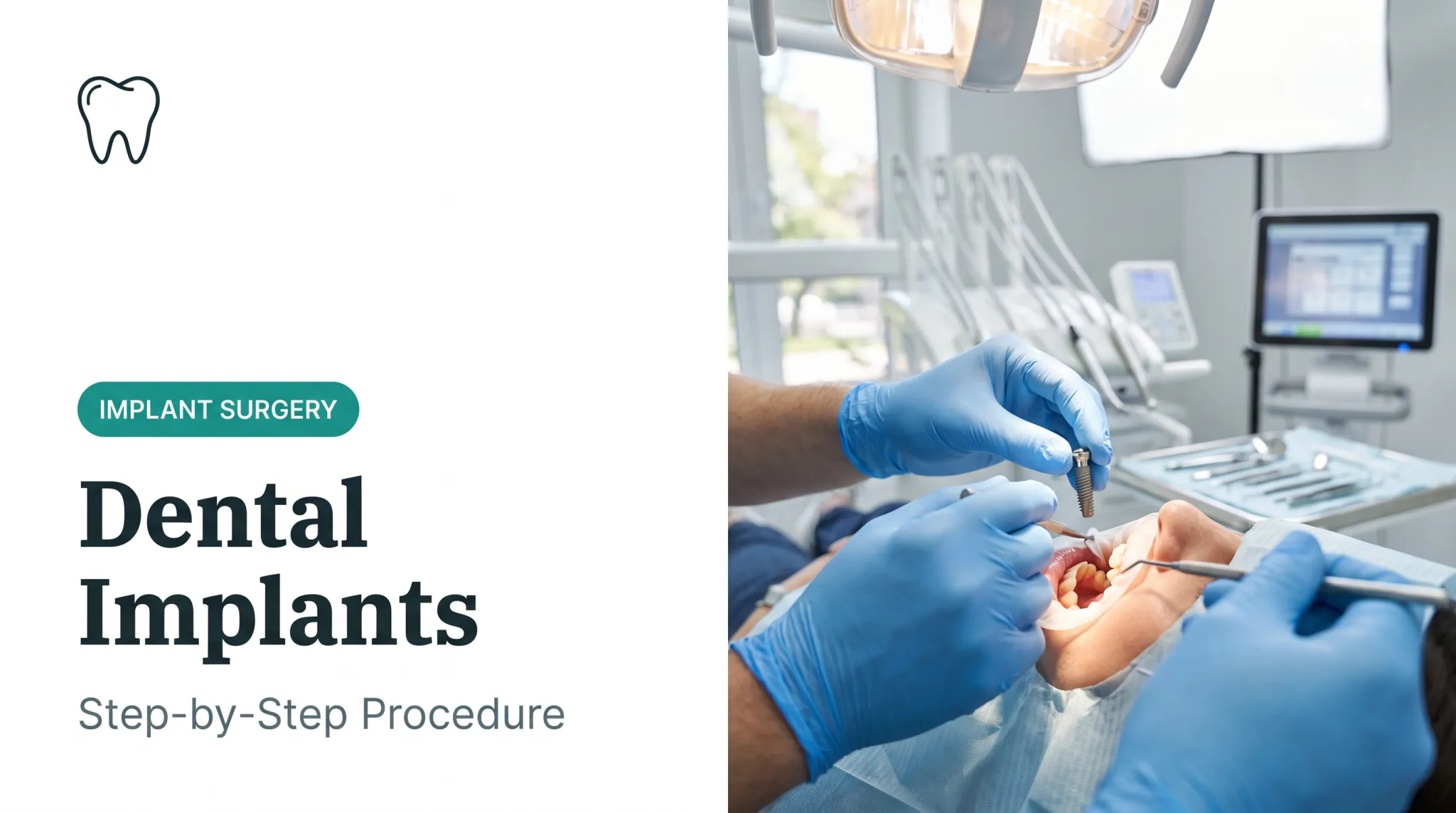
A single implant typically takes 30-45 minutes of chair time under local anesthesia. Full-arch protocols involving multiple implants, such as 3-ON-8™, take considerably longer and are usually performed under IV sedation for patient comfort.
Sedation options vary by case:
- Local anesthesia for straightforward single-implant placement
- Oral conscious sedation for mild anxiety
- IV sedation for full-arch surgeries or higher-anxiety patients
Step 4: Osseointegration and Healing
This waiting period is the biggest driver of your overall timeline. The titanium post fuses with your jawbone over 3-6 months, with the upper jaw sometimes taking longer due to softer bone density.
During this period, initial gum healing happens in about a week, but bone fusion continues quietly for months afterward. For cross-border patients, staying in touch with your clinic during this window matters. Some patients coordinate monthly check-in calls with their care team while healing at home before returning for the final restoration visit.
Step 5: Abutment Placement and Final Crown/Prosthesis
Once osseointegration is confirmed via imaging, the abutment is placed. Soft tissue around it typically heals in about 2 weeks, followed by 2-6 weeks for the custom crown or full-arch prosthesis to be fabricated and fitted.
Clinics with in-house CAD/CAM labs can fabricate zirconia bridges and crowns on-site, which supports faster customization during this final stage, though it doesn't shorten the biological healing that precedes it.

Key Factors That Affect the 2026 Timeline
Several variables determine whether you're looking at 3 months or 12+:
- Number of implants needed — single tooth vs. full-mouth reconstruction
- Bone density — insufficient bone means grafting or sinus lift first
- Extractions required — failing teeth must often come out before implants go in
- Health factors — smoking, diabetes, or gum disease can slow healing
- Protocol choice — traditional two-stage healing vs. immediate-load options like All-on-4, All-on-6, or 3-ON-8™
Smoking deserves particular attention here. A 2021 meta-analysis found implants in smokers had a 140% higher failure risk than in nonsmokers, which can mean redo surgeries and months of lost time.

Recovery Timeline: What Healing Looks Like Week by Week
Here's a realistic week-by-week breakdown of what patients typically experience:
| Timeframe | What's Happening |
|---|---|
| Week 1 | Swelling peaks around day 3; soft-food diet; gentle hygiene near the site |
| Weeks 2-4 | Swelling resolves, sutures dissolve or are removed, diet expands |
| Weeks 5-12 | Osseointegration continues under the surface; most normal activities resume |
| Months 3-6 | Imaging confirms fusion before abutment and crown placement |
Activity usually returns in stages:
- Light exercise is often fine by day 6-7
- Skip heavy lifting and intense cardio until your clinician clears you
- Rest matters most in the first 48 hours, then increase activity based on how you feel
Ways to Shorten the Timeline Without Cutting Corners
You can't rush osseointegration, but you can avoid unnecessary delays:
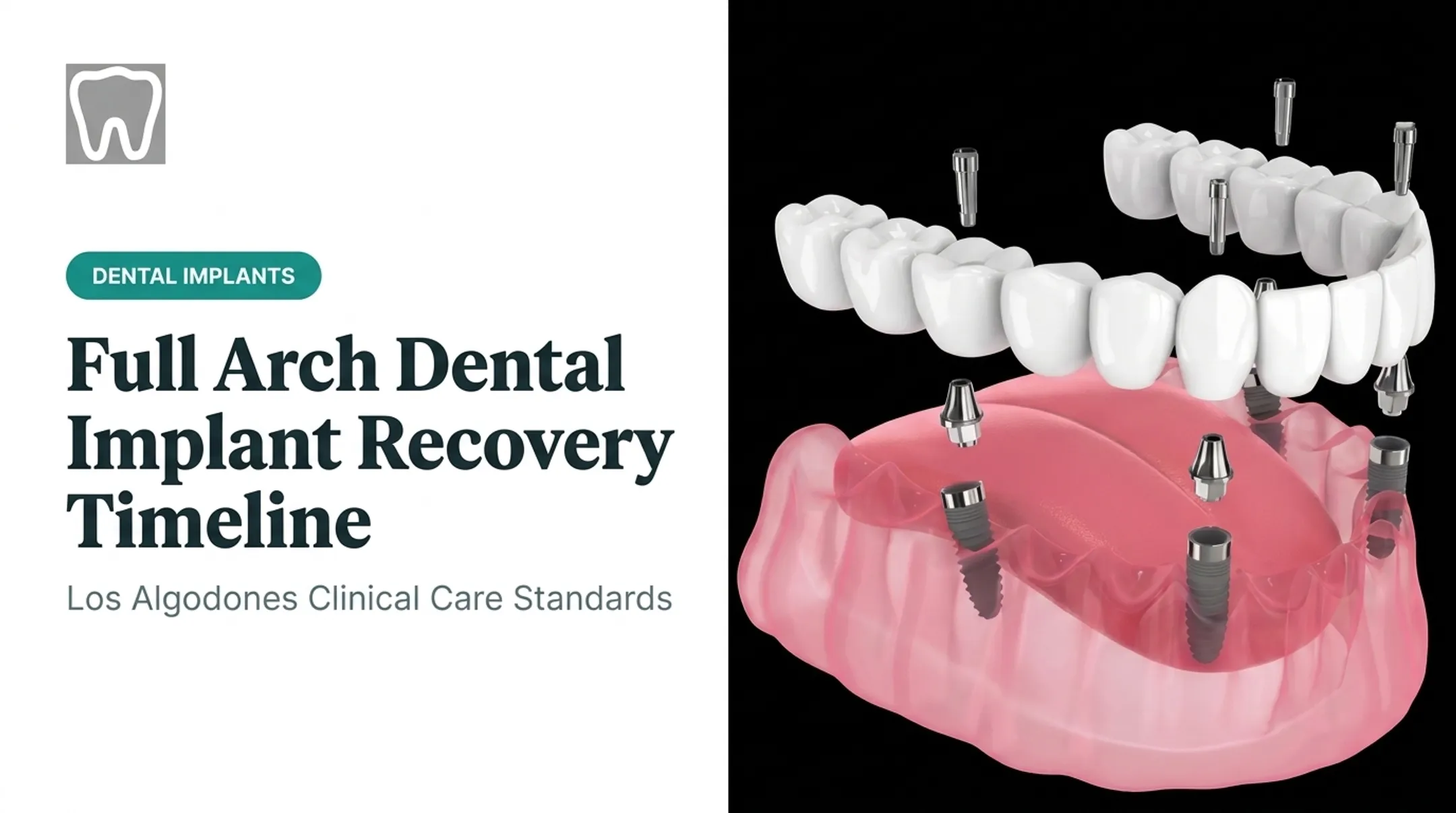
- Choose an immediate-load protocol. Options like Teeth in a Day, All-on-4, or the patented 3-ON-8™ let you leave with a functional temporary bridge on day one, while healing continues underneath. Surgery typically runs 2-3 hours under sedation.
- Start treatment sooner rather than later. Waiting after tooth loss allows bone resorption to continue, which often means grafting gets added to your timeline later. Acting early can skip that step entirely.
- Work with an experienced specialist. Complications and redo procedures are what actually blow up timelines. Dr. José Moguel has placed over 17,000 implants across 38+ years of practice, and that volume of experience is what helps avoid setbacks.
For cross-border patients, we offer free consultations and staged treatment plans, separating your care into consultation, travel, treatment, and recovery phases so scheduling around osseointegration is clearer from the start.
Frequently Asked Questions
Can I get an implant 2 years after extraction?
Yes, but prolonged bone loss after extraction often means a bone graft will be needed first. This can add several months to your overall timeline before implant placement is even possible.
Do you have no teeth while waiting for implants?
No. Temporary options such as healing caps, temporary crowns, or fixed temporary bridges (for full-arch cases) are typically used so you aren't left without teeth during healing.
How long should you rest after a dental implant?
Plan on 24-48 hours of dedicated rest with your head elevated. After that, ease back into activity gradually, avoiding strenuous exercise for about a week.
What helps dental implants heal faster?
Avoid smoking, follow aftercare instructions closely, eat a nutrient-rich diet, and attend every follow-up appointment. These steps support faster, more predictable healing.
Do they pull all your teeth at once for implants?
It depends on the case. Full-arch protocols may involve multiple extractions in a single visit, but single-tooth implant cases don't require pulling other teeth.
How long does the entire dental implant process take in 2026?
Most cases fall between 3 months and 12+ months, depending on whether grafting, extractions, or full-mouth work are part of your treatment plan.