
Those numbers push a lot of people to Google "dental work abroad." But "should I go" isn't a yes-or-no question. It comes down to trade-offs.
This guide covers the real benefits, the real risks, and exactly how to vet a clinic before you book a flight—or, for many US and Canadian patients, before you drive to the border. Mexico, especially border towns like Los Algodones, has become one of the most practical overseas options simply because of geography.
Key Takeaways
- Dental tourism can cut costs by roughly 60-70% for implants and full-mouth work at established clinics
- The biggest risk is choosing an unaccredited clinic, not the travel itself
- Border-adjacent Mexican clinics remove flight costs and simplify follow-up visits
- Always verify credentials, implant brands, and warranty terms before you commit
What Is Dental Tourism, and Why Are Patients Considering It?
Dental tourism means traveling to another country for dental care, usually to pay less or wait less. That's it. No mystery.
The drivers are straightforward:
- High domestic prices for anything beyond basic care
- Limited insurance coverage — Medicare, for instance, does not cover dental implants or dentures in most cases
- Long waits to see specialists for implant work or reconstructive procedures
The American Dental Association's Health Policy Institute reports that 21% of US adults ages 19-64 have no dental benefits at all. Even among the 63% with private coverage, implants are frequently excluded or capped.
Who Typically Considers Overseas Dental Work
This isn't just budget shoppers. Patients weighing overseas treatment usually need:
- Single-tooth implants after a domestic quote over $3,000
- All-on-4 or All-on-6 full-arch replacement
- Full-mouth reconstruction with implants, bone grafting, or sinus lifts
- Extensive cosmetic work excluded by insurance
The Real Benefits of Going Overseas for Dental Work
Cost Savings That Actually Move the Needle
The Academy of General Dentistry found in a 2020 report that patients typically save 40-65% in Mexico and 50-75% in Thailand. Implant-focused clinics often land at the higher end for full-arch cases. A $15,000 US All-on-4 arch can cost 50-70% less at an established Mexican clinic.

Access to Real Specialists
A common misconception: overseas clinics are staffed by generalists cutting corners. Many are actually led by board-certified periodontists and prosthodontists using the same implant brands you'd find at a US practice: Nobel Biocare, Straumann, MegaGen. Materials and training don't have to suffer just because the price does.
Faster Treatment Timelines
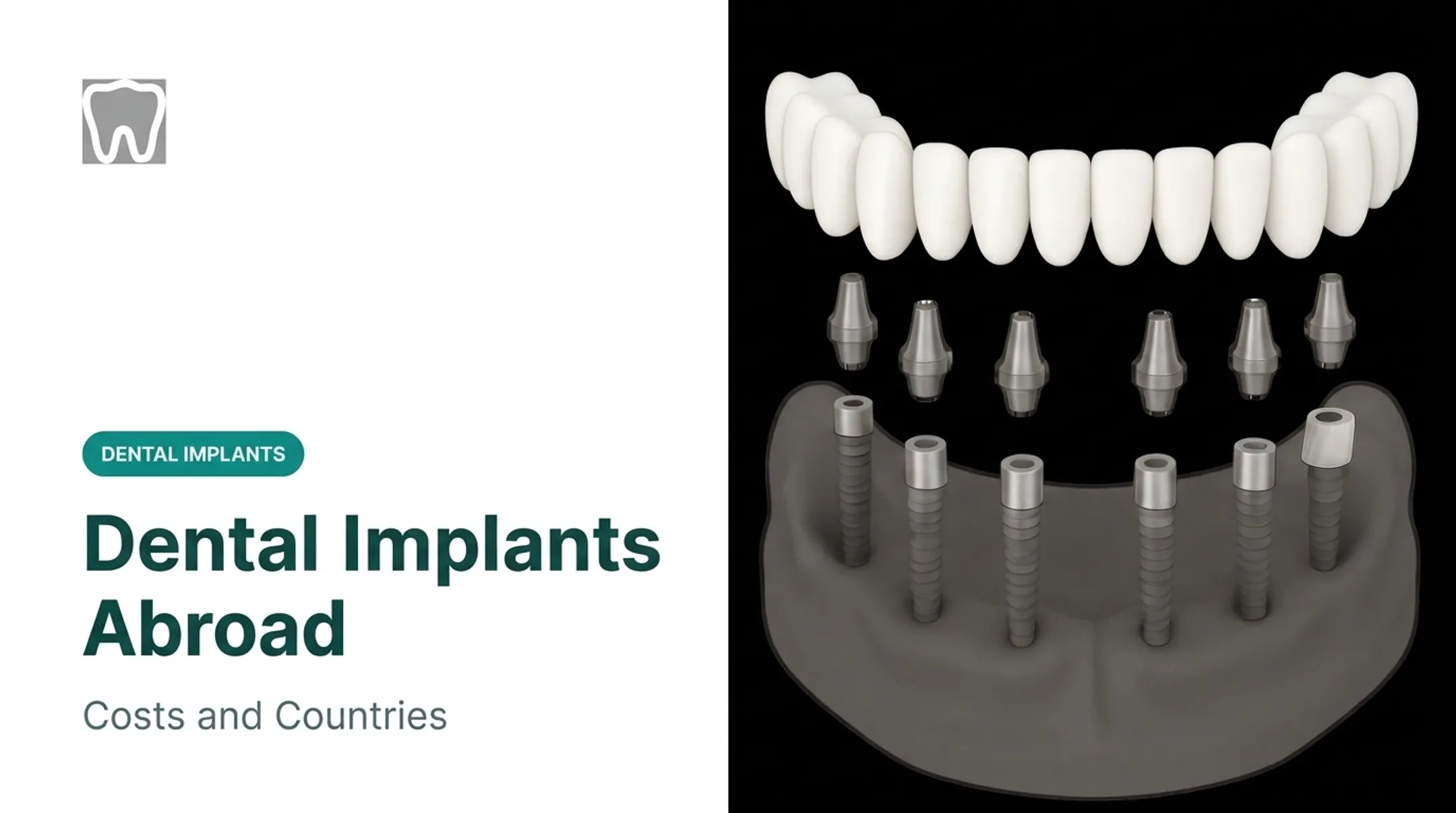
Some clinics offer full-arch protocols completed in two visits rather than the months of scattered appointments typical domestically. A first visit of 3-5 days can cover consultation, imaging, surgery, and temporary teeth. A second visit, months later, delivers the permanent restoration once the implants integrate with the jawbone.

Modern Technology, Not Just Lower Prices
3D Cone Beam CT imaging, digital intraoral scanning, and in-house CAD/CAM labs are standard tools at reputable clinics on both sides of the border.
Nobel Biocare's DTX Studio platform, for example, merges CBCT and scan data for implant planning. The same digital workflow appears in a recent Straumann case study. Not every overseas clinic has this technology, which is exactly why verification matters.
The Border Convenience Factor
For US patients near the Mexico border, some clinics sit a short walk from the crossing point. No flights. No jet lag. No airport security lines with post-surgical swelling. That convenience alone matters for anyone within driving distance of Southern California, Arizona, or Texas.
Combining treatment with a short trip can be a nice bonus, but it is a secondary reason to go, not the main one.
The Real Risks You Need to Weigh
Overseas dental work becomes risky when patients skip due diligence.
- Clinic quality varies widely. Inferior materials or undertrained staff can cause implant failure, infection, or nerve damage. A 2024 peer-reviewed study found infection rates of 15.3% and implant failure at 8.0%, which is why credential checks matter wherever you're treated.
- Language barriers can muddy treatment plans or informed consent.
- Complications after returning home are hard to manage. Many US dentists are reluctant to take on someone else's implant work without complete records, so bring your X-rays and treatment notes home every time.
- Rushed timelines are a red flag. Multi-stage procedures like All-on-4 need proper healing time between stages; compressing that into a rushed trip invites failure.
- Legal recourse is limited. A 2008 British Dental Journal analysis found that most dental tourism providers require liability waivers, and patients may have to pursue disputes in the clinic's home country, which is often impractical.

The CDC's Yellow Book notes that destination-country dentists may not face the same licensure oversight as US providers. Verify credentials before you book.
How to Choose a Safe, Reputable Clinic Abroad
Vetting a clinic takes 30 minutes and saves you years of regret. Here's the checklist:
- Verify credentials. Look for board certification equivalent to ADA/ADM standards, years of experience, and implant volume (thousands placed, not dozens).
- Confirm implant brands. Prioritize FDA-approved, internationally recognized systems like Nobel Biocare, Straumann, or MegaGen, not unnamed generic implants.
- Get everything in writing. Request an itemized treatment plan and quote before you travel—no hidden fees, no vague estimates.
- Ask about warranty terms. What happens if an implant fails two years from now? Get it in writing.
- Read independent reviews. When possible, talk to a former patient directly about results and aftercare.
A clinic that won’t clearly answer questions on credentials, implant brands, pricing, or warranty isn’t the one to book.

Is Mexico the Right Overseas Option for US and Canadian Patients?
For proximity alone, Mexico is hard to beat. Border towns like Los Algodones, often nicknamed "Molar City," host more than 350 dentists serving tens of thousands of US and Canadian patients annually, according to NPR reporting. The appeal is simple: no flights, no long layovers, and easy return trips for follow-up care.
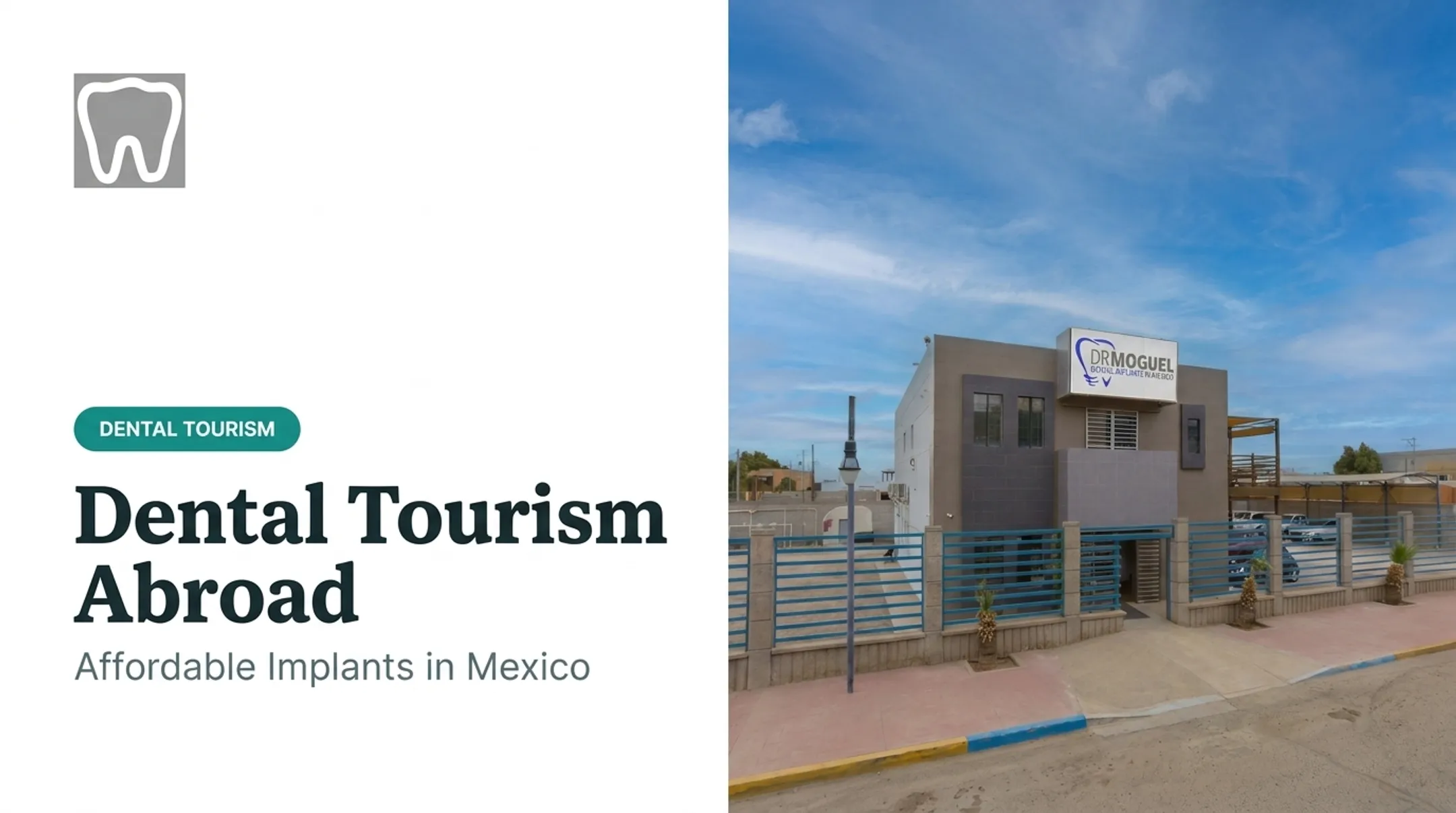
Dental Implants in Mexico, based in Los Algodones about a five-minute walk from the Andrade pedestrian border crossing, illustrates what a well-vetted clinic looks like:
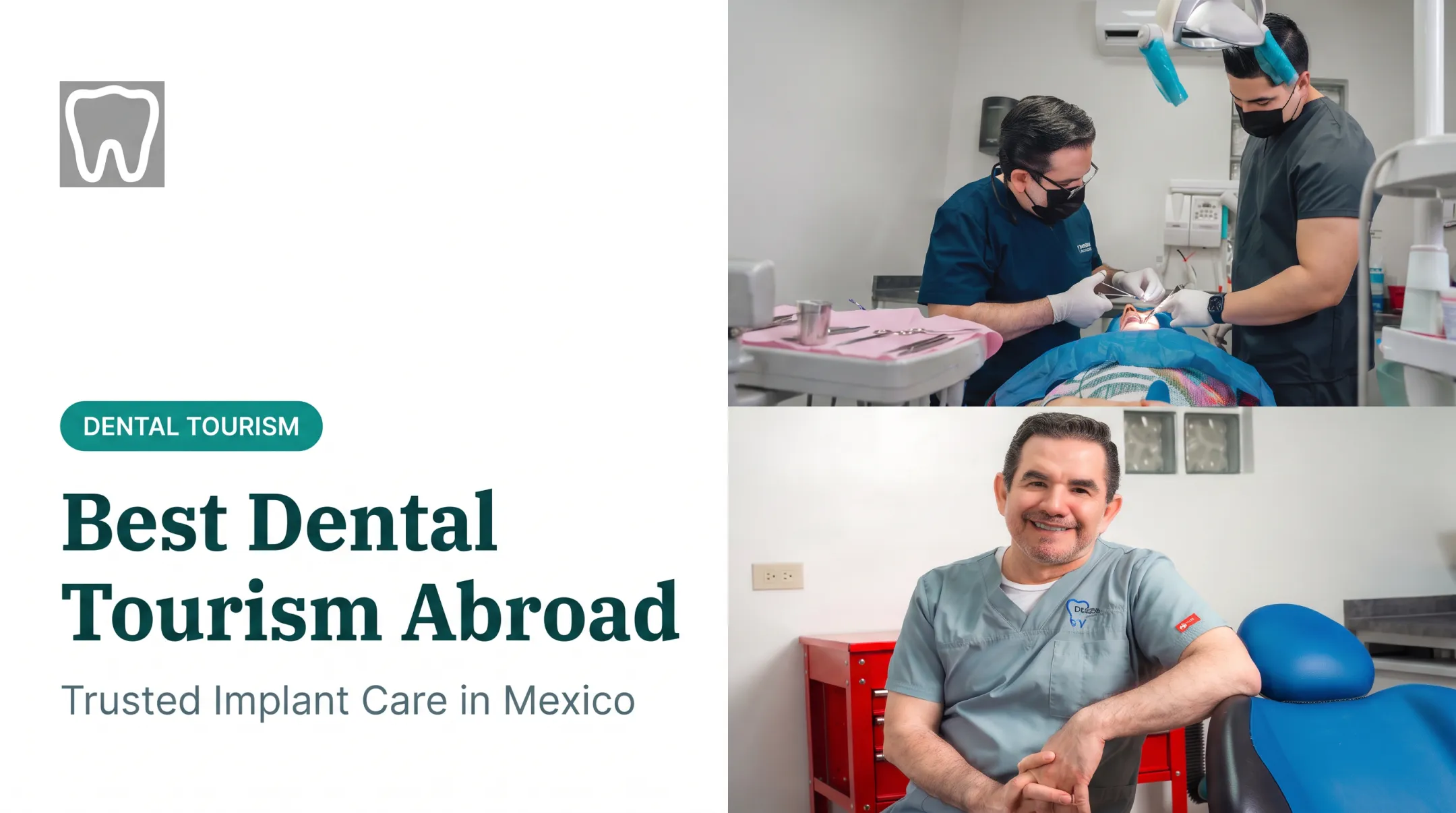
- 38+ years of clinical experience under Dr. José Moguel
- 17,000+ implants placed
- ADA and ADM board certification, plus membership in the Consejo Mexicano de Periodoncia
- A patented 3-ON-8™ full-mouth protocol alongside standard All-on-4 and All-on-6 options
- A lifetime warranty on implant hardware and a 5-year warranty on prosthetics
- 3D CBCT imaging for every patient, with restorations designed in an in-house CAD/CAM lab
A free, no-obligation consultation by phone or video, with a coordinator responding within 24 hours, is a good sign of a transparent provider. If a clinic won't give you a clear quote before you travel, treat that as a red flag.
Frequently Asked Questions
Which countries are the most affordable for overseas dental treatment and dental implants?
Mexico, Turkey, and parts of Southeast Asia, particularly Thailand, are commonly cited as affordable options. The cheapest option isn't always best. Credentials and materials matter more than the price tag alone.
Is it worth traveling abroad for dental implants, for example, in Mexico or Turkey?
For larger treatment plans like full-arch implants or full-mouth reconstruction, the savings and quality available at accredited clinics often make the trip worthwhile. That's true as long as you do your homework on the clinic first.
Which countries are best for overseas dental treatment?
Mexico tends to suit US and Canadian patients best because of proximity and easy follow-up visits. Other regions, like Turkey or Thailand, may suit European or Australian patients with better flight access.
Is it safe to fly with dental implants?
Generally, yes. A 2023 peer-reviewed review recommends waiting about one week after most procedures, or six weeks after a sinus lift. Follow your clinic's specific guidance.
How much does dental tourism in Thailand typically cost?
Thailand typically offers 50–75% savings versus US prices. That is similar to typical Mexico savings, though longer flights and travel time offset some of the difference for US patients.