
This article breaks down what endosteal implants actually are, the different types available, what they typically cost, and how patients weigh US pricing against options like board-certified care in Mexico. We'll also cover who makes a good candidate and what recovery looks like.
Many patients researching this topic end up comparing US treatment against Mexico-based providers, largely because of the cost gap for comparable, board-certified care.
Key Takeaways
- Endosteal implants place titanium posts in the jawbone and are the most common implant design
- Three main types: threaded (screw), smooth (cylinder), and bladed
- Full osseointegration takes 3-6 months before the final crown is placed
- Single-implant cost: $4,000–$6,000 in the US vs $1,500–$2,500 with board-certified providers in Mexico
What Are Endosteal Dental Implants?
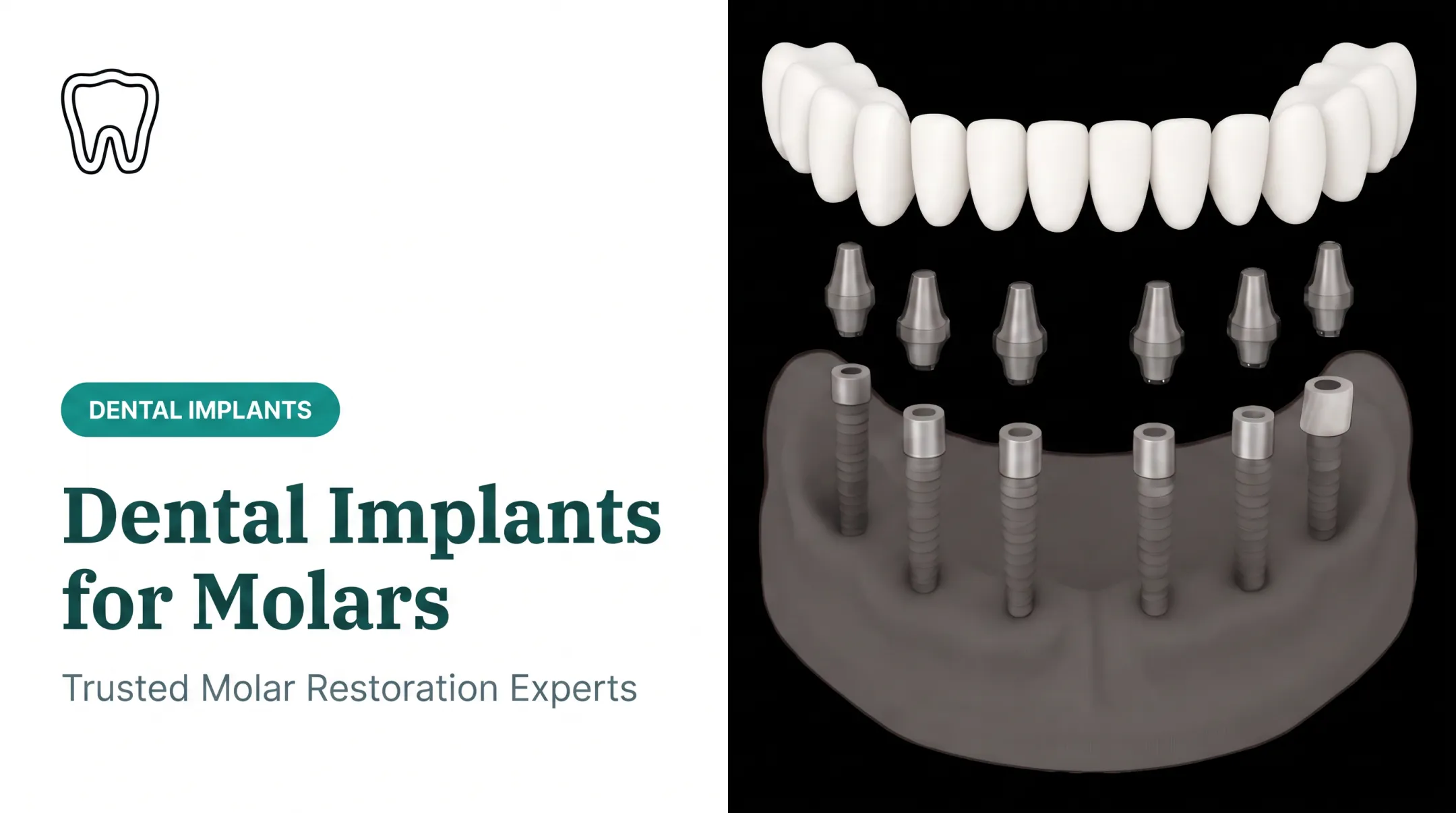
"Endosteal" simply means "within the bone." An endosteal implant is a titanium post surgically placed into the jawbone, where it functions as an artificial tooth root. Once in place, it fuses with surrounding bone tissue through a process called osseointegration, creating a foundation stable enough to support normal biting and chewing.
This fusion process is what makes endosteal implants feel and function like natural teeth. Bone cells grow around and into the implant's surface, locking it in place. According to Mayo Clinic, this process can take several months, and healing speed depends on factors like:
- Bone density and quality at the implant site
- Whether grafting was needed beforehand
- The patient's overall health and healing capacity
- Implant location (lower jaw generally heals faster than upper jaw)
Clearing Up a Common Confusion
Patients often search "endosteal implant vs. dental implant" as though they're separate things. They're not. Endosteal describes where the implant sits (in the bone) as opposed to a subperiosteal implant, which rests on top of the bone under the gum. Root-form endosteal implants are, according to StatPearls, the most frequently used type in modern implant dentistry.
Once osseointegration is complete, the implant post supports an abutment, which in turn holds a crown, bridge, or full denture — depending on how many teeth need replacing.

Types of Endosteal Implants
Threaded (Screw-Type) Implants
Screw-type implants are by far the most common design. Their threaded surface increases contact area with bone and improves initial stability right after placement, so the implant can hold firm from day one. The threads "grip" prepared bone as they're inserted.
Smooth (Cylinder-Type) Implants
Cylinder implants are inserted without threading, relying instead on a press-fit design and, often, a textured surface to encourage bone attachment. A dentist might choose this design in specific bone conditions where a threaded approach isn't ideal.
Bladed Implants
Bladed implants use a flat, knife-shaped titanium body rather than a rounded post. They're suited for situations where jawbone height is adequate but width is limited, where cylinder or screw implants might not seat properly.

Which type is right for you? That depends on:
- Jawbone density and width at the implant site
- Location in the mouth (front vs. back, upper vs. lower)
- The treating specialist's clinical assessment after imaging
At Dr. José Moguel's clinic, every patient receives a 3D Cone Beam CT scan so the exact implant type, length, and position can be planned before surgery ever begins.
Endosteal Implant Costs: Comparing US and Mexico Pricing
A single endosteal implant in the United States typically runs $3,500–$6,000, including the post, abutment, and crown.
The American Academy of Implant Dentistry estimates $3,100–$5,800, depending on the case.
What Drives the Price
- Implant material and brand (Nobel Biocare, Straumann, MegaGen, etc.)
- Bone grafting or sinus lifts, if the jaw needs reinforcement
- Imaging requirements, including CBCT scans
- Surgeon's experience and credentials
- Geographic location: urban US clinics tend to run higher
Why Patients Look at Mexico
Dental Implants in Mexico, led by board-certified periodontist Dr. José Moguel in Los Algodones, delivers American-standard implant care at 60–70% lower cost than typical US pricing.
A single-tooth implant that costs $3,500–$6,000 in the US is priced around $1,500–$2,500 in Mexico. Related procedures follow the same gap:
| Procedure | US Cost | Mexico Cost | Savings |
|---|---|---|---|
| Bone grafting | $2,500–$3,500 | $500–$800 | Up to 77% |
| Sinus lift | $2,500–$4,000 | $600–$900 | Up to 70% |
| All-on-4 (per arch) | $24,000–$35,000 | $8,000–$12,000 | Up to 70% |
| All-on-6 (per arch) | $28,000–$40,000 | $12,000–$16,000 | Up to 65% |

The clinic offers free consultations with transparent, upfront pricing — no surprise fees after imaging and treatment planning.
Multiple Missing Teeth? Full-Arch Options Often Win
If you're missing several teeth, individual endosteal implants placed one by one usually cost more than a full-arch solution. Options like All-on-4, All-on-6, or the clinic's patented 3-ON-8™ protocol (eight implants supporting three independent zirconia bridges) distribute cost more efficiently while delivering a complete, fixed set of teeth.
Insurance coverage for implants varies widely and is often limited unless deemed medically necessary. Ask any provider, US or Mexico-based, about financing or payment-plan support before committing.
Pros and Cons of Endosteal Implants
Endosteal implants deliver strong long-term outcomes for many patients, but surgery, cost, and healing time are real trade-offs to weigh.
Pros:
- High long-term success rates: a 2019 systematic review found 96.4% implant survival at 10 years
- Natural look and function, with custom-shaded crowns matched to neighboring teeth
- Jawbone preservation: the post stimulates bone and helps prevent the recession that follows tooth loss
- Works for single teeth, multiple gaps, or full-arch restoration
Cons:
- Requires a surgical procedure, unlike removable dentures
- Higher upfront cost than dentures
- Treatment timeline spans months, not days, due to osseointegration
- Needs adequate bone density, which sometimes means grafting first
Dr. Moguel's clinic reports a 98%+ clinical success rate, documented across 38 years and more than 17,000 implants placed. That figure tracks closely with the peer-reviewed benchmark above.
Procedure, Candidacy, and Recovery
Endosteal implant treatment generally follows four stages:
- Consultation and imaging — 3D CBCT scan maps bone density and plans exact implant positioning
- Implant placement — Surgical insertion under local anesthesia, often completed in 30-45 minutes for a single tooth
- Osseointegration — Bone fuses around the implant over roughly 3-6 months
- Abutment and crown placement — Once healed, the abutment connects, and a custom crown is fitted

Are You a Good Candidate?
Ideal candidates typically have:
- Healthy gums, free of active infection
- Adequate jawbone density (or willingness to undergo grafting)
- Good overall health with no conditions that impair healing
- Non-smoking habits, because smoking lowers implant success rates
- Commitment to consistent oral hygiene long-term
Patients with insufficient bone aren't automatically ruled out. Bone grafting, offered alongside implant placement, rebuilds the width and depth needed to safely anchor an implant.
Recovery and Aftercare
After placement, most people deal with manageable soreness rather than major downtime:
- Mild swelling and discomfort for a few days, usually controlled with pain relief
- Soft foods while the surgical site settles
- Return to normal routines often within about a week
- Full bone fusion still needs the 3–6 month osseointegration window
- Steady oral hygiene and follow-up visits to protect healing
Frequently Asked Questions
How long does an endosteal implant last?
With proper care and good oral hygiene, the implant post itself can last a lifetime. The crown on top, however, may need replacement after years of normal wear.
Is an endosteal implant painful?
The procedure is performed under local anesthesia, with sedation options available. Most patients report mild soreness or swelling for a few days afterward, not intense pain.
Are endosteal implants safe?
Yes. They're a well-established, predictable procedure with rare serious complications when placed by a qualified, board-certified specialist using proper imaging and sterile technique.
What is the success rate of endosteal implants?
A 2019 systematic review found 96.4% survival at 10 years. Success depends heavily on bone density, smoking status, and how well patients follow aftercare instructions.
What is the difference between an endosteal implant and an abutment?
The endosteal implant is the titanium post placed in the jawbone. The abutment is the connector piece attached above the gumline that holds the crown in place.
What is the meaning of endosteal?
"Endosteal" means "within the bone," describing implants placed directly into the jawbone, as opposed to subperiosteal implants, which sit on top of the bone under the gum tissue.