
Traditional dentures involve daily removal, adhesives, and gradual bone loss. Add in the sticker shock of US implant pricing and fear of surgery, and many patients feel stuck choosing between discomfort and cost. This guide breaks down what zirconia actually is, how it stacks up against titanium and acrylic, what it costs, and how to find a provider qualified to place it correctly.
Key Takeaways
- Zirconia gives you high strength and biocompatibility for implant posts and fixed full-arch dentures
- Zirconia arches stay permanently fixed to implants, unlike removable dentures
- Documented prosthesis survival reaches 97-99% at 5-6 years
- Traveling to Mexico can cut zirconia implant costs by 60-70% compared to US pricing
What Are Zirconia Dentures and Dental Implants?
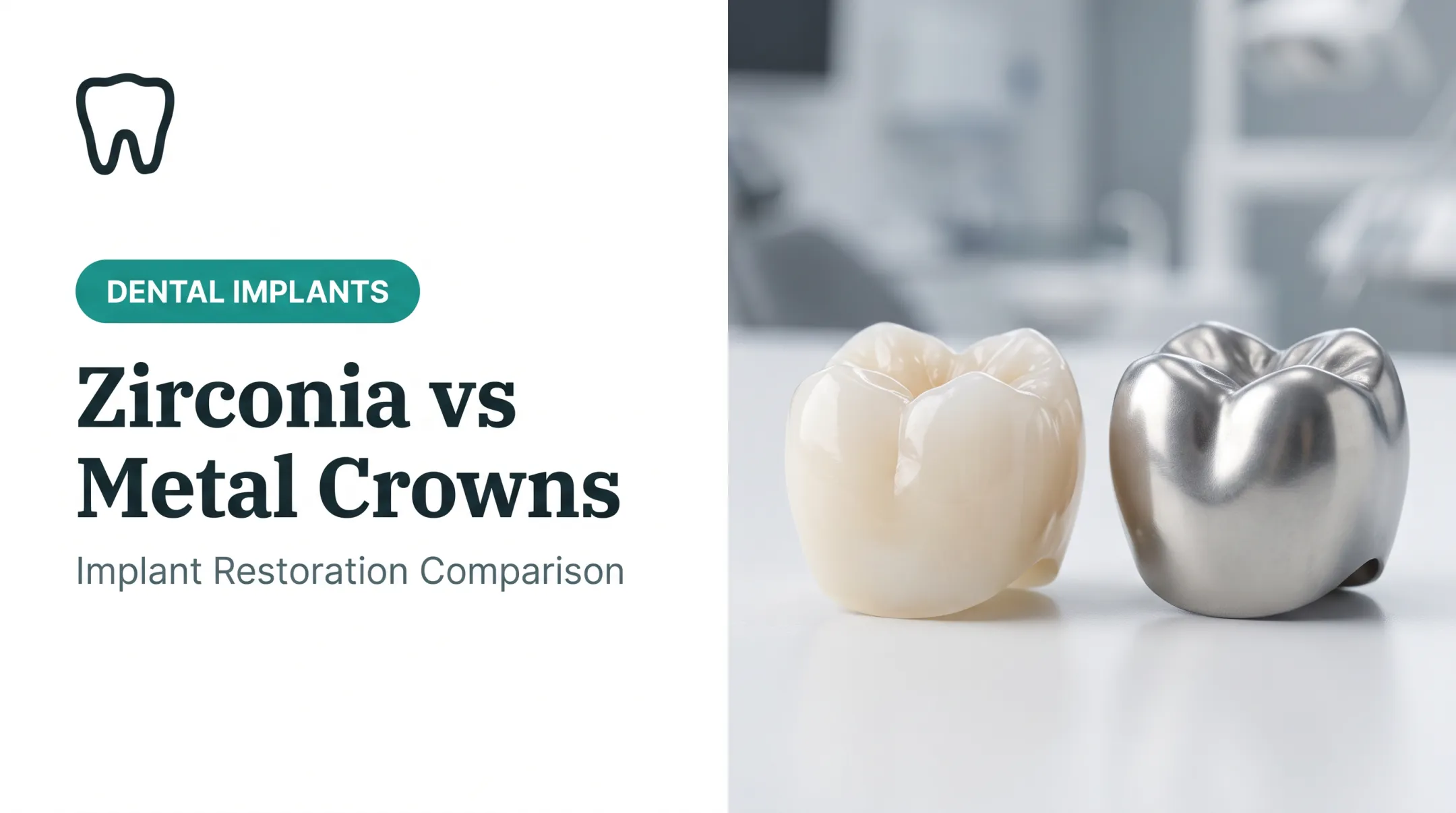
Zirconia (zirconium dioxide, or ZrO2) is a tooth-colored ceramic prized in dentistry for its strength, biocompatibility, and resistance to corrosion. Most dental zirconia is yttria-stabilized, which is what gives it the durability implant dentists rely on.
Two distinct products fall under the "zirconia" umbrella:
- Zirconia implants — metal-free root replacements, an alternative to titanium posts
- Zirconia full-arch dentures — the visible prosthetic teeth, custom-milled and permanently anchored to implants
How Full-Arch Zirconia Restorations Are Made
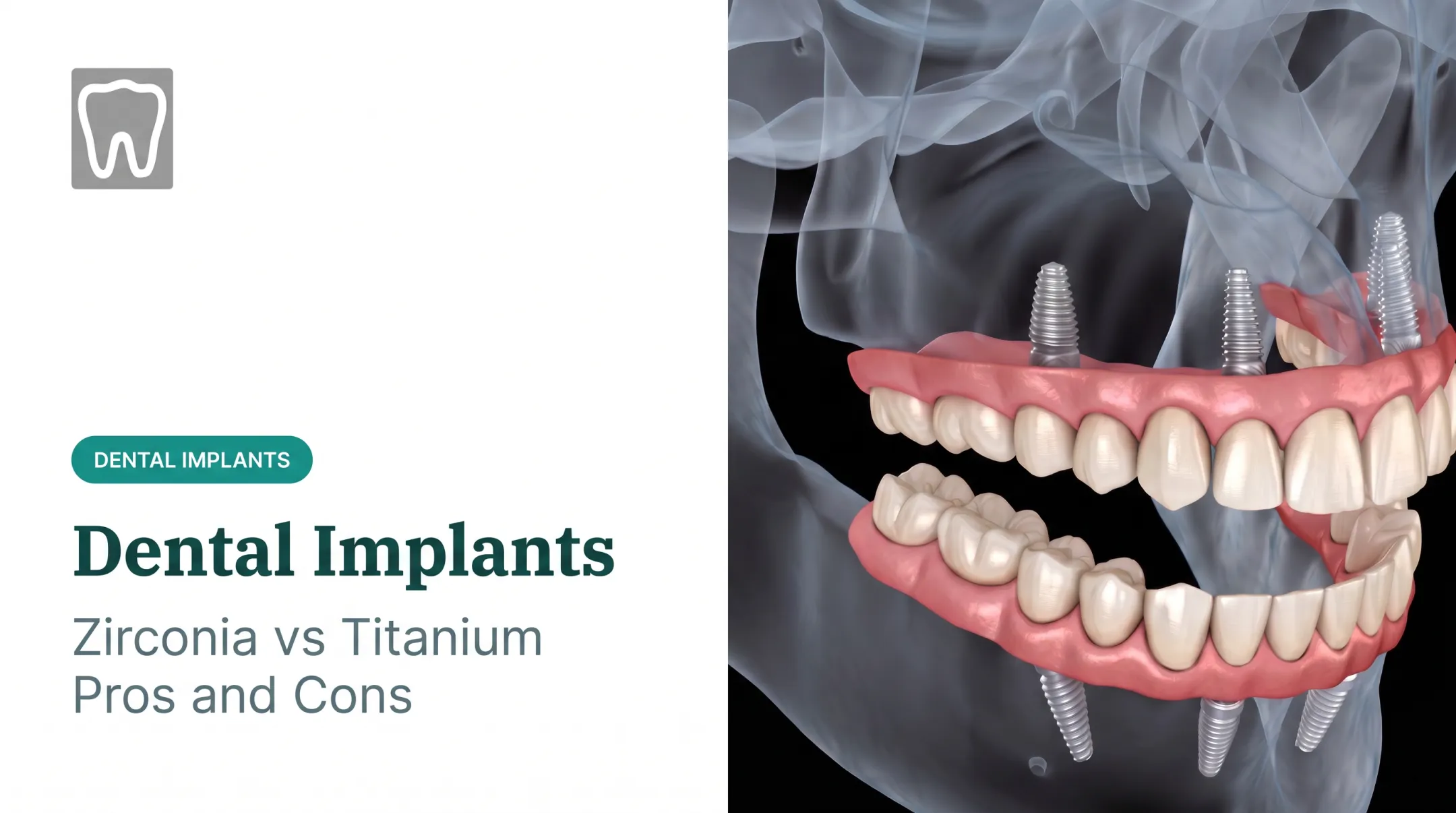
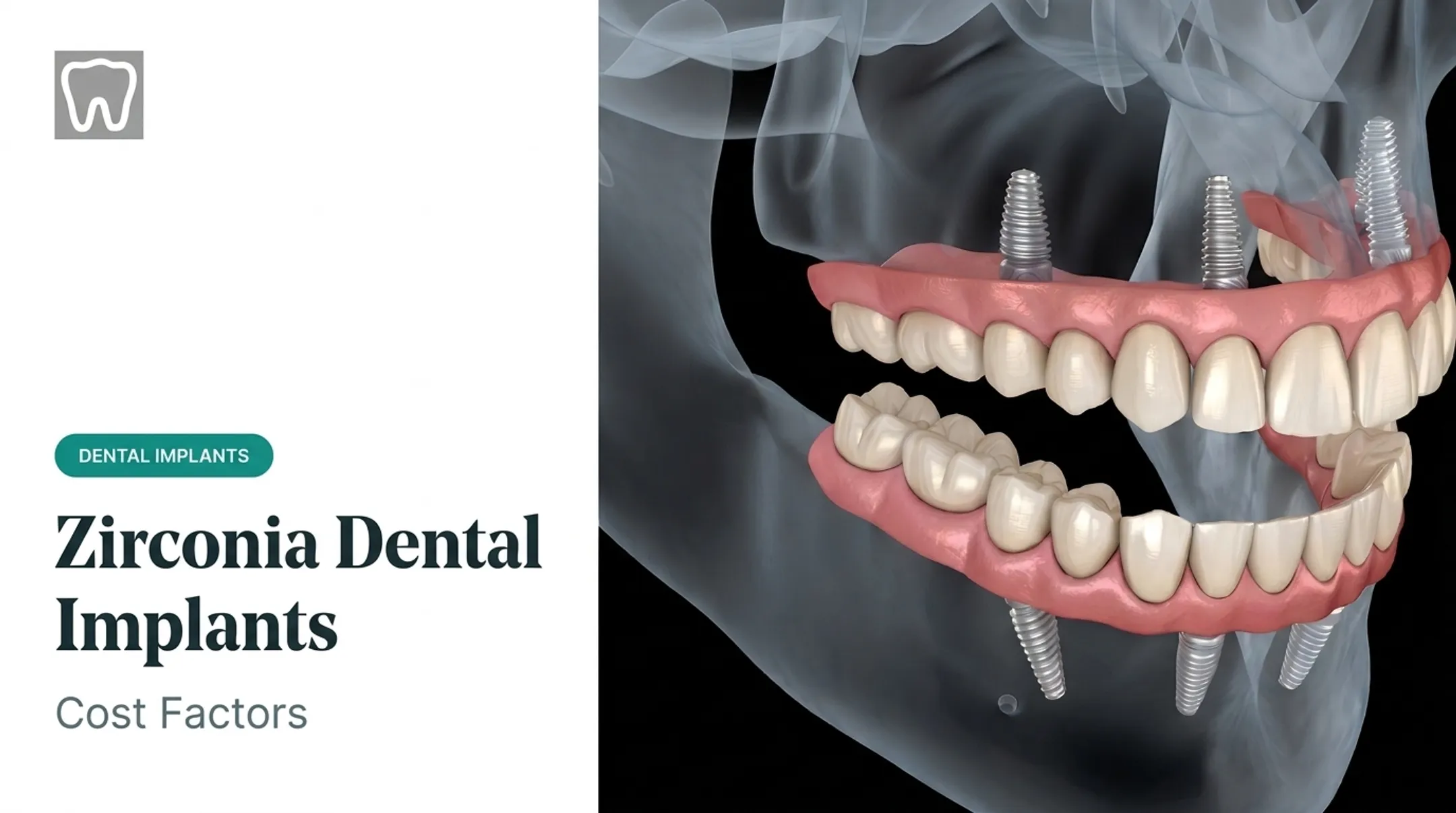
Full-arch zirconia dentures are custom prosthetics designed with CAD/CAM digital scanning and milled from solid ceramic blanks to fit each patient's mouth. They're permanently fixed to implants using protocols such as:
- All-on-4 (four implants per arch)
- All-on-6 (six implants per arch)
- 3-ON-8™ — eight implants and three segmented zirconia bridges (Dental Implants in Mexico)
Conventional full-arch designs use one continuous piece. 3-ON-8's segmented layout is different: if one section needs repair, the other two stay in place, undisturbed.
Zirconia's mechanical strength is a major reason it's used this way. Research puts its bending strength at roughly 900-1,200 MPa, well above older feldspathic porcelain, which measured closer to 70 MPa in classic testing. That strength gap is a big part of why zirconia has become the go-to material for fixed full-arch work.

Zirconia vs. Traditional Dentures and Titanium Implants
Fixed Zirconia vs. Removable Dentures
Removable dentures rest on the gums, held by suction or adhesive. They shift when you chew, speak, or laugh — and over time, the jawbone beneath them shrinks from lack of stimulation.
Fixed zirconia arches work differently:
- Anchored permanently to implants, so there's no slipping or clicking
- Implant stimulation helps preserve jawbone, unlike tissue-borne dentures
- Chewing force is distributed more like natural teeth
- No nightly removal, soaking, or adhesive needed
Implant-supported prostheses typically deliver better chewing performance, comfort, and satisfaction than conventional dentures.
Zirconia vs. Titanium Implants
| Factor | Zirconia | Titanium |
|---|---|---|
| Aesthetics | No metal shadow at gumline | Can show gray through thin gum tissue |
| Track record | Shorter clinical history | Decades of established data |
| Flexibility | More rigid | Slightly more flexible, fracture-resistant |
| Metal sensitivity | Metal-free | Rare sensitivity reported in some patients |
| Plaque resistance | Smooth surface resists buildup | Comparable with good hygiene |
Titanium still holds the edge on flexibility and long-term data. Zirconia wins on appearance and appeals to patients who specifically want a metal-free solution.

Zirconia vs. Porcelain
Porcelain veneering can look beautiful, but it's brittle and prone to chipping at the interface with the underlying framework. Zirconia's higher bending strength makes it the more durable choice for load-bearing full-arch restorations, particularly in monolithic (single-material) designs.
Benefits of Choosing Zirconia
Zirconia full-arch restorations stand out from acrylic dentures on strength, look, oral health, and daily care:
- Durability: A study of 2,039 zirconia full-arch prostheses reported 99.3% five-year survival; a 115-prosthesis study found 98.6% survival at six years
- Aesthetics: Translucency mimics real enamel, and unlike acrylic, zirconia does not yellow or stain over time
- Bone support: Implant-supported zirconia arches stimulate the jaw like natural roots, helping slow ridge resorption
- Hygiene: The smooth ceramic surface resists plaque buildup better than acrylic
- Maintenance: No soaking, adhesives, or nightly removal—brush zirconia teeth the same way you brush natural ones
Mid-term data is strong; longer 15–20 year evidence is still developing.

Potential Drawbacks and Who Should Consider Zirconia
Zirconia isn't the right fit for everyone. Consider these factors:
- Higher upfront cost than acrylic or basic removable dentures
- Less flexible than titanium, so poor design or extreme bite force can cause chipping or fracture (studies report rates from 15% to 54%)
- Surgery is required, so adequate jawbone density matters — patients with bone loss may need grafting or a sinus lift first
- Provider skill is critical: not every dentist is trained in zirconia implant placement or full-arch design, and outcomes vary with experience
Those trade-offs still leave many patients as strong matches. Good candidates typically have:
- Decent jawbone volume confirmed via CBCT imaging
- Good general oral health
- A clear preference for a fixed, metal-free solution over a removable one
Cost of Zirconia Dentures and Implants: Why Patients Travel for Treatment
US pricing for full-arch implant treatment varies widely, with All-on-4 often averaging $25,000–$30,000 per arch and All-on-6 at $24,000–$32,000 per arch in the United States.
Prices in Mexico are far lower. At Dental Implants in Mexico’s Los Algodones clinic:
- All-on-4: $8,000-$12,000 per arch
- All-on-6: $12,000-$16,000 per arch
- 3-ON-8™ (premium zirconia full-arch protocol): $16,000-$20,000 per arch
That's roughly 60-70% in savings compared to comparable US treatment, though patients should always confirm exactly what's included — implant brand, zirconia prosthesis, imaging, and follow-up care.

What Sets This Clinic Apart
- 38+ years of experience and 17,000+ implants placed by board-certified periodontist Dr. José Moguel
- Premium FDA-approved implant systems, including Nobel Biocare, Straumann, and MegaGen
- Lifetime warranty on implant hardware
- Five-year warranty on zirconia arches with routine professional cleanings
- 3D Cone Beam CT imaging used to plan bone grafting or sinus lifts when needed
Making the Trip Practical
The clinic is about a three-minute walk from the Andrade border crossing. Bilingual coordinators help with the practical details:
- Hotel stays in Yuma, Arizona, or nearby Los Algodones lodging
- Local shuttle coordination
- Border re-entry prep for US and Canadian patients (valid passport, passport card, or enhanced driver’s license)
Frequently Asked Questions
How long do zirconia dentures last?
With proper oral hygiene and regular checkups, clinical data report 97–99% survival at 5–6 years. Longer-term data (15-20 years) is still developing, but zirconia's strength profile supports long service life.
Are zirconia implants better than titanium?
Zirconia offers superior aesthetics and is metal-free, appealing to patients who want to avoid any metal in their mouth. Titanium has a longer clinical track record and slightly better flexibility under stress.
Can zirconia dentures break or crack?
Fracture is uncommon but possible, especially under extreme biting force or with poor prosthetic design. Choosing an experienced provider who plans for proper force distribution reduces this risk.
Is zirconia more expensive than traditional dentures?
Yes, zirconia carries a higher upfront cost than acrylic or basic removable dentures. Many patients accept that cost for greater durability and fewer long-term replacements.
Who is a good candidate for zirconia implants and dentures?
Good candidates need adequate jawbone density (confirmed on CBCT), solid oral health, and a preference for a fixed, natural-looking, metal-free option. Removable dentures are usually a weaker fit for that goal.
Do I need surgery to get zirconia dentures?
Yes. Implant placement requires a surgical procedure, unlike removable traditional dentures that simply rest on the gums. Healing typically takes several months before the final zirconia arch is attached.