
But here's what many patients don't realize: not all implants are the same. The three main types differ based on where and how they're placed in your jaw, and the right choice depends heavily on your bone health.
This guide breaks down endosteal, subperiosteal, and zygomatic implants, so you know exactly what to ask when you sit down with a specialist.
TL;DR
- Endosteal implants go directly into the jawbone; most common option for patients with good bone density
- Subperiosteal implants rest on top of the jawbone under the gum, for patients with insufficient bone height
- Zygomatic implants anchor into the cheekbone, reserved for severe upper jaw bone loss
- A specialist evaluation using 3D imaging determines which type fits your situation
What Is a Dental Implant?
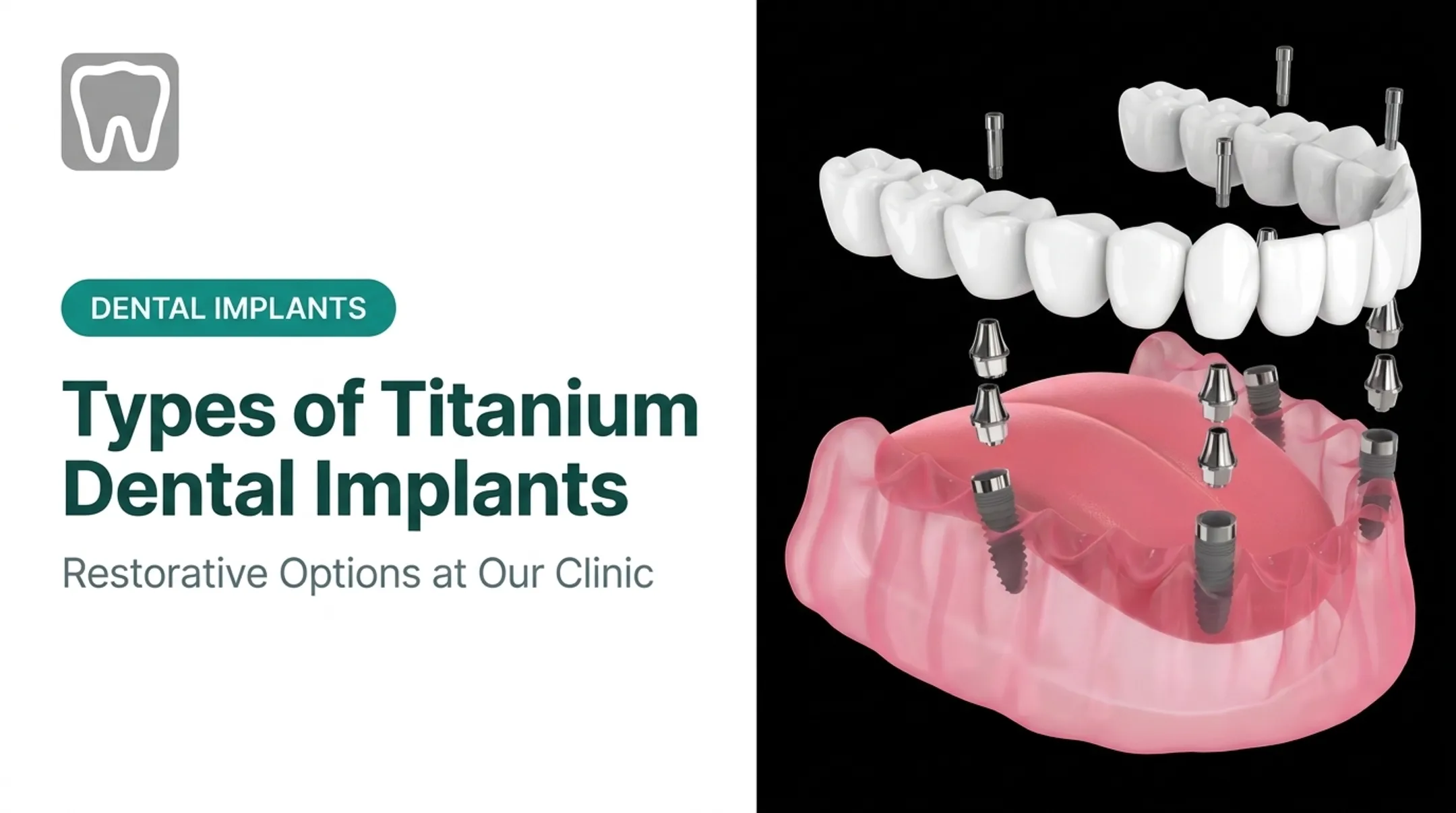
A dental implant is a titanium or zirconia post, surgically placed to act as an artificial tooth root. It supports a crown, bridge, or denture on top.
Osseointegration is the process where the implant fuses with your jawbone. The American Academy of Implant Dentistry defines it as a direct physical and functional bond between living bone and the load-bearing implant surface.
That bond gives you a permanent, stable foundation that works much like a natural tooth root.
Implants aren't one-size-fits-all. They're a practical, long-term alternative to dentures and bridges, but the specific type matters as much as the decision to get one at all.
Why the Type of Implant Matters
Your jawbone density, the location of your missing teeth, and how much bone loss you've experienced determine which implant type will actually work for you.
Choosing incorrectly, or working with a provider who doesn't properly assess your bone first, can lead to:
- Implant failure due to insufficient anchorage
- Extended treatment timelines
- Unnecessary bone grafting procedures
A proper diagnostic workup avoids most of these problems by matching implant type to the bone you actually have.
At our Los Algodones clinic, every patient receives a high-resolution 3D Cone Beam CT scan before treatment planning begins. Dr. Moguel uses this imaging to evaluate bone density in three dimensions and set the implant's exact length, width, and position, instead of relying on a flat 2D X-ray.
The 3 Types of Dental Implants
Implants fall into three categories based on placement method and jawbone condition. Understanding these differences helps you ask sharper questions in your consult and compare options with clearer expectations.
Type 1: Endosteal Implants
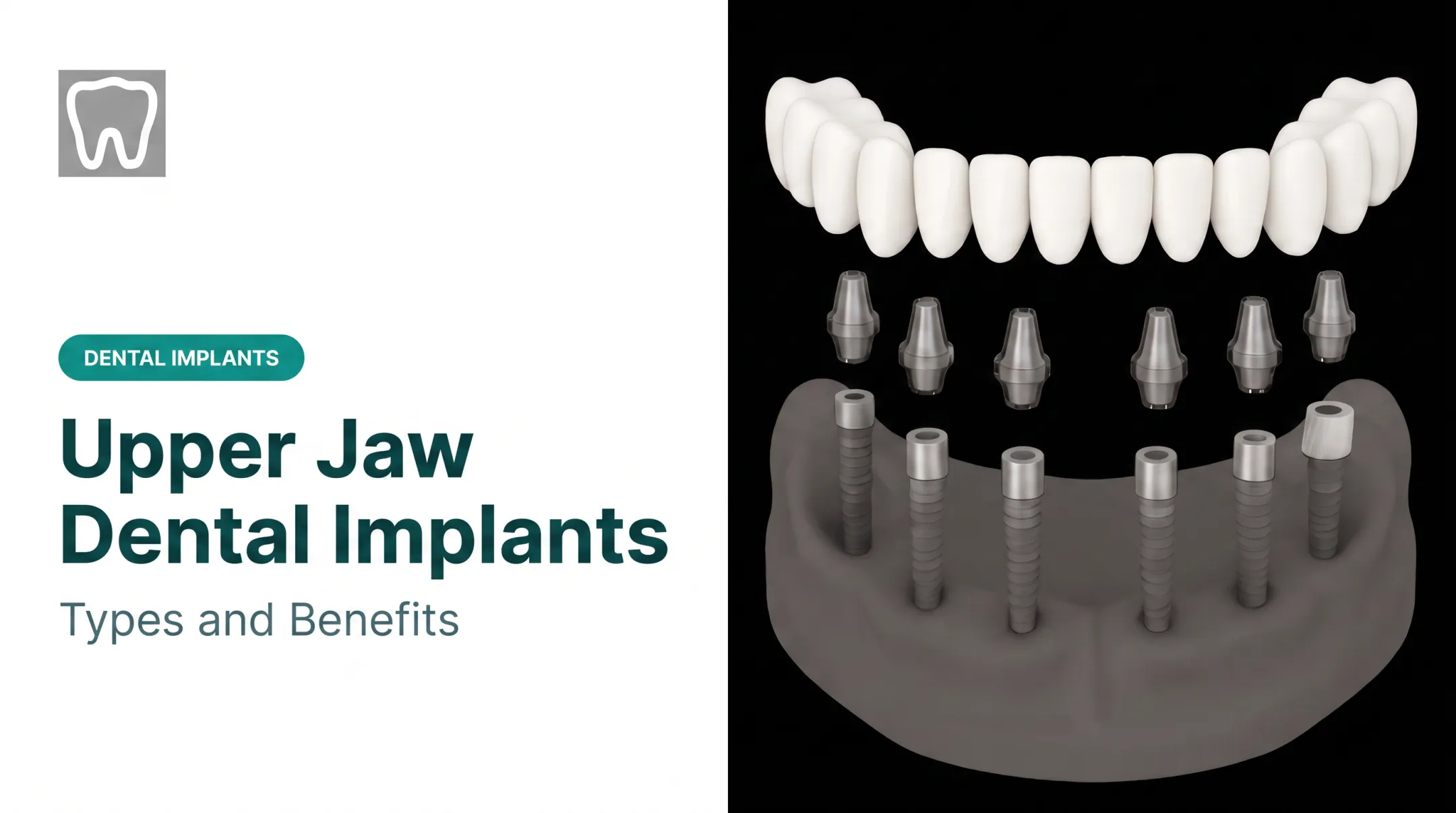
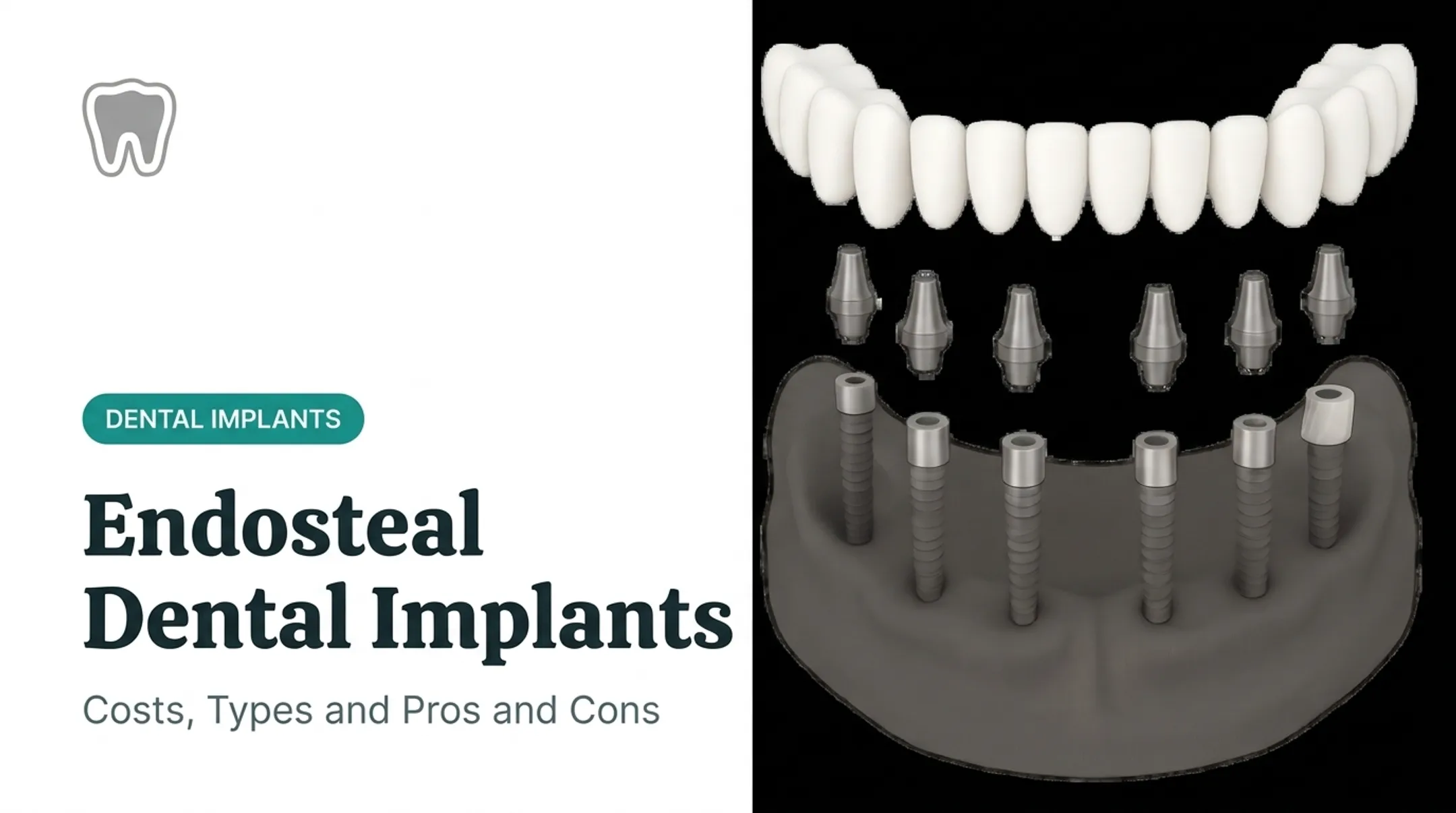
Endosteal implants are small titanium screws or cylinders placed directly into the jawbone. They're the most widely used implant type worldwide.
Once placed, the implant undergoes osseointegration, fusing with the surrounding bone. A 2024 prospective cohort study following 166 implants over 24 months reported a 97.44% cumulative survival rate.

Healing typically takes about 3 months in healthy bone and up to 6 months when bone augmentation is involved.
How it differs: Endosteal implants sit inside the bone itself, unlike subperiosteal or zygomatic implants, which anchor on or outside the jaw.
Best suited for: Patients with adequate bone density and height. Endosteal implants can replace a single tooth, several teeth, or support a full arch.
Key strengths:
- Strong long-term clinical track record
- Preserves natural bone structure through functional loading
- Versatile across single-tooth and full-arch cases
Limitations: Requires sufficient bone volume. If your jawbone has thinned, especially after years of a missing tooth, you may need bone grafting first, which adds 3-6 months of healing before the implant itself can go in.
Type 2: Subperiosteal Implants
Instead of drilling into the bone, subperiosteal implants use a custom metal framework that sits on top of the jawbone, under the gum tissue. Posts extend through the gum to hold the prosthesis in place.
How it differs: This implant rests on the bone rather than fusing inside it, which means no drilling and, often, no bone grafting requirement.

Best suited for: Patients with insufficient bone height who want to avoid a grafting procedure altogether.
Key strengths:
- Less invasive placement than endosteal implants
- Often avoids bone grafting
- Shorter initial healing period in many cases
Limitations: A 2025 review of subperiosteal implants found survival rates of 67%-86% at 10 years and 52%-60% at 15 years for standard designs. That's a meaningful drop-off compared to endosteal options.
The design has also become far less common as bone grafting techniques have advanced, and the frameworks can be harder to keep clean.
Type 3: Zygomatic Implants
Zygomatic implants are longer fixtures anchored into the zygomatic bone (your cheekbone) instead of the jaw. This bypasses areas of severe upper jaw bone loss entirely, where neither endosteal nor subperiosteal implants could work.

How it differs: This is the only implant type anchored completely outside the jaw. It often allows for same-day temporary teeth, since the cheekbone provides immediate stability that a resorbed jaw cannot.
Best suited for: Patients with severe upper jaw bone loss, failed previous bone grafts, or long-term denture wearers who aren't candidates for standard implants.
Key strengths:
- Cumulative success rates of 96.8% at 3-5 years and 96.1% beyond 5 years in a 2022 systematic review
- Avoids lengthy grafting in many severe upper-jaw atrophy cases
- Can support same-day temporary teeth when primary stability is strong
Limitations: This is highly complex surgery. A recent global consensus found that over 95% of specialists agree it requires highly specialized training, and roughly 84% believe complex cases belong in a hospital setting.
Expect higher costs, and know this option only applies to upper jaw cases.
How to Choose the Right Type of Implant
The right implant depends primarily on your jawbone and clinical needs, not preference alone. Your specialist should weigh:
- Bone density and volume in the affected area
- Number of missing teeth — a single gap versus a full arch
- Willingness to undergo bone grafting versus seeking a grafting-free alternative
- Budget and treatment timeline, including same-day options
Those factors are evaluated in consultation with 3D CBCT imaging. At our Los Algodones clinic, Dr. Moguel—a board-certified periodontist with 38+ years of experience and over 17,000 implants placed—matches the approach to your anatomy, timeline, and goals.
For full-arch cases, that may mean All-on-4 (four implants per arch), All-on-6 (six implants), or the patented 3-ON-8™ protocol. The 3-ON-8™ approach uses eight titanium implants per arch supporting three independent, custom-milled zirconia bridges.
This segmented design means that if one section develops an issue, the other two remain functional, an advantage traditional single-bridge full-arch designs don't offer.

What to Check Before Finalizing Your Implant Type
Don't automatically choose the most advanced or expensive option. If a standard endosteal implant will do the job, a zygomatic implant is overkill in cost and surgical complexity.
Before committing to any treatment plan:
- Compare long-term maintenance, not just upfront cost. Subperiosteal frameworks can be harder to clean and may need attention sooner.
- Verify your surgeon's certifications, especially for zygomatic procedures. Ask specifically about their training and case volume for this technique.
- Get an itemized quote. Confirm what's included: imaging, materials, and warranty coverage before you sign anything.
- Ask about warranty terms. Our clinic offers a lifetime warranty on implant hardware (replaced at no cost if it fails). Crowns and zirconia arches carry a five-year warranty when you keep up with routine professional cleanings.
Conclusion
Endosteal, subperiosteal, and zygomatic implants each solve a different bone problem. None is universally better. The right type depends on your jawbone health, not popularity or price alone.
If you're unsure which category fits your case, a free, no-obligation consultation with a board-certified specialist is the fastest way to find out. Bring your dental history, and expect a 3D scan to guide the recommendation.
Frequently Asked Questions
What are the 3 types of dental implants?
The three types are endosteal (placed inside the jawbone), subperiosteal (resting on top of the jawbone under the gum), and zygomatic (anchored into the cheekbone). Each targets a different level of bone availability.
What type of dental implant lasts the longest?
Endosteal implants have the strongest long-term evidence, with studies showing survival rates above 90% at 15 years. Zygomatic implants hold up well in their use case; older subperiosteal designs tend to decline more over 10–15 years.
Which type of dental implant is most common?
Endosteal implants, specifically root-form designs, are the most common type in clinical practice today. They have a strong track record and work for both single-tooth and full-arch cases.
Do I need a bone graft before getting implants?
It depends on your bone density and volume, which is why a 3D CBCT scan is essential before treatment planning. In some severe upper jaw cases, zygomatic implants can eliminate the need for grafting entirely.
How much do dental implants cost in Mexico compared to the U.S.?
Patients typically see savings of 60-70% compared to U.S. prices, with American-standard materials and technology. Exact pricing depends on the implant type and whether grafting or full-arch protocols are needed.
Is dental implant surgery painful?
Local anesthesia makes the procedure itself painless, and oral or IV conscious sedation is available for anxious patients or more complex cases. Most patients report manageable soreness for a few days afterward.