
That demand has fueled wider adoption of immediate-load techniques, including All-on-4, All-on-6, and full-arch protocols, as alternatives to the traditional months-long implant timeline. But there's a catch. Many patients assume "same-day" means zero healing time. It doesn't.
This guide breaks down exactly how same-day dental implants work, step by step, and who actually qualifies.
TL;DR
- Same-day implants place a temporary crown or bridge on surgery day; osseointegration still takes months
- Best for good bone density, healthy gums, and no uncontrolled chronic conditions
- Typical path: consult and diagnostics, extraction if needed, implant placement, temporary restoration
- Treatment in Los Algodones, Mexico can cut costs by roughly 60–70% versus U.S. prices
- Bone grafting or infection often means a staged approach instead of same-day treatment
What Are Same-Day Dental Implants?
A same-day (immediate-load) implant means the implant post and a temporary prosthetic tooth go in during a single visit. Traditional staged implants, by contrast, often leave patients waiting months between extraction and any visible tooth.
The gap this solves is real: nobody wants to walk around toothless for half a year. Same-day protocols eliminate that waiting period for the visible restoration.
What it doesn't eliminate: the biological healing process. Osseointegration, where the implant physically fuses to the jawbone, still takes weeks to months, no matter how fast the cosmetic result appears.
Single-Tooth vs. Full-Arch Protocols
The scope changes significantly depending on how many teeth are involved:
- Single-tooth implants replace one missing tooth; a temporary crown can go on the same day, with the permanent crown after healing.
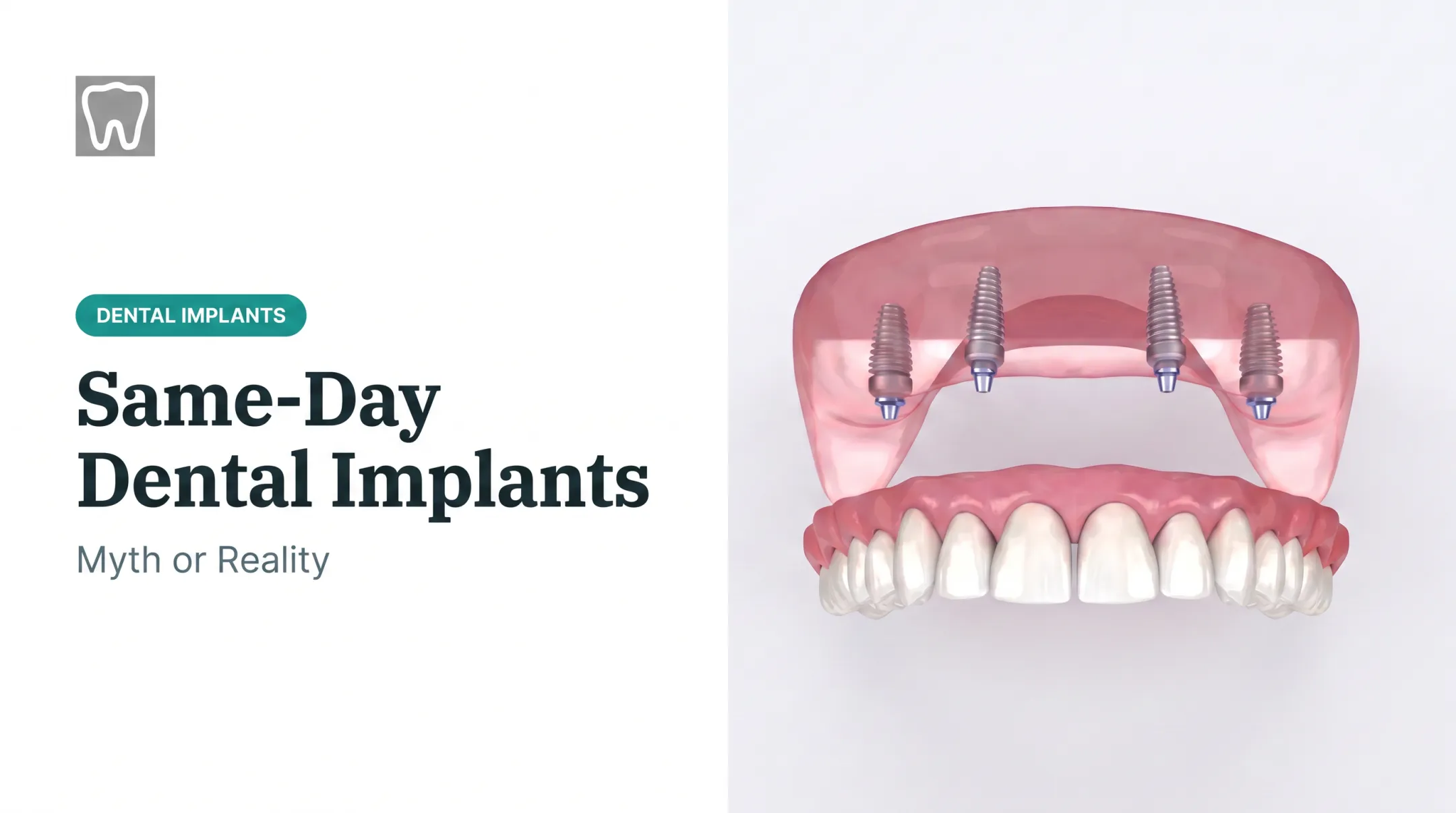
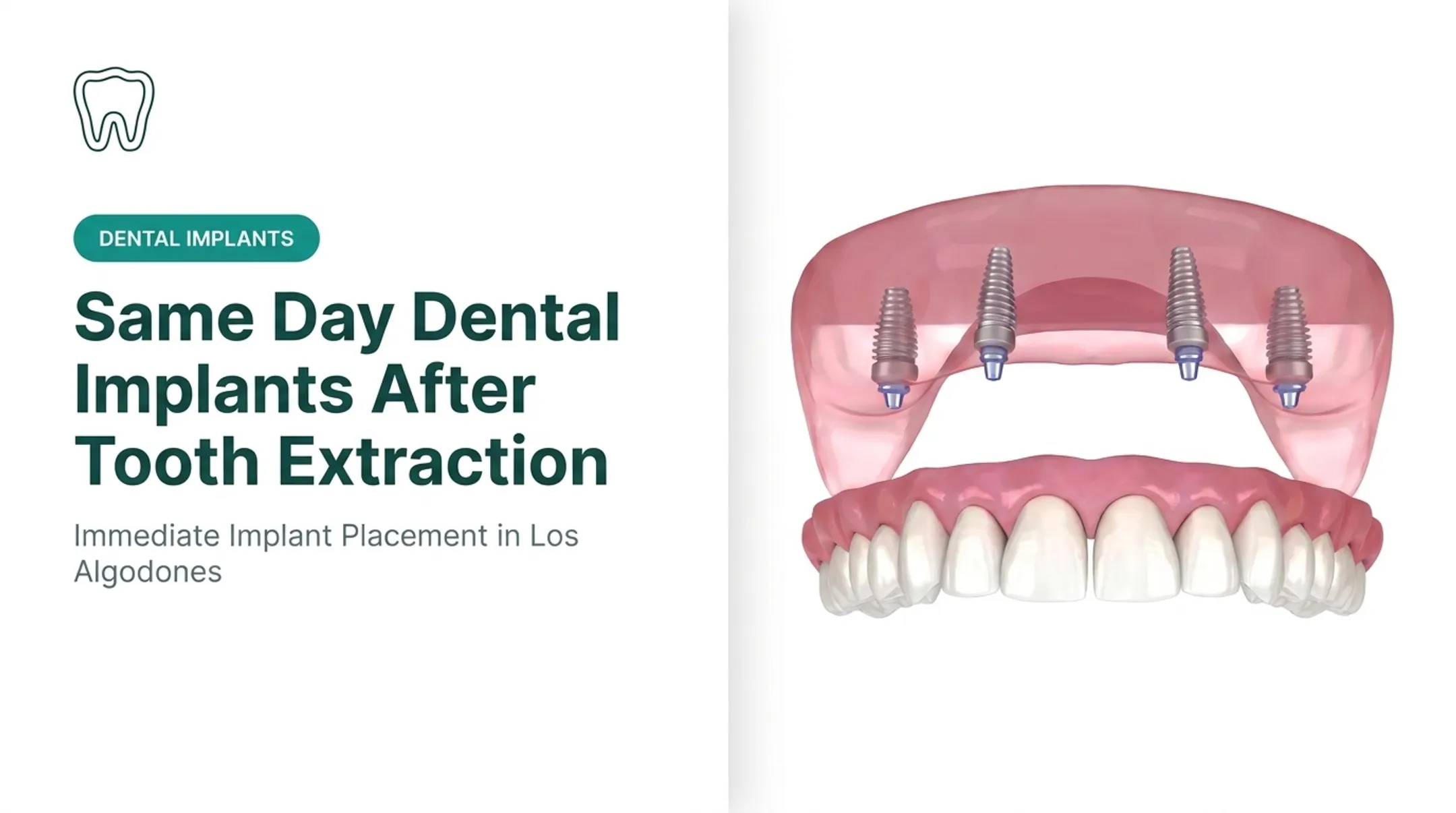
- All-on-4 uses four implants per arch with cross-arch stabilization, so a temporary fixed bridge can go in the same day.
- All-on-6 uses six implants per arch for added support and the same same-day temporary bridge option.
- 3-ON-8™ (a patented protocol) uses eight implants per arch and three separate bridges, typically covering 12–14 teeth.
"Same-day" in full-arch cases means a temporary fixed restoration, not the final permanent bridge. That final bridge comes later, once the bone has healed.

How Do Same-Day Dental Implants Work?
The process follows a defined sequence: diagnostics, extraction and placement, immediate restoration, then long-term healing.
Consultation & Diagnostics
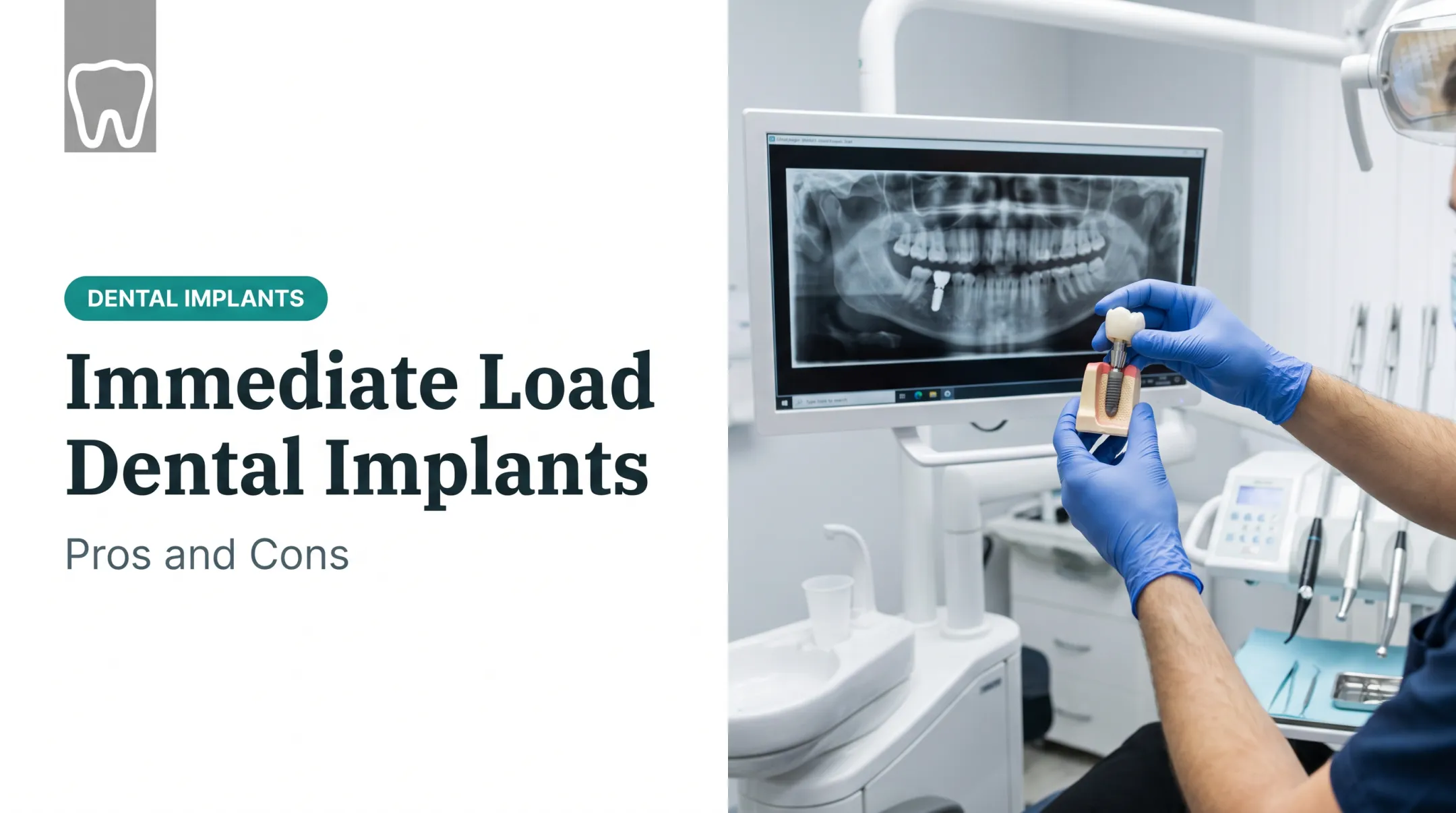
Everything starts with 3D Cone Beam CT (CBCT) imaging and digital scanning. Standard 2D X-rays don't cut it here. They can't show bone width or nerve pathways with enough precision for implant planning. At Dental Implants in Mexico, Dr. José Moguel reviews the CBCT scan during a free consultation to assess:
- Jawbone density and width at each planned implant site
- Nerve and sinus locations, to determine safe implant length, width, and angle
- Whether same-day extraction is viable, or if grafting needs to happen first This step is not automated. It requires clinical judgment. Patients with insufficient bone volume often cannot proceed same-day. Grafting can delay eligibility by months.
Extraction, Implant Placement & Temporary Restoration
If teeth need removal, extraction and implant placement happen in the same appointment. The implant post is surgically anchored into the jawbone, then a temporary crown, bridge, or fixed denture is attached immediately. That temporary restoration is engineered to withstand bite forces without disturbing the healing implant underneath. Implant stability and surgical precision drive success here. In one documented case, Dr. Moguel extracted a fractured front tooth and immediately placed a NobelActive titanium implant, followed by a temporary aesthetic crown, all in one visit. Dr. Moguel has placed more than 17,000 implants over 38 years.

Managing the Healing Load
Once the temporary is in place, protecting it becomes the priority. Pre-surgery digital scans and surgical guides make it possible to finalize and secure that temporary bridge the same afternoon the implants go in. During osseointegration (roughly 10-12 weeks, sometimes extending to 3-4 months), patients follow specific protocols:
- Soft-food diet: cold or room-temperature foods initially, soft foods for 3-4 months
- Hygiene: no rinsing the day of surgery; gentle salt-water rinses starting 24 hours later
- No pressure on the surgical site for at least two weeks
- No smoking or alcohol throughout healing Excess load or infection during this window is the leading cause of same-day implant failure. This stage is where patient compliance matters just as much as surgical skill.

Final Restoration & Long-Term Function
Once osseointegration is confirmed, typically 4 to 6 months later, the temporary restoration is swapped for a custom permanent crown or full-arch prosthesis, usually zirconia or ceramic. A properly fused implant then functions like a natural tooth root. When protocols are followed, outcomes are strong. One 2024 case series reported a 97.9% five-year implant survival rate. That figure reflects a specific study population, not a universal guarantee.
Who Is a Good Candidate for Same-Day Implants?
Ideal candidates typically have:
- Adequate bone density and volume at the implant sites
- Healthy gums, free of active infection
- No uncontrolled diabetes or autoimmune conditions
- Non-smoker status, or willingness to quit during healing
Disqualifying factors include active gum disease, insufficient bone requiring grafting or sinus lifts, and heavy bruxism (teeth grinding). Smokers face a 140% higher implant failure risk than nonsmokers, and teeth grinders show elevated failure rates as well.
A CBCT scan and oral health check are the only reliable way to confirm eligibility. Free, no-obligation consultations give patients that answer before they commit to any cost.
Eligibility also shapes how many teeth can be replaced in one visit. Scope depends on the protocol:
| Protocol | Implants per arch | Scope |
|---|---|---|
| Single-tooth | 1 | One missing tooth |
| All-on-4 | 4 | Full arch |
| All-on-6 | 6 | Full arch |
| 3-ON-8™ | 8 | Full arch, 12-14 teeth across 3 bridges |
Same-Day vs. Traditional Implants
The core trade-off comes down to timeline versus risk tolerance.
- Visit count: Same-day protocols compress treatment into fewer visits; traditional staged implants require separate appointments for extraction, placement, and final restoration
- Timeline: Same-day patients get a functional, fixed temporary the day of surgery; traditional patients often wait weeks with a removable option or nothing at all
- Risk profile: Same-day carries slightly higher risk for non-ideal candidates; a systematic review linked immediate loading to higher failure rates than conventional loading in some comparisons
Traditional implants remain the more conservative route with broader eligibility. The right choice usually comes down to bone health, budget, and how badly the patient needs functional teeth restored quickly.
Cost Considerations & Affordable Options
Same-day implant costs vary by number of implants, materials, and whether extraction or grafting is needed. At Dental Implants in Mexico, listed "from" pricing includes:
- Single-tooth implant: starting at $1,500
- All-on-4: starting at $6,000
- All-on-6: starting at $8,000
- 3-ON-8™: starting at $15,000
- Teeth in a Day (full same-day treatment): $9,000–$13,000, versus $26,000–$32,000 in the US
That works out to roughly 60–70% savings, with FDA-approved systems such as Nobel Biocare, Straumann, and MegaGen. Bone grafting, if needed, typically runs $500–$800 separately.

If paying everything upfront is a concern, ask about:
- Medical credit financing
- HSA/FSA funds for eligible treatment costs
- Insurance claim support, including itemized receipts, CDT codes, and pre-treatment estimates
These paths often make same-day treatment workable without delaying care.
Conclusion
Same-day implants compress the visible treatment timeline, not the biological one. Success still depends on bone health, surgical precision, and a patient's willingness to follow healing protocols closely.
A thorough CBCT evaluation and an experienced, board-certified provider remain the biggest factors separating a lasting result from a failed one. Start there before you commit to same-day treatment.
Frequently Asked Questions
How much do same-day dental implants cost?
Pricing depends on the number of implants, materials, and whether grafting is needed. In Mexico, full same-day treatment typically runs $9,000-$13,000, compared to $26,000-$32,000 in the US.
Can you get a tooth extracted and an implant placed on the same day?
Yes, when bone and gum conditions allow. Extraction, implant placement, and a temporary restoration can all happen in a single visit.
Are same-day dental implants a good idea?
They're a strong option for well-qualified candidates who want immediate function and aesthetics, but not everyone qualifies. Bone health and gum condition determine eligibility.
What can I do if I have bad teeth but can't afford dental treatment?
Explore free consultations, financing options, and lower-cost treatment in Mexico. These paths can make implant care more accessible.
How many teeth can you remove in a day?
It depends on oral health and the chosen protocol. Full-arch techniques like All-on-4, All-on-6, or 3-ON-8™ allow multiple extractions in one session.
Do same-day implants require special aftercare?
Yes. A soft-food diet, strict oral hygiene (including gentle salt-water rinses), and avoiding pressure on the surgical site are essential during the 3–6 month osseointegration period.