
Here's something most patients don't know: periodontists are gum and bone specialists with residency training specifically built around implant surgery. They're not general dentists who added implants to their menu. Implant placement, bone grafting, and gum health are their daily work.
This guide covers what periodontists actually do, how they stack up against oral surgeons and general dentists, what happens if you have gum disease, and how to evaluate a provider properly, including options for patients considering treatment across the border in Mexico.
Key Takeaways
- Periodontists specialize in the gum tissue and jawbone that implants depend on, so implant placement is a core daily procedure
- Gum disease doesn't disqualify you from implants; treatment and stabilization typically come first
- Choose your specialist by comparing training, technology, and implant case volume for your needs
- Treatment with a board-certified periodontist in Mexico can cut costs by 60-70% while meeting strong qualification standards
What Is a Periodontist and Why They Matter for Dental Implants
A periodontist is a dental specialist focused on the gums, the supporting jawbone, and the tissues that anchor both natural teeth and implants. The American Academy of Periodontology recognizes periodontics as one of the 12 official dental specialties, and implant surgery is central to the specialty.
Periodontists complete three additional years of residency beyond dental school, focused specifically on periodontal disease treatment, bone grafting, gum grafting, and surgical implant placement. Dr. José Moguel, for example, completed postgraduate Periodontics and Oral Implantology training after his DDS at UNAM and went on to earn board certification.
Why Implant Placement Is a Periodontist's Core Skill
For a periodontist, implant surgery is the core of daily practice. That case volume builds pattern recognition that's hard to develop in general dentistry. Dr. Moguel has placed over 17,000 implants across 38 years of practice, developing his patented 3-ON-8™ protocol along the way.
A periodontist also manages both the surgical placement and the long-term gum health around it, which helps catch early signs of peri-implantitis before they become bigger problems.

Bone and Soft Tissue Expertise
Not every jaw has enough bone to hold an implant on day one. Periodontists routinely perform:
- Bone grafting to rebuild density in areas with insufficient volume
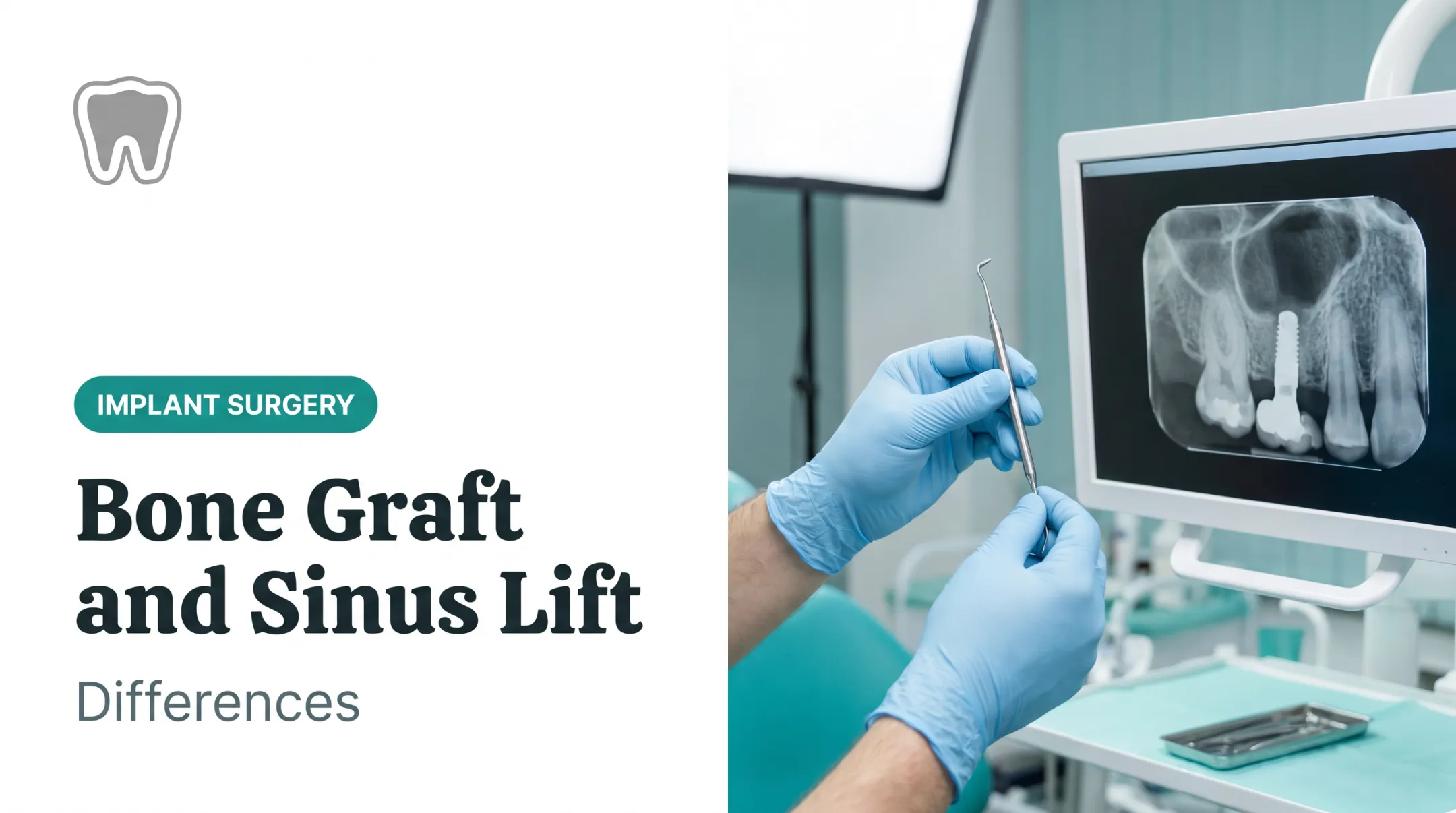
- Sinus lifts when the upper jaw has thinned too close to the sinus cavity
- Ridge augmentation to prepare narrow or collapsed bone ridges
They also manage soft tissue thickness and contouring, which matters most in visible front-tooth cases. One patient, Marcus D., age 32, received a single anterior implant with laser gum contouring specifically to keep his gumline symmetrical and natural-looking.

Periodontist vs. Oral Surgeon vs. General Dentist: Who Should Place Your Implant?
Not every case needs the same specialist. Here's how the three provider types compare:
| Provider | Training Focus | Primary Procedures | Bone/Soft Tissue Expertise | Typical Implant Volume |
|---|---|---|---|---|
| Periodontist | 3+ years residency in gum, bone, and implant surgery | Implant placement, grafting, gum health maintenance | High — daily focus | High (implants are a core service) |
| Oral Surgeon | Minimum 48-month surgical residency (AAOMS) | Jaw reconstruction, trauma, extractions, implants | High, with broader surgical scope | High |
| General Dentist | Dental school plus limited implant-specific training | Restorative and preventive dentistry; implants as an add-on | Lower, case-dependent | Lower |
When a periodontist may be preferred: gum disease, bone or soft-tissue grafting, or full-arch work (All-on-4, All-on-6) where surgical and restorative planning need to stay coordinated.
When an oral surgeon may be preferred: complex jaw reconstruction, facial trauma, or impacted teeth that need extraction before an implant can go in.
When a general dentist may be enough: straightforward single-tooth cases where the patient already has healthy bone and gums.
Some clinics split full-arch cases: a periodontist handles surgery and a prosthodontist handles the final restoration. Either way, ask who's doing what before you commit.
Can You Get Dental Implants If You Have Gum Disease?
Yes, but with a catch: active gum disease typically needs to be treated and stabilized first. Placing an implant into infected tissue sets it up to fail before it even integrates.
The standard prep sequence usually looks like this:
- Scaling and root planing — removes plaque and tartar from beneath the gumline
- Laser sanitization — kills bacteria in periodontal pockets and encourages gum reattachment
- Healing phase — typically 2 to 4 weeks before gum health is verified
- Implant placement — proceeds once tissue is stable

Implants don't make you immune to gum disease. Peri-implantitis, a bacterial infection around the implant, can still develop. Research shows patients with a history of periodontal disease face a notably higher risk (OR 4.80, per a 2024 meta-analysis). Ongoing periodontal maintenance matters after surgery, not just before it.
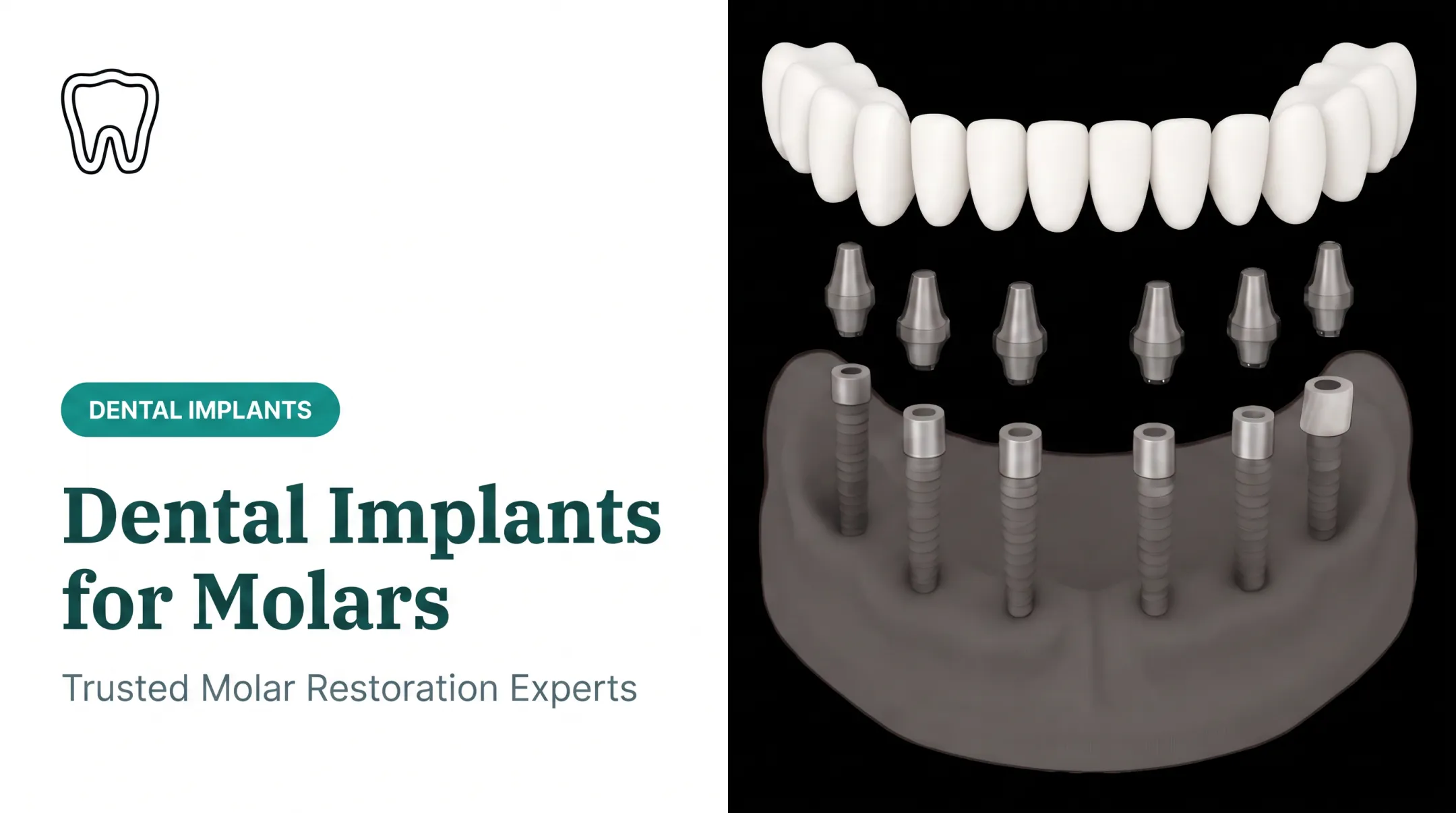
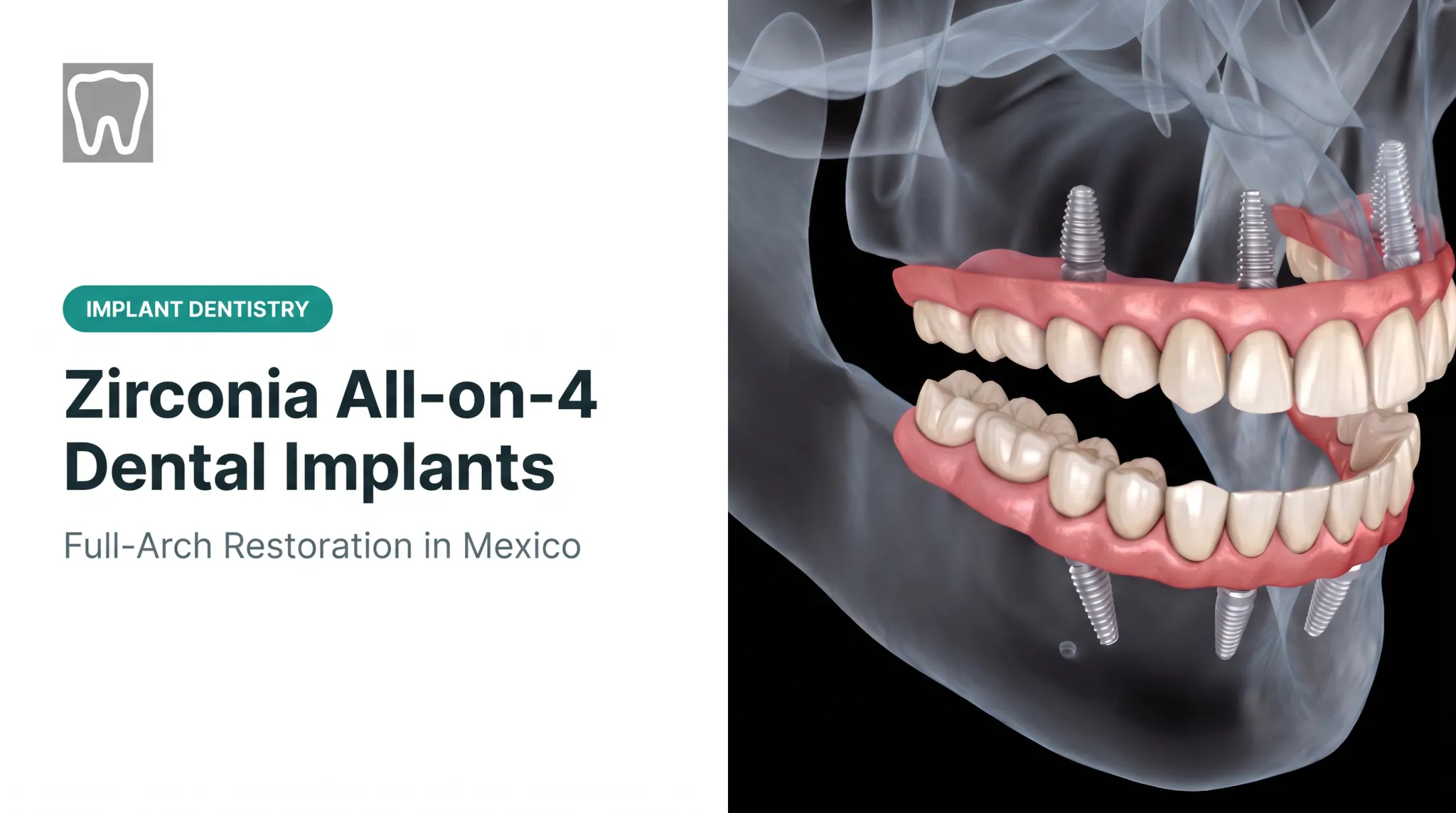
For patients with a history of advanced gum disease, full-arch options like All-on-4 or All-on-6 are often the stronger long-term option. Removing remaining natural teeth that are still vulnerable to disease, and replacing them with a fixed prosthesis anchored to healthy implant sites, removes one recurring risk entirely.
Why Patients Choose a Board-Certified Periodontist in Los Algodones, Mexico
Dr. José Moguel has practiced periodontics and implant dentistry for 38+ years, placing more than 17,000 implants. He's board certified through both the American Dental Association and the Asociación Dental Mexicana, and he developed the patented 3-ON-8™ protocol for full-mouth restoration.
The cost difference is significant. Patients treated in Mexico can save approximately 60-70% compared to U.S. pricing, while still receiving care built on American-standard technology and ADA/ADM-recognized credentials. For context, a single-tooth implant in the U.S. typically runs $3,100-$5,800 once you include the implant, abutment, and crown.

Getting there is straightforward:
- The clinic sits roughly a 3-minute walk from the Andrade, California border crossing
- Parking on the U.S. side runs about $6 for the day
- English-speaking staff coordinate appointments from start to finish
For patients driving in from Yuma or flying into nearby airports, the border crossing is often the easiest part of the whole trip.
What to Expect During the Implant Treatment Process
Implant treatment typically follows five stages:
- Free consultation — clinical treatment plan and cost estimate
- 3D Cone Beam CT imaging — maps bone density and plans exact implant positioning
- Surgical placement — a single-tooth implant post takes about 30-45 minutes
- Osseointegration (healing) — the implant fuses with bone over 3-6 months
- Final restoration — a custom crown, bridge, or fixed hybrid arch is attached

That healing window usually means a return visit for the final restoration. Some patients still qualify for same-day options: All-on-4 candidates with adequate bone density may leave with a temporary fixed bridge on surgery day, then receive the permanent restoration after healing.
Before choosing any provider, ask directly about:
- Implant brand and whether it has FDA clearance (Nobel Biocare, Straumann, and MegaGen are common examples)
- Warranty coverage on the implant itself
- What ongoing maintenance looks like after placement
These aren't nitpicky questions. They're the ones that determine whether your implant lasts 10 years or 25.
Frequently Asked Questions
Can you still get dental implants with periodontal disease?
Yes. Active gum disease typically needs to be treated and stabilized first. Once healed, implant placement can proceed, followed by ongoing maintenance to protect the surrounding tissue.
What is the best teeth replacement for periodontal disease?
Full-arch solutions like All-on-4, All-on-6, or 3-ON-8 are often recommended. They replace disease-damaged teeth with a stable, fixed prosthesis anchored to healthy implant sites.
Does gum disease go away once you get all implants?
Not entirely. Implants remove disease risk tied to natural tooth roots, but the tissue around implants can still develop peri-implantitis without proper hygiene and regular maintenance.
Is a periodontist or oral surgeon better for dental implants?
Periodontists are typically ideal for standard and full-arch implant cases due to their bone and gum expertise. Oral surgeons are better suited to complex jaw reconstruction or trauma cases.
How much can I save by getting dental implants in Mexico?
Patients often save around 60-70% compared to U.S. pricing. Actual savings depend on case complexity, the number of implants needed, and materials used.
How do I know if a periodontist is qualified to place my implants?
Check for board certification, years of clinical experience, and the number of implants they've placed. Dr. José Moguel, for example, is ADA/ADM board certified with 38+ years of experience and 17,000+ implants placed.