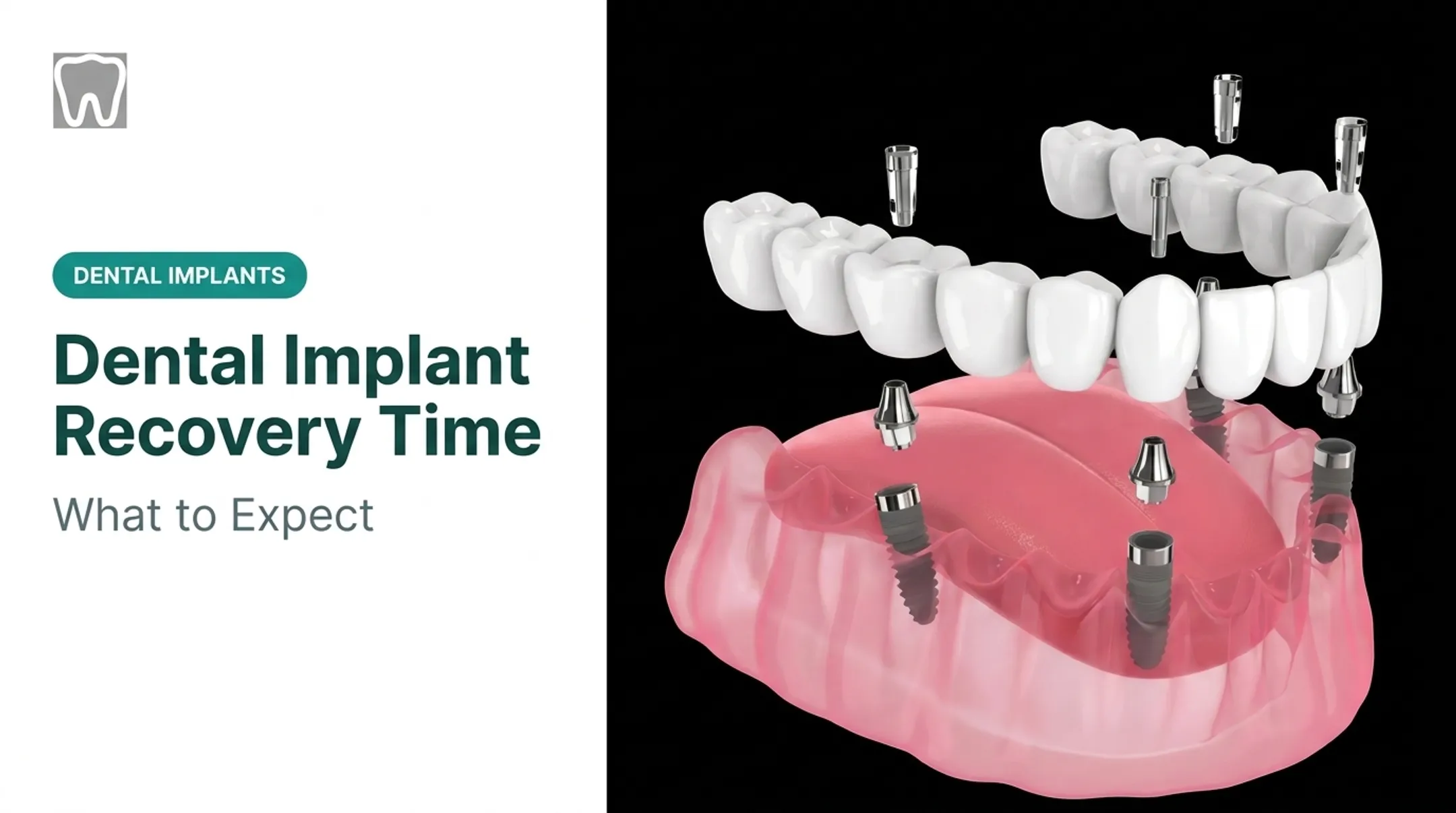

Recovery speed depends on several things — how many implants you're getting, the health of your jawbone, and whether your treatment involves bone grafting or a full-arch protocol like All-on-4 or the patented 3-ON-8™ system. A single-tooth implant heals differently than a full-mouth restoration.
This guide walks through the complete healing timeline, what affects your recovery speed, warning signs to watch for, and practical tips to heal faster.
Key Takeaways
- Soft tissue heals in 1-2 weeks; full osseointegration takes 3-6 months
- Swelling, mild bleeding, and discomfort typically resolve within 3-7 days
- Full-arch treatments (All-on-4, All-on-6, 3-ON-8™) may need 3-6 months to fully heal
- Proper aftercare and an experienced specialist reduce complication risk
- Seek care immediately for worsening pain, fever, or pus
What Happens Immediately After Dental Implant Surgery?
Your dentist performs implant surgery under local anesthesia. You won't feel pain during the procedure itself. Most patients describe pressure, not sharp pain.
Once the anesthesia wears off, normal post-op symptoms set in:
- Swelling around the implant site
- Minor bleeding or oozing
- Bruising on the cheek or jaw
- Soreness that feels similar to a bad toothache
Symptoms typically peak within 48-72 hours, then start improving. A 2021 study found moderate swelling peaked at 48 hours, while severe pain dropped from 52.5% of patients on day one to 12.5% by day three. Most people feel largely back to normal within a week.

Day-One Aftercare Basics
- Bite on gauze: fold two damp pieces over the site and apply steady pressure for 30-60 minutes to control bleeding
- Ice the area: 20 minutes on, 20 minutes off, during the first 24 hours
- Rest: skip the gym and heavy activity for at least 48 hours
Pink or blood-tinged saliva is normal for 2-3 days. It's not a red flag unless it's heavy or doesn't taper off.
Dental Implant Healing Timeline: Stage by Stage
Healing happens in three distinct phases, each with a different job to do.
Stage 1: Soft Tissue Healing (1-2 Weeks)
Your gums close around the implant, any stitches dissolve or get removed, and the swelling and soreness from surgery fade. This is the part patients notice and feel. By day 7, most people report minimal or fully resolved discomfort.
Stage 2: Osseointegration (3-6 Months)
This is the real work, and it happens invisibly. Titanium fuses directly to your jawbone at a cellular level, creating an anchor strong enough to handle normal chewing forces for decades.
It generally unfolds in three phases:
- Weeks 1-4: The implant holds by mechanical friction alone
- Weeks 5-12: New bone grows into the implant's threads, replacing mechanical stability with biological fusion
- Months 3-6: Bone fully consolidates, locking the implant in place
There are no visible symptoms during this stage: no swelling, no pain to track. That quiet stretch is why patience matters most here. Cleveland Clinic puts the typical osseointegration window at 3-9 months depending on the case. Ten-year implant survival data shows a success rate around 96.4% when integration is properly managed.

Stage 3: Abutment and Crown Placement (After Osseointegration)
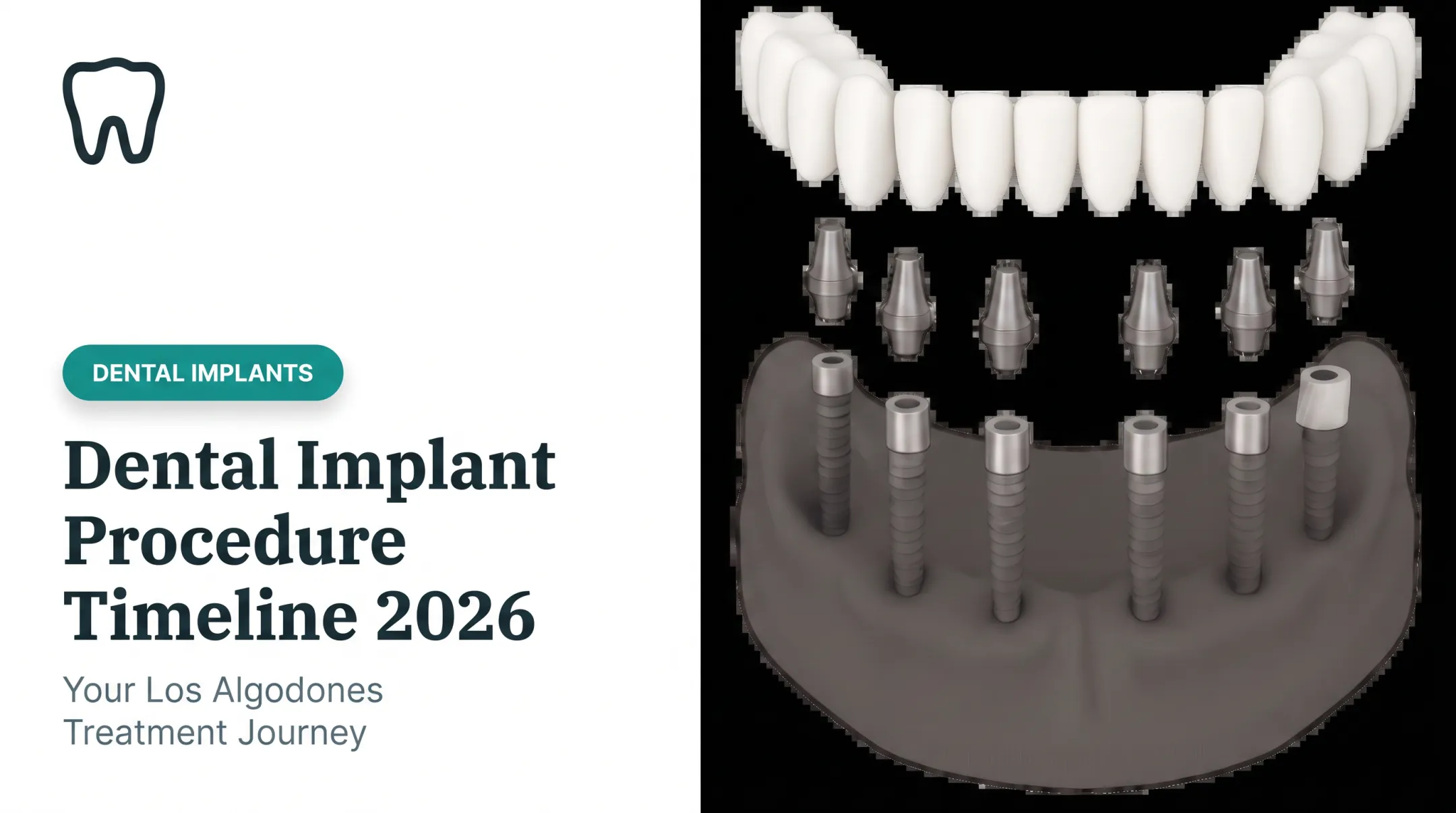
Once osseointegration is confirmed through imaging, your dentist attaches the abutment (the small connector piece) and takes a digital scan for your custom crown. The final crown, typically porcelain or zirconia, is shaped and shaded to match your natural teeth.
Full-Arch Timelines Differ
All-on-4, All-on-6, and 3-ON-8™ use multiple implants placed strategically to support a full arch, often with a temporary set of teeth attached the same day as surgery. Typical healing times:
| Treatment | Implants Per Arch | Typical Recovery |
|---|---|---|
| All-on-4 | 4 | 3-4 months |
| All-on-6 | 6 | 4-5 months |
| 3-ON-8™ | 8 | 4-6 months |
Quick Reference Timeline
| Time Frame | Healing Stage |
|---|---|
| Days 1-7 | Soft tissue healing, swelling and bleeding resolve |
| Weeks 1-4 | Mechanical implant stability |
| Weeks 5-12 | Biological bone fusion begins |
| Months 3-6 | Osseointegration completes |
| After integration | Abutment and crown placed |

Factors That Affect Healing Time
Not everyone heals at the same pace. Several variables can speed things up or slow them down considerably.
Health and lifestyle factors:
- Age and overall health — conditions like osteoporosis can slow bone regeneration; age alone isn't a reliable predictor of outcome
- Diabetes — poorly controlled diabetes carries higher implant-failure risk than well-managed cases
- Smoking — implant-failure odds over 2x higher than non-smokers, with greater bone loss around the implant (2021 meta-analysis of 35,000+ implants)
- Poor oral hygiene — increases infection risk during the healing window
Treatment complexity:
- Bone grafting adds 3-4 months of healing before an implant can be placed on that site
- A sinus lift can require 6-9 months for the graft to mature before implants go in
- More implants generally mean a longer overall treatment timeline
Provider experience matters, too. Surgical precision reduces complications that otherwise stall healing. Dr. José Moguel, a board-certified periodontist who has placed more than 17,000 implants, has refined protocols over 38 years that account for these variables. That includes bone density assessment and grafting decisions made before surgery, not after complications arise.
How to Speed Up Dental Implant Healing
You can't rush osseointegration, but you can avoid slowing it down. Here's what actually helps:
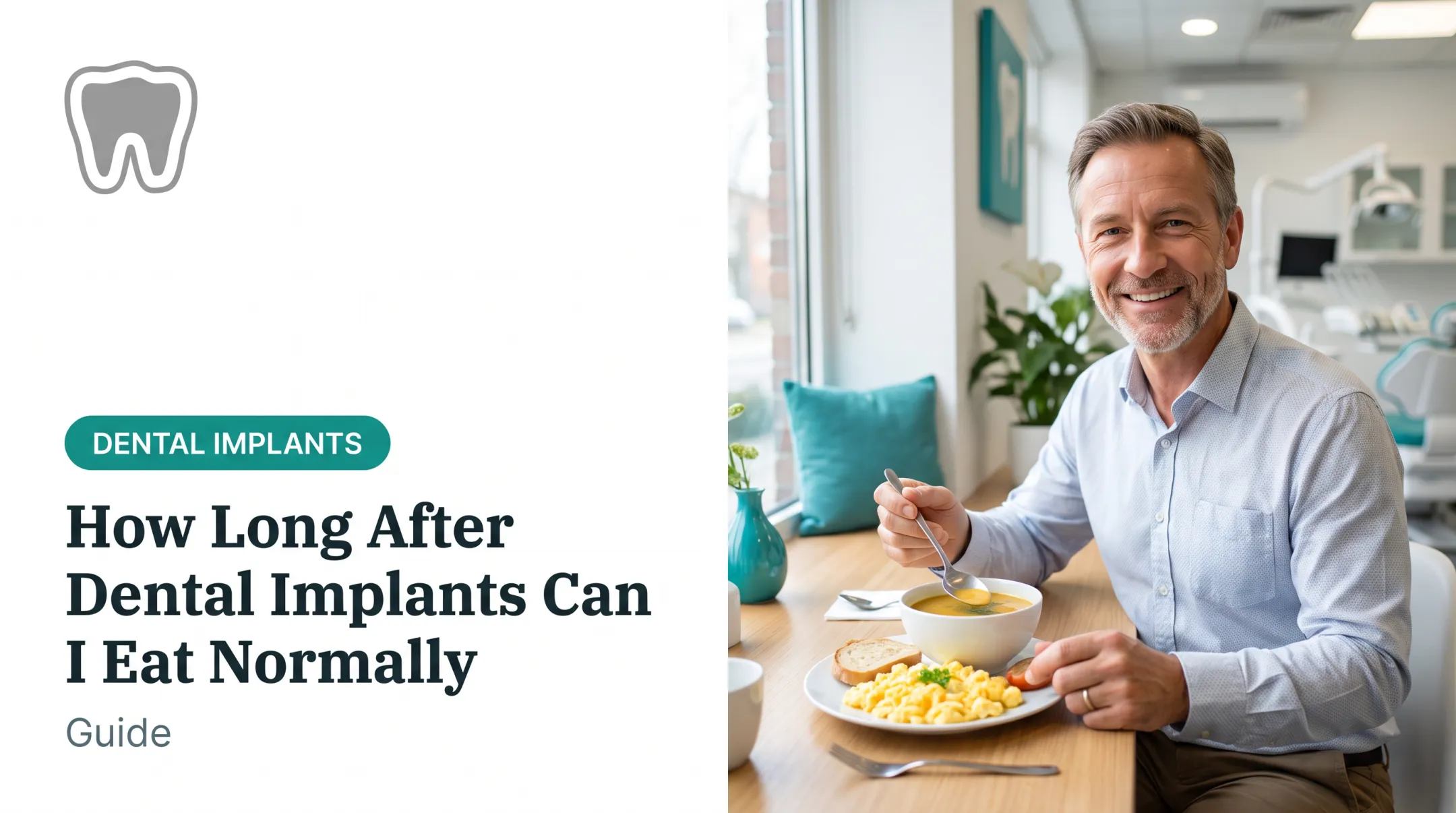
- Stick to soft foods for the first 3-4 months: soups, scrambled eggs, yogurt, smoothies. Prioritize protein, calcium, and vitamin D, which support tissue and bone repair.
- Skip smoking and alcohol entirely. Both restrict blood flow to healing tissue and raise failure risk. Most specialists recommend quitting at least 2 weeks before surgery and staying off tobacco for 6 weeks after.
- Keep the site clean, gently. Start warm saltwater rinses 24 hours after surgery (½ teaspoon salt in a glass of warm water, 4-5 times daily). Brush with a soft-bristle brush, avoiding direct contact with the surgical site for the first 48 hours.
- Don't skip follow-ups. Your dental team needs to check integration progress, and small issues caught early rarely become big ones.

Signs Your Implant Is Healing Well vs. Warning Signs
What Healthy Healing Looks Like
By the two-week mark, you should notice:
- Swelling has largely subsided (it typically peaks at 48-72 hours and fades by day 7-10)
- Gums are closing around the implant site, no longer raw or open
- Discomfort is minimal to none, a far cry from surgery day
- The implant feels stable, with no wiggle or shift
- Gum tissue looks pink and healthy rather than inflamed
Does Gum Heal Over the Implant?
Gum tissue heals around the implant post during the soft-tissue phase. It doesn't grow over the crown itself. Once your final restoration is placed, the crown sits visible above the gumline just like a natural tooth, while the gum forms a snug seal around its base.
Red Flags That Need Immediate Attention
Contact your dental team right away if you notice:
- Pain that worsens after the first week instead of improving
- Bleeding that won't stop or restarts heavily
- Fever or chills
- Pus or discharge at the implant site
- An implant that feels loose or mobile
These symptoms can point to infection or failed integration. Catching them early makes a real difference in whether the implant can be saved.
Frequently Asked Questions
How can I speed up dental implant healing?
Stick to a soft-food diet rich in protein and vitamin D, avoid smoking and alcohol, rinse gently with warm salt water, and attend every follow-up appointment. These steps reduce complications that slow healing down.
What should my dental implant look like after 2 weeks?
Swelling should be mostly gone, gums should be closing around the site, and discomfort should be minimal. If anything looks more inflamed or painful than the week before, call your dentist.
How can you tell if your dental implants are healing?
Look for steadily decreasing pain, a stable implant that doesn't move, and healthy pink gum tissue. Steady, gradual improvement is the pattern you want to see.
Does gum heal over implants?
Gum tissue heals around the implant post, forming a tight seal at the base. It does not grow over the visible crown, which sits above the gumline once your final restoration is placed.
How long does full recovery take after full-mouth or All-on-4/All-on-6 implants?
These cases typically take longer than single-tooth implants due to multiple implant sites and sometimes bone grafting. Expect 3-6 months, though full-mouth cases with grafting can extend closer to a year.
When should I contact my dentist during recovery?
Reach out immediately if you experience fever, pus, bleeding that won't stop, or pain that gets worse instead of better after the first week. These are signs that need professional evaluation, not home remedies.