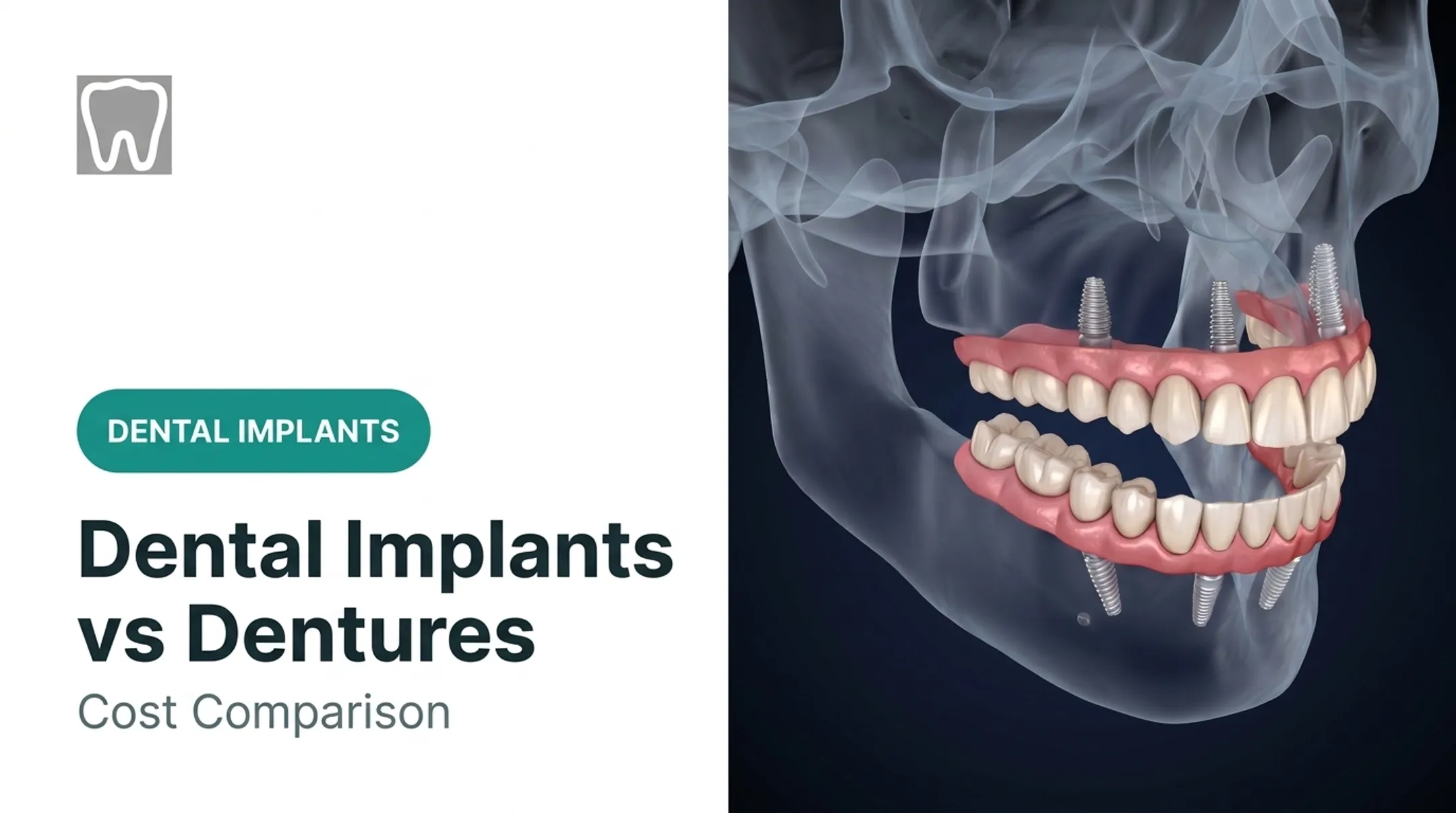

Snap-on dentures offer a middle ground between traditional plates and permanent implant bridges. They clip onto dental implants anchored in your jawbone, giving you far more stability without the full commitment of a fixed prosthesis. This article covers how they work, what they cost, how to care for them, and how they compare to fixed full-arch alternatives.
Key Takeaways
- Snap-on dentures lock onto 2–4 implants, so they don’t slip or click like adhesive dentures
- Expect $3,500–$5,500 in Mexico vs. $10,000–$14,000 in the US for comparable care
- Remove them nightly and clean daily to protect gums and implant longevity
- Want a fixed, non-removable smile? Ask about All-on-4, All-on-6, or 3-ON-8™
What Are Snap-On Dentures and How Do They Work?
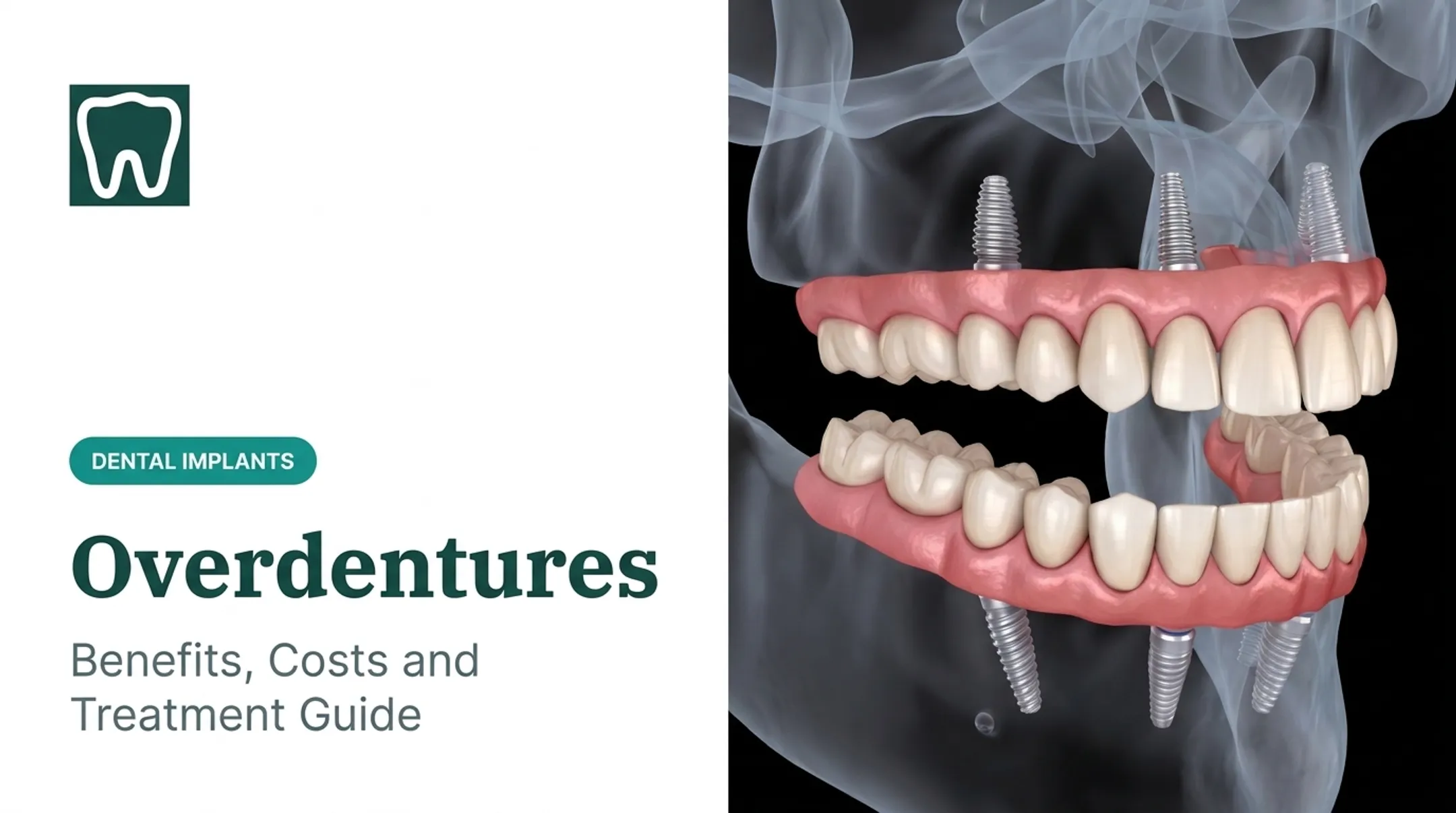
Snap-on dentures, also called implant-retained overdentures, use locator attachments that clip onto 2-4 implants surgically placed in your jawbone. Unlike traditional dentures, which rely on suction and adhesive to stay put, these prosthetics snap securely into place and only come out when you remove them.
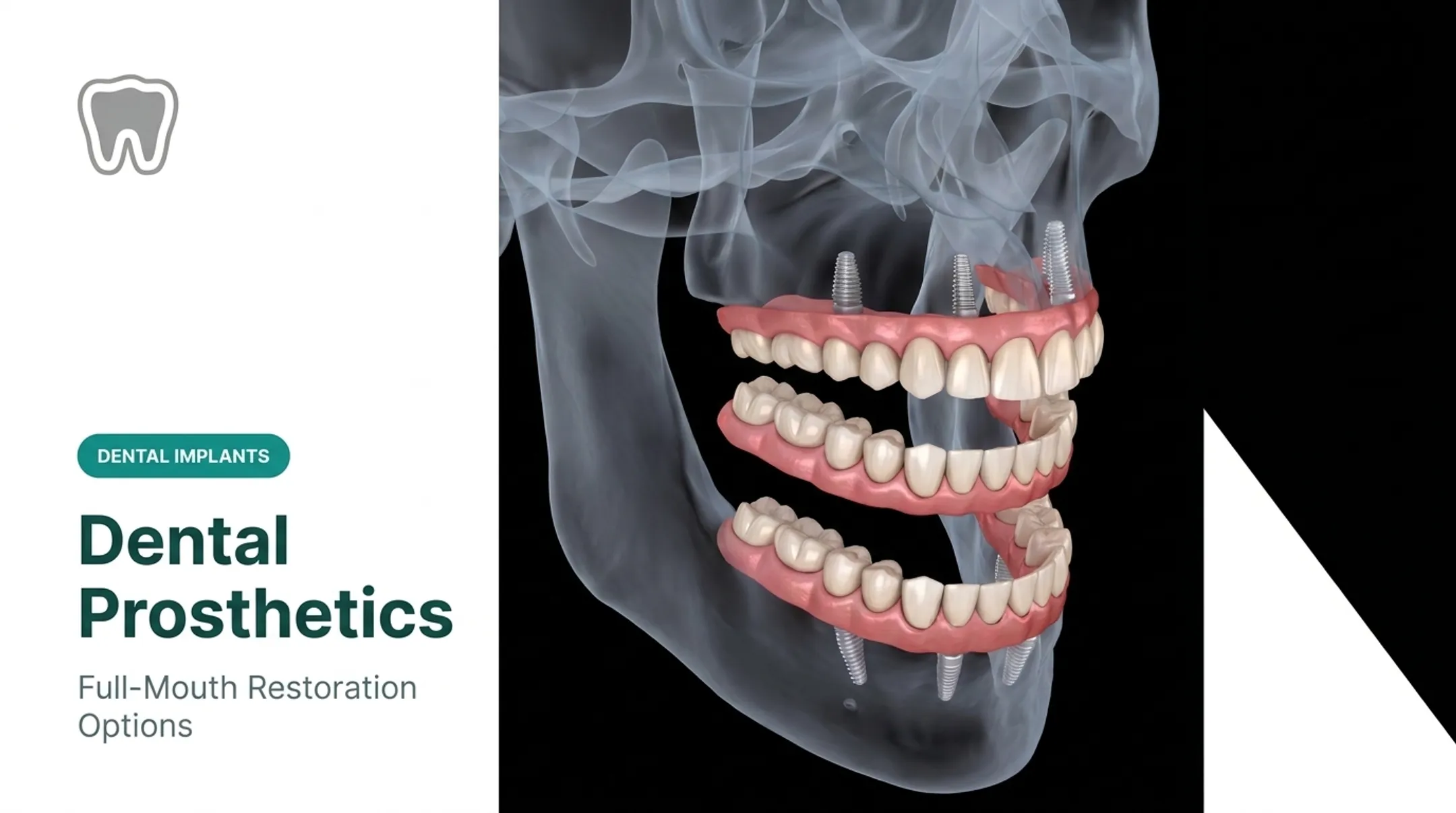
This differs from fixed hybrid options like All-on-4, which screw permanently into the implants and are only removable by a dentist. Snap-on dentures are made for you to remove every night for cleaning.
Snap-On vs. Traditional Dentures
A 2017 clinical trial found that patients wearing implant-supported mandibular overdentures needed only 40 chewing strokes to break food down to the same particle size that took 69 strokes with conventional dentures (Sharma et al., 2017).
That is a clear gain in chewing efficiency. Our patients often report chewing capacity improvements of up to 300% compared with traditional plates.
Beyond function, implants stimulate the jawbone every time you chew, which traditional dentures simply can't do since they rest on the gums.
The Treatment Timeline
Treatment typically follows five phases:
- 3D CT imaging to locate strong, healthy bone before surgery
- Implant placement, typically 2-4 titanium implants per arch
- Healing period of 3-4 months while implants osseointegrate with the jawbone
- Locator attachment placement once healing is confirmed
- Final fitting of the custom overdenture, adjusted for bite and comfort

Some clinics offer earlier loading protocols in select cases, but conventional healing of several months remains the more predictable path for most patients.
Key Benefits of Snap-On Dentures
Compared with adhesive-dependent dentures, snap-on options fix the problems patients hit most often:
- Implants hold the denture in place, cutting down on slipping while eating or speaking
- Chewing forces through the implants may help slow jawbone loss over time, though results vary by patient
- Patients regain foods that were once off-limits, including apples, nuts, and steak
- A secure fit removes the fear of a denture shifting mid-conversation
- Dentures snap out for thorough cleaning, with no adhesive residue to scrub away
Those day-to-day gains show up quickly in real cases. One patient, Sandra, had struggled for years with slipping plastic dentures and painful gum sores from adhesive buildup. After four titanium implants were placed, her new snap-on denture eliminated both problems.

How Much Do Snap-On Dentures Cost?
Pricing depends on several variables:
- Number of implants: 2 versus 4 changes both surgical time and cost
- Implant brand and material: premium options like Nobel Biocare or Straumann cost more than generic alternatives
- Imaging and diagnostics: 3D CT scans add to the total
- Bone grafting: required when the jawbone needs reinforcement before implants can be placed
- Clinic location: often the biggest swing factor
Typical ranges look like this:
| Component | United States | Mexico |
|---|---|---|
| Implant-supported dentures (per arch) | $10,000–$14,000 | $3,500–$5,500 |
| Bone grafting (if needed) | $2,000–$3,500 | $500–$800 |
In Mexico, comparable treatment (implants, locator attachments, and the final denture) often costs up to 65% less than US pricing.

Insurance note: Coverage varies widely. Some plans cover part of the denture but exclude implant surgery, or vice versa. Ask your provider for a breakdown before you commit, and request documentation you can submit for reimbursement.
Caring for and Maintaining Your Snap-On Dentures
Daily maintenance keeps both the denture and the implants healthy:
- Remove and rinse the denture after meals when possible
- Brush daily with a soft-bristle brush and nonabrasive cleanser; avoid whitening toothpaste, which can scratch the acrylic
- Clean the locator attachments on the implants themselves, not just the denture
- Remove nightly so gum tissue can rest and the denture doesn't warp from prolonged wear
Removing your denture before bed isn't optional — it prevents nighttime grinding from stressing the implants and gives your gums a break from constant pressure. Locator inserts wear down with use and cleaning-solution exposure. A 2023 laboratory study found some cleansers caused significant retention loss after months of simulated use (Al-Rumaih et al., 2023). Replacement timing depends on individual wear, not a fixed schedule. Your dentist will check retention at regular visits. With good hygiene, the implants themselves have a clinical success rate above 98% and are built to last a lifetime.
Snap-On Dentures vs. Fixed Full-Mouth Implants
If you want a prosthetic you never take out, fixed options are worth considering. Here's how they stack up:
| Factor | Snap-On Overdenture | Fixed (All-on-4 / 3-ON-8™) |
|---|---|---|
| Removability | Patient-removable daily | Fixed; only a dentist removes it |
| Palate coverage | Upper dentures often include a palate plate | Typically no palate coverage |
| Comfort | Very stable, but not permanent | Feels closer to natural teeth |
| Cleaning | Easy: remove and brush | Requires cleaning around a fixed bridge |
| Cost | Lower entry point | Higher investment, longer-term solution |

The 3-ON-8™ protocol, developed by Dr. José Moguel, uses eight implants per arch across three independent bridges rather than one rigid piece. That design lets the jawbone flex naturally during chewing. Patients weighing a permanent option can have candidacy assessed with him based on bone density and lifestyle needs.
Frequently Asked Questions
How much do snap-on dentures cost?
Pricing typically ranges from $3,500-$5,500 in Mexico versus $10,000-$14,000 in the US. The main cost drivers are implant count, materials, and whether bone grafting is needed.
How long do snap-on dentures last?
The implants themselves can last decades with proper care. The denture and locator attachments generally need replacement or adjustment every 5-10 years due to normal wear.
Do snap-on dentures stay in all the time?
No. Unlike fixed implants, snap-on dentures should be removed nightly for gum rest and daily for cleaning. They're designed to come out.
Are snap-on dentures worth it?
For most patients with slipping traditional dentures, the added stability and bone-preservation benefits outweigh the higher cost and nightly maintenance.
Are snap-on dentures painful?
Mild discomfort is common during healing after implant placement, but most patients feel comfortable once the site heals and the denture is fitted.
Do snap-on dentures cover the roof of your mouth?
Upper snap-on dentures typically include a palate-covering plate for added stability, unlike fixed full-arch alternatives, which usually leave the palate open.