
For many US and Canadian patients, the confusion gets compounded by sticker shock. A single implant in the US now runs $3,100 to $5,800, according to the American Academy of Implant Dentistry's 2024 pricing data. Full-mouth cases can climb into six figures. That gap is exactly why thousands of patients now look toward accredited clinics in Los Algodones, Mexico, just across the border from Yuma, Arizona.
This guide breaks down what cosmetic dental implant surgery actually involves, walks through the procedure and recovery, compares real costs, and covers what to look for in a qualified provider.
Key Takeaways
- Implants restore smile appearance and jawbone health as one integrated treatment.
- Mexico-based clinics can save 60-70% versus US treatment without switching implant brands or standards.
- Candidacy hinges on bone density and gum health, not age.
- Prioritize board certification and a documented implant track record over price alone.
What Is Cosmetic Dental Implant Surgery?
Here's the source of most of the confusion: an implant isn't purely cosmetic dentistry the way veneers or whitening are. Veneers and whitening only change what's visible on the surface of an existing tooth. An implant replaces a missing tooth entirely, root and all.
According to the Mayo Clinic, the procedure replaces tooth roots with metal, screw-like posts, then replaces the missing tooth with an artificial one that functions like the real thing. That artificial tooth is where the "cosmetic" part comes in.
Three Components, One Result
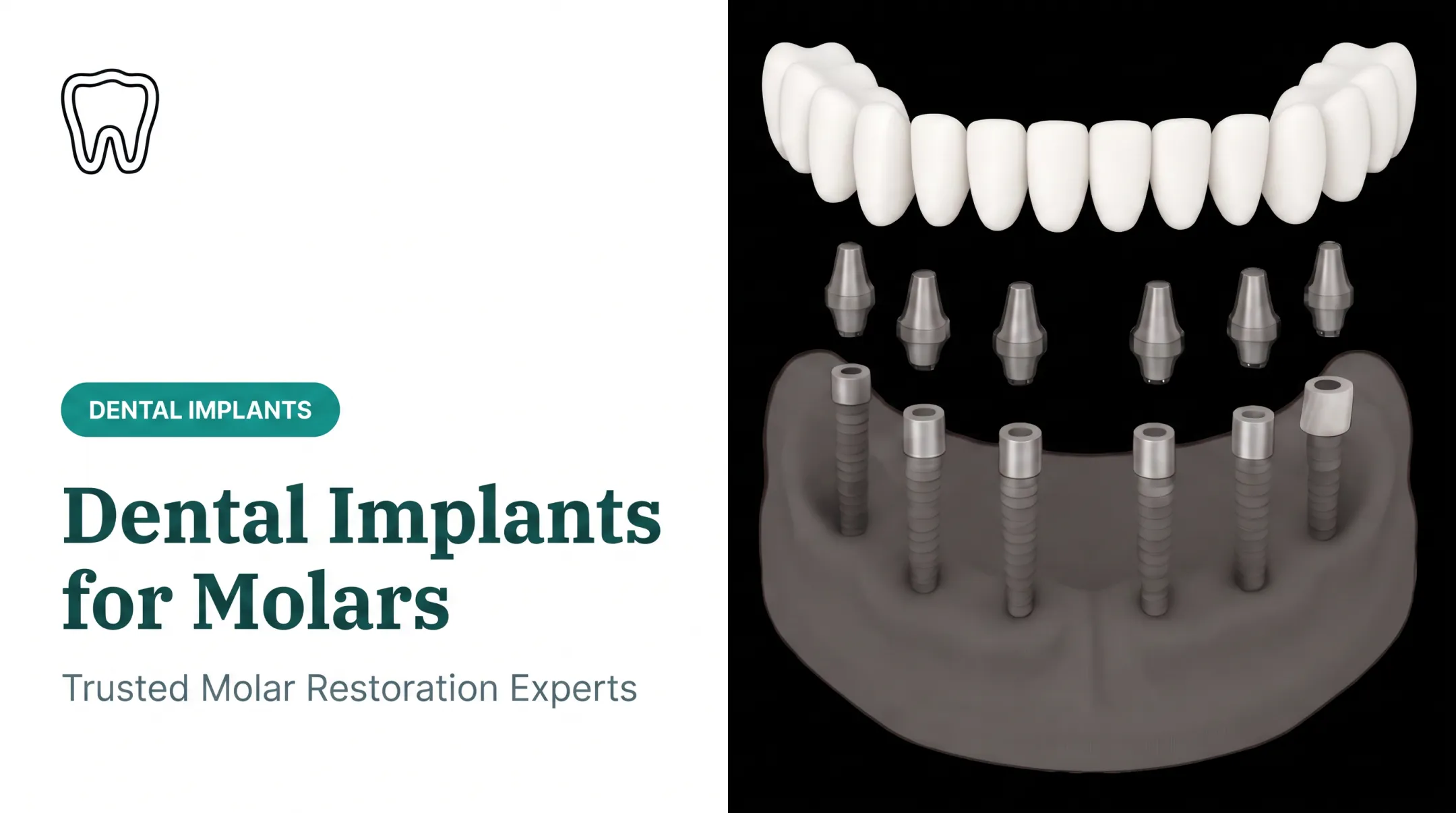
Every implant has three parts, each with a job:
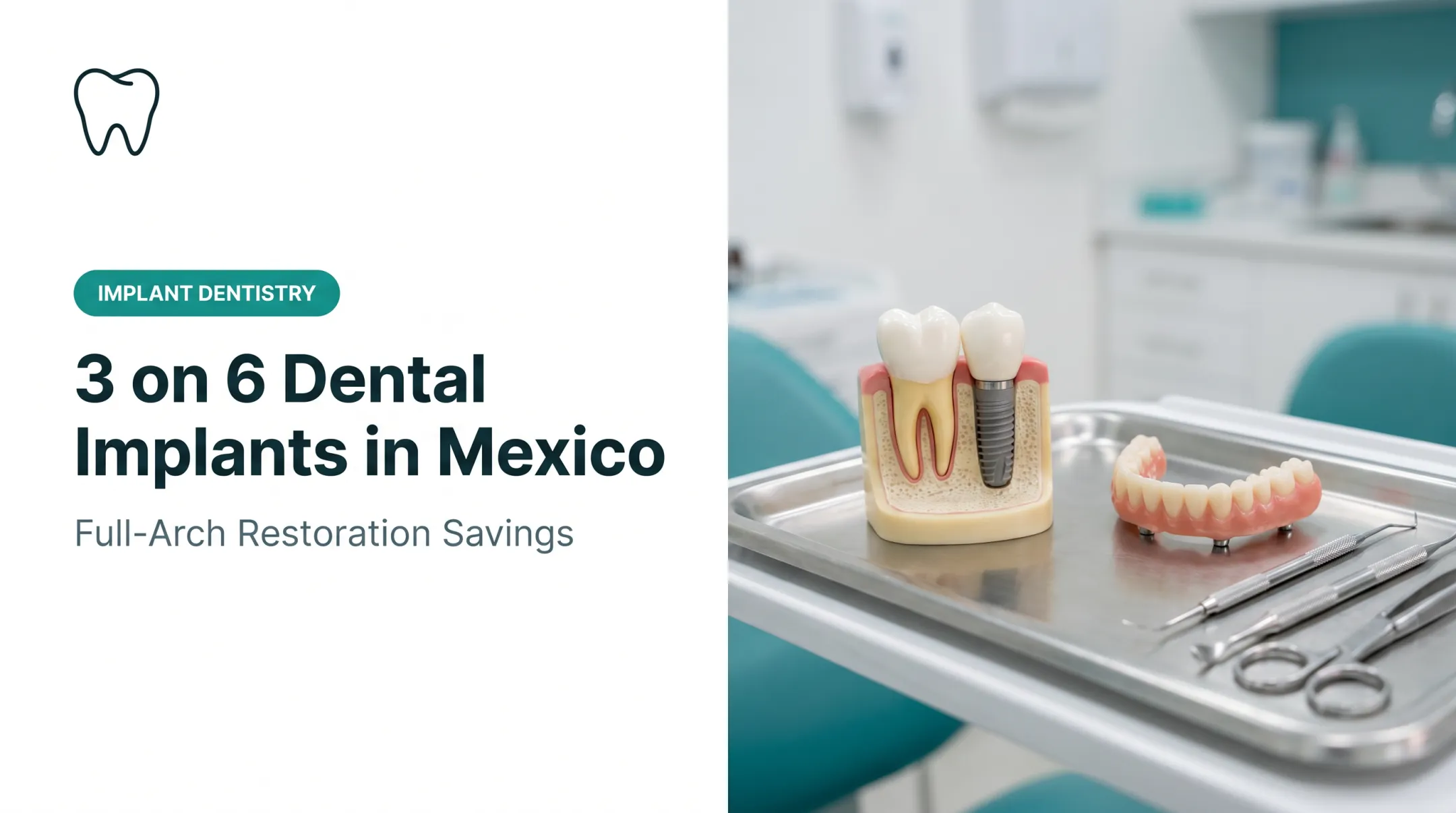
- Implant fixture — a titanium post placed in the jawbone, functioning as the new root
- Abutment — the connector piece linking the fixture to the visible tooth
- Crown — the custom-shaded, contoured piece that mimics natural tooth shape and color
So is an implant "cosmetic dentistry"? It's both. The fixture handles the medical/structural job. The crown handles the aesthetic one. Neither works well without the other.
Types of Implant Procedures for Different Needs
Not every patient needs the same solution:
- Single-tooth implants — replace one missing tooth without touching neighboring teeth
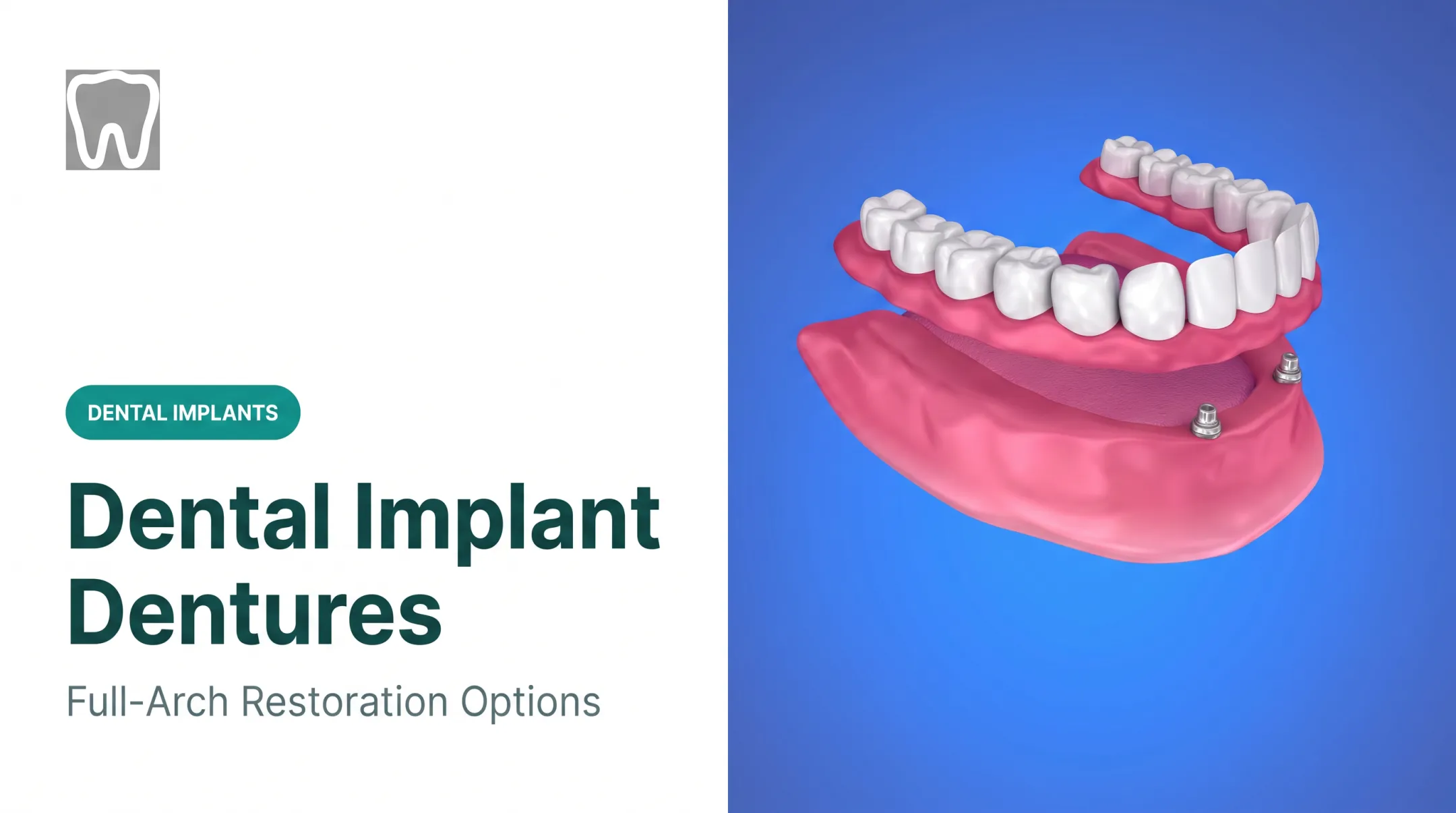
- All-on-4 — four implants (two straight, two angled) supporting a full fixed arch
- All-on-6 — six implants for added stability, particularly in cases with more bone loss
- 3-ON-8™ protocol — Dr. José Moguel's patented method: eight implants per arch supporting three zirconia bridges for more even bite-force distribution
More implants isn't automatically better. A 2016 randomized trial comparing four versus six implants found no statistically significant difference in five-year failure rates or bone loss between the two protocols. The right choice depends on your anatomy, not a blanket rule.

The Cosmetic Dental Implant Procedure: Step-by-Step
The process typically unfolds over several months, though you may leave with temporary teeth much sooner than full healing takes.
- Consultation and imaging — A 3D Cone Beam CT scan maps bone density and plans implant position in three dimensions. This step determines nearly everything that follows.
- Preparatory work (if needed) — Some patients need bone grafting or a sinus lift before implants can be placed. Grafts typically take 3-4 months to integrate; sinus lifts can take 6-9 months.
- Surgical placement — The titanium fixture goes into the jawbone under local anesthesia, often in under an hour. IV sedation is available for anxious patients.
- Osseointegration — The implant fuses with bone over 3-4 months in the lower jaw or 6-8 months in the upper jaw, per clinical literature on immediate-loading protocols. A temporary crown or healing cap protects gum shape during this window.
- Final crown placement — Once integration is confirmed, a custom porcelain or zirconia crown is matched to surrounding teeth in shade, contour, and bite alignment.

Same-day fixed provisional teeth are possible for qualifying patients with adequate bone stability, per Nobel Biocare's treatment guidelines. That is not finished osseointegration—it is a temporary bridge so you leave with teeth while healing continues underneath.
Cosmetic vs. Functional Benefits of Dental Implants
Losing a tooth doesn't just leave a gap. It starts a chain reaction.
Without a tooth root stimulating the jawbone, that bone begins resorbing. A 2012 systematic review found 29-63% horizontal bone loss within six months of extraction. Left unaddressed, this contributes to the sunken, aged facial appearance often associated with missing teeth or long-term denture wear.
Implants interrupt that process by giving the jawbone something to hold onto again.
What Patients Actually Gain
- Functional: restored chewing efficiency, clearer speech, stable bite alignment
- Cosmetic: crowns blended in shade and contour so they're difficult to distinguish from natural teeth
- Structural: ongoing jawbone stimulation that helps preserve facial contours long-term
Patient-reported outcomes back this up. A 2011 study of 49 implant patients found 82.8% were completely satisfied with esthetics and 94.2% with function — and 94.2% said they'd recommend the treatment to others.

Is Cosmetic Dental Implant Surgery Painful, and Who Is a Good Candidate?
Short answer: the surgery itself shouldn't hurt. Recovery involves manageable discomfort, not agony.
Local anesthesia numbs the surgical site completely during placement. Patients with dental anxiety can opt for IV conscious sedation. Afterward, mild swelling, oozing, or a dull ache in the first day or two is common as anesthesia wears off. Over-the-counter pain relief usually handles it.
What Makes Someone a Good Candidate?
Candidacy comes down to three factors:
- Bone density: sufficient jawbone volume to anchor the implant securely
- Gum health: active gum disease usually needs treatment first
- Overall health: conditions affecting healing (uncontrolled diabetes, certain medications) need evaluation
Patients who don't initially qualify due to bone loss aren't out of options. Bone grafting can rebuild the foundation needed for a successful implant.
What about age? The International Team for Implantology's consensus statement is clear: advanced age alone, even 75 and older, is not a disqualifying factor. What matters is overall health, bone quality, and ability to maintain oral hygiene during healing, not the number on a birth certificate.
Cost of Cosmetic Dental Implants: US vs. Mexico
This is usually the deciding factor. Here's how the numbers actually compare:
| Treatment | Typical US Cost | Typical Mexico Cost | Approx. Savings |
|---|---|---|---|
| Single-tooth implant | $4,000–$6,000 | $1,500–$2,500 | ~60% |
| All-on-4 (per arch) | $24,000–$30,000 | $8,000–$12,000 | Up to 65% |
| All-on-6 (per arch) | $28,000–$36,000 | $8,000–$12,000+ | 60–70% |
| Full-mouth reconstruction | $45,000–$65,000 | $13,500–$26,000 | 60–70% |
The American Academy of Implant Dentistry (AAID) notes there's no single standard implant price in the US, since cases vary by grafting needs, sedation, and specialist involvement. That's exactly why an itemized, all-in quote matters more than a single advertised number.
What justifies the Mexico option beyond price?
- Board-certified periodontist care with ADA and ADM credentials
- The same FDA-approved implant brands used in the US, including Nobel Biocare, Straumann, and MegaGen
- Free, no-obligation consultations with a customized cost quote
- Transparent pricing without hidden add-ons
Dr. José Moguel's Los Algodones clinic, for example, has placed more than 17,000 implants over 38 years, using the same imaging technology and implant brands found in comparable US practices. That track record matters just as much as the price difference.

Choosing the Right Provider for Cosmetic Dental Implant Surgery
Not every implant clinic is worth the trip. Here's what separates a serious provider from a risky one.
Credentials to Verify
- Board certification in periodontics — confirms specialized surgical training beyond general dentistry
- ADA/ADM affiliation — cross-border credential recognition
- Documented case volume — a clinician who's placed thousands of implants has seen the edge cases
Practical Considerations for Cross-Border Patients
- Border proximity — some Los Algodones clinics sit just a few minutes' walk from Andrade, CA
- Bilingual staff — walk you through treatment plans without a language barrier
- Travel coordination — hotel recommendations in nearby Yuma, Arizona, plus local logistics support
Quality Signals Worth Asking About
- Lifetime warranty on implants — a clinic confident in its work will stand behind it
- In-house CAD/CAM lab — allows same-visit crown customization rather than outsourcing
- 3D CBCT imaging — the diagnostic standard for precise implant planning

A free consultation that includes a full treatment plan and cost quote, not just a sales pitch, is a good sign you're dealing with a transparent provider.
Frequently Asked Questions
What is the average cost of implants for teeth?
Single-tooth implants run $3,100–$5,800 in the US, per 2024 AAID data. Accredited Mexico clinics offer comparable treatment for roughly 60–70% less, often $1,500–$2,500 per implant.
How painful is it to get tooth implants?
Local anesthesia or sedation keeps the surgery itself pain-free. Mild swelling or soreness for a day or two afterward is normal and manageable with standard pain relief.
Should a 70-year-old get dental implants?
Age alone isn't a barrier. What matters is bone density, gum health, and overall ability to heal, which your dentist evaluates regardless of age.
Is an implant considered cosmetic dentistry?
Implants are dual-purpose. The titanium fixture restores structural function, while the custom crown restores natural appearance, making them both medical and cosmetic.
How long does an implant last for teeth?
Studies show 10-year implant survival rates above 96%, and many implants last decades or a lifetime with proper care. The crown on top may need eventual replacement, but the implant itself is built to last.