
The material you choose affects your budget, how long your new smile lasts, and how natural it looks under everyday light. This guide compares both side-by-side, including how cross-border options like Mexico can make premium porcelain veneers surprisingly affordable.
TL;DR
- Porcelain veneers: lab-made ceramic shells, last 10-15+ years, closely mimic natural enamel, higher cost
- Composite veneers: resin applied on teeth in one visit, lower cost, reversible, last 5-8 years
- Best fit: choose porcelain for longevity and enamel-like looks; composite if you need speed, lower cost, or a reversible option
- Mexico pricing: porcelain at $450 per tooth vs. a typical $1,500 per tooth in the US—about 70% savings
Porcelain vs Composite Veneers: Quick Comparison
Porcelain and composite veneers diverge most on price, how long they last, and how much enamel is removed. Use the grid below for a fast side-by-side read before you weigh aesthetics, timeline, and budget—including typical Mexico pricing versus US fees.
| Factor | Porcelain | Composite |
|---|---|---|
| Cost | $900-$2,500 per tooth (US); about $450 per tooth in Mexico | $500-$2,300 per tooth (US) |
| Composition | Custom ceramic shell, made in a lab | Tooth-colored resin, sculpted chairside |
| Lifespan | 10-15+ years with proper care | 5-8 years; stains more easily |
| Appointments | Usually 2 visits (prep, then bonding) | Typically 1 visit |
| Reversibility | Permanent (enamel removal can't be undone) | Largely reversible |

What Are Porcelain Veneers?
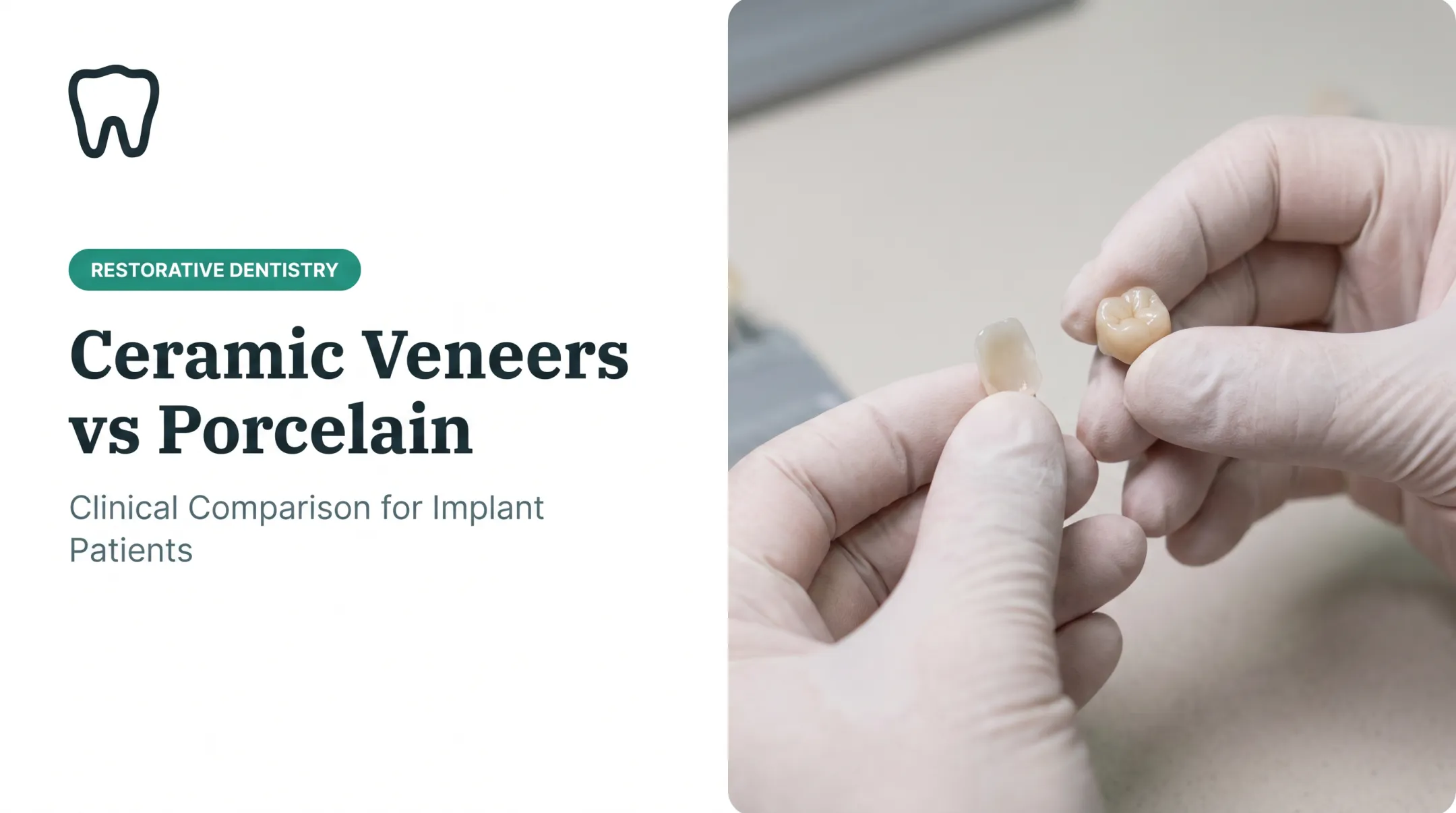
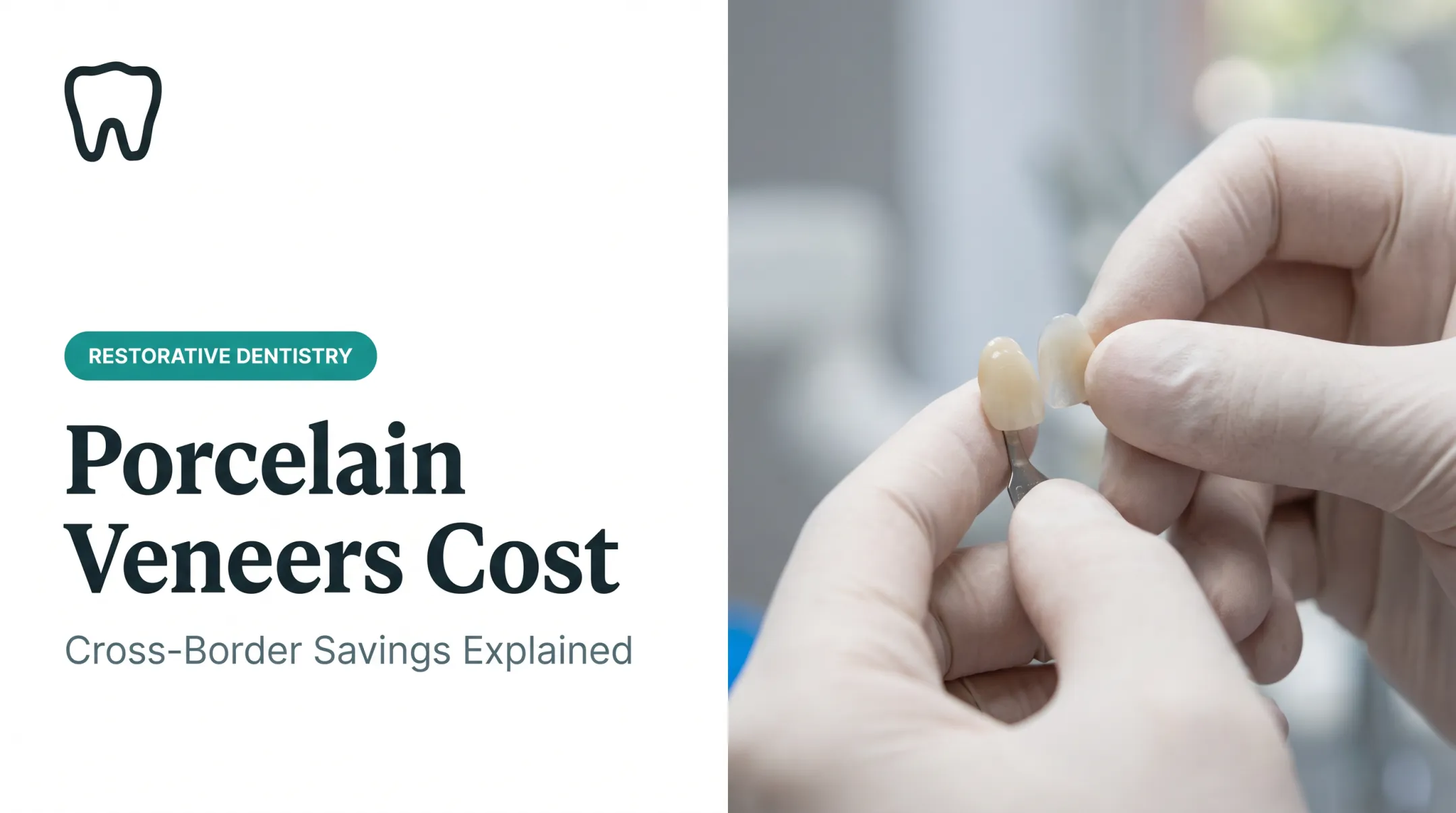
Porcelain veneers are thin, custom-fabricated ceramic shells bonded to the front surface of your teeth. Dentists favor them because ceramic mimics the translucency of natural enamel in a way few materials can match.
Core benefits:
- Stain resistance that holds up against coffee, wine, and tobacco
- High strength for biting and chewing
- A lifelike appearance under different lighting conditions
The process starts with removing a thin layer of enamel, then taking impressions that get sent to a dental lab for fabrication. Once the veneer returns, your dentist bonds it permanently in place. This typically takes 2-3 visits since the lab work happens off-site.
The trade-off: enamel removal is permanent. Once it's gone, you'll need some form of veneer or crown on that tooth going forward.

Use Cases of Porcelain Veneers
Porcelain suits patients with significant discoloration, chips, or spacing issues who want a long-term, high-end result. Cleveland Clinic reports that dental veneers last an average of 10-15 years with proper care, and some clinical studies have documented porcelain veneers surviving 20 years or more.
Because of that durability and natural light reflection, porcelain is the go-to choice for full smile makeovers involving multiple teeth.
What Are Composite Veneers?
Composite veneers use tooth-colored resin, the same material used in dental bonding, sculpted directly onto your teeth chairside. There's no lab, no waiting, no temporary veneers in between.
Core benefits:
- Lower upfront cost than porcelain
- Same-day results
- Minimal to no enamel removal
- Easy to repair if chipped
Your dentist selects a shade, sculpts the resin layer by layer, cures it with a curing light, then polishes it to a natural sheen. The entire process usually wraps up in one appointment.
The downside: composite doesn't hold up as long, and it stains more easily than porcelain over time.
Use Cases of Composite Veneers
Composite works well for minor imperfections, tighter budgets, or patients who want to "test drive" a new smile before committing to something permanent.
Per GoodRx's pricing research, chairside composite runs around $800 per tooth, while lab-made composite averages closer to $1,100 — both notably below typical porcelain pricing.
Porcelain vs Composite: Which Is Better?
There's no universal winner here. Weigh these factors instead:
- Budget — how much can you spend upfront?
- Longevity — do you want a decade-plus solution, or something you can change later?
- Number of teeth — a single tooth vs. a full arch changes the math significantly
- Invasiveness — are you comfortable with permanent enamel removal?
Quick rule of thumb: choose composite for a fast, affordable, reversible fix. Choose porcelain for durability and the most natural aesthetic.
The Long-Term Cost Math
Using GoodRx's benchmark pricing, composite at roughly $800 per tooth over a 5-8 year lifespan works out to about $100-$160 per tooth-year. Porcelain at $1,500 over 10-15 years lands around $100-$150 per tooth-year.
Those annualized costs are nearly identical, so porcelain's higher upfront cost often evens out over time.

Many patients also combine veneers with whitening, crowns, or implants for a complete smile makeover rather than treating veneers as a standalone fix.
Making Porcelain More Accessible
This is where geography changes the equation. Top-tier clinics in Los Algodones and other parts of Mexico offer board-certified specialists and clinical quality that rivals US and Canadian practices, at a fraction of the price.
Porcelain veneers, for example, are priced at $450 per tooth in Mexico, compared with a typical $1,500 per tooth in the United States—about 70% savings.

That price gap can make the "better" material (porcelain) financially realistic instead of aspirational.
If your smile needs go beyond veneers—missing teeth plus cosmetic concerns, for example—consult a specialist who handles both.
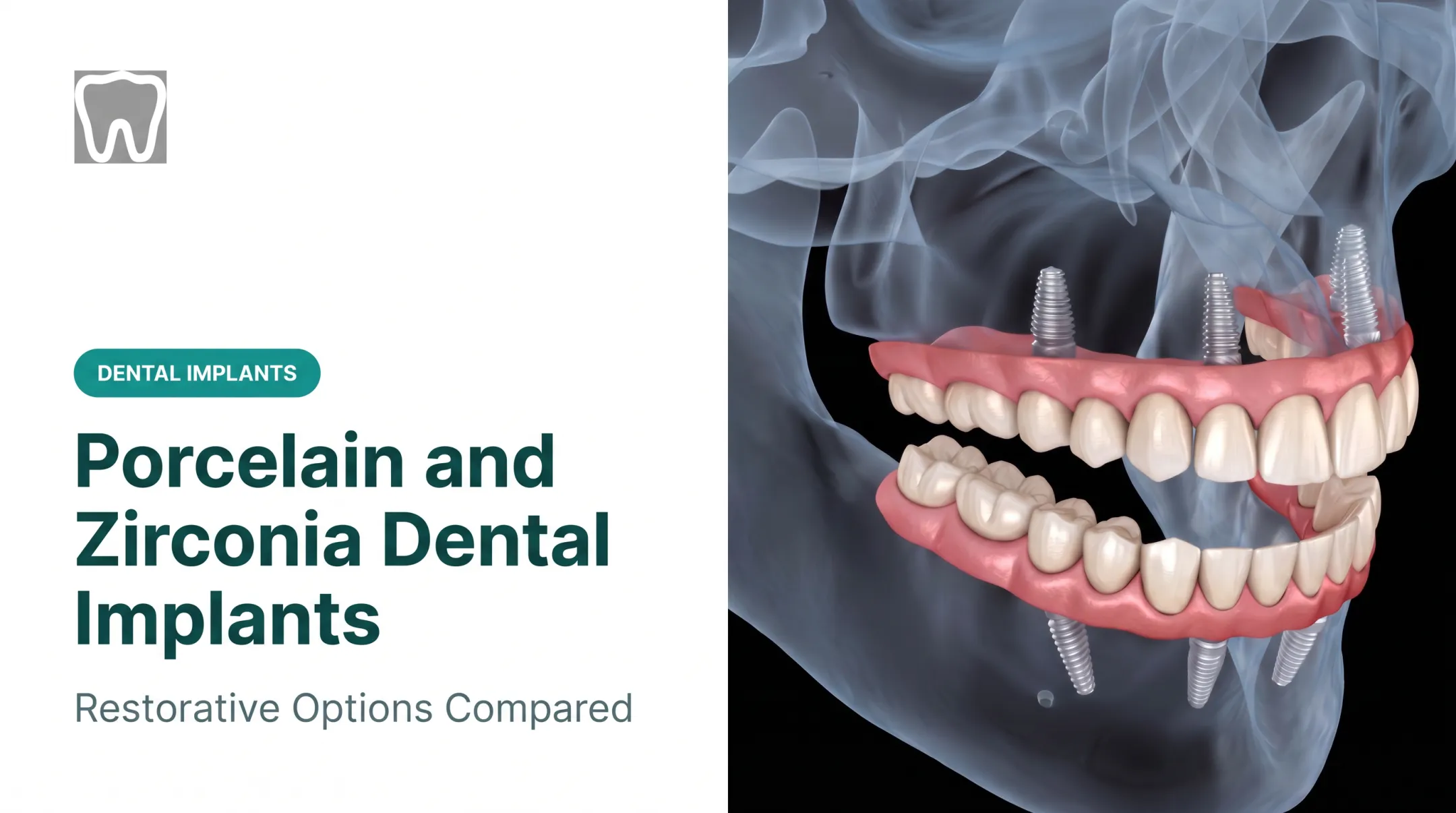
Dental Implants in Mexico, led by board-certified periodontist Dr. José Moguel, offers single-tooth implants, All-on-4, All-on-6, and full-mouth reconstruction alongside cosmetic treatment planning. Patients can complete a full smile rehabilitation in one coordinated plan instead of piecing it together across providers.
Conclusion
Neither porcelain nor composite is universally "better." The right call depends on your budget, your timeline, and how long-term of a solution you want.
- Composite: Faster and lower cost for minor fixes
- Porcelain: More durable and natural-looking for larger smile changes
Getting treatment in Los Algodones can bring either option within reach at a lower price than typical U.S. quotes. A free consultation is the clearest next step to match the material to your budget, timeline, and how long you want the result to last.
Frequently Asked Questions
Do celebrities get porcelain or composite veneers?
Most cosmetic dentists working with on-camera clients favor porcelain. It holds color, resists staining, and controls shape and light reflection more precisely under studio lighting. Composite is less common for high-visibility, long-term cases.
How much do composite veneers cost?
Composite veneers typically range from $500-$2,300 per tooth, with chairside composite averaging around $800. That's lower than porcelain, which averages about $1,500 per tooth in the US.
Which veneers look most natural: porcelain or composite?
Porcelain's ceramic structure gives labs more control over translucency and light reflection, closely mimicking natural enamel. Composite can look great initially but may appear flatter and more prone to staining as it ages.
How long do porcelain veneers last compared to composite?
Porcelain veneers typically last 10-15+ years with proper care, while composite veneers average 5-8 years. Actual lifespan depends on bite force, habits, and maintenance for both materials.
Can veneers be reversed once placed?
Composite veneers are largely reversible since they require minimal enamel removal. Porcelain veneers involve permanent enamel reduction, so once placed, you'll need some form of veneer or crown on that tooth indefinitely.
Is it cheaper to get veneers in Mexico?
Yes. Cosmetic and restorative dental work in Mexico often costs 60-70% less than typical US prices. Many clinics use board-certified specialists and US-standard equipment and materials.