
Material choice affects durability, appearance, and cost. A crown on a molar has different demands than one on a front tooth, and picking the wrong material can mean premature wear, chipping, or a mismatched smile. This article breaks down the main crown types, what they're made of, their benefits, and how to choose the right one for your situation.
TL;DR
- Dental crowns cap damaged teeth to restore strength, shape, and appearance
- Main types: porcelain/ceramic, zirconia, metal, and porcelain-fused-to-metal (PFM)
- The right material depends on tooth location, bite force, budget, and aesthetic goals
- Patients traveling to Mexico can access premium crown materials at roughly 60–70% lower cost than comparable US treatment
What Is a Dental Crown?
A dental crown is a custom-fitted cap placed over a tooth to protect and restore it. The American Dental Association lists common reasons a crown is needed:
- Large filling with too little remaining tooth structure
- Weak tooth at risk of breaking
- Already fractured tooth
- Discolored or badly shaped tooth Crowns also finish implant restorations, sitting atop the implant post to function and look like a natural tooth.
Root-canal-treated teeth often need a crown too. The American Association of Endodontists notes that a 1.5-2mm ferrule (remaining natural tooth structure) significantly boosts fracture resistance after root canal therapy. A crown isn't just a cosmetic finishing touch — it's frequently the difference between saving a tooth and losing it.
Why Crown Material Matters
Material affects four things: strength, appearance, longevity, and biocompatibility. The ADA classifies crown materials into metal alloys, ceramics, resin composites, and metal-ceramic hybrids. Ceramics offer excellent aesthetics and chemical inertness, but they can be more brittle than metal.
Choosing incorrectly has real consequences:
- A ceramic crown on a heavy-grinding molar may chip prematurely
- A metal crown on a visible front tooth creates an obvious cosmetic mismatch
- The wrong material can accelerate wear on opposing teeth
At Dental Implants in Mexico, board-certified periodontist Dr. José Moguel brings over 38 years of clinical experience to each case. He evaluates 3D CT imaging, bone density, bite patterns, and aesthetic goals before recommending a restoration.
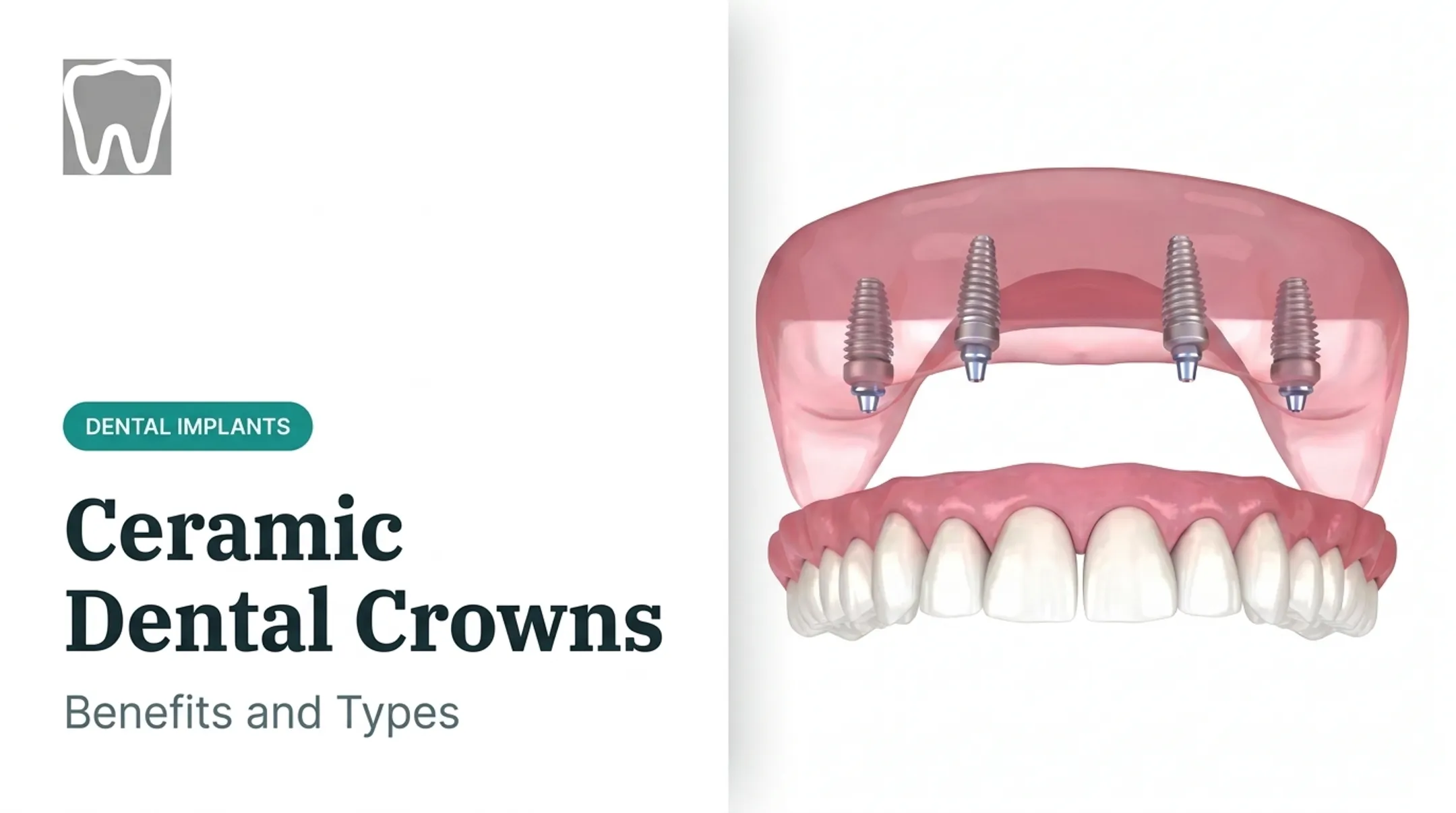
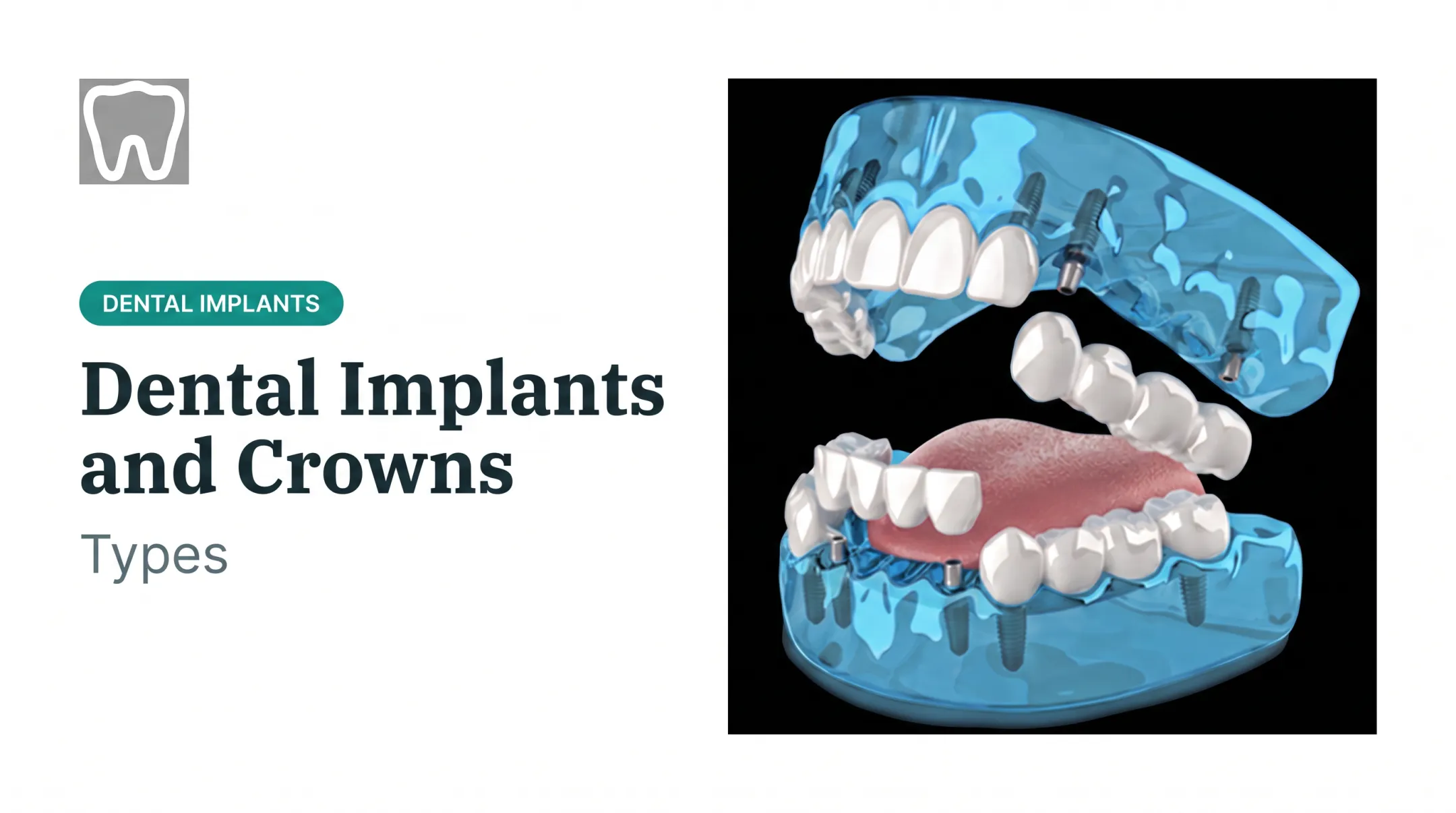
Crowns are usually placed as part of single-tooth implant or full-arch treatment, with porcelain or zirconia chosen to match the case.

Types of Dental Crowns
Crowns aren't one-size-fits-all. The right material depends on where the tooth sits in your mouth, how much bite force it absorbs, and how much you prioritize a natural look.
Porcelain/Ceramic Crowns
Full ceramic crowns are made without any metal, giving them a natural translucency that mimics real enamel. They're layered or digitally milled and bonded directly to the prepared tooth.
Best for: Front teeth, patients with metal allergies, anyone prioritizing a seamless cosmetic match.
Strengths:
- Natural color match, biocompatible, and stain-resistant
- ADA-cited data: lithium-disilicate ceramic at 97.4% five-year survival
Limitations: More prone to chipping under heavy bite force than zirconia. Not ideal for molars in patients who grind their teeth.
Zirconia Crowns
Zirconia is a high-strength ceramic milled digitally for a precise fit, available in monolithic (solid) or layered forms.
Best for: Molars, patients with bruxism (teeth grinding), anyone needing durability without a metal look.
Strengths:
- Fracture resistance approaching metal-level strength
- Biocompatible and versatile enough for front or back teeth
- 96.8% five-year survival in a review of 8,000+ crowns — on par with metal-ceramic
Limitations: Slightly less translucent than pure porcelain and requires precise digital fabrication to fit well.
Metal Crowns (Gold and Base Metal Alloys)
Cast from gold, palladium, or chromium alloys, metal crowns require minimal tooth reduction and offer the longest track record of any crown material.
Best for: Molars, patients with heavy grinding habits or strong bite forces.
Strengths:
- ADA-cited average longevity of 18-20 years (some cases exceed 40)
- Resist chipping and stay gentle on opposing teeth
Limitations: Metallic appearance rules them out for visible teeth, and some patients report sensitivity to certain alloys.
Porcelain-Fused-to-Metal (PFM) Crowns
PFM crowns combine a cast metal substructure with a layer of porcelain fired over the top, balancing strength with a natural look.
Best for: Cases needing both durability and appearance, and bridges spanning multiple teeth.
Strengths:
- Versatile for front or back teeth
- ADA-cited 97% survival at 10 years
Limitations: A dark line can appear at the gumline over time, and the porcelain layer can chip and expose the metal underneath.

How to Choose the Right Type of Crown
The right crown is the one that fits your specific tooth, bite, and budget—not the most popular or most expensive option by default.
Factors worth discussing with your dentist:
- Tooth location — front teeth prioritize aesthetics; back teeth prioritize strength
- Bite force and grinding habits — heavy grinders often need zirconia or metal
- Budget — including comparing costs between the US and Mexico for equivalent materials
- Metal allergies or sensitivities — worth disclosing before treatment planning
- Long-term durability expectations — a 5-year crown versus a 20-year crown changes the math
- Standalone vs. larger treatment — implant crowns and full-mouth restorations follow different material plans
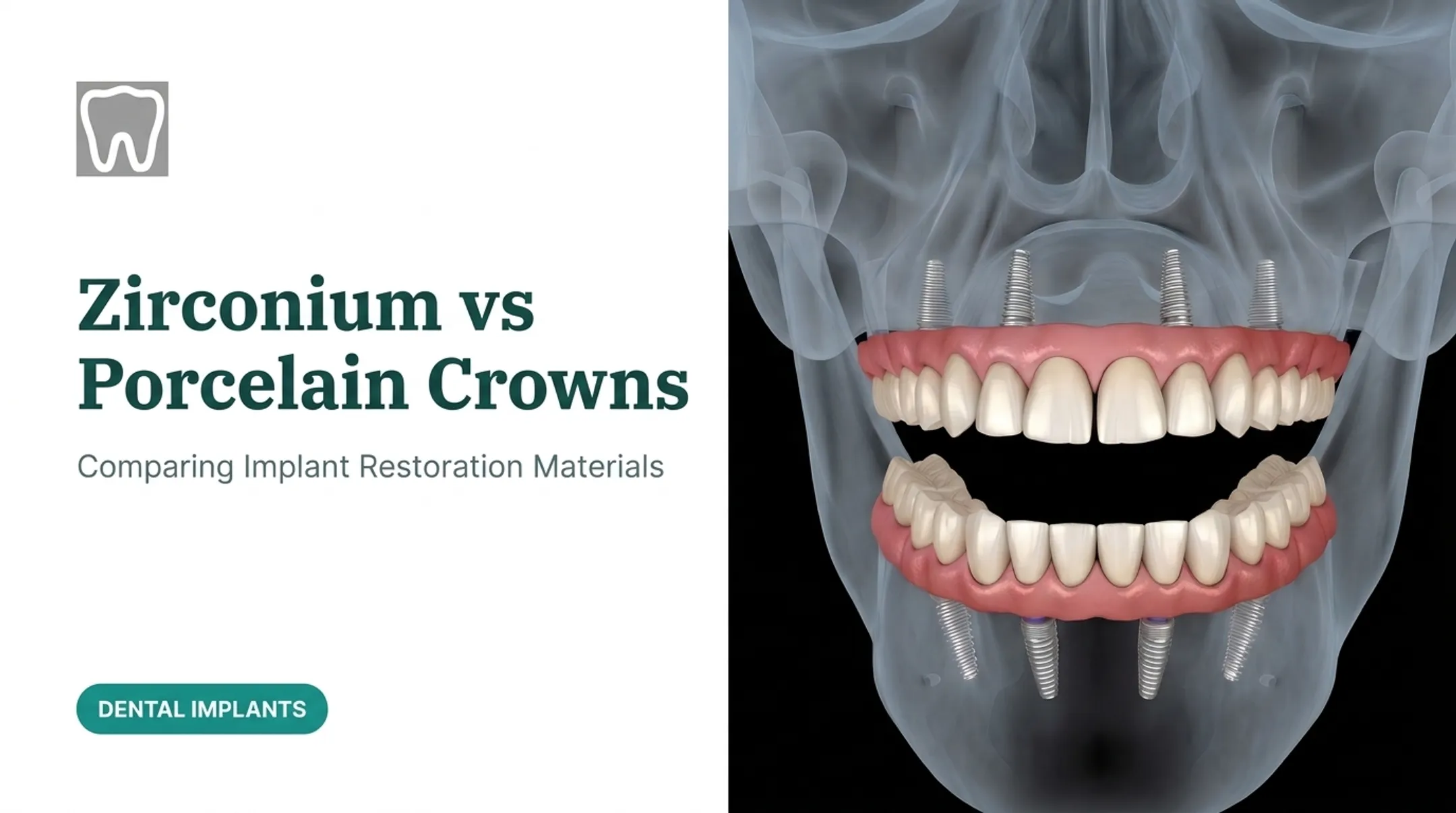
Those same factors shape timing and material once treatment starts. For single-tooth implants at Dental Implants in Mexico, a permanent porcelain or zirconia crown is typically placed about 3–6 months after surgery, once healing is complete. Full-arch cases, including the clinic's patented 3-ON-8™ protocol, use custom zirconia bridges instead of individual crowns.

What to Check Before Finalizing Your Crown
Don't default to the priciest material if a simpler option meets your clinical needs. A molar that isn't visible when you smile rarely needs premium ceramic. Still, don't ignore trade-offs like chip risk on ceramics or wear on opposing teeth from harder materials.
Before finalizing treatment, confirm:
- Dentist credentials: Board certification and quality material sourcing. Dr. Moguel is ADA and ADM board-certified in periodontics and oral implantology and uses FDA-approved systems including Nobel Biocare, Straumann, and MegaGen.
- Warranty coverage: Crowns at Dental Implants in Mexico include a five-year prosthetic warranty with ongoing professional cleanings, separate from the lifetime implant hardware warranty.
- Follow-up logistics: If traveling for treatment, ask how many visits you need and how later adjustments are handled.
- Travel support: Bilingual coordinators can help arrange itineraries. Most patients fly into Yuma International Airport, about 15 minutes from the Los Algodones clinic.
Getting these details in writing before treatment prevents surprises later, especially for cross-border patients who can't easily pop back in for a quick fix.

Conclusion
Crowns restore damaged teeth, protect weak structure, and help you smile with confidence again. Porcelain, zirconia, metal, and PFM each fit different needs based on tooth location, bite strength, and how natural you want the result to look.
Knowing those trade-offs helps you choose a material that fits your goals and budget. In Los Algodones, Mexico, the same crown materials and credentialed care are available, often at a fraction of typical US prices.
Frequently Asked Questions
What is the best type of crown for your teeth?
It depends on the tooth’s location and function. Zirconia or porcelain-fused-to-metal (PFM) work well for molars under heavy bite force. Porcelain or zirconia suit front teeth where appearance matters most.
What are the three main types of dental crowns?
The three most traditional types are porcelain/ceramic, metal, and porcelain-fused-to-metal. Zirconia has become increasingly popular as a fourth major option due to its strength and aesthetics.
Which is better, a zirconia crown or a metal crown?
Zirconia offers a strong, tooth-colored alternative that suits most patients well. Metal remains slightly more durable for extreme bite forces, but it sacrifices a natural appearance.
What kind of crown lasts the longest?
Gold and metal alloy crowns typically last the longest, often 20+ years or more. Zirconia crowns follow closely, with similar long-term durability for most patients.
Which cap is best for front teeth?
Porcelain or zirconia crowns are preferred for front teeth. Both offer the translucency needed to blend naturally with surrounding teeth.
Which type of crown is most expensive?
Zirconia and premium ceramic crowns tend to cost more due to advanced materials and digital fabrication. Equivalent treatment in Mexico is often about 60–70% less than typical US prices.