
Here's the short version: titanium implant posts and the prosthetic bridge on top of them age very differently. The metal foundation can last a lifetime. The teeth sitting on it usually can't.
This article breaks down exactly what to expect from average lifespan, the factors that push that number up or down, when you'll likely need a new bridge, and how to protect your investment for the long haul.
Key Takeaways
- Titanium implant posts can last 20+ years or a lifetime; prosthetic bridges usually need replacement every 10–15 years
- A landmark 18-year study found 93% implant survival and 98.8% prosthetic survival in All-on-4 patients
- Oral hygiene, not smoking, and choosing an experienced periodontist most affect how long results last
- Checkups every 6 months (with professional cleanings) catch problems before they become failures
How Long Do All-on-4 Dental Implants Actually Last?
All-on-4 has two separate components with two separate lifespans, and mixing them up is where most confusion starts.
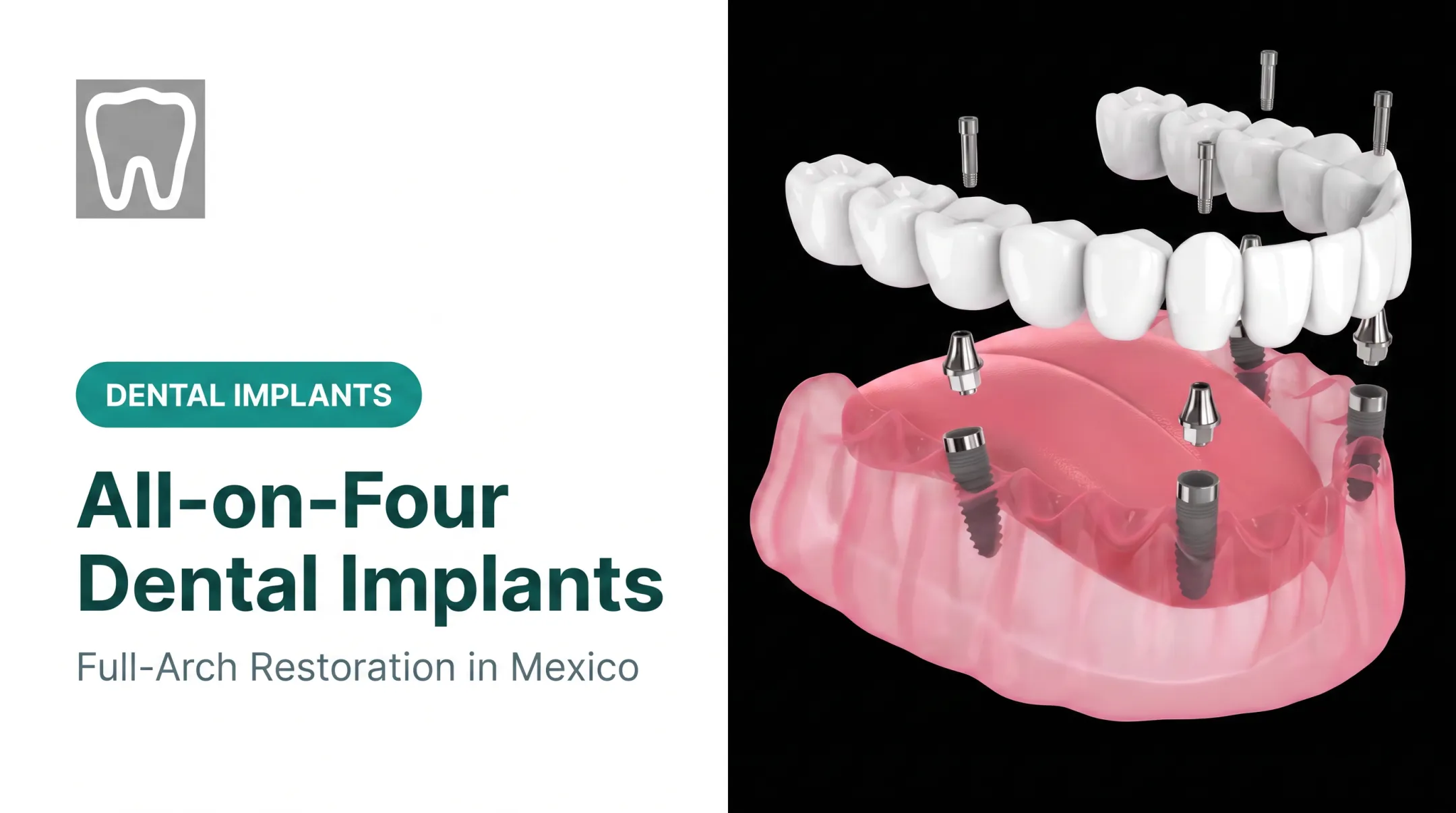
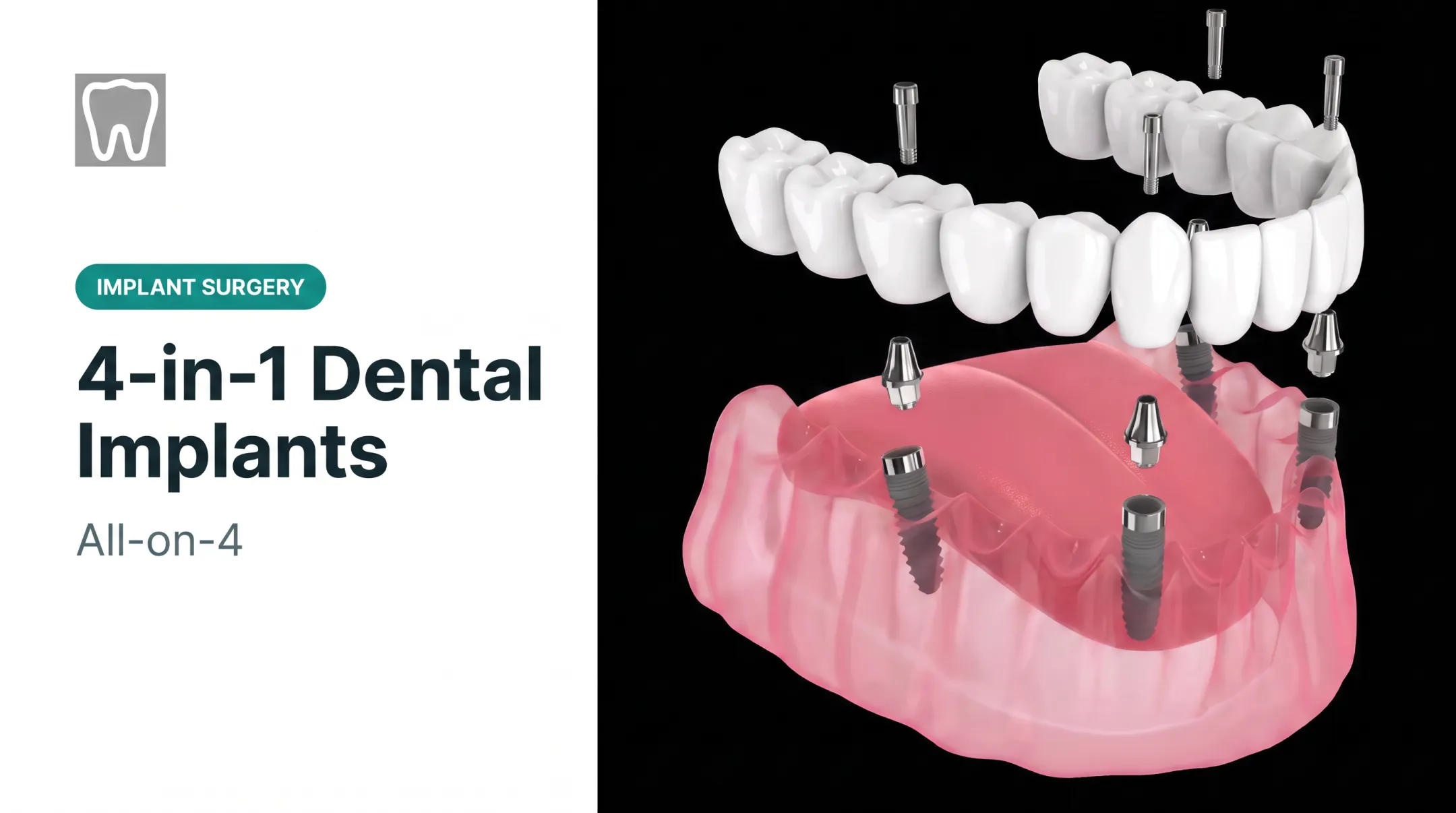
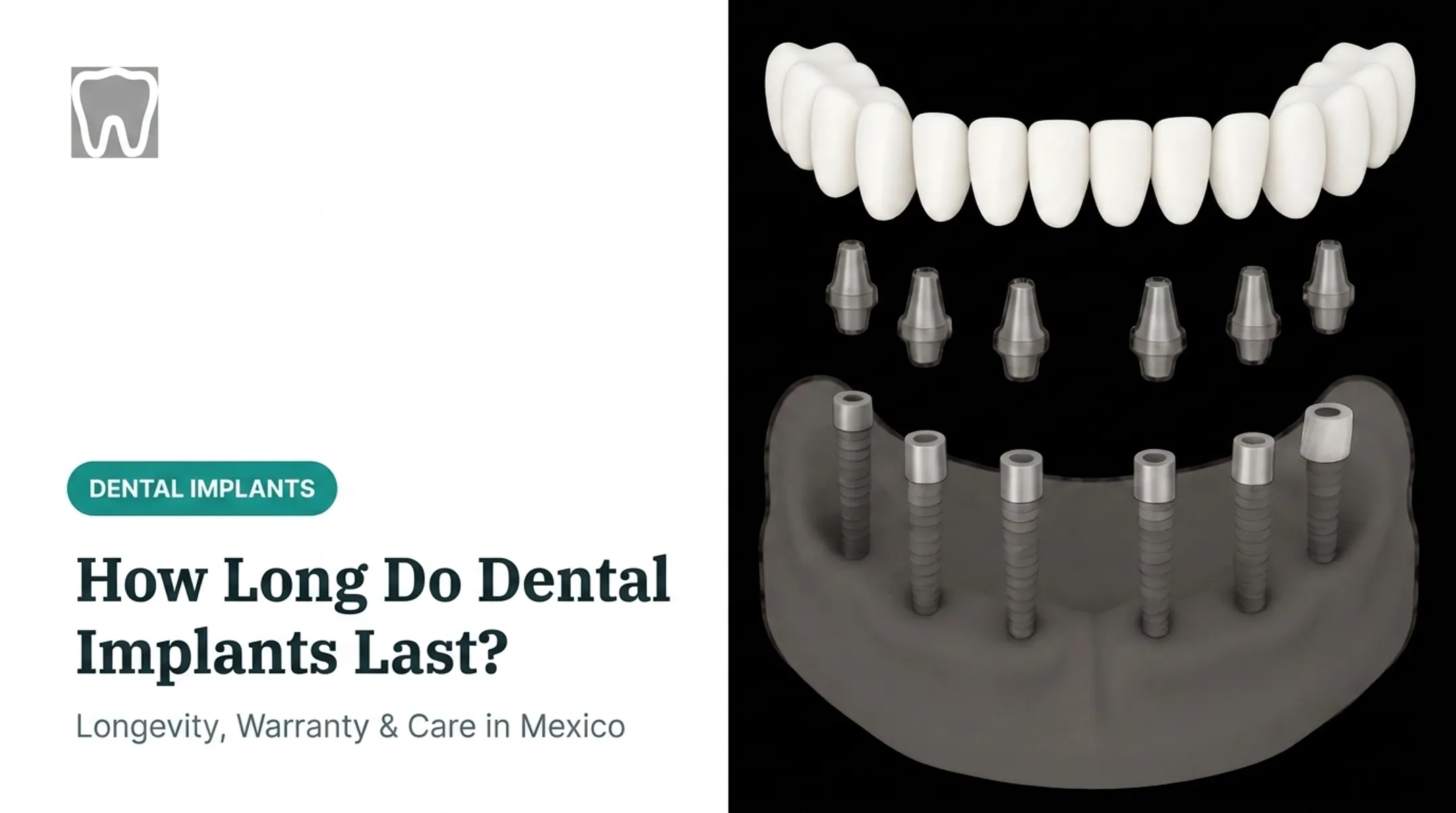
The implant posts are titanium screws fused directly into your jawbone through a process called osseointegration. Once healed, they behave like a natural tooth root. They rarely fail after that point unless something disrupts the bone or gum tissue around them.
The prosthetic bridge is the visible row of teeth attached on top. It takes daily wear from chewing, staining, and grinding, so it has a shorter shelf life.
What the Research Actually Shows
The most detailed long-term data comes from a study published in Clinical Implant Dentistry and Related Research, which followed 471 patients and 1,884 implants for 10 to 18 years. The results:
- Implant survival: 93%
- Implant success: 91.7%
- Prosthetic survival: 98.8%
That's a strong track record for a treatment many patients assume needs frequent redoing.
Bridge Material Changes the Timeline
Bridge material is one of the biggest factors in how long the visible teeth last:
- Temporary acrylic — 3 to 12 months (this is a placeholder, not a final restoration)
- Titanium-reinforced acrylic — roughly 2 to 5 years
- Zirconia — 10 to 15+ years, sometimes longer with excellent care

That is why final bridge selection matters as much as implant placement. Dr. Moguel's clinic fits patients with a custom zirconia or ceramic-hybrid final bridge, fabricated in-house after 3-6 months of osseointegration.
Implants are placed using FDA-approved systems such as Nobel Biocare, Straumann, and MegaGen. The clinic backs that hardware with a lifetime warranty: if an implant fails, it's replaced at no cost.
Key Factors That Affect All-on-4 Implant Longevity
Quality of Implant Materials and Technique
Not all implants are placed the same way. High-grade titanium matters, but so does the precision of placement. Surgeons need at least 35 Ncm of insertion torque across all four implants for immediate loading to work safely. Too little torque, and the case needs a delayed-loading approach instead.
Experience counts, too. One study on implant surgery found failure rates of 5.9% for less-experienced surgeons versus 2.4% for surgeons with 50+ prior placements. That gap adds up over a career.
Bone Health and Density
All-on-4 was designed partly to work around bone limitations. The rear implants are tilted at roughly 45 degrees, which uses available bone more efficiently and often avoids the need for grafting altogether.
When bone volume genuinely isn't enough, two fixes come into play:
- Bone grafting: donor or synthetic bone is placed and given 3-6 months to integrate
- Sinus lift: used for upper-jaw cases, requiring 6-9 months of healing before implants go in
A 3D CBCT scan determines which path (if any) a patient needs before surgery.

Oral Hygiene and Home Care
A fixed bridge doesn't come out for cleaning like dentures do, so technique matters:
- Brush twice daily with a soft-bristled toothbrush
- Clean underneath the bridge daily with a water flosser or superfloss
- Attend professional cleanings on schedule (this is also a warranty requirement for prosthetic coverage)
Lifestyle Habits
Two habits show up again and again in failure data.
Smoking: A 2021 meta-analysis found smokers face more than double the implant failure risk compared to non-smokers (odds ratio of 2.402).
Bruxism (teeth grinding): Reviews link grinding to a 2.2 to 4.7-fold increase in implant failure risk. A custom night guard distributes bite force evenly and protects both the implant and the bridge material.

How to Extend the Life of Your All-on-4 Implants
A few consistent habits make a measurable difference over the years:
- Clean under the bridge daily: a water flosser or implant brush keeps plaque from triggering peri-implantitis
- Get checked twice a year: professional visits catch early bone loss or infection before they become expensive problems
- Respect the healing period: soft foods only while osseointegration completes, then reintroduce harder foods gradually
- Don't use your teeth as tools: no ripping open packages, cracking nuts, or chewing ice
- Wear a night guard if you grind: protects both the bridge and the implant screws underneath it
Stick with these habits and your All-on-4 restoration has the best shot at lasting decades.
Signs Your All-on-4 Implants May Need Attention
Don't wait for pain. Peri-implant disease (inflammation or infection around the implants) often progresses quietly before symptoms feel serious. Contact a dental professional if you notice:
- Persistent discomfort or tenderness around an implant
- Swelling or redness in the gum tissue
- A loose prosthetic tooth or bridge segment
- Difficulty chewing that wasn't there before
- Visible gum recession around an implant site
Early intervention is almost always cheaper and simpler than late-stage treatment. If you've returned home after treatment and something feels off, you can submit recent X-rays or a CBCT scan for remote review rather than guessing.
Why Choosing an Experienced Specialist Matters for Long-Term Success
Precise planning and placement reduce long-term complications more than any single product choice. Experience shows up in bone mapping, implant angulation, and how the prosthesis is built to handle years of daily use.
Dr. José Moguel has placed 17,000+ implants over 38+ years and developed the patented 3-ON-8™ protocol. That design uses eight implants per arch to support three independent bridge sections, rather than one continuous bridge on four implants. If one section needs repair, the full prosthesis does not always have to be replaced.

Patients treated in Los Algodones still get the same class of technology used in many U.S. clinics:
- 3D Cone Beam CT imaging for precise bone mapping
- Digital scanning for fit accuracy
- An in-house digital lab that fabricates the zirconia bridge
Those tools support more predictable placement and a durable final prosthesis, with significant cost savings compared to typical U.S. pricing.
Frequently Asked Questions
What should I know before getting All-on-4 dental implants?
Candidacy depends on adequate bone health, good oral hygiene habits, and no uncontrolled conditions such as diabetes. Choosing an experienced, board-certified provider matters just as much as the implant brand itself.
Which dental implants last the longest?
Titanium implants fully integrated with the jawbone can last a lifetime with proper care. For the bridge on top, zirconia consistently outlasts acrylic alternatives.
How long does the All-on-4 prosthesis typically last before replacement?
Most patients get 10 to 15 years from a zirconia-based bridge before it needs replacement or significant refurbishment, depending on material and daily care.
Can All-on-4 implants fail, and what causes it?
Yes, though failure is uncommon once healed. The main causes are peri-implantitis (gum infection around the implant), insufficient bone density, smoking, and untreated bruxism.
Is All-on-4 treatment in Mexico as durable as treatment in the US or Canada?
Durability comes down to the surgeon's credentials, technique, and materials used, not the country where treatment happens. Look for ADA/ADM board certification and documented experience regardless of location.