
Your choice affects more than appearance. It shapes how long your restoration lasts, how many dental visits you'll need, and what you'll pay. This guide breaks down zirconia vs. metal crowns across cost, durability, and aesthetics — and shows why many U.S. and Canadian patients now cross the border to access both options at a fraction of domestic prices.
Key Takeaways
- Zirconia is metal-free and biocompatible—strong enough for front and back teeth
- Metal/PFM crowns offer a long clinical track record and lower upfront cost
- Choose by tooth location, bite force, allergy history, and budget
- In Los Algodones, Mexico, both options often cost 60–70% less than typical U.S. prices
Zirconia vs Metal Crowns: Quick Comparison
Cost
U.S. fee benchmarks from the ADA's 2022 Survey of Dental Fees show mean charges of $1,316 for porcelain/ceramic crowns and $1,318 for PFM crowns (ADA fee survey). Those figures are nearly identical, though they predate current market conditions and don't isolate zirconia specifically. Actual pricing varies widely by lab, region, and dentist.
Composition
- Zirconia: Milled from solid zirconium dioxide blocks, completely metal-free
- Metal: Gold alloys, base-metal alloys, or a metal coping topped with porcelain (PFM)
Durability & Strength
Zirconia's strength depends heavily on its formulation. Lab testing shows flexural strength commonly falling between 900-1200 MPa, though this varies by brand, thickness, and aging (ScienceDirect review). Metal-based crowns rely on clinical history rather than lab strength numbers. A 2021 university study found 89.4% five-year survival for full metal crowns versus 83.2% for PFM.

Aesthetics
- Zirconia: Tooth-colored with translucent options; blends naturally with surrounding teeth
- Metal: Visible metallic shade; best reserved for molars where it won't show
Biocompatibility
Zirconia contains no metal, so allergy risk is minimal. Metal crowns can trigger sensitivity in patients with nickel or other metal allergies, though full-gold options tend to be well-tolerated.
What Is a Zirconia Crown?
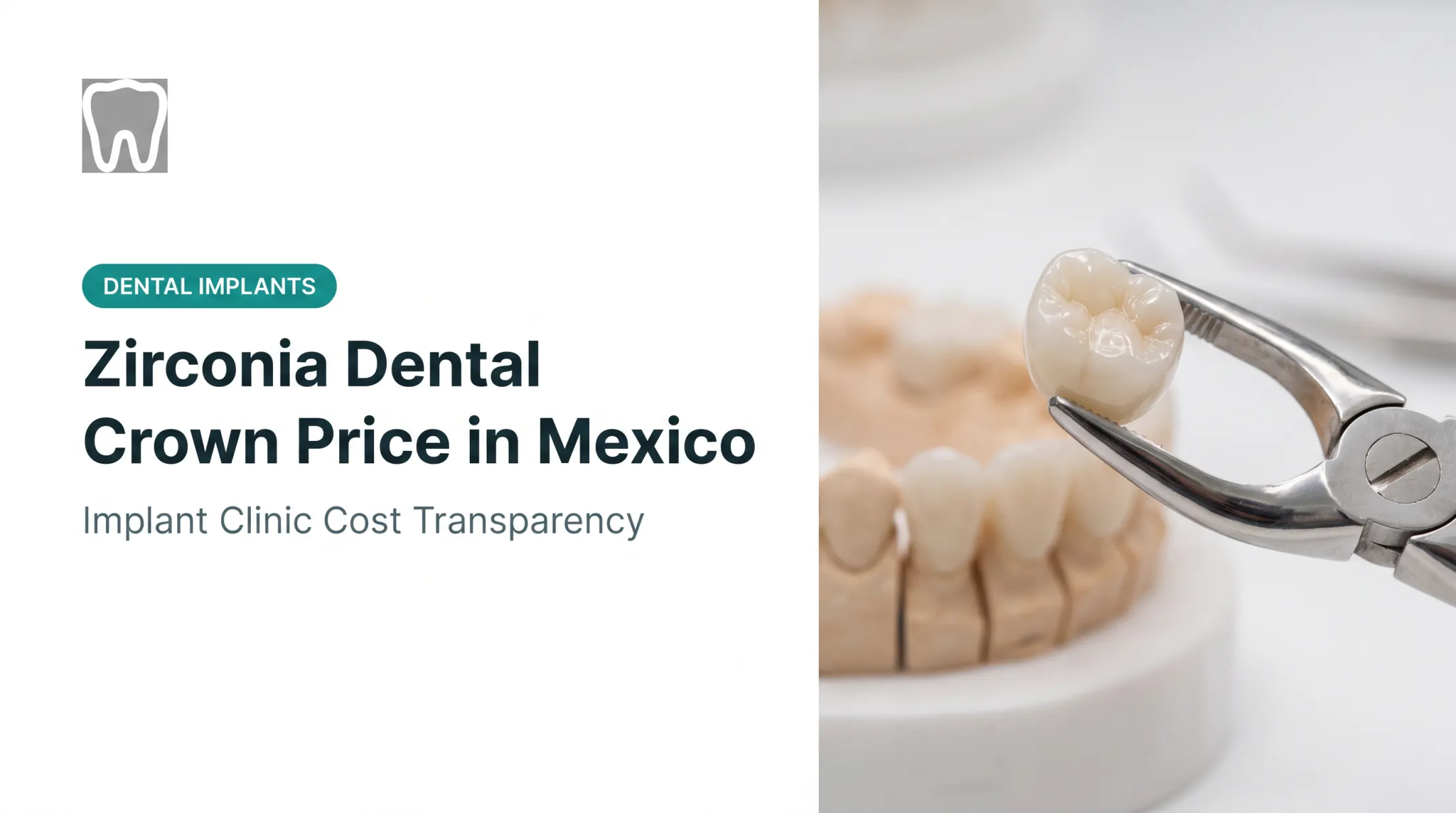
Zirconia crowns are milled from solid blocks of zirconium dioxide, a ceramic material valued for strength and a natural look. Because the material is so strong, dentists can often use thinner crowns, meaning less of your natural tooth structure needs to be removed. Zirconia comes in a few formulations:
- 3Y-TZP – the strongest option, best for high-bite-force situations
- 4Y-TZP – a balance between strength and translucency
- 5Y-TZP – the most translucent, but roughly 40-50% weaker in flexural strength than 3Y, according to a 2023 classification review (PMC study) Clinical data supports zirconia's durability. A 2025 retrospective cohort found 86% ten-year survival for monolithic zirconia crowns, compared to 71% for porcelain-layered versions.

Use Cases of Zirconia
Zirconia works well for:
- Patients who grind their teeth (bruxism) and need extra fracture resistance
- Back molars that take heavy chewing loads
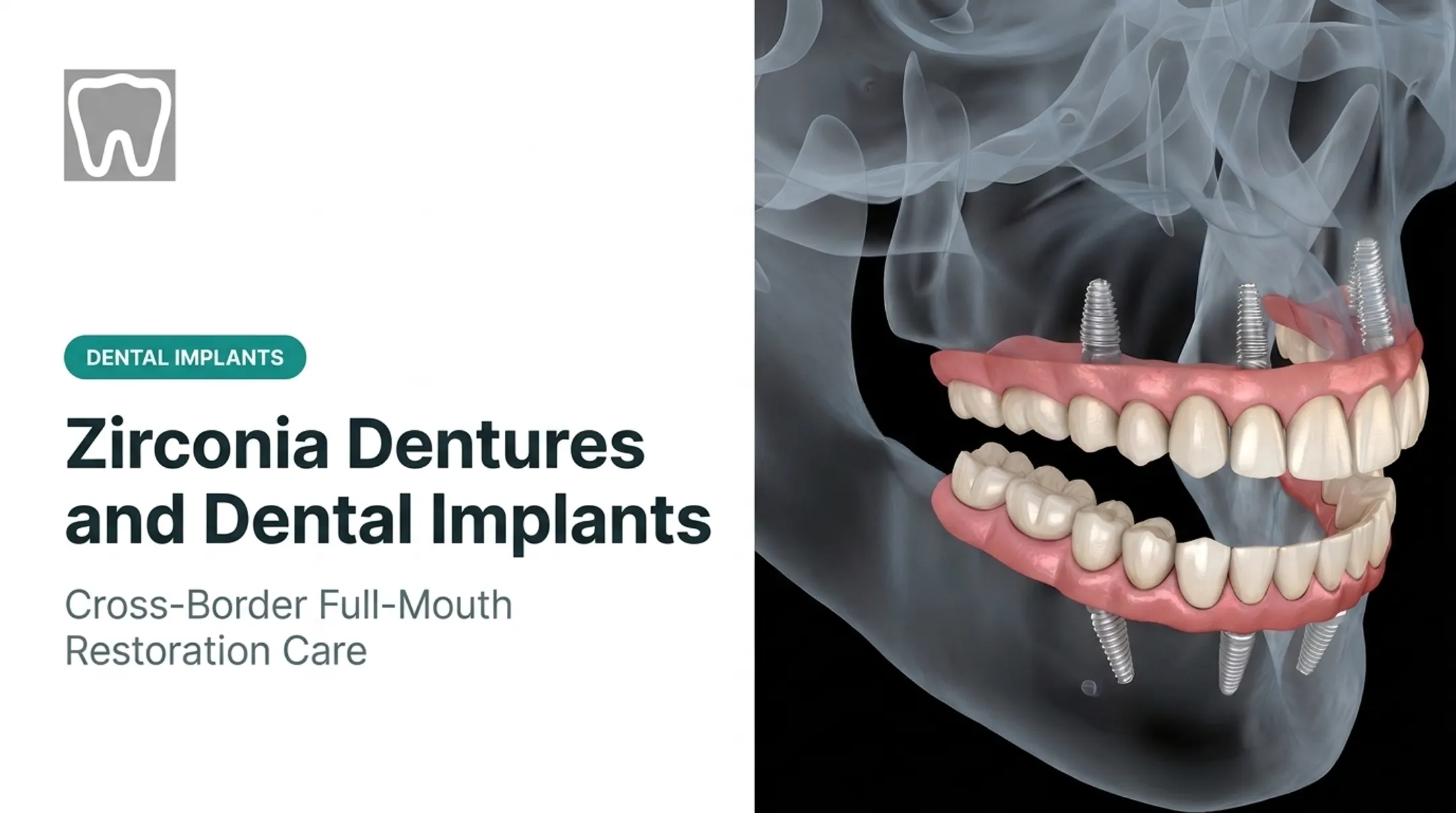
- Anyone wanting a metal-free, natural-looking smile from front to back Clinics with in-house CAD/CAM labs, like Dr. Moguel's practice in Los Algodones, can design and mill custom zirconia restorations on-site. In one case, a patient with severe periodontitis and nine failing upper teeth received the clinic's patented 3-ON-8™ protocol: 16 implants supporting three fixed zirconia bridges per arch. His total cost came in under $18,000, compared to a $58,000+ quote he'd received in Phoenix.

What Is a Metal Crown?
Metal crowns have been used in dentistry for generations. They come in two main forms: full-metal (gold or base-metal alloy) and porcelain-fused-to-metal (PFM), which pairs a metal substructure with a porcelain outer layer for a more natural look.
Their appeal comes down to:
- A long, well-documented clinical history
- Minimal wear on opposing teeth (particularly full gold)
- Often lower material costs than premium zirconia crowns
Use Cases of Metal Crowns
Metal and PFM crowns make the most sense when:
- The restoration sits on a back molar where appearance isn't a priority
- Budget is the deciding factor
- A metal substructure is needed to support a larger bridge
A 10-year prospective study found 88.8% survival for metal-ceramic crown restorations, which helps explain why PFM remains a trusted option (Journal of Prosthetic Dentistry).
That track record still matters in practice. One patient at Dr. Moguel's clinic, David L., received two Nobel Biocare implants topped with custom PFM crowns to replace missing upper molars, a straightforward fix for a back-tooth restoration.
Zirconia vs Metal: Which Is Better?
There's no single "better" material. The right pick depends on:
- Tooth location – front teeth favor zirconia's translucency; back molars tolerate metal's appearance
- Budget – metal/PFM often costs less
- Bite force and grinding habits – heavy grinders may benefit from strength-oriented 3Y zirconia
- Allergy history – metal sensitivities point toward zirconia
- Cosmetic goals – visible smile zones almost always favor zirconia

Situational guidance:
- Choose metal or PFM for cost-conscious, low-visibility back-tooth work
- Choose zirconia for a natural look, strong biocompatibility, and long-term durability anywhere in the mouth
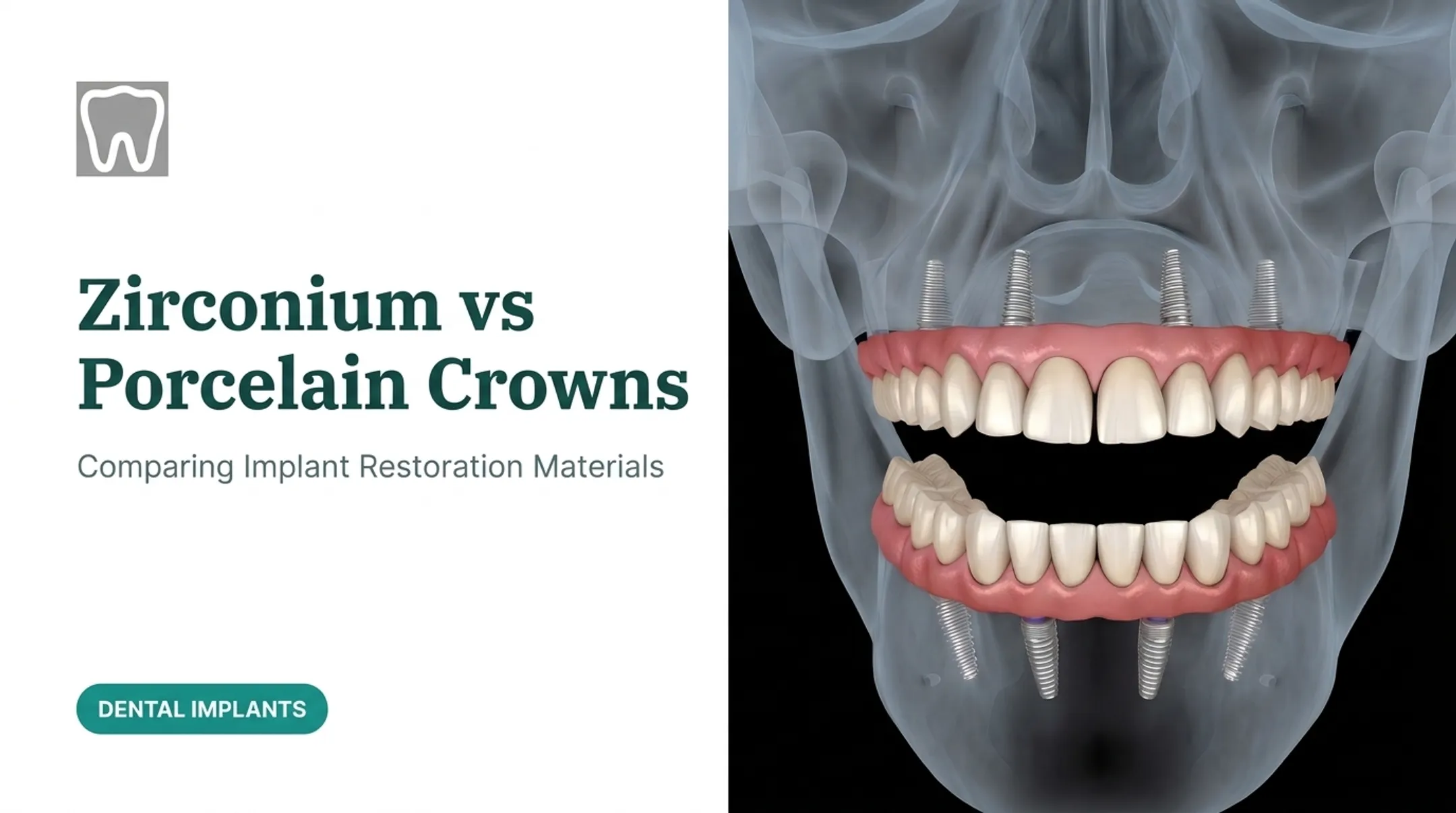
For full-mouth reconstruction and implant-supported cases—including All-on-4, All-on-6, and the patented 3-ON-8™ protocol—zirconia bridges are often the preferred prosthetic. Composite or hybrid acrylic-titanium options may still fit some treatment plans.
Why Patients Choose Mexico for Zirconia or Metal Crown Treatment
Cross-border patients travel to Los Algodones for one main reason: access to the same technology and materials at a much lower price. Dr. Moguel's clinic uses:
- American-standard equipment, including 3D Cone Beam CT imaging and digital scanning
- An in-house CAD/CAM lab for custom zirconia and crown milling
- Premium FDA-approved materials and systems (Nobel Biocare, Straumann, MegaGen) for implant-supported crowns and bridges Patients can save an estimated 60-70% compared to U.S. prices on implant and restorative treatment. One Phoenix schoolteacher with severe periodontal disease and chewing pain chose the clinic’s 3-ON-8™ protocol: 16 implants supporting fixed zirconia bridges on both arches. She regained stable chewing function and a natural-looking smile. Every consultation includes a free, no-obligation review of your case, so you can compare zirconia and metal options side by side before committing. Ready to find out which crown material fits your case? Request a free consultation with Dr. Moguel's team to get a transparent, personalized quote.
Conclusion
The better crown is the one that fits the tooth’s location, your bite force, and your budget—not a single default material. A board-certified specialist can weigh those factors against your long-term oral health goals and recommend zirconia or metal with a clear rationale.
Provider skill and material quality still decide the outcome more than the label on the crown. Clinics that offer both options with transparent pricing help patients crossing the border compare choices without pressure and move forward with a plan that fits their case.
Frequently Asked Questions
What is the average cost of a zirconia crown?
U.S. benchmarks put ceramic crown fees around $1,316 on average, though pricing varies by region and lab. Patients treated in Mexico often find combined implant-and-crown packages priced well below comparable U.S. quotes. Ask for a written, itemized estimate to compare accurately.
How long do zirconia crowns last?
A 2025 cohort study found 86% ten-year survival for monolithic zirconia crowns. Lifespan depends on design, tooth location, and maintenance, so results vary by patient.
What is a zirconia crown?
It's a tooth-colored crown milled from solid zirconium dioxide, a ceramic material known for its strength, biocompatibility, and natural appearance. It contains no metal.
Which is better, zirconia or metal crowns?
It depends on the tooth's location, your budget, and your cosmetic priorities. Zirconia suits visible teeth and metal allergies; metal/PFM works well for hidden molars on a budget.
Is porcelain-fused-to-zirconia a better choice than full zirconia?
Not necessarily. Layered zirconia offers slightly different aesthetics, but monolithic zirconia showed higher 10-year survival (86% vs. 71%) in recent clinical data, largely due to better chip resistance.
What is the best material to use for cementing zirconia crowns?
Dentists commonly use MDP-based resin cements for zirconia bonding, since MDP chemically bonds well to the material's surface. The exact protocol depends on crown design and your dentist's preference.