
This guide pulls together what patients report about full-arch implant outcomes, satisfaction, and value, including experiences from patients who traveled to Los Algodones, Mexico for treatment. We'll cover satisfaction data, cost comparisons, common complaints, and how factors like Dr. José Moguel's 38-year practice and the patented 3-ON-8™ protocol fit into the decision.
Key Takeaways
- Full-arch satisfaction stays high long-term when clinician skill and aftercare are strong
- Cost tops most review hesitations; cross-border care often saves 60-70% without changing materials or technique
- Implant survival rates of 94-99% at 5-10 years are common with qualified specialists
- Peri-implantitis, not surgical error, is the leading implant failure cause in clinical literature
What Real Patient Reviews Reveal About Full Mouth Dental Implants
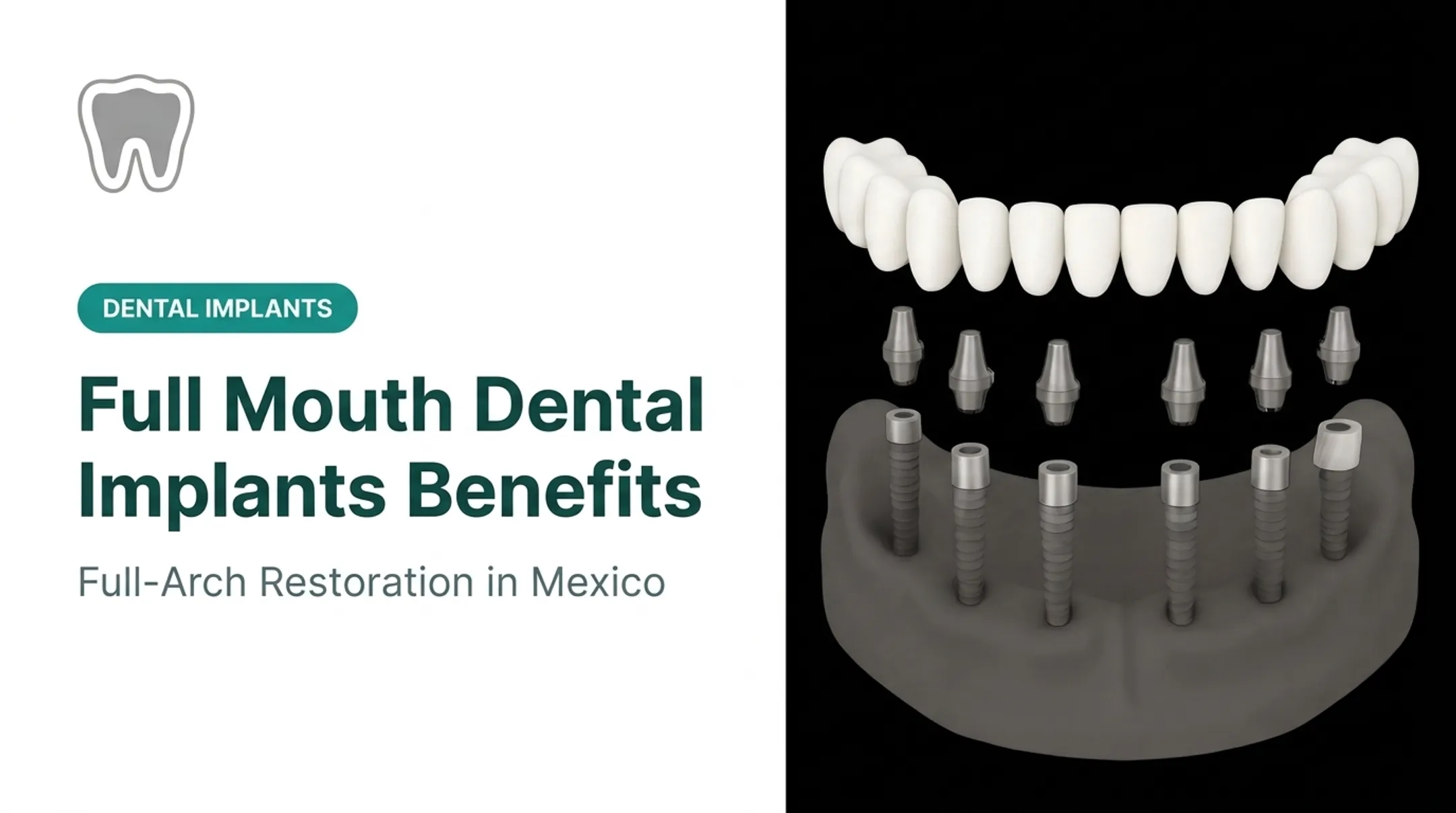
Across testimonials and case reports, a few themes repeat constantly: patients describe eating steak or apples again after years of avoiding certain foods, and they talk about smiling in photos without covering their mouths. One documented patient, Robert T., described his 3-ON-8™ restoration as painless and said it let him eat foods he'd avoided for years after receiving 16 implants and fixed zirconia bridges. The emotional weight shows up as often as the functional wins. Cases involving severe dental anxiety or a habit of avoiding public smiles frequently end with reports of restored confidence, not just restored chewing ability. A 2021 cross-sectional study following patients roughly 10 years after implant placement found that 98.9% would choose an implant-supported restoration again. All patients were highly satisfied with speech, and most were satisfied with chewing comfort and stability. That said, the study's sample was small, so treat it as a strong directional signal rather than a universal guarantee. Reviews also lean toward same-day or immediate-load approaches, including All-on-4, All-on-6, and specialized protocols like 3-ON-8™, largely because they compress treatment time. Testimonials that mention board certification, in-house labs, or premium implant brands like Nobel Biocare, Straumann, and MegaGen tend to reflect more confidence in the outcome.
Common Praise Points in Positive Reviews
- Natural appearance: bridges that don't look "too perfect" or obviously fake
- Comfortable fit: no slipping or irritation compared to traditional dentures
- Painless procedures: often attributed to sedation and thorough pre-op planning
- Responsive communication: bilingual coordinators answering questions before and during treatment
Cost-Value Reviews: What Patients Say About Pricing
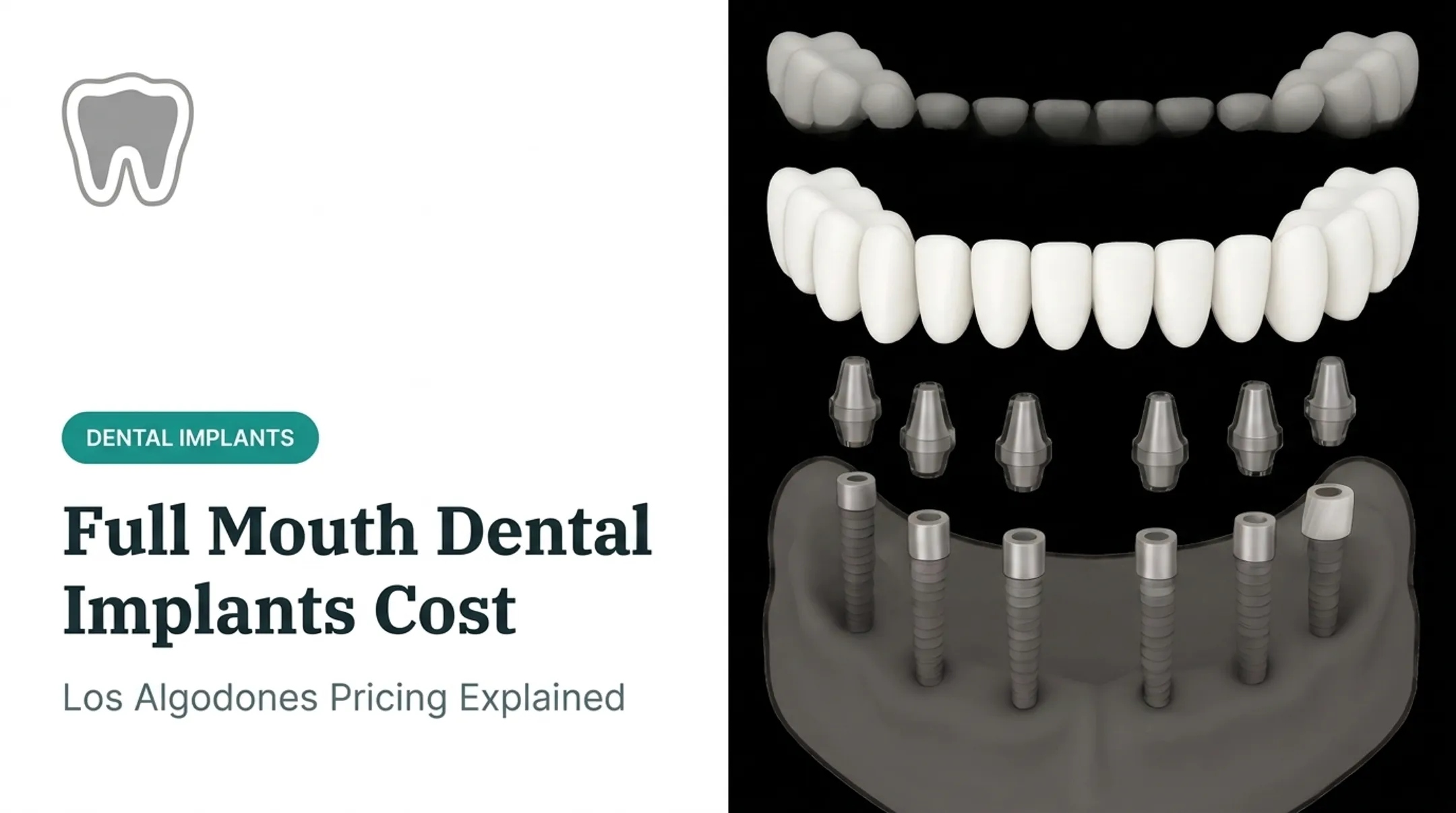
Cost dominates review discussions more than any other factor, and for good reason. It's the biggest hesitation point before committing to treatment. A widely cited US industry benchmark from CareCredit's cost guide puts average All-on-4 pricing at $15,176 per arch, with a range of $11,640 to $27,500. That's a financing-industry estimate, not an official fee survey, but it gives a useful baseline. By comparison, Mexico-based full-arch pricing frequently starts much lower:
| Treatment | US Estimate (per arch) | Mexico "From" Price |
|---|---|---|
| All-on-4 | $11,640-$27,500 | From $6,000 (range $8,000-$12,000) |
| All-on-6 | Typically higher | From $8,000 (range $12,000-$16,000) |
| 3-ON-8™ | Not available in US | From $15,000 (range $16,000-$20,000) |
| Implant-supported overdentures | $10,000-$14,000 | $3,500-$5,500 |
| Patients reviewing cross-border care frequently note savings in the 60-70% range without compromising on implant brand or technique, which lines up with the packages above. | ||
| What positive cost reviews praise most: transparent, itemized quotes covering consultation, extractions, implants, and the final bridge. | ||
| Vague "starting at" pricing with no breakdown is a recurring complaint in negative reviews. Clinics that give free consultations with detailed cost breakdowns tend to score higher on patient trust. | ||
| Dental Implants in Mexico builds its process around that standard—free consultations and pre-treatment estimates with ADA CDT codes patients can submit to insurers for pre-determination of benefits. |

Success Rates, Risks, and What Reviews Say Went Wrong
Clinical literature backs up what most positive reviews describe. A 2011 longitudinal JADA study following 245 patients with immediate-function implants found implant survival of 98.1% at five years and 94.8% at up to 10 years, with prosthesis survival reaching 99.2%. A separate 2022 retrospective study reported similar numbers: 99% five-year survival and 98.1% at 10 years.
The Number One Cause of Failure
When implants do fail, peri-implantitis is almost always the culprit. In that 2022 study, seven of eleven lost implants were traced back to this condition, an infection and inflammation caused by poor oral hygiene or unresolved gum disease around the implant site. Negative reviews tend to cluster around a different set of problems, though:

- Inadequate pre-op planning or rushed diagnostics
- Vague or missing aftercare instructions
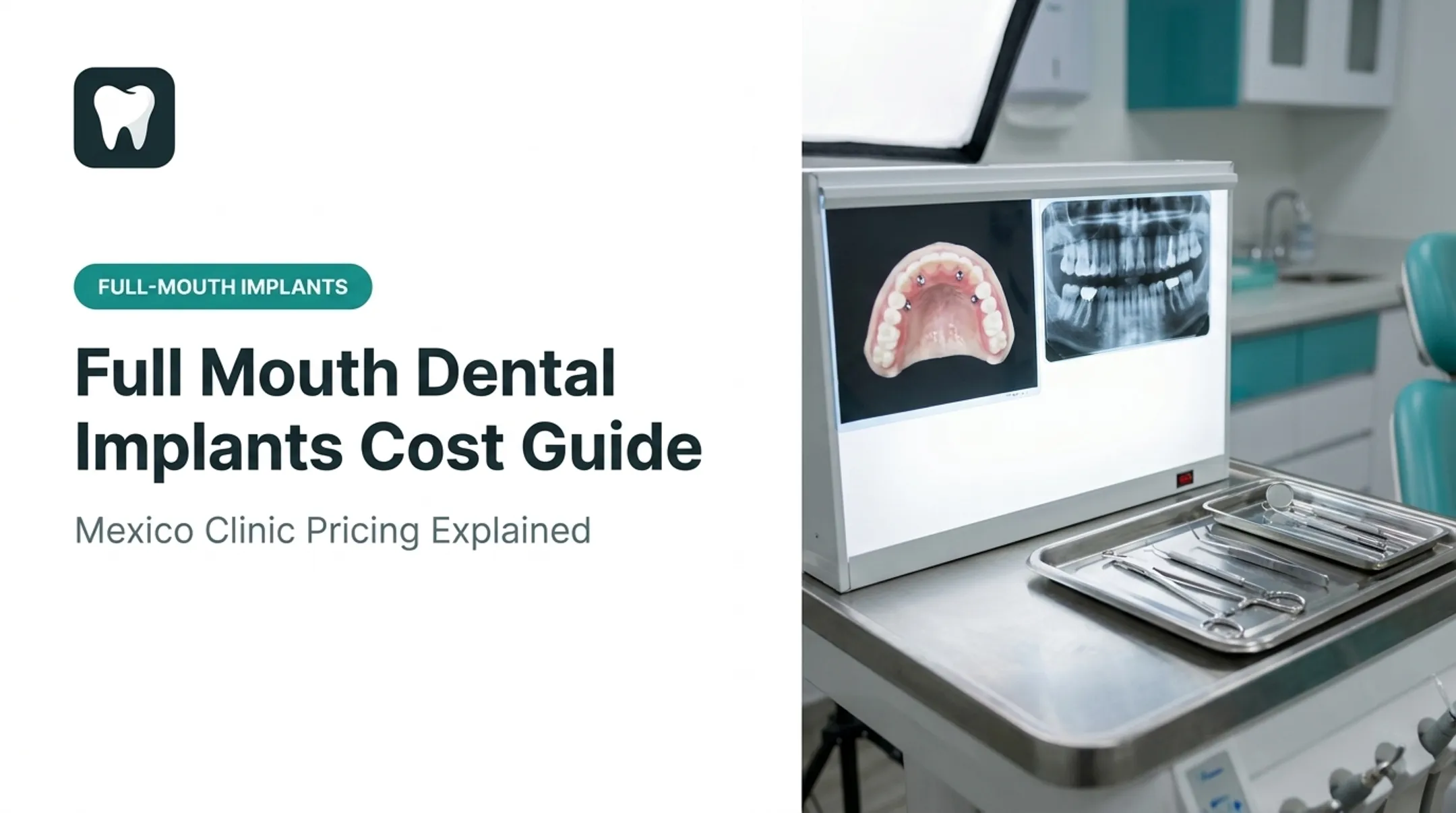
- Unexpected extra costs not disclosed upfront Reviewers consistently cite two things as what most often prevents these problems: working with a board-certified periodontist, and insisting on 3D Cone Beam CT imaging before surgery rather than basic 2D X-rays. CBCT scanning lets the clinician map bone density, nerve pathways, and exact implant angle before any incision is made. That prep reduces complications such as nerve irritation or under-supported implants.
Are Full Mouth Dental Implants Worth It? Weighing the Reviews
Most full mouth implant reviews land on yes. Durability, chewing function, and bone preservation outweigh the higher upfront cost and recovery time for patients who can invest in the process.
Pros most cited in reviews:
- Durability that outlasts repeated denture adjustments
- Natural chewing function, including foods patients had given up on
- Jawbone preservation (dentures alone don't stop bone loss)
- Long-term cost savings versus replacing dentures every few years
Cons most cited in reviews:
- Higher upfront cost compared to dentures
- Multi-month treatment timeline before final bridges are placed
- Surgical recovery period, even with same-day temporary teeth
Patients frequently compare implants against traditional dentures, implant-supported overdentures, or fixed bridges. A 2022 study found 48.3% of patients were very satisfied with implant overdentures versus just 6.9% with conventional dentures. That makes overdentures a reasonable middle ground for patients not ready for a fixed full arch.

Once patients pick an option, reviews shift to who will deliver it. They look for concrete proof points—Dr. Moguel's 17,000+ implants placed and lifetime warranty on implant hardware are the figures reviewers cite when checking whether a provider's claims hold up.
Choosing a Provider Based on Reviews
Not all reviews carry the same weight. Check genuine testimonials for these markers:
- Before-and-after photos showing real healing progression, not stock images
- Verified patient names or locations (vague "J.D. from somewhere" claims carry less weight)
- Mentions of credentials such as ADA, ADM, or board certification in periodontics
- Specific procedure details: implant count, materials used, and timeline
Red flags to watch for:
- No mention of aftercare or follow-up
- Unusually low prices with no breakdown of what's included
- Generic praise without treatment specifics
For cross-border patients, free consultations and travel support show up often in positive reviews. Clinics in Los Algodones frequently coordinate Yuma hotel stays, shuttle transportation, and appointment scheduling so patients are not left managing logistics alone.
Frequently Asked Questions
What is the typical cost of a full set of dental implants?
Costs vary widely by country and materials, often ranging from $11,000–$27,000 per arch in the US. Cross-border options in Mexico frequently reduce this by 60–70%, with full-arch packages starting around $6,000–$16,000.
How long does a full mouth of implants last?
With proper care, the implants themselves can last 15–25 years or longer, and clinical studies report implant survival above 94% at 10 years. The prosthetic bridge, however, may need replacement or repair sooner.
Are there alternatives to dental implants?
Yes: conventional dentures, implant-supported overdentures, and fixed bridges are all options. Overdentures often provide a lower-cost middle ground with better satisfaction than traditional dentures.
What is the failure rate of dental implants?
Clinical studies generally report failure rates under 5–10% in healthy patients with proper aftercare. Results still vary with health status, surgical quality, and how long patients are followed.
What is the number one reason dental implants fail?
Peri-implantitis, an infection or inflammation caused by poor oral hygiene or unresolved gum disease around the implant, is the most commonly cited cause in clinical research.
What do patients wish they knew before getting dental implants?
Patient reviews commonly mention wishing they'd asked more upfront questions about total costs, the full treatment timeline, and exactly what aftercare support looks like once they returned home.