
The lower jaw is the harder arch to fit. There's no palate to create suction like the upper jaw has, so gravity, tongue movement, and cheek muscles constantly work against a loose-fitting plate. Implant-supported lower dentures solve this by anchoring the prosthesis directly into the jawbone with titanium implants.
This guide covers how these implants work, how many you actually need, what they cost, and how patients from the US and Canada are accessing this treatment through cross-border care in Los Algodones, Mexico.
Key Takeaways
- Lower dentures loosen more than uppers because suction alone can't stabilize the lower jaw
- 2–4 implants can secure a full lower denture, removable or fixed
- Mexico-based implant care with a board-certified periodontist can cost 60-70% less than comparable US treatment
What Are Implant-Supported Lower Dentures?
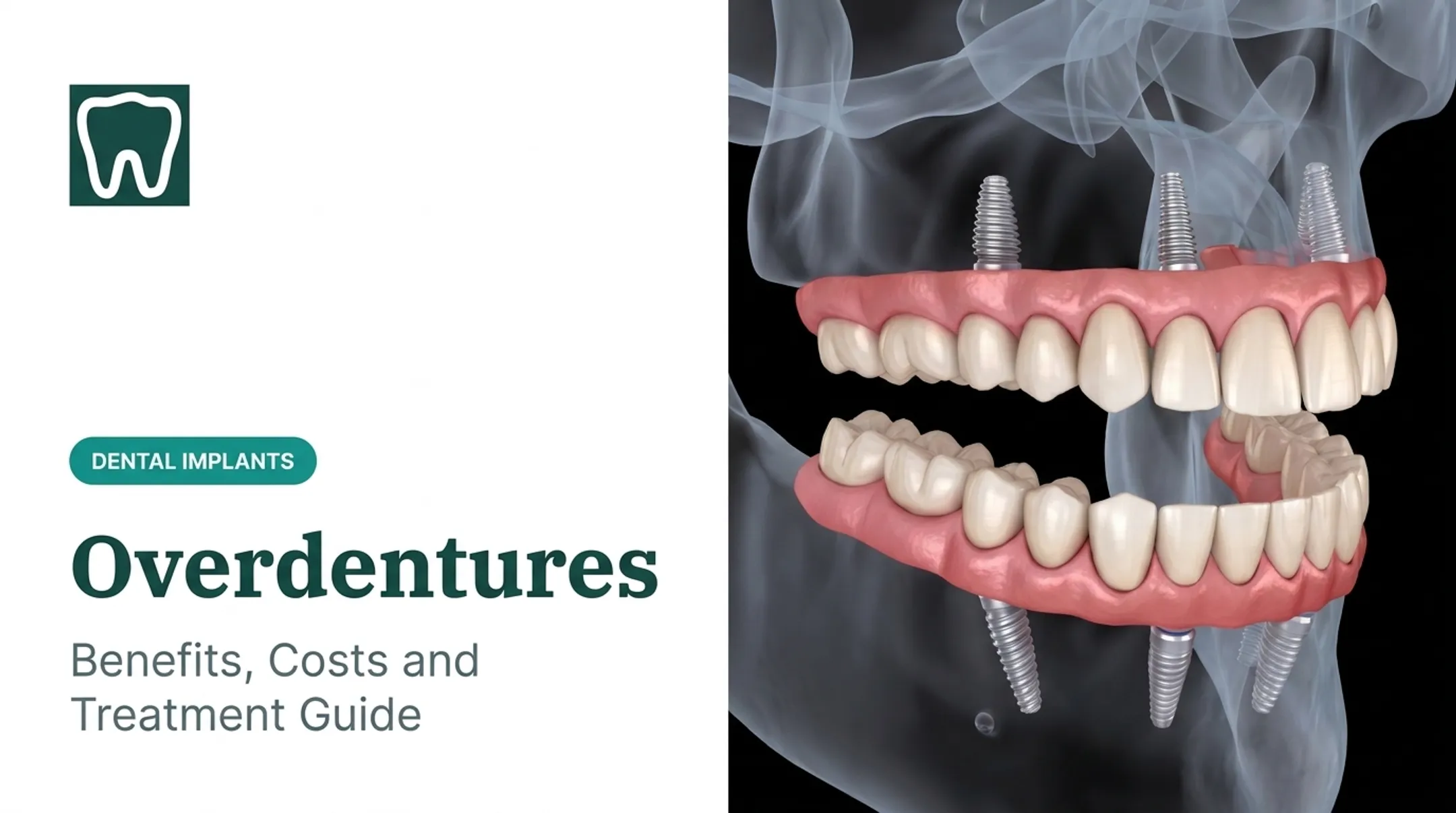
Implant-supported (and implant-retained) lower dentures attach to titanium implants surgically placed in the mandible, rather than simply resting on the gums. The implants fuse with the jawbone through a process called osseointegration, creating a stable foundation the denture clips onto.
Why the lower jaw struggles more than the upper. A widely cited denture study found unsatisfactory retention in 59% of mandibular dentures, compared to 44% for upper dentures. That gap is explained largely by the absence of a suction-forming palate on the bottom arch (de Baat et al., 1997).
Conventional lower dentures rely on:
- Suction (limited on the lower arch)
- Denture adhesive (daily reapplication)
- Muscle control (tongue and cheek positioning)
Implants remove that guesswork entirely.
Two Main Categories
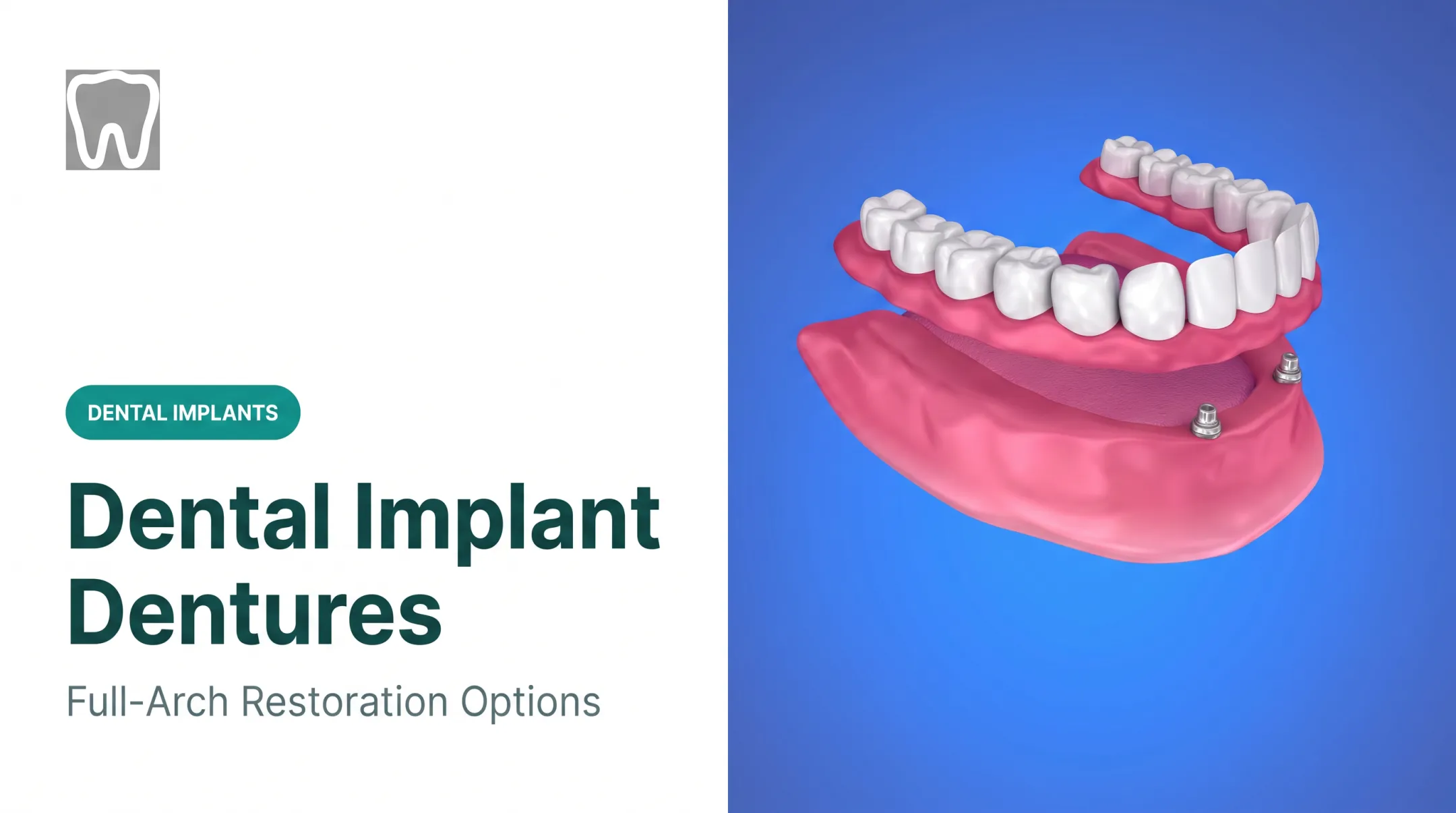
- Implant-retained overdentures: removable, snap onto implants via locator attachments, taken out nightly for cleaning
- Fixed/screw-retained implant dentures: permanently attached, removable only by a dentist
One practical advantage: mandibular bone tends to be denser than upper-jaw bone, which often means faster healing. Lower-jaw implants often integrate in as little as 3 months, compared with 4–6 months for the upper arch.
Distinguishing "Supported" vs. "Retained"
This terminology trips up a lot of patients. According to the American College of Prosthodontists, an implant-supported prosthesis is fully carried by the implants, with no gum tissue bearing the load. An implant-retained or implant-assisted design shares the load between implants and the gum tissue underneath, which is common in removable snap-on dentures (ACP White Paper).
In plain terms: "retained" usually means you can take it out. "Supported" often means your dentist takes it out.

How Many Implants Do You Need for Lower Dentures?
A common myth: patients assume they need one implant per missing tooth. For full-arch restoration, that's rarely true.
Typical configurations:
- 2 implants: basic overdenture; the 2002 McGill consensus standard of care for patients with no remaining lower teeth (McGill Consensus)
- 4 implants: bar-retained overdenture or All-on-4 fixed bridge
- 6-8 implants: All-on-6 or the patented 3-ON-8™ protocol, for maximum stability or a segmented, more repairable design
An ITI consensus statement recommends a minimum of four well-distributed implants for a one-piece fixed full-arch prosthesis (ITI Consensus).

The right number for you depends on:
- Available bone volume in the lower jaw
- Bite force and grinding habits
- Whether you want removable or permanently fixed teeth
A 3D Cone Beam CT scan maps bone density and width before any implant is placed. At Dr. Moguel's clinic, every patient gets this scan as a standard part of treatment planning.
Overdenture vs. Fixed Implant Dentures: Which Is Right for You?
Both options anchor to implants, but they feel and function very differently day-to-day.
| Feature | Overdenture | Fixed Bridge |
|---|---|---|
| Removal | Patient removes nightly | Dentist-removed only |
| Attachment | Ball/locator studs or bar | Screw-retained framework |
| Cleaning | Take out, brush, soak | Professional cleaning visits |
| Feel | Slight movement possible | Near-natural, no shift |
| Cost | Generally lower | Higher upfront |
Attachment Systems Explained
Overdentures typically use ball/locator attachments (individual studs on each implant) or a bar-retained design (a metal bar connecting implants, with the denture clipping onto the whole bar for extra stability). Fixed bridges use a screw-retained framework that's torqued directly into the implants.
Which Option Fits Your Needs
- Overdentures: Easier at-home cleaning and a lower cost of entry
- Fixed bridges: Permanent, near-natural feel with zero day-to-day movement
- Bone and budget: Limited density or tighter budget often favors All-on-4 or All-on-6 fixed options
- Segmented fixed care: Adequate bone and higher expectations may fit a multi-segment bridge design Among fixed choices, Dr. Moguel's patented 3-ON-8™ protocol places 8 implants per arch to support three separate zirconia bridge segments. If one section needs attention, the full prosthesis does not have to come out. All-on-4 and All-on-6 remain strong options when bone density or budget is more limited. Maintenance differs by design. Overdenture attachment inserts (the small plastic or metal clips) wear down and need periodic replacement. A 2012 systematic review found magnet-based attachments needed maintenance most often, while bar and ball systems showed their own wear patterns (Kim et al., 2012). Fixed bridges instead need professional unscrewing and deep cleaning at scheduled visits.
Benefits of Implant-Supported Lower Dentures
Chewing power improves. A 2017 comparative study found higher chewing efficiency with implant-retained overdentures than with conventional dentures (Sharma et al., 2017). Many patients also report chewing capacity gains of up to 300% over traditional plates.
Bone loss slows. A five-year study comparing conventional dentures with two-implant overdentures found posterior mandibular ridge reduction of just 0.69mm with implants, versus 1.63mm without, nearly a full millimeter of bone saved over time. Implants transmit biting force into the jawbone and keep it stimulated. Conventional dentures do not, so the bone underneath gradually resorbs.

Speech and confidence improve for a practical reason: implant-supported lower dentures don't need excess bulk or unstable positioning that causes clicking in conversation. Patients stop worrying about a denture shifting mid-sentence or mid-meal, which makes daily speaking and eating feel more secure.
Treatment Process and Cost Savings With Care in Mexico
The journey from consultation to a finished denture follows a predictable path:
- Consultation and 3D imaging: CBCT scan maps bone density and implant positions
- Implant placement surgery: implants placed under local anesthetic or sedation
- Osseointegration healing: typically 3-4 months for the lower jaw
- Final denture attachment and fitting: attachments are screwed on, and the custom denture is fitted and bite-adjusted
What Recovery Actually Feels Like
- Days 1-2: mild oozing, minor swelling, soft-liquid diet
- Day 3: swelling typically peaks
- Day 4: most patients can move to soft foods
- Days 6-7: back to normal routines, though intense exercise should wait
Most patients manage discomfort with over-the-counter pain relievers, and a temporary modified denture can often be worn during healing, so you're never without teeth.

Why Patients Cross the Border for This
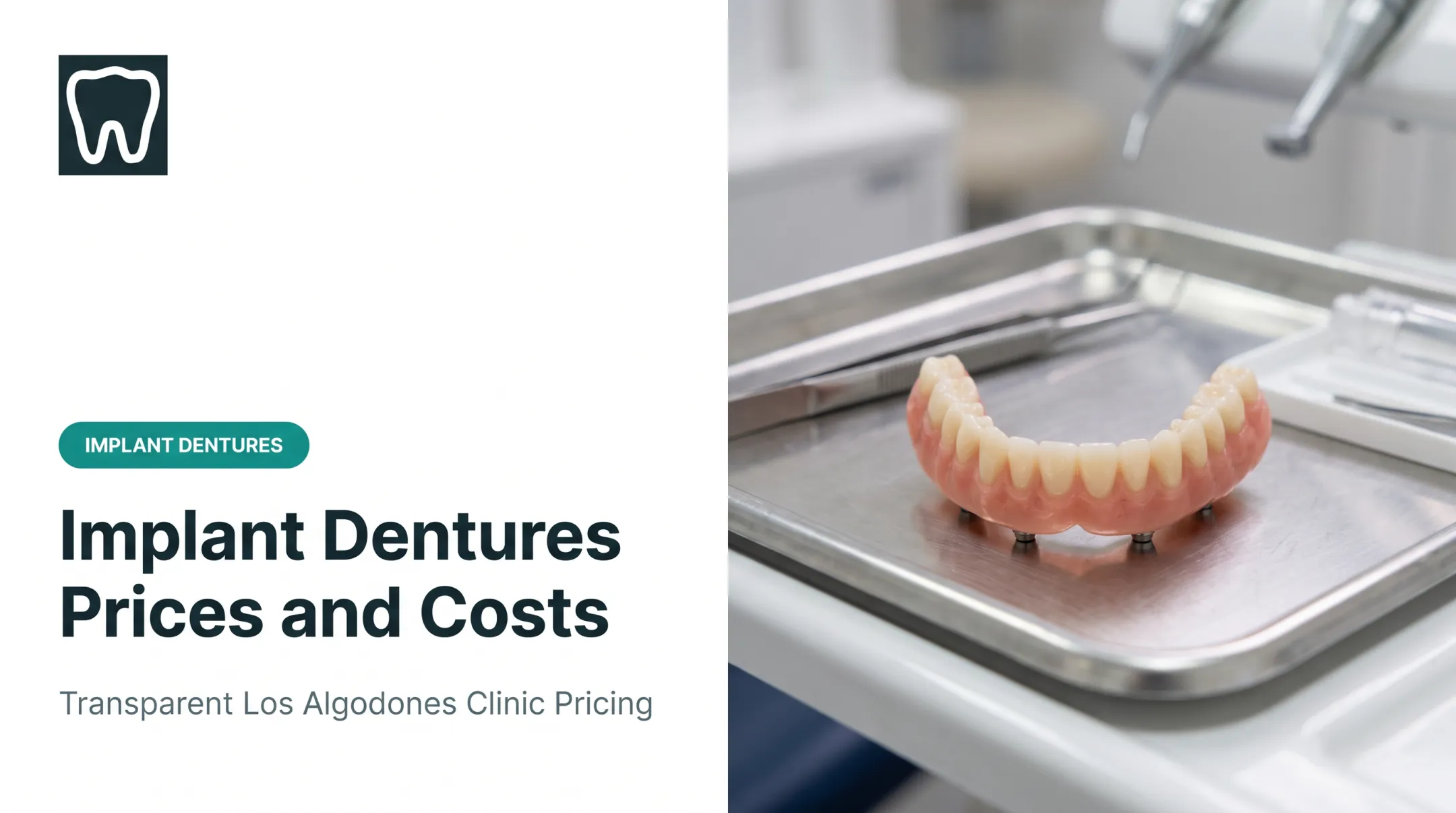
US patients typically pay $10,000-$14,000 for implant-supported dentures domestically. At Dr. Moguel's Los Algodones clinic, the same treatment runs $3,500-$5,500, with savings of up to 65%.
That gap lines up with a broader dental tourism benchmark from the Academy of General Dentistry, which cites savings of 40-65% for US patients who seek treatment in Mexico (AGD, 2020).

Practical advantages for cross-border patients:
- Clinic sits roughly a three-minute walk from the Andrade, California border crossing
- Bilingual coordinators handle scheduling and paperwork
- Hotel coordination in nearby Yuma, Arizona, plus shuttle assistance
- Free consultations, virtual or in-person, before committing to treatment
Dr. José Moguel is a board-certified periodontist with 38+ years of experience and over 17,000 implants placed. All implants come with a lifetime warranty, and treatment uses premium materials including Nobel Biocare, Straumann, and MegaGen systems.
That said, cost savings only matter if the follow-up care holds up. The AGD article also flags a cautionary case: a patient who paid $25,000 for implants in Los Algodones with no guarantee terms later dealt with infection and no recourse. Ask about warranty terms, records, and complication protocols before booking anywhere — not just in Mexico.
Frequently Asked Questions
Can you get implants on the bottom and dentures on the top?
Yes, this is a common combination. The lower arch often needs implant stability more urgently because suction works poorly there. A well-fitted conventional denture can still function on the upper jaw with palate suction.
What will hold bottom dentures in place?
Dental implants, along with attachment studs or a connecting bar, anchor the denture securely to the jawbone. This replaces the guesswork of gravity, suction, and adhesive that conventional dentures depend on.
Is it hard to wear bottom dentures?
Conventional lower dentures are notoriously unstable due to tongue and cheek movement constantly working against them. Implant-supported versions greatly reduce this problem by locking the denture to a fixed anchor point.
How long does it take to get implant-supported lower dentures?
The full process typically spans 3-4 months, covering implant placement, osseointegration healing, and the final denture fitting. Some patients wear a temporary modified denture during the healing phase.
Are implant-supported lower dentures worth the cost?
For most patients, yes. Durability, bone preservation, and quality-of-life gains outweigh the cost of repeatedly relining or replacing conventional dentures. Long-term value also depends on choosing a provider who backs the work with a solid warranty.