
Speed comes with trade-offs. Bone quality, stability, and case selection all matter more when you're skipping the traditional healing window. This article breaks down the real pros and cons of immediate loading, so you can figure out whether it fits your situation, or whether a staged approach is actually the smarter route.
TL;DR
- Immediate load implants get you a temporary or permanent tooth the same day, versus 3–6 months of waiting with traditional implants
- Pros: fewer appointments, no gap with missing teeth, faster return to normal life
- Cons: smaller margin for error, higher demands on bone quality and implant stability
- Candidacy depends on bone density, oral health, and bite forces — not everyone qualifies
- An experienced, board-certified provider substantially reduces failure and complication risk
What Are Immediate Load Dental Implants
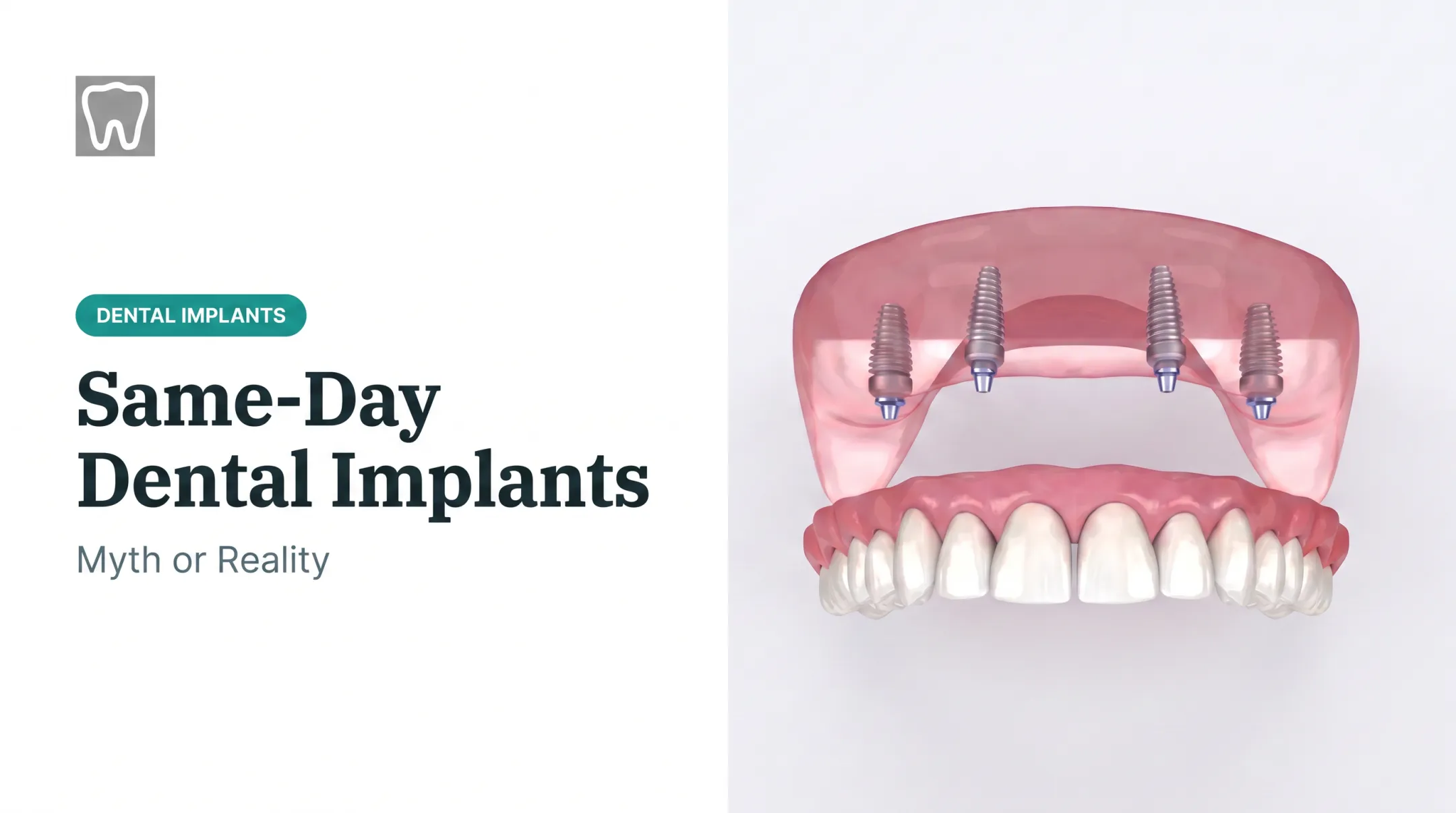
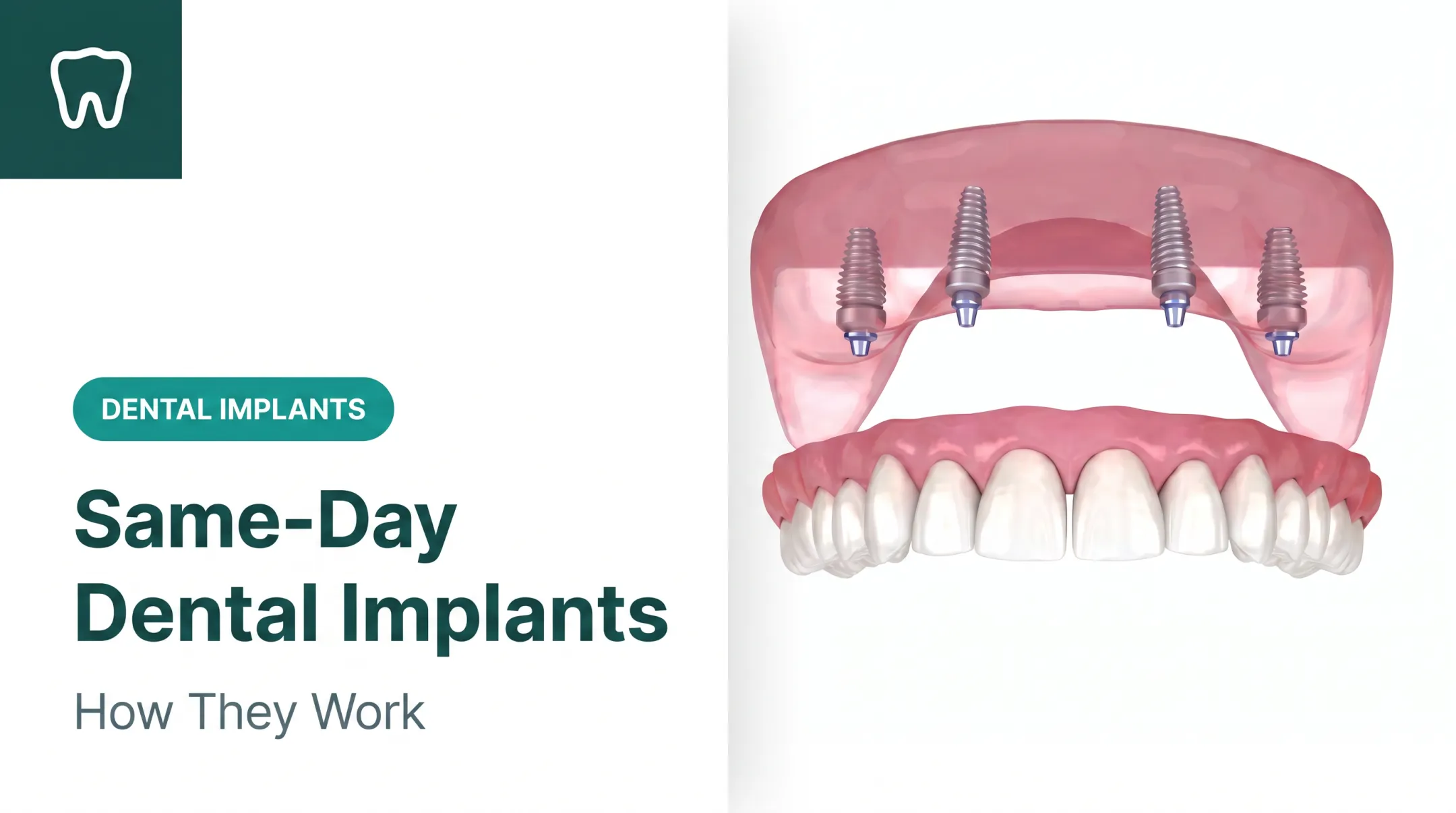
Immediate load implants receive a temporary or functional crown within the same visit, or sometimes within 48-72 hours, instead of waiting the usual 3-6 months for osseointegration (the process where bone fuses to the implant). The International Team for Implantology defines immediate loading as attaching a restoration in occlusion (bite contact) within 48 hours of placement. Two terms get mixed up constantly:
- Immediate placement – the implant goes in right after a tooth extraction
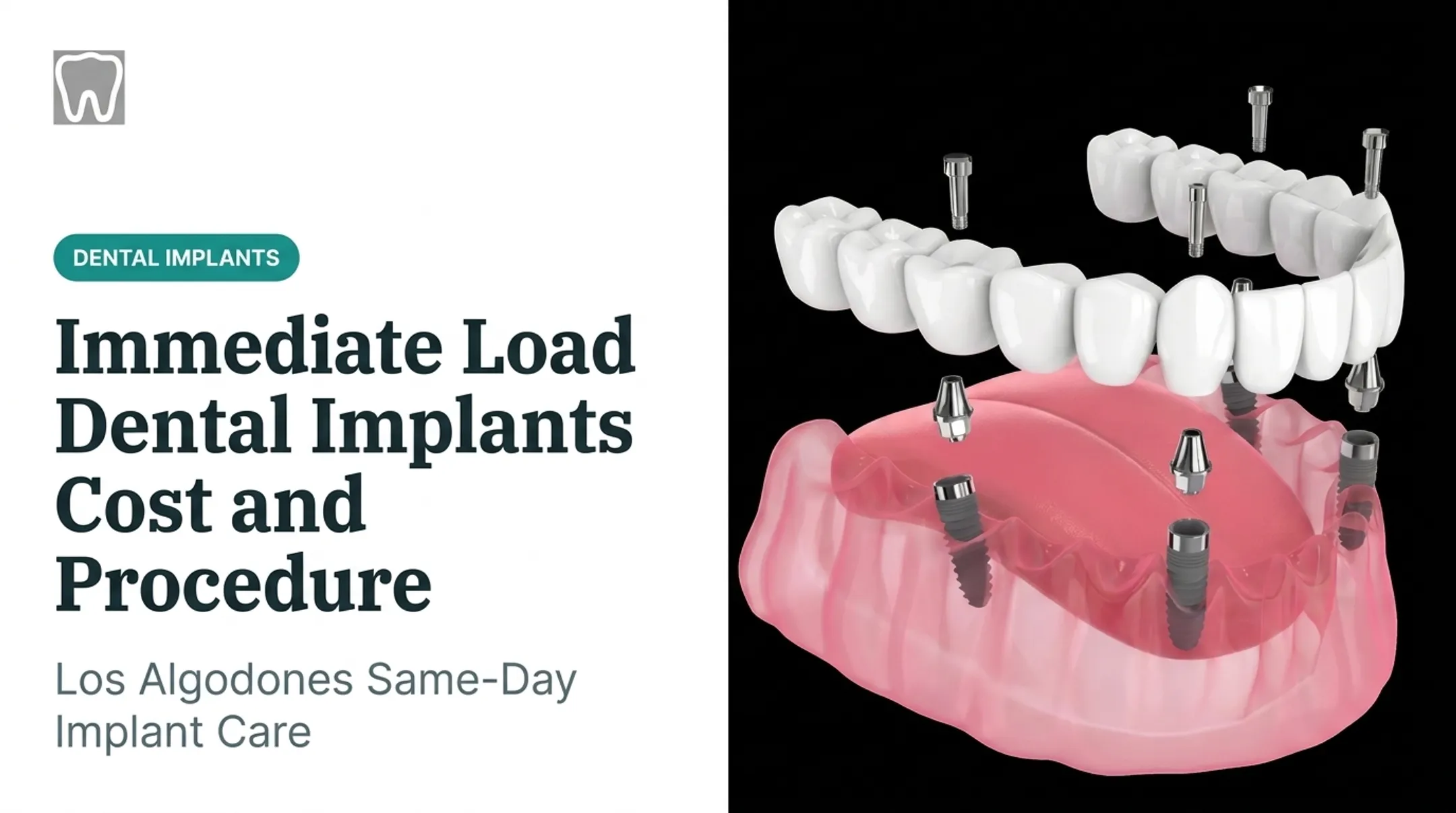
- Immediate loading – a crown gets attached soon after the implant is placed These are separate decisions. You can have immediate placement with delayed loading, or vice versa. Immediate loading works best when primary stability is strong. Front teeth with dense bone are common candidates. Full-arch protocols like All-on-4 also fit this approach, because multiple implants are splinted together for extra rigidity.
Pros of Immediate Load Dental Implants
These advantages show up in daily life: time saved, trips avoided, and confidence while you heal.
Faster Time to a Functional Smile
Traditional implants mean months with a gap, a removable partial, or a healing cap while bone fuses around the implant. Immediate loading collapses that timeline.
In practice, it works like this:
- The implant is placed
- The dentist confirms primary stability
- A temporary crown or bridge is attached the same day
Stability is typically checked with insertion torque or resonance frequency analysis. At Dr. José Moguel's clinic in Los Algodones, the "Teeth in a Day" full-arch protocol follows this sequence: surgery takes about 2-3 hours, and the fixed temporary bridge is screwed on that same afternoon. Bone then heals around the implants over roughly 4-6 months before the permanent bridge goes on.

For patients traveling from the US or Canada, that shorter timeline means fewer border crossings, less time off work, and lower hotel bills.
A 2008 randomized clinical study comparing immediate loading to 3-month conventional loading in front-tooth cases found 100% survival in both groups at 24 months. In well-selected cases, the faster route did not cost outcomes.
Fewer Appointments and Lower Total Trips
Consolidating placement and provisional restoration into one visit cuts down round trips significantly. That's a bigger deal than it sounds for cross-border patients, where every extra visit means another flight, hotel stay, and day away from work.
Dr. Moguel's clinic offers three fixed full-arch options built around this need:
- All-on-4 – four implants per arch, often eligible for same-day loading
- All-on-6 – six implants per arch
- 3-ON-8™ – Dr. Moguel's patented eight-implant protocol
The usual schedule is two trips: one for surgery and temporary teeth, a second (3-6 months later) for the permanent zirconia or ceramic-hybrid bridge. Out-of-town patients can even do an initial virtual consultation using digital X-rays or CBCT scans before booking travel.

Improved Aesthetics and Emotional Wellbeing
Nobody wants to smile with a visible gap for months. Immediate loading avoids that entirely, which matters most in the aesthetic zone (front teeth), where a gap hits confidence and social comfort right away.
A 2017 prospective study of 43 anterior-maxilla implants found that when implants had strong enough stability (ISQ ≥60), a provisional crown could be placed within 48 hours with zero failures at one year.
The clinical result was solid. Patient satisfaction was not a formal endpoint in that study, so the confidence benefit is still more intuitive than proven.
Cons and Risks of Immediate Load Dental Implants
Immediate loading isn't one-size-fits-all. These risks explain why careful case selection matters more here than with traditional implants.
Higher Sensitivity to Case Selection and Technique
There's a smaller margin for error. Less healing time before loading means factors like infection, weak bone density, or unstable primary fixation can jeopardize the entire implant.
Location matters too. Back teeth (molars) face much higher bite forces than front teeth, which makes immediate loading riskier there.
ITI's consensus notes immediate loading may work in select posterior mandible cases, but evidence is insufficient to broadly recommend it for the posterior maxilla.
At Dr. Moguel's clinic, every patient gets a 3D Cone Beam CT scan to evaluate bone density and width in three dimensions before immediate loading is even considered. Combined with computer-guided surgery, the team places implants where bone density is highest and only proceeds with immediate loading when implants can be splinted together for added stability.
Risk of Implant Failure or Micromovement
Applying pressure too early, before the implant has fused to bone, can cause micromovement that disrupts osseointegration.
A 2019 meta-analysis of 39 randomized trials found immediate loading had a statistically lower survival rate than conventional loading (relative risk 0.974). A separate Cochrane review found no clinically significant first-year difference. The research isn't fully settled; outcomes depend heavily on site, technique, and patient selection.
Watch for these warning signs after surgery:
- Increasing pain (beyond the expected dull ache in the first 48-72 hours)
- Swelling that worsens instead of peaking and subsiding
- Discharge or unusual taste
- A feeling of looseness in the implant or bridge
Post-surgery, the clinic advises a soft-food diet for 3-6 months and avoiding straws for 48 hours, since suction can dislodge healing clots. Patients should also skip smoking and alcohol entirely. Smoking is flagged as the leading cause of early implant failure.

Not Suitable for Everyone
Some conditions make immediate loading a poor bet. Higher-risk factors include:
- Active infection at the implant site
- Insufficient bone volume without grafting
- Uncontrolled diabetes
- Heavy smoking
- Untreated gum disease
- Severe bruxism (teeth grinding)
In these cases, a staged, traditional approach is usually safer, even if it takes longer. Dr. Moguel's clinic screens for general health risks, uncontrolled diabetes, and smoking during consultation. Patients are advised to stop smoking two weeks before surgery and six weeks after.
Insufficient bone doesn't necessarily rule out treatment; grafting can sometimes bridge the gap.
Candidacy and Cost Considerations
Candidacy comes down to a clinical exam plus imaging, typically 3D Cone Beam CT, to check bone density, gum health, and bite alignment. Those findings determine whether immediate loading is viable and how the plan is built.
From there, cost is driven by the full scope of care—not a single line item.
Cost depends on the complete plan, not just the implant itself:
- Imaging and diagnostics
- Extractions (if needed)
- Bone grafting (if bone volume is insufficient)
- Temporary crown/bridge
- Final restoration material (titanium, zirconia, ceramic-hybrid)
At Dr. Moguel's clinic, immediate-load "Teeth in a Day" full-arch treatment starts around $9,000-$13,000, while traditional single-tooth implants start from $1,500. Patients treated in Los Algodones can often save 60-70% compared to US pricing for comparable care.

A free, no-obligation consultation—including a review of X-rays or a CBCT scan—is the safest way to confirm whether immediate loading or a staged approach fits your case.
Conclusion
Immediate load implants deliver real convenience: fewer trips, no gap in your smile, and a faster return to normal life. Success still hinges on bone quality, implant stability, and careful case selection from the start.
Match the loading protocol to your biology and risk factors, not to speed alone. Talk with a board-certified implant specialist and get an imaging-based evaluation before choosing between immediate and staged loading.
Frequently Asked Questions
How much do same-day (immediate load) dental implants cost?
Cost depends on the full treatment plan (number of implants, imaging, grafting needs, and crown material) rather than one fixed price. Patients treated in Mexico can often save 60-70% versus comparable US pricing.
What is the difference between immediate implant placement and immediate loading?
Placement refers to when the implant goes into the jaw relative to extraction. Loading refers to when a crown or bridge gets attached to that implant. They're related decisions, but not the same thing.
Can immediate load dental implants really be done in one day?
Yes, in suitable cases. Placement and a fixed temporary crown or bridge can happen the same day, sometimes within a 2-3 hour surgical visit. The final permanent restoration typically comes 3-6 months later, after healing.
Which is better, immediate or delayed implant placement?
Neither is universally better. The right choice depends on infection status, available bone support, and implant stability at the time of placement. Your case dictates the safer path.
Who is not a good candidate for immediate load dental implants?
Poor candidates typically include patients with active infection, insufficient bone density, heavy smoking habits, or uncontrolled diabetes. A staged, traditional approach is usually safer in these cases.
What should I know before getting immediate load dental implants?
Get an imaging-based evaluation (ideally 3D CBCT) first, choose an experienced board-certified provider, and follow aftercare instructions closely, especially around diet and avoiding smoking during healing.