
This guide breaks down dentures, bridges, implant-supported dentures, and affordable paths to full-mouth restoration. By the end, you'll know which option fits your situation, and when a dental implant is actually the smarter long-term investment.
Key Takeaways
- Removable dentures and fixed bridges are the most common non-surgical alternatives to implants
- Implant-supported dentures add stability at a lower cost than full implant treatment
- Cost, jawbone health, and the number of missing teeth are the biggest deciding factors
- Los Algodones, Mexico care can make implant options cost less than a typical US bridge
Why Patients Look for Alternatives to Dental Implants
Not every patient is a straightforward implant candidate. A few common roadblocks:
- Insufficient jawbone density — a 3D CBCT scan shows whether bone can hold an implant; long-standing tooth loss or gum disease often requires grafting first
- Active gum disease — infection must be cleared before placement, or peri-implantitis and failure risk rise
- Medical conditions — a 2016 systematic review linked poorly controlled diabetes to impaired osseointegration and higher failure rates; well-managed diabetes is usually fine
- Sticker shock — a single implant in the US or Canada can exceed $4,500; a full arch can reach $28,000
- Preference for less invasive treatment — some patients simply want a faster fix without surgery
For many, though, the real issue isn't medical suitability. It's price. That distinction matters, because it changes which "alternative" actually makes sense.
Main Alternatives to Dental Implants
The right choice depends on how many teeth are missing and the condition of your remaining teeth and gums.
Removable Partial and Complete Dentures
Partial dentures replace a few missing teeth using clasps attached to remaining natural teeth. Complete dentures replace an entire arch when no natural teeth remain.
Pros:
- Require no surgery
- Cost less upfront than implants or bridges
- Can be fitted relatively quickly
Cons:
- Can slip or click while eating and speaking
- Require daily removal and cleaning
- Don't stimulate the jawbone, so bone loss continues underneath them
In the US, a full set of dentures typically runs $1,400 to over $2,700 depending on the type and provider, according to a 2025 GoodRx survey.
Compare that with a single US dental implant at $3,100–$5,800, and dentures look cheaper on paper. That gap narrows fast once you factor in relining, adjustments, and the bone loss that eventually changes how they fit.
Fixed Dental Bridges
Bridges replace one or more missing teeth by anchoring a false tooth to crowns placed on adjacent teeth. Three main types exist:
- Traditional bridges — crowns on both neighboring teeth support the false tooth
- Cantilever bridges — supported by a crown on just one side
- Maryland (resin-bonded) bridges — a less invasive option using metal or ceramic wings bonded to the back of adjacent teeth, avoiding the need to grind them down
Bridges move faster than implants. Cleveland Clinic notes most cases wrap up in two visits, with a 2–4 week lab turnaround in between.
The tradeoff is structural: traditional and cantilever bridges permanently reshape healthy adjacent teeth. A systematic review found tooth-supported bridge survival rates of 94.1% at 5 years, dropping to 77.8% at 10 years. Plan on eventual replacement, unlike a well-maintained implant.

Implant-Supported Dentures
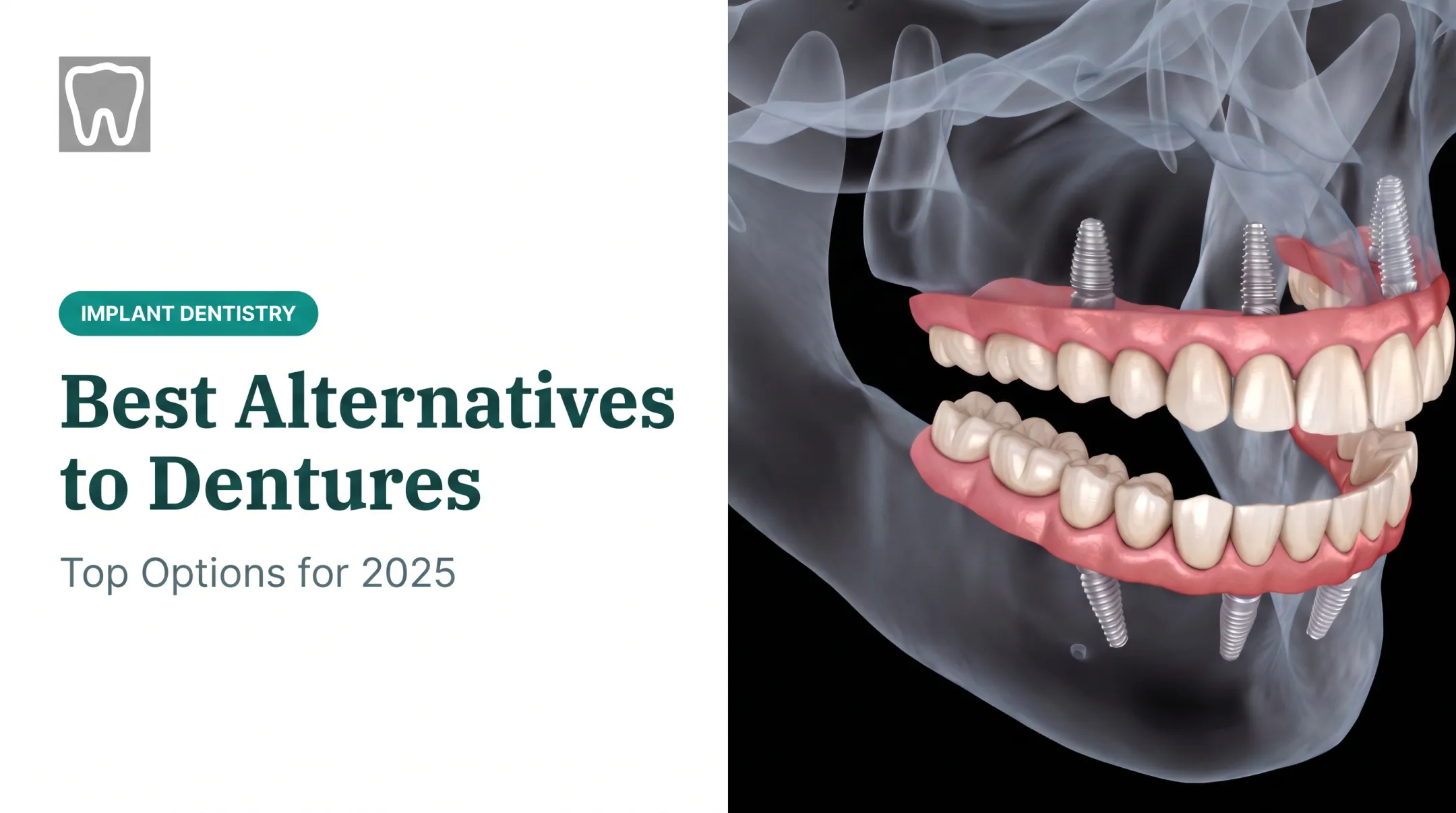
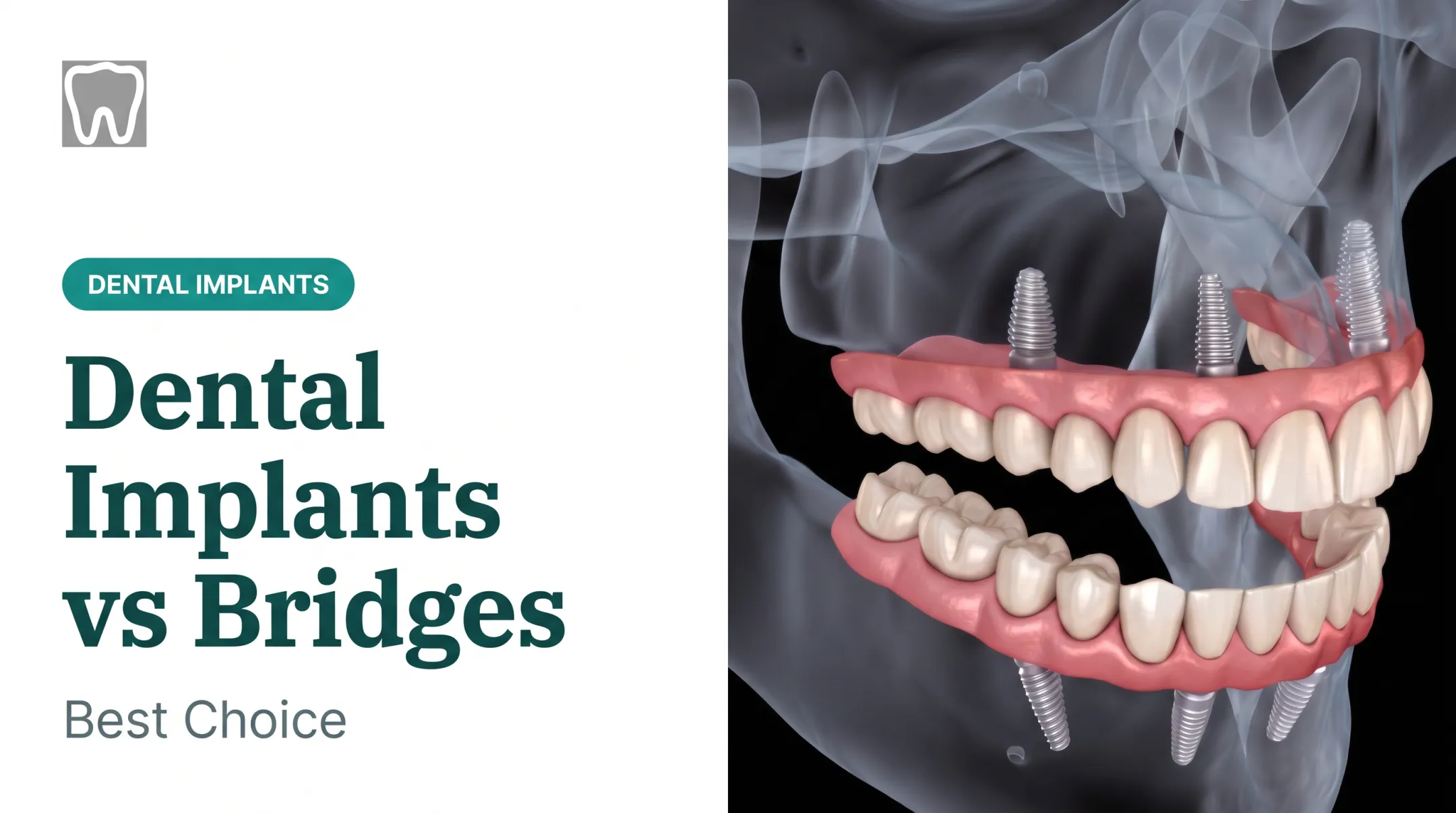
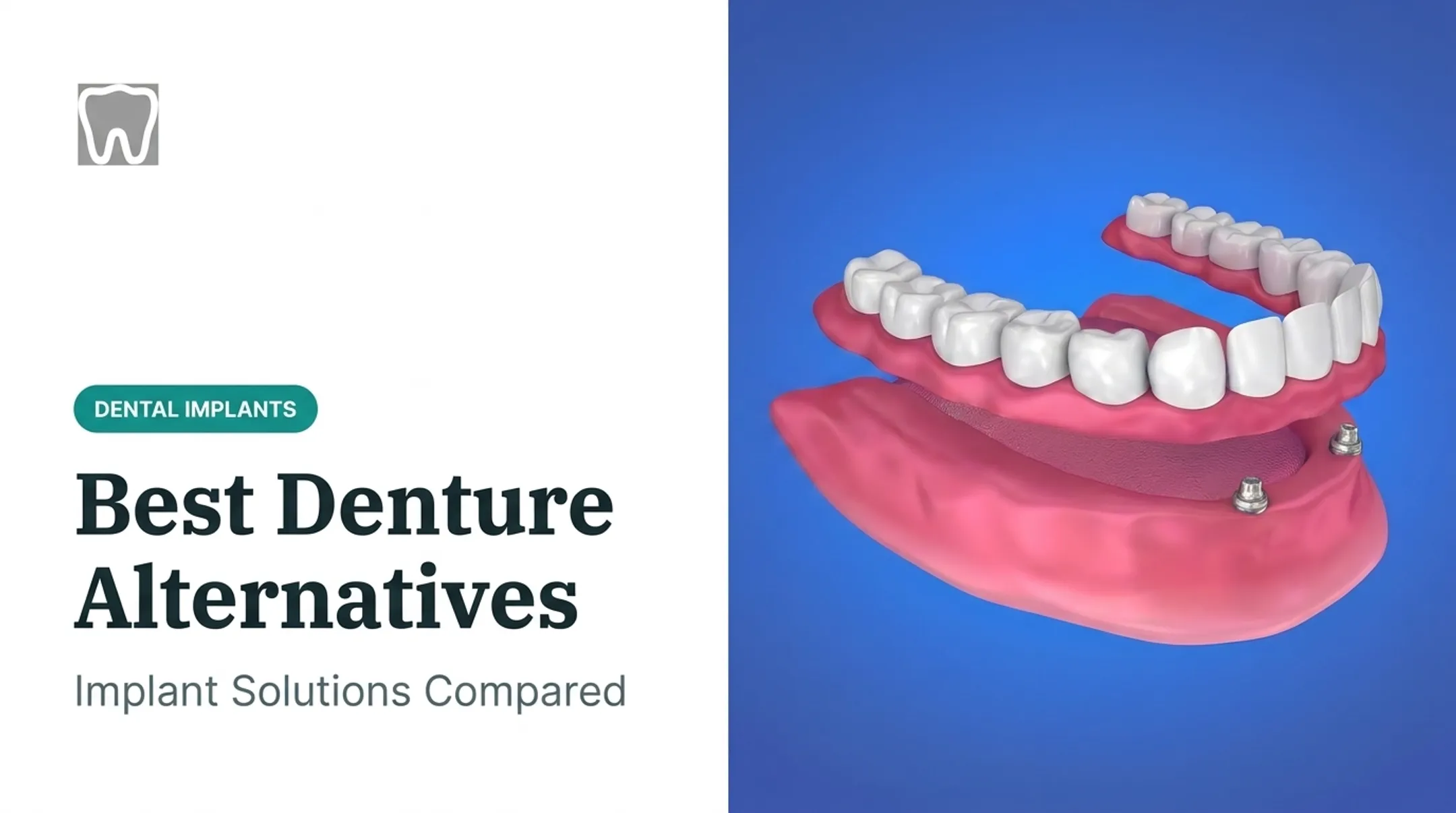
This hybrid option anchors a removable or fixed denture to a small number of implants, typically 2 to 6, rather than placing one implant per missing tooth. You get far more stability than a regular denture, at a lower cost than replacing every tooth individually.
How it compares:
- In Mexico, implant-supported dentures run $3,500-$5,500, versus $10,000-$14,000 in the US — a savings of up to 65%
- Anchored by 2-6 implants, they resist the slipping and clicking that plague conventional dentures
- A 2023 meta-analysis found significant improvements in chewing performance at 1, 3, and 12 months after implant overdenture placement compared to conventional dentures
We see implant-supported dentures as a middle ground for patients who want implant-level stability without paying for an individual implant in every missing-tooth space. They often fit best when bone density or budget rules out a fully fixed full-arch bridge like All-on-4.

Comparing Alternatives: Cost, Durability, and Stability
| Option | Typical Cost | Lifespan | Bone Preservation |
|---|---|---|---|
| Removable dentures | $1,400-$2,700 (US) | Often needs replacing within ~10 years | No — bone resorption continues |
| Traditional bridge | $2,000-$5,000 (US) | 77.8% survival at 10 years | No — only supports adjacent teeth |
| Maryland bridge | $1,500-$2,500 (US) | ~92% survival at 5 years | No |
| Implant-supported denture | $3,500-$5,500 (Mexico) | Long-term with proper care | Yes — stimulates jawbone |
| Traditional implant | $750-$1,500 (Mexico) | Lifetime with maintenance | Yes — fuses directly with bone |
Dentures and bridges cost less upfront. But that lower price tag doesn't tell the whole story. Relining, replacements, and the slow reshaping of your jaw under a denture all add up over a decade or two.
Dental implants fuse permanently with the jawbone, preventing the shrinkage that changes your facial structure over time. That's a meaningful difference if you're weighing options for the next 15-20 years, not just the next five.
When comparing options side by side, three factors matter most:
- Upfront cost: Dentures and bridges are cheaper initially but often require relining or replacement
- Bone health: Only implant-supported options stimulate the jawbone and prevent resorption
- Long-term value: Implants placed once, with proper care, can last a lifetime

How to Make Dental Implants More Affordable Instead of Choosing an Alternative
Most patients searching for "cheaper alternatives" aren't medically unsuited for implants. They're reacting to US and Canada pricing, where a single implant can top $4,500 and a full arch can reach $28,000.
Traveling to a Mexico-based clinic changes that math entirely:
- Single-tooth implants run $750-$1,500 in Los Algodones versus $3,500-$5,000 in the US
- All-on-4 full-arch treatment costs $8,000-$12,000 in Mexico versus $24,000-$30,000 in the US
- Full-mouth reconstruction runs $16,000-$24,000 in Mexico versus $45,000-$65,000 in the US
At Dental Implants in Mexico, Dr. José Moguel — a board-certified periodontist with over 38 years of experience and more than 17,000 implants placed — offers free consultations with a customized treatment plan and cost estimate.
If bone density is the barrier, adjunct procedures in Mexico often cost far less than in the US:
- Bone grafting: $400–$800 vs. $1,500–$3,000 in the US
- Sinus lift: $600–$900 vs. $2,500–$4,000 in the US

Those steps can make you an implant candidate instead of steering you toward a shorter-lived alternative. Same-day fixed full-arch options are also available if you want a functional smile before you leave.
How to Choose the Right Option for You
Match the option to your mouth, budget, and how long you want the result to last. Weigh these four factors:
- Number of missing teeth — a single gap and a full arch call for very different solutions
- Bone and gum health — a 3D CBCT scan (not a basic 2D X-ray) shows true bone width and nerve position
- Budget — including the real, long-term cost, not just the sticker price
- Desired permanence — are you looking for a 5-10 year fix or a lifetime solution?
Get a 3D CBCT scan before committing. A recent scan can be sent digitally for a free remote treatment plan and price quote.
Weigh long-term value, not just today's invoice. A bridge you replace twice over 20 years can cost more than one longer-lasting option placed once.
Frequently Asked Questions
How can I replace my teeth without implants?
Dentures and fixed bridges are the main options that don’t require implants. Which one fits depends on how many teeth you’re missing and the health of your remaining gums and bone.
What is a cheaper alternative to a tooth implant?
Removable partial or complete dentures are typically the most affordable short-term option. Resin-bonded (Maryland) bridges are the least invasive fixed alternative if you want something more permanent.
How do you get dental implants when you can't afford them?
Financing plans, insurance appeal support, and treatment in Mexico can all make implants more affordable. Patients often save 60–70% with care in Los Algodones compared with typical US pricing.
Can I live without a dental implant?
Yes, but an unaddressed gap can shift adjacent teeth, alter your bite, and speed up jawbone loss over time. Regular monitoring is still recommended if you delay replacement.
Is there such a thing as screwless dental implants?
No. All osseointegrated implants use a screw-like post that fuses with the jawbone for stability. Some minimally invasive protocols, like 3-ON-8™, reduce the number of implants needed compared to older full-arch methods.