
For patients weighing cross-border care, this decision carries extra weight. Cost, travel time, and how long the results last all factor into the choice. This guide breaks down what each treatment actually does, what it costs, and how to decide, including situations where you might need both.
TL;DR
- Implants replace missing or damaged teeth from the root up; veneers cover healthy teeth for cosmetic improvement only
- Higher upfront cost for implants, but they can last decades; veneers cost less at first and need replacement every 10–15 years
- A missing tooth needs an implant—veneers cannot fill a gap or restore chewing function
- Many patients combine both for a full smile makeover
- Treatment in Mexico can cut costs by 60–70% compared with US pricing
Dental Implants vs Veneers: Quick Comparison
| Factor | Dental Implants | Veneers |
|---|---|---|
| Cost | Higher upfront (surgery, materials, lab work) | Lower per-tooth, no surgery |
| Longevity | Decades, often a lifetime with care | 10-15 years (porcelain), 5-7 years (composite) |
| Invasiveness | Surgical placement, months of healing | Minimal enamel removal, 2-3 visits |
| Best for | Missing, decayed, or unsalvageable teeth | Healthy teeth with cosmetic issues |
| Insurance | Sometimes partially covered | Usually not covered (cosmetic) |
Delta Dental notes that veneers are commonly classified as cosmetic and are often excluded from standard dental plans, while implant coverage varies more by plan and medical necessity.
Typical pricing (internal clinic data):
- Single-tooth dental implant: about $750–$1,500 in Mexico vs. $3,000–$4,500 in the US
- Porcelain veneer: about $450 per tooth in Mexico vs. $1,500 in the US
- Approximate savings: roughly 70% versus typical US fees

What Are Dental Implants?
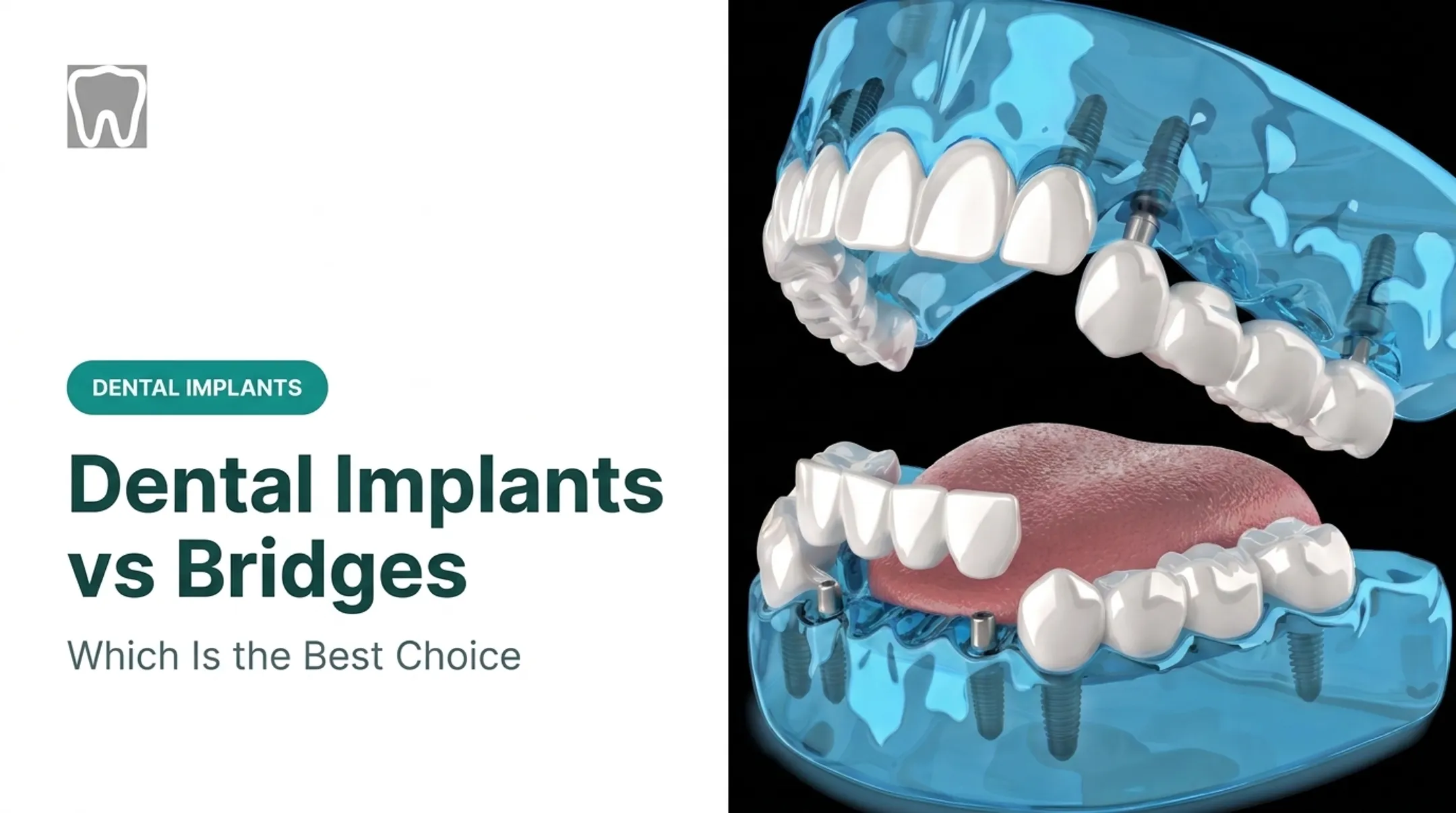
A dental implant is a titanium post surgically placed into the jawbone. Over 3-4 months, the bone fuses to the post through a process called osseointegration. Once that fusion is solid, a custom crown is permanently attached on top.
Core benefits include:
- Prevents jawbone deterioration that follows tooth loss
- Keeps adjacent teeth stable (no grinding them down for a bridge)
- Restores full chewing function, not just appearance
Implant treatment scales to how many teeth you need to replace:
- Single-tooth implant — one post and crown for a single gap
- All-on-4 — four implants supporting a full arch
- All-on-6 — six implants per arch for added stability
- Advanced full-arch protocols — for patients missing most or all of their teeth

When Implants Are the Better Fit
Implants are the right tool when a tooth is already gone or too damaged to save. Severe decay, failing bridgework, or advanced gum disease that has loosened teeth can mean a single implant—or a full-arch rebuild if most of the teeth are involved.
For extensive loss, protocol choice matters. Dr. José Moguel, a board-certified periodontist who has placed over 17,000 implants, developed the patented 3-ON-8™ protocol: eight implants per arch supporting three separate, highly stable zirconia bridges. It is built for cases where standard All-on-4 or All-on-6 may not offer enough support.
A 10-year systematic review published on PubMed found implant-level survival around 96.4%, with results varying by patient and study population. That is a strong long-term record, but no study guarantees a fixed lifespan for every implant.
What Are Veneers?
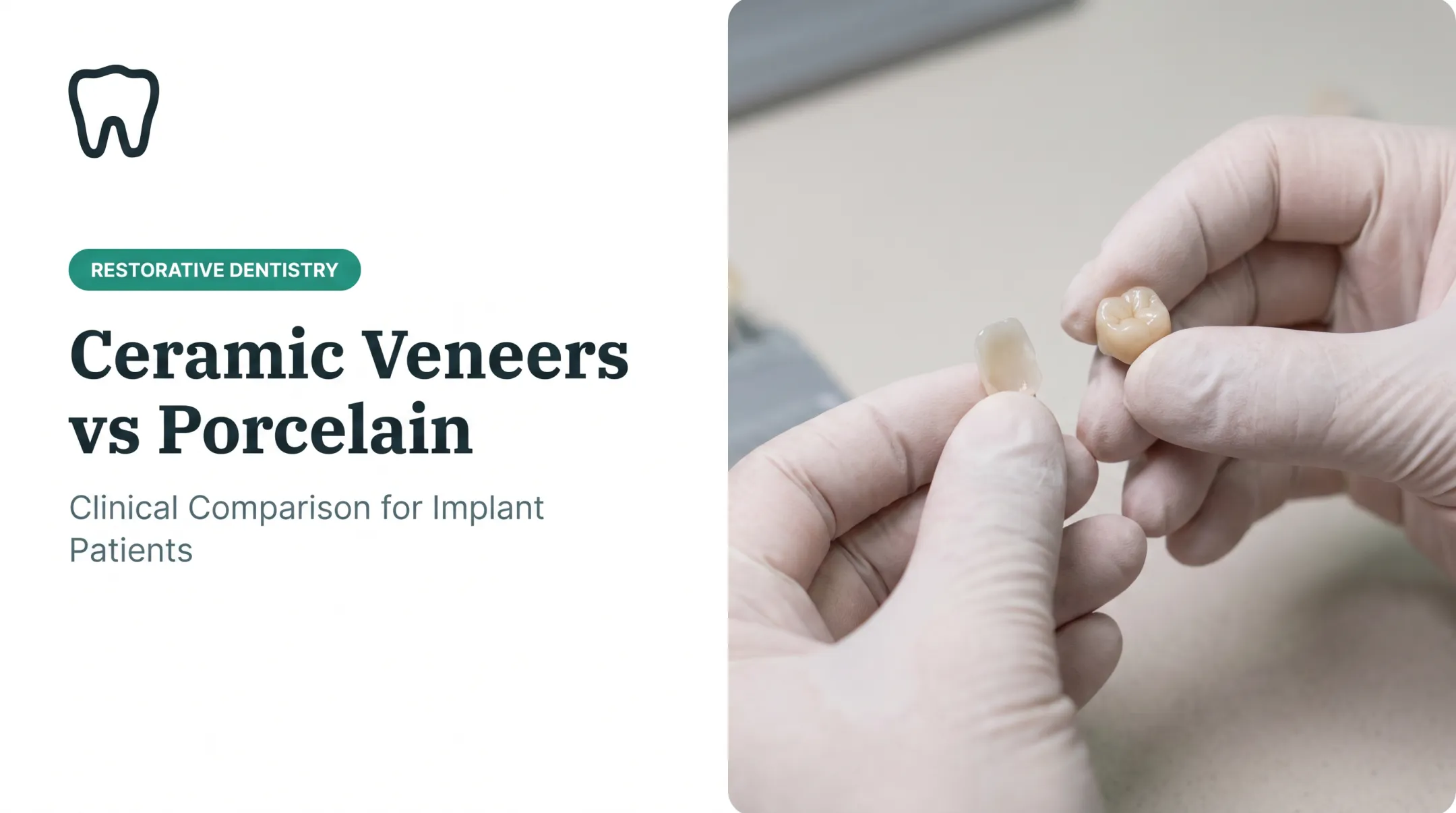
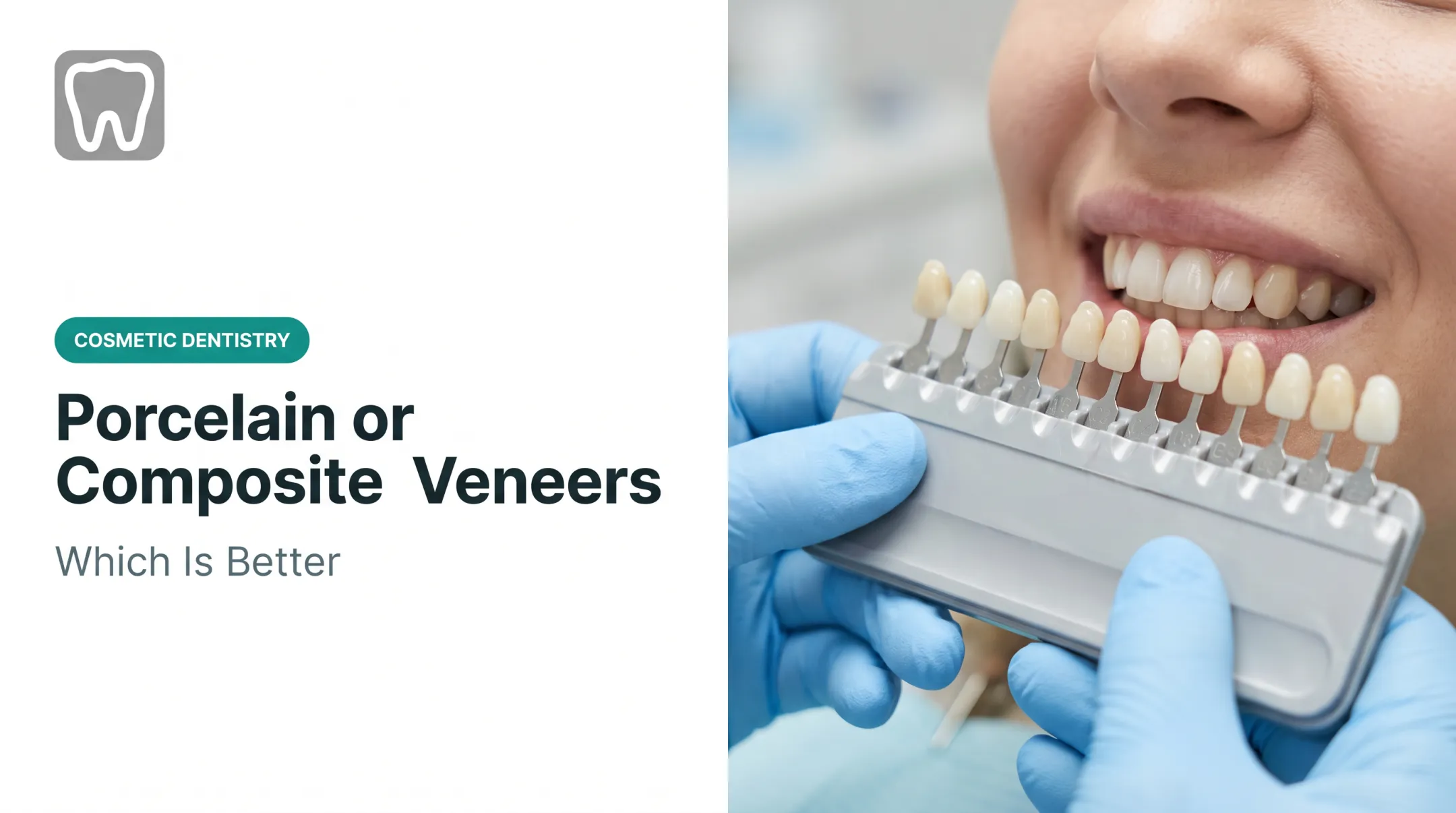
Veneers are thin, custom shells, usually porcelain or composite resin, bonded to the front surface of existing teeth. They change color, shape, or minor alignment while preserving most of the natural tooth underneath.
Core benefits include:
- Fast cosmetic transformation, often in 2-3 visits
- Natural, tooth-like appearance
- Far less invasive than crowns, which require more enamel removal
There are two main types:
- Porcelain veneers: more durable, stain-resistant, longer-lasting
- Composite veneers: lower cost, quicker to apply, less durable over time
Use Cases of Veneers
Veneers work best on healthy teeth with cosmetic flaws: stains that won't respond to whitening, small chips, minor gaps, or slight misalignment. They will not fix a missing tooth or repair underlying decay. The tooth underneath needs to be structurally sound for veneers to be an option at all.
A 20-year clinical study on porcelain veneers tracked 318 restorations and found survival rates of 94.4% at 5 years, 93.5% at 10 years, and 82.9% at 20 years. Ceramic fracture accounted for nearly 45% of failures.

Composite veneers show a shorter track record. One study of 196 restorations found an average service time of just 3.5 years, with higher failure rates on teeth that had root canal treatment.
Dental Implants vs Veneers: Which Is Better for You?
The decision usually comes down to one question: is the tooth actually there?
If a tooth is missing, decayed beyond repair, or structurally compromised, veneers simply aren't an option. There's nothing solid to bond them to.
Choose implants if:
- You have one or more missing teeth
- A tooth is too decayed or damaged to save
- You want a permanent, functional fix, not just cosmetic
If the tooth is still healthy and intact, veneers are usually the better path.
Choose veneers if:
- Your teeth are structurally healthy
- You want to fix color, shape, or minor gaps
- You want results in a matter of weeks, not months
Many patients don't fit neatly into one category. It's common to combine both: an implant replaces a missing tooth, then veneers on the surrounding teeth create a uniform, matching smile line. This kind of combination plan is standard in full smile makeovers.
Real-World Example: Choosing the Right Treatment
Consider a documented case involving an anterior (front) tooth too damaged for a veneer or crown alone. Treatment finished in about four months and included:
- Immediate extraction and implant placement
- Temporary aesthetic crown during healing
- Digital scans and a custom zirconia abutment
- Final translucent ceramic crown
The cost comparison was straightforward: this implant procedure ran $1,350 in Mexico versus a $4,800 quote in the US, a savings of $3,500 on a single tooth. Full-arch treatment widens the gap further. All-on-4 in Los Algodones runs $8,000-$12,000 versus $24,000-$30,000 in the US, with savings of up to 65%.

If you are unsure which path fits, a free consultation clarifies the options. Send a recent panoramic X-ray or 3D CBCT scan digitally, and Dr. Moguel's team will build a treatment plan and price quote at no cost.
Ready to find out which option fits your smile? Book a free, no-obligation consultation to get a personalized treatment plan and transparent price quote.
Conclusion
The right choice comes down to matching the solution to your specific dental condition. Missing or unsalvageable teeth call for implants. Cosmetic concerns on otherwise healthy teeth are better served by veneers, and sometimes both work together in the same treatment plan.
Whichever direction fits, the practical outcomes matter most: real cost savings, durability that holds up over years, and a smile that functions as well as it looks. A personalized consultation remains the fastest way to figure out your best next step.
Frequently Asked Questions
What's the average cost of a full set of veneers?
Pricing depends on material: porcelain costs more than composite. A full set typically covers 6-10 front teeth. In Mexico, porcelain veneers run around $450 per tooth compared to $1,500 in the US.
How much will 4 veneers cost?
Cost depends on material and clinic. At roughly $450 per tooth in Mexico versus $1,500 in the US, four porcelain veneers run about $1,800 versus $6,000. Ask for a personalized quote for exact pricing.
Is it better to do veneers or implants?
It depends on whether the tooth is missing or intact. Missing or unsalvageable teeth need implants; healthy teeth with cosmetic issues are better suited to veneers.
What is the best option for replacing all your teeth?
Full-arch implant solutions like All-on-4, All-on-6, or the patented 3-ON-8™ protocol are built for total tooth loss. Veneers can't replace missing teeth, so they're not an option here.
Can you have a mix of implants and veneers?
Yes. Combination plans are common for patients who have both a missing tooth and cosmetic concerns on neighboring teeth, creating one uniform smile.
How long do implants and veneers last?
Implants are designed to last a lifetime with proper care and come with a lifetime warranty on the implant screw. Porcelain veneers typically last 10-15 years before needing replacement.