
The truth: appearance depends heavily on materials, technique, and healing stage. A newly placed implant looks nothing like the finished result four months later.
At Dr. José Moguel's clinic in Los Algodones, over 17,000 implants placed across 38+ years give a clear picture of what real before-and-after results look like at every stage. Here's what to expect.
Key Takeaways
- Finished implant crowns look indistinguishable from natural teeth once fully healed
- Appearance shifts dramatically across three stages: post placement, temporary crown, and final restoration
- Gum health, crown material, and dentist skill drive how natural the result looks
- Full-arch solutions like All-on-4, All-on-6, and 3-ON-8™ create more dramatic before/after transformations than single-tooth cases
What Do Dental Implants Look Like at Each Stage? (Before and After)
Stage 1: Extraction/Post Placement
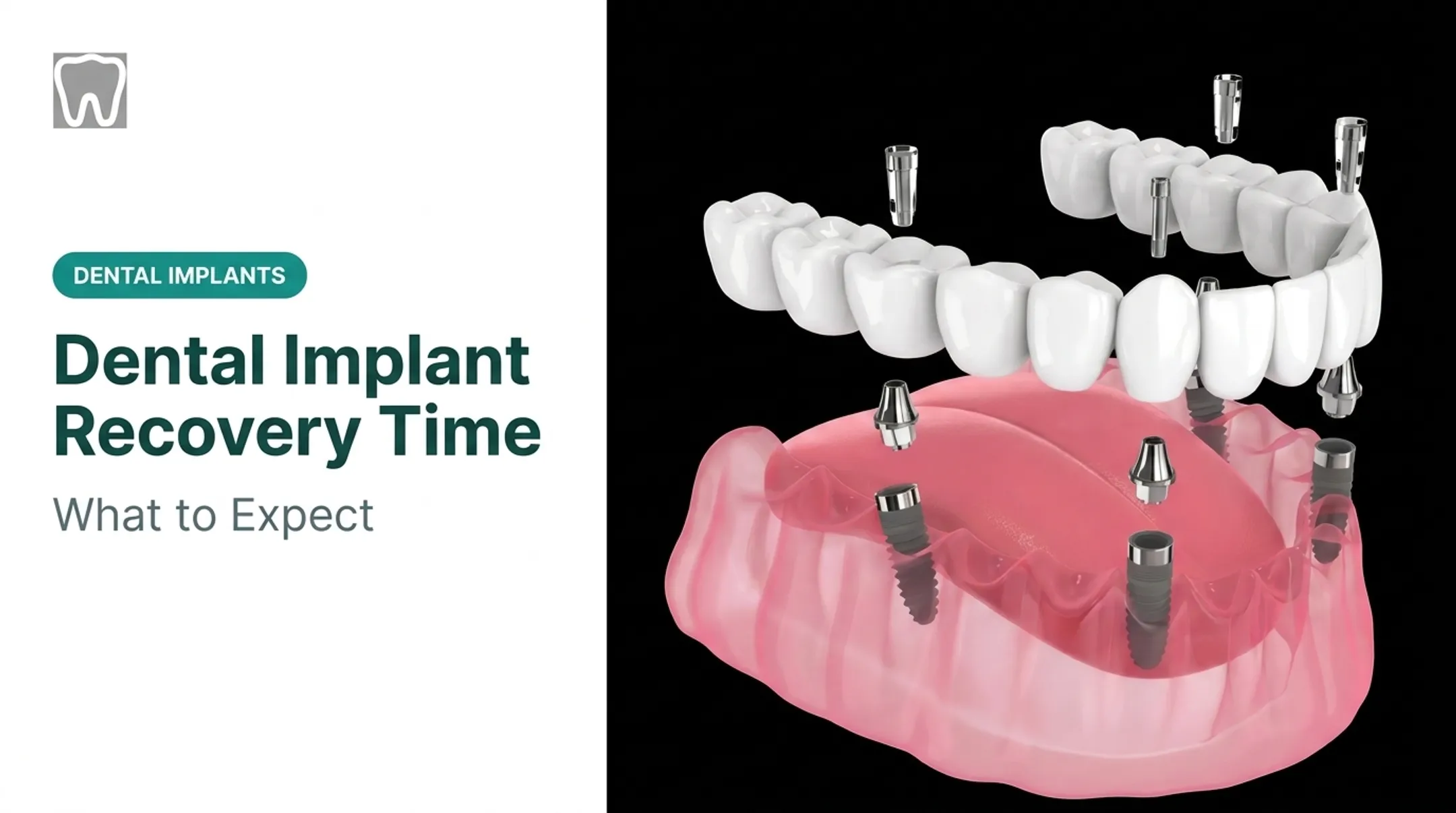
The titanium or zirconia implant post sits below the gumline, embedded directly in your jawbone. Externally, you won't see a metal post at all. You'll notice:
- Stitches at the surgical site
- A small healing cap (a rounded metal cover) protecting the implant
- Mild swelling in the surrounding gum tissue
Most patients don't walk around with a visible gap. Clinics typically fit a temporary option immediately so the smile stays intact during healing.

Stage 2: Temporary Crown/Healing Period
During the 3-4 month osseointegration period, the implant fuses with your jawbone. You'll likely wear a temporary crown or healing cap over the site.
What it looks like while you heal:
- Functional temporary tooth that is not the final restoration
- Slightly duller or less translucent shade than neighboring natural teeth
- Gum tissue still settling into its permanent contour
Stage 3: Abutment Attachment
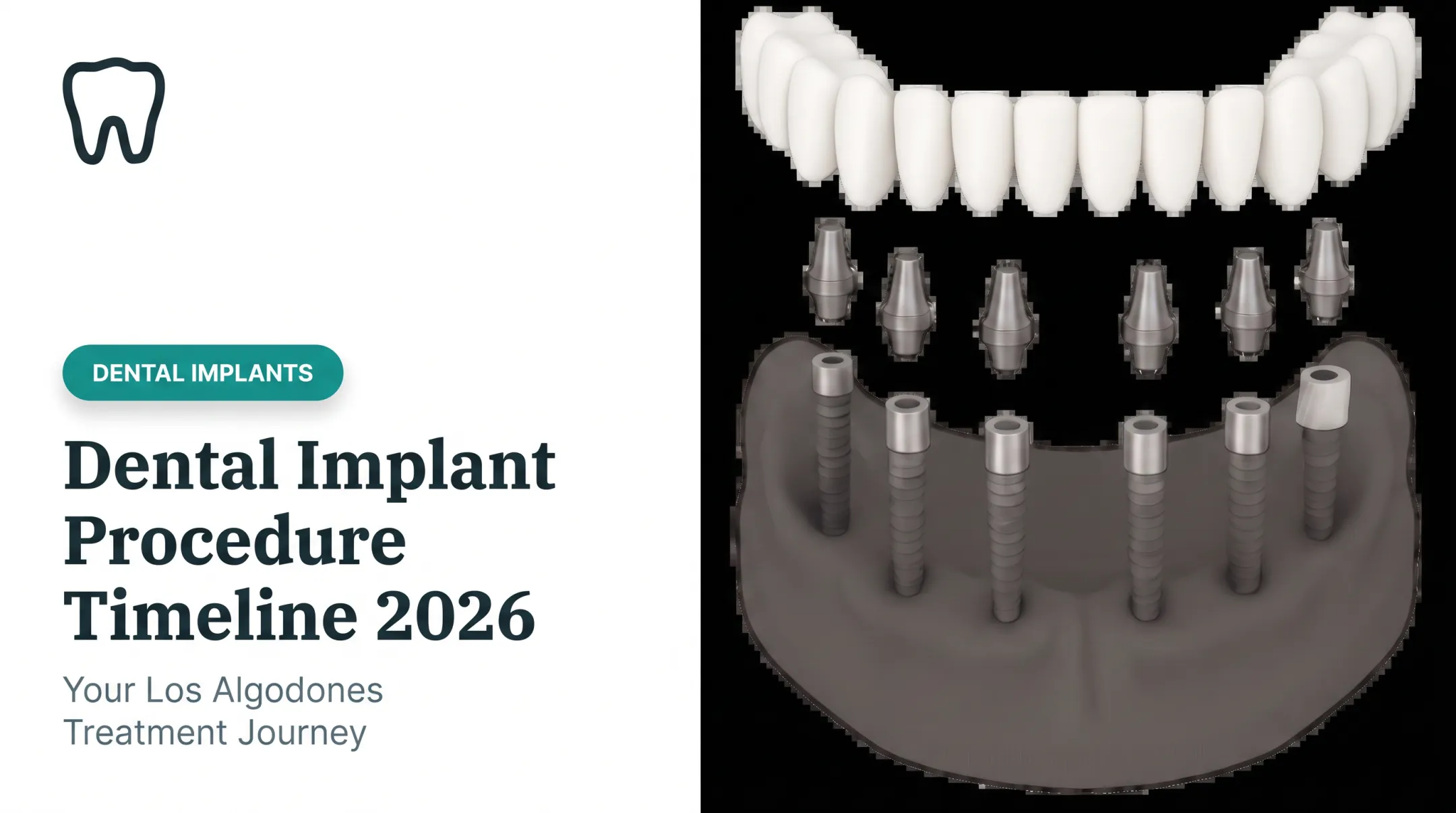
Once integration is confirmed, the dentist attaches an abutment. This small connector piece links the implant post to the crown above. It's typically hidden entirely below the gumline once tissue heals around it, so from the outside, you'd never know it's there.
Stage 4: Final Restoration
The permanent crown, custom-shaded and shaped in a dental lab, is placed on the abutment. At Dr. Moguel's clinic, this final crown is a porcelain or zirconia restoration, matched to neighboring teeth for color, shape, and translucency using digital scans taken after integration.
In one documented anterior-tooth case at the clinic, a patient received an immediate NobelActive implant with a zirconia abutment and a hand-crafted translucent ceramic crown. Treatment spanned four months at a fraction of a comparable U.S. quote. Gum contour settled cleanly, the temporary's duller shade gave way to a shade-matched crown, and the finished tooth blended with the rest of the smile.

Ask any clinic showing before/after photos whether the "after" image shows the temporary or the final crown. That distinction matters. A temporary can look noticeably different from the finished product.
What Factors Affect How Natural an Implant Looks?
Crown Material
Not all crown materials perform the same visually. A 2017 spectrophotometric study of 98 anterior maxillary single crowns found that a gold-hue abutment with a zirconia coping produced the smallest crown color mismatch.
Zirconia-on-zirconia combinations showed the largest color difference but the least visible gum discoloration. Zirconia is metal-free, cosmetic, and resistant to chipping, which is why it's a common choice for visible teeth.
Shade Matching
Dentists compare crown color against neighboring teeth using shade-matching systems, often referencing standards like VITA's 16-shade classical guide, one of the most established references in dentistry.
At Dr. Moguel's clinic, digital scanning of the patient's mouth guides an in-house lab that custom-shades and contours each crown to match color, shape, and translucency.
Gum and Bone Health
Gum recession or thin bone can expose the metal edge of an implant, creating a grayish shadow at the gumline. Bone grafting and soft-tissue procedures build a stable foundation so the crown sits naturally, without visible edges.
Dentist Skill and Technology
Digital planning tools make a measurable difference. A 2024 review found that digital workflows improved implant positioning accuracy and esthetic outcomes compared to traditional methods. Dr. Moguel's clinic uses:
- High-resolution 3D Cone Beam CT imaging for bone density evaluation and implant positioning
- Digital scanning for impressions and crown design
- An in-house CAD/CAM lab for custom-fabricating crowns and full-arch zirconia bridges

Before and After: Single-Tooth vs. Full-Mouth Implants
Single-tooth implants typically show one discreet crown blending seamlessly into an existing smile. The rest of the teeth stay untouched, so the "after" photo often looks subtle: you have to look closely to spot the difference.
Full-mouth options produce a much larger change. All-on-4, All-on-6, and Dr. Moguel's patented 3-ON-8™ protocol (eight implants per arch instead of six) transform an entire smile at once. These before-and-after comparisons are dramatic. Collapsed bites, missing teeth, and worn teeth give way to a full, symmetrical arch.
| Treatment | Typical Timeline | Visual Outcome |
|---|---|---|
| Single-tooth implant | 3-4 months | One crown blends into existing smile |
| All-on-4 | 3-4 months | Full-arch transformation, same-day temporary possible |
| All-on-6 | 4-5 months | Full-arch transformation, added implant redundancy |
| 3-ON-8™ | 4-6 months | Three segmented zirconia bridges, 12-14 teeth replaced |

Many full-arch patients qualify for same-day fixed temporary teeth. Surgery for a full arch runs roughly 2-3 hours, after which a rigid temporary bridge gets screwed onto the implants that same afternoon. That changes the before-and-after timeline: patients leave with a functional smile on day one, then transition to the permanent restoration after 4-6 months of healing.
Common Myths About Implant Appearance
Myth: Implants look metallic or fake. Fact: Finished crowns are tooth-colored porcelain or zirconia, not raw metal. The only visible metal is temporary, during early healing stages before the final crown is attached. Myth: You can always tell someone has implants. Fact: This usually happens with poor planning, outdated materials, or inadequate shade matching, not implants themselves. With proper technique, implants are designed to be indistinguishable from natural teeth. How to evaluate before/after photos:
- Ask if the "after" shows a temporary or final crown
- Check whether gum healing appears complete
- Look for shade consistency with neighboring teeth
Maintaining Your Implant's Natural Look
Keeping your implant looking its best long-term comes down to a few habits:
- Brush and floss daily, paying attention to the gumline around the implant
- Limit staining foods, coffee, and tobacco, which can dull crown shade over time
- Schedule regular follow-up visits to catch gum recession early, before it exposes implant edges
Daily care only goes so far if the materials and clinic support are weak. Choosing FDA-approved implant systems helps the restoration hold its shade and fit over time.
Dr. Moguel's clinic uses Nobel Biocare, Straumann, and MegaGen systems. Patients get a lifetime warranty on implant hardware and a five-year warranty on crowns and bridges when they keep up with professional cleanings.
Frequently Asked Questions
How long does dental implant surgery take?
A single-tooth implant typically takes 30-45 minutes to place. Full-arch procedures like All-on-4 usually take 2-3 hours per arch, depending on complexity and whether extractions are needed.
How painful is it to get a dental implant?
Your dentist places the implant under local anesthesia, so the procedure itself is painless. Sedation is available if you are anxious, and mild soreness afterward is usually managed with medication.
Do all your teeth get pulled for implants?
No. Only unrestorable or damaged teeth are extracted for single-tooth or partial cases. Dentists usually reserve full removal for full-mouth solutions like All-on-4, when the entire arch is being restored.
What does a dental implant post look like?
The post is a small titanium or zirconia screw shaped like a natural tooth root. Once the gum heals over it, it's completely invisible from the outside.
Can dental implants look completely natural?
Yes. With proper shade matching, quality crown materials, and skilled placement, implants are typically indistinguishable from natural teeth once the final restoration is in place.
How long does it take to go from before to final after results?
For a single-tooth implant, the full journey from placement to final crown typically takes 3-4 months, covering osseointegration, abutment attachment, and custom crown fabrication.