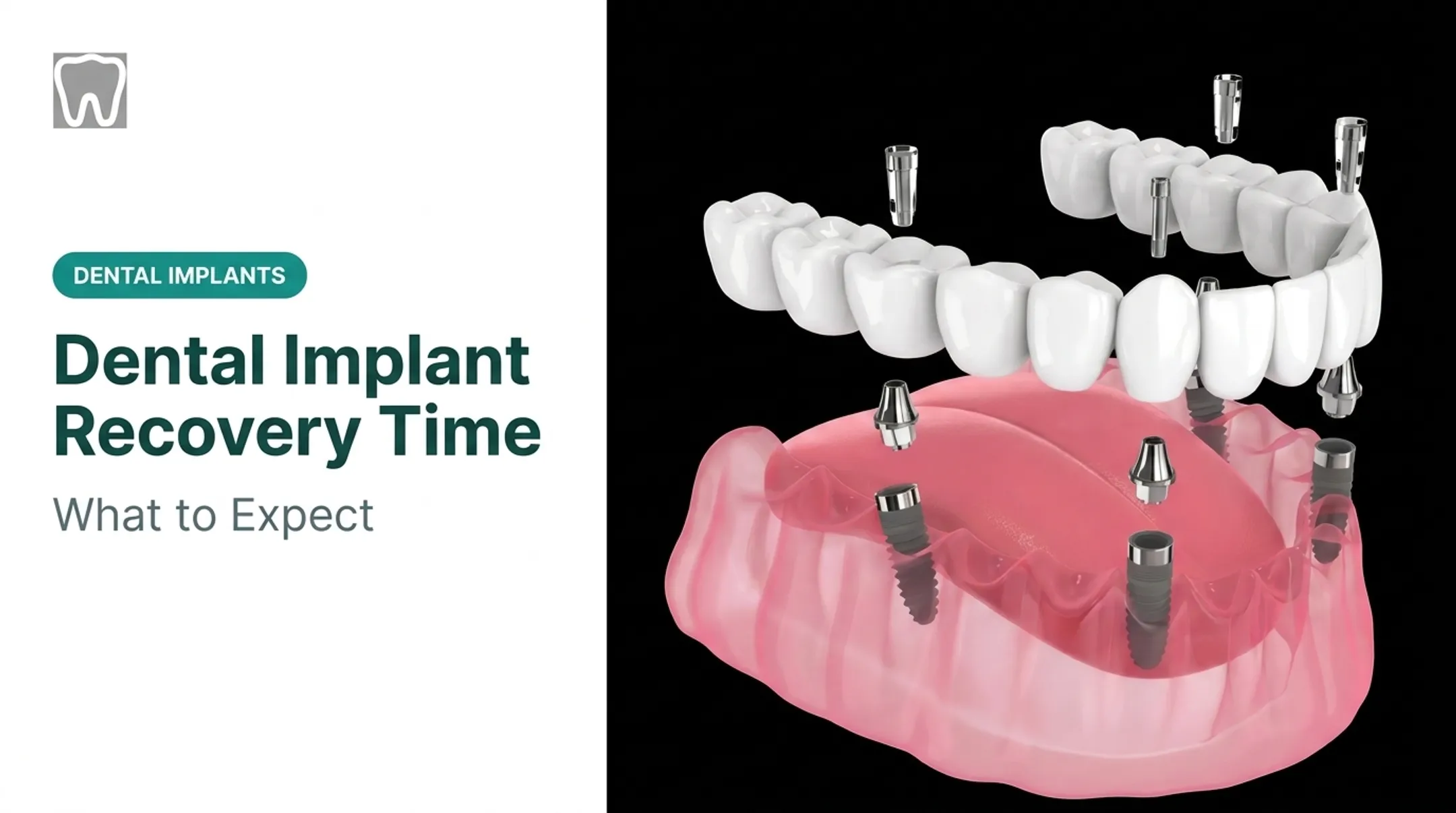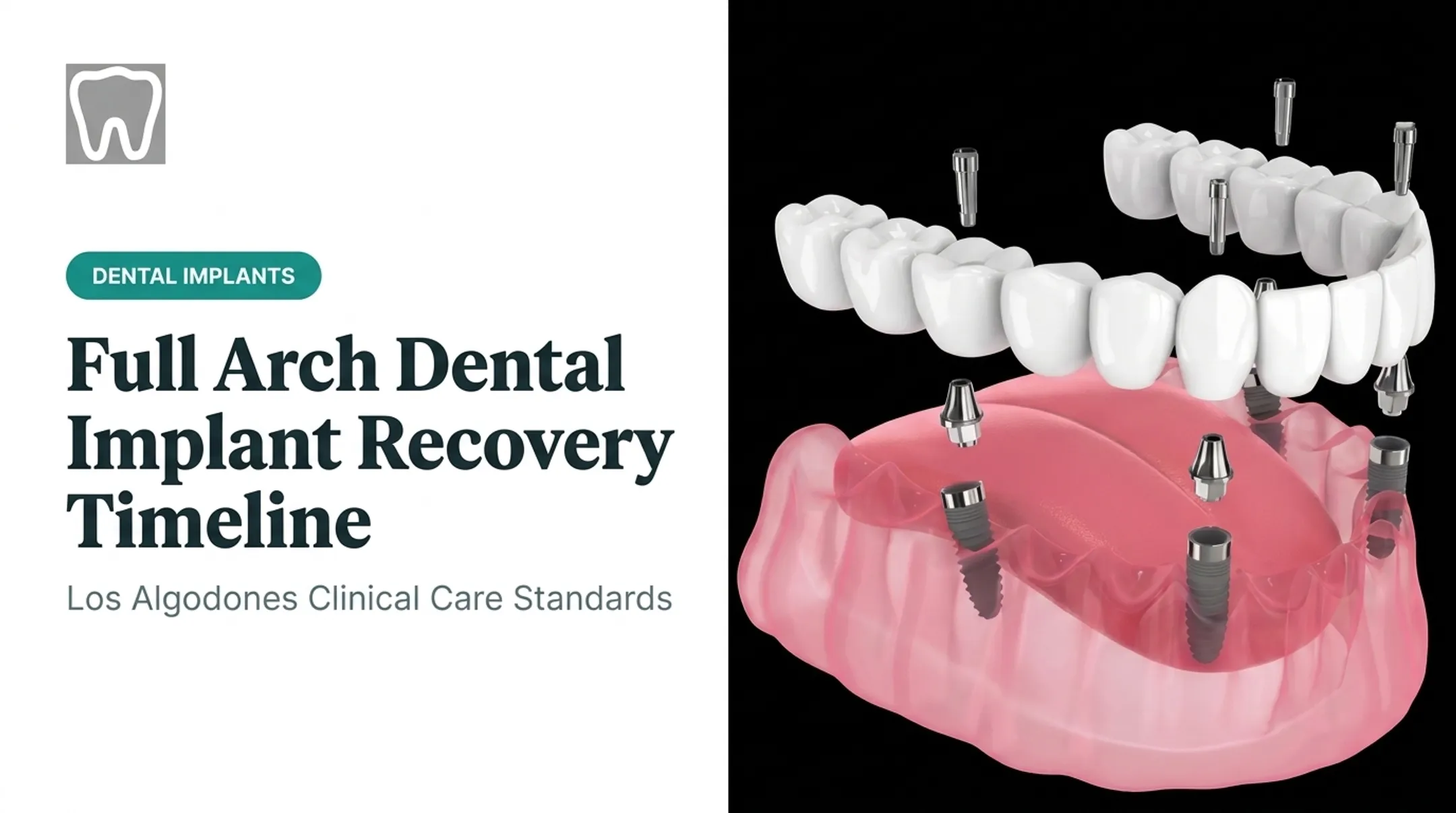

Timelines vary quite a bit. A single implant heals differently than a full-arch case like All-on-4 or the 3-ON-8™ protocol. This guide walks through the phase-by-phase eating timeline, what foods work at each stage, and what actually determines your personal recovery speed.
Key Takeaways
- Soft foods resume in 3-4 weeks for most single implants; full unrestricted eating returns in 3-6 months
- The first 24-48 hours require liquids only: no straws, no hot food, no alcohol
- Full-mouth cases (All-on-4, All-on-6, 3-ON-8™) need longer soft-diet phases, often 3-6 months
- Sticking to your dentist's food progression protects the implant and lowers failure risk
How Long Does It Really Take to Eat Normally After Dental Implants?
Your gums heal in weeks. Your bone takes months. That gap is why patients get mixed answers about eating timelines.
Soft tissue around an implant typically heals in 2-4 weeks. Osseointegration, the process where the implant fuses with your jawbone, generally takes 3-6 months, according to postoperative guidance from MyOMS.org.
Full chewing function depends on the bone, not just the gums.
Timeline by procedure type:
- Single implant: Soft everyday foods within 3-4 weeks
- Multiple implants: 6-8 weeks before comfortable soft-food chewing
- Full-arch (All-on-4, All-on-6, 3-ON-8™): 3-6 months of soft-diet adherence during integration

Your final crown or prosthesis placement is usually the real green light for unrestricted eating. Until that piece is set, you're technically still in a healing phase, even if things feel fine.
At Dental Implants in Mexico, Dr. José Moguel draws on 38 years of clinical experience and more than 17,000 implants placed to set realistic expectations during consultation. Every mouth heals differently, and treatment planning accounts for that from the start.
Phase-by-Phase Eating Guide After Dental Implant Surgery
First 24-48 Hours: Liquids Only
Stick to cold or room-temperature liquids while numbness fades. Good options:
- Blended soups (cooled)
- Protein shakes and smoothies (no straw)
- Plain yogurt and applesauce
- Water, natural juice, crushed ice
Avoid straws, hot drinks, and alcohol in this window:
- Straws create suction that can dislodge the blood clot and cause dry socket
- Hot drinks can burn tissue you still cannot feel
- Alcohol thins blood and interacts poorly with pain medication
Days 3-7: Soft Foods
Once feeling returns, add soft solids and chew on the opposite side of your mouth:
- Mashed potatoes and scrambled eggs
- Soft pasta, oatmeal, and yogurt
- Ripe bananas, cottage cheese, and well-cooked fish
Skip spicy foods, crunchy items, and anything sticky or chewy that takes real effort to break down.
1-4 Weeks: Gradually Firmer Foods
Tender meats, steamed vegetables, soft bread, and similar easy-to-chew meals can return to your rotation. Keep favoring the non-surgical side while gums settle, and cut food into small pieces so you do not stress the implant site.
6 Weeks to 6 Months: Return to Full Diet
Hold hard foods such as nuts, raw vegetables, and tough meats until your dentist confirms osseointegration is complete and your final crown is in place. Timing depends on healing progress they can assess in follow-up visits, not on a fixed calendar alone.

Foods to Eat and Avoid During Recovery
Healing tissue needs fuel. Prioritize protein and vitamin-rich soft foods:
- Soft eggs, fish, and tender cooked poultry
- Avocado and smoothies
- Cottage cheese and yogurt
Strictly avoid throughout healing:
- Nuts, popcorn, hard candy, and chewing ice
- Sticky sweets like caramel or taffy
- Tough or chewy meats
Food choice is only half the rule—temperature matters too. Room-temperature or cool foods help limit swelling and irritation. Hot foods can aggravate the surgical site and increase discomfort.
Factors That Affect Your Recovery Timeline
Not every patient heals at the same pace. Several variables shift the eating timeline:
- Number and location of implants — more implants or posterior placements often mean longer healing
- Bone density and quality — denser bone typically supports faster, more stable integration
- Smoking — smokers face 140% higher odds of implant failure than non-smokers, per a 2021 meta-analysis in Healthcare
- Diabetes — linked to roughly 77% higher failure risk in a 2022 systematic review of over 68,000 implants
- Oral hygiene during healing — poor hygiene raises infection risk, which delays diet advancement

Dr. Moguel's clinic uses 3D Cone Beam CT imaging to assess bone density and width before treatment. That scan shapes implant placement decisions and whether grafting is needed. Grafting typically adds 3–4 months to healing, so plan travel and diet milestones around that extra window when it applies.
Tips for a Smoother Recovery and Long-Term Implant Care
A few habits speed early healing and protect the implant long after diet returns to normal.
During recovery
- Rest for the first 48 hours and skip strenuous activity while tissues start to heal
- Brush gently away from the surgical site; start prescribed rinses 24 hours post-op
- Stay hydrated to support tissue repair
- Keep follow-up visits so your dentist can clear firmer foods only when healing allows
Long-term implant care
- Resume full brushing and cleaning around the crown only after your dentist approves
- Schedule routine checkups to monitor the implant and surrounding gum tissue
- Avoid using teeth to open packages or chew ice and other extreme hard foods
For patients traveling from the US or Canada, planning matters more. Dental Implants in Mexico offers free consultations and transparent treatment planning before you cross the border, so you know what recovery and diet progression to expect before you book.
Frequently Asked Questions
How many days should you rest after a dental implant?
Most patients rest for the first 1-2 days immediately after surgery. Normal activity typically resumes within a week, depending on the complexity of the procedure.
Can I brush my teeth after implant surgery?
Yes, gentle brushing can usually resume the day after surgery, avoiding the surgical site directly. Prescribed salt-water rinses typically start around 24 hours post-op.
When can I eat solid food again after dental implants?
Soft solids generally return within 3-4 weeks for single implants. Harder, tougher foods take longer, often several months, until your dentist confirms full healing.
Will I ever be able to eat completely normally again with dental implants?
Yes. Once your implants fully integrate with the bone and permanent crowns are placed, there are no lasting dietary restrictions.
What happens if I eat hard food too soon after implant surgery?
You risk implant failure, dislodging the healing blood clot, infection, and a longer overall recovery. Following your dentist's food progression protects your investment.
How is the eating timeline different for full-mouth implants like All-on-4 or 3-ON-8™?
Full-mouth procedures generally require a longer soft-diet phase, often 3-6 months, because multiple implant sites need to integrate before the final prosthesis is placed.