
That price gap has patients researching which countries deliver safe, credentialed care without the domestic price tag. This guide compares the top five destinations by cost, safety standards, technology, and travel convenience so you can make an informed choice.
TL;DR
- Mexico, Turkey, Hungary, Costa Rica, and Thailand top 2026 implant tourism picks
- Savings usually run 50–70% vs. US/Canada prices, by destination and case
- Best country depends on travel distance, budget, and case complexity
- Credentials, implant brands, and warranties matter more than destination alone
Overview of Dental Implants Abroad in the Medical Tourism Market
Dental implant tourism means traveling to another country for implant treatment at a lower cost, often with comparable clinical quality. It's a subset of the broader medical tourism industry, and that industry is expanding fast. Market estimates vary by methodology. Allied Market Research pegs global dental tourism at $6.2 billion in 2021, projected to reach $21.5 billion by 2031 (a 13.9% CAGR). Grand View Research projects the market will hit $17.6 billion in 2026 alone. Both point the same way: more patients are crossing borders for implants, and more clinics are competing on price, credentials, and convenience. Below, we break down the five countries drawing the most implant patients in 2026, weighing cost against credentials, technology, and logistics.
Best Countries for Dental Implants Abroad in 2026
We evaluated each destination on cost savings, clinician credentials, technology access, proximity, and verified patient feedback.
Mexico
Mexico remains the top pick for US and Canadian patients, largely thanks to border towns like Los Algodones, nicknamed "Molar City" for its dense cluster of dental clinics. The Academy of General Dentistry reports roughly 350 dentists operate in this small downtown area alone, serving thousands of border-crossing patients daily.
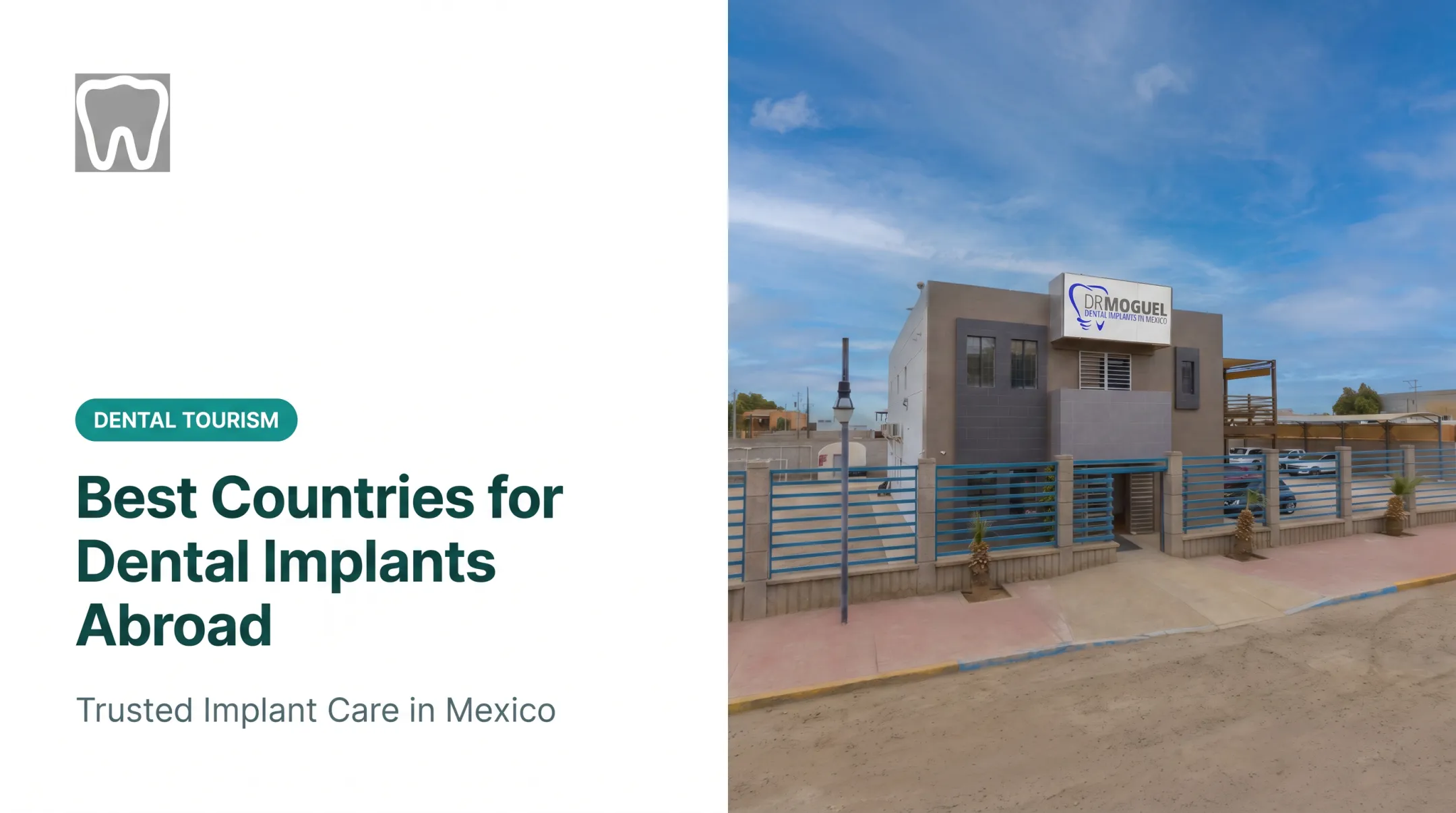
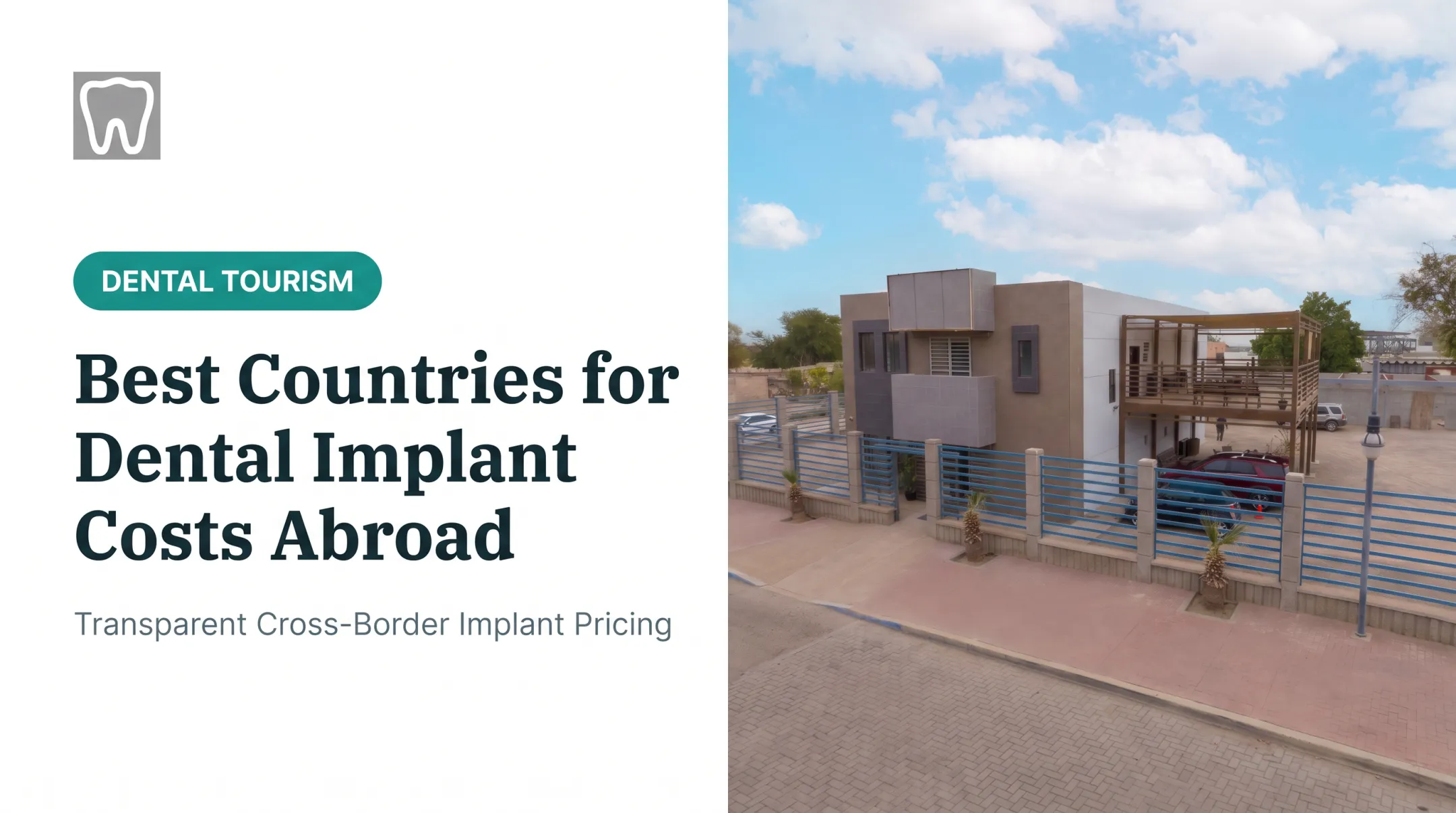
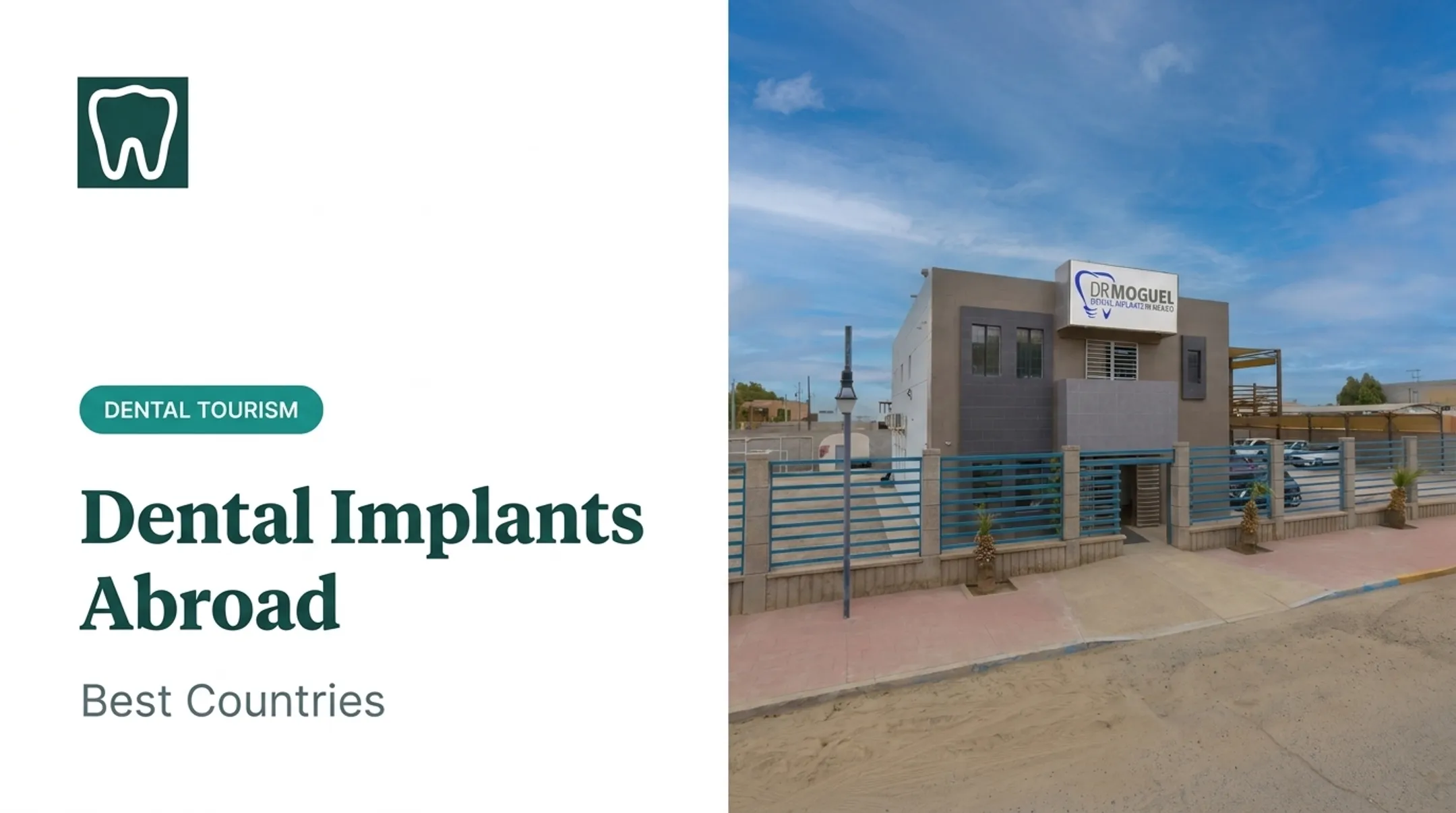
Dr. José Moguel's clinic, for example, has placed over 17,000 implants across 38+ years of practice, specializing in full-arch protocols including the patented 3-ON-8™ system.
What sets Mexico apart:
- A short drive or walk across the border (no long-haul flight required)
- Bilingual, English-speaking clinical staff
- American-standard technology at leading clinics: 3D CBCT imaging, digital scanning, in-house CAD/CAM labs
- Premium implant brands such as Nobel Biocare, Straumann, and MegaGen at vetted practices
- Lifetime warranties on implant hardware at established clinics
| Item | Details |
|---|---|
| Single Implant | $750-$1,500 |
| All-on-4 (per arch) | $8,000-$12,000 |
| All-on-6 (per arch) | $12,000-$16,000 |
| 3-ON-8™ Protocol | $16,000-$20,000 |
| Travel & Logistics | Short drive/flight from US/Canada; walk across the border in Los Algodones |
| Key Consideration | Quality varies by clinic. Verify board certification and implant brand before booking |

Turkey
Istanbul and Antalya have become global hubs for all-inclusive implant packages, driven by high surgical volume and aggressive pricing. A BBC investigation from October 2025 found Turkish implants running roughly £400-£500 each, compared to £2,000-£2,500 in the UK.
Key differentiators:
- Some of the lowest headline prices worldwide
- All-inclusive packages bundling hotel stays and airport transfers
- Globally recognized implant brands used at major clinics
| Item | Details |
|---|---|
| Average Cost | ~£400-£500 per implant (roughly $500-$650 USD); full-arch pricing varies widely by clinic |
| Travel & Logistics | Long-haul flight for North Americans; short hop for Europeans |
| Key Consideration | High patient volume means variable surgeon experience; vet credentials individually |
Hungary
Budapest has earned its nickname, the "Dental Capital of Europe," through decades of EU-regulated implant care. A 2013 peer-reviewed study surveying 273 Hungarian dentists attributes this reputation to accessibility, consistent quality, and a strong cost-to-value ratio compared to Western Europe.
Why patients choose Hungary:
- EU sterilization and legal frameworks under Directive 2011/24/EU
- Premium implant brands and predictable treatment standards
- Mutual recognition of dental qualifications across EU member states
| Item | Details |
|---|---|
| Average Cost | Historically cited near $1,070 per implant versus ~$2,000 in the US; confirm current quotes directly with clinics |
| Travel & Logistics | Central European location, easy access for EU travelers |
| Key Consideration | Higher cost than Turkey or Mexico, plus longer travel time for North Americans |

Costa Rica
San José and Escazú have grown into a dental tourism hub built around US-trained, bilingual dentists. For American patients, it's a notably shorter flight than crossing the Atlantic.
What makes it appealing:
- Political stability and established tourism infrastructure
- Direct flights from several major US cities
- Bilingual providers familiar with US treatment expectations
| Item | Details |
|---|---|
| Average Cost | Reliable independent 2026 benchmarks weren't available. Confirm pricing directly with your chosen clinic |
| Travel & Logistics | Direct flights from major US cities |
| Key Consideration | Prices often run higher than Mexico or Turkey; fewer clinics handle complex full-arch cases |
Thailand
Bangkok and Phuket cater to a more luxury-oriented crowd, particularly Australian and Asia-Pacific patients seeking resort-style recovery alongside advanced dentistry. Chulalongkorn University launched Thailand's first dedicated implant and esthetic dentistry research center in late 2025, expanding the country's clinical training base.
Standout features:
- Digital dentistry paired with resort-style recovery environments
- Growing academic and clinical infrastructure
- Practical option for Australian and Asia-Pacific patients combining treatment with travel
| Item | Details |
|---|---|
| Average Cost | No verified independent 2026 benchmark found; request itemized quotes |
| Travel & Logistics | Best suited for Australia/Asia-Pacific patients; long-haul travel requires careful post-surgery planning |
| Key Consideration | Smaller case volumes than Turkey; long flights complicate recovery for Western patients |

How We Chose the Best Countries
Chasing the lowest headline price without checking surgeon credentials or implant brand is the single biggest mistake dental tourists make. We weighted each destination on:
- Clinician certification — board credentials equivalent to ADA or Asociación Dental Mexicana (ADM) standards
- Implant brand and technology — FDA-approved systems over unbranded generics
- Cost transparency — clear, itemized quotes without hidden add-ons
- Travel logistics — flight time, border access, and recovery planning
- Verified patient reviews — real outcomes, not marketing claims
Accreditation still isn't enough on its own. The CDC's Yellow Book is blunt: accreditation alone doesn't guarantee a good outcome. Patients need to verify credentials themselves, not just trust a clinic's website.
Understanding the Two-Trip Process and Hidden Costs
Most implant treatments abroad require two separate trips, not one. Osseointegration—the process where the implant fuses to your jawbone—typically takes 3-6 months. You can't rush biology.
Standard timeline:
- First visit — Implant placement surgery, temporary teeth or bridge fitted
- Healing period — 3-6 months at home while osseointegration completes
- Second visit — Permanent crown, bridge, or zirconia restoration fitted

This timeline directly affects "true" cost comparisons. A quote that looks like a bargain on paper might exclude:
- Bone grafting (often quoted separately, commonly $400-$800 in Mexico)
- CT/CBCT imaging (sometimes bundled, sometimes not)
- The final prosthesis itself
- Return-trip travel costs
Before booking, confirm in writing:
- Exact implant brand being used
- Final crown or bridge inclusion in the quoted price
- Warranty scope and duration (implant hardware only, or the visible crown too)
- Aftercare plan if something fails after you return home
If a clinic will not put those warranty terms in writing, treat that as a red flag.
Conclusion
There's no single "best" country for dental implants abroad. The right choice depends on where you live, your budget, and how complex your case is.
What matters more than the destination name is what you verify before you go:
- Board certification
- Transparent pricing
- Implant brand
- Written warranty terms
Headline savings mean little if the work needs to be redone.
If you're weighing your options, Dental Implants in Mexico offers free consultations with Dr. José Moguel, a board-certified periodontist with 38+ years of experience and 17,000+ implants placed. You'll get a personalized, transparent quote before you commit to anything.
Frequently Asked Questions
How much do full dental implants cost abroad?
Full-arch treatments abroad typically range from $8,000–$20,000 per arch, depending on the protocol (All-on-4, All-on-6, or full-mouth reconstruction). Comparable care in the US often runs $24,000–$50,000+ per arch.
How much does a single-tooth dental implant cost in Germany?
Germany's Deutsche Mundgesundheitsstiftung lists single-tooth implants at €2,200-€4,700, notably higher than Mexico, Turkey, or other popular tourism destinations.
What is the best country for dental implants?
It depends on your profile. US and Canadian patients often find Mexico ideal for its proximity, bilingual staff, and lower travel burden, while European patients may prefer Hungary's EU-regulated standards.
Where in Europe is the best place to get dental implants?
Hungary, particularly Budapest, is Europe's leading destination thanks to EU sterilization standards, mutual qualification recognition, and consistently competitive pricing.
Is it safe to get dental implants abroad?
Safety depends on verifying the surgeon's board certification, the implant brand used, and getting warranty terms in writing. Clinic accreditation helps, but it alone does not guarantee a good outcome.
How many trips are needed for dental implants abroad?
Most cases require two trips: one for implant placement and temporary teeth, then a second visit 3-6 months later once healing and osseointegration are complete.